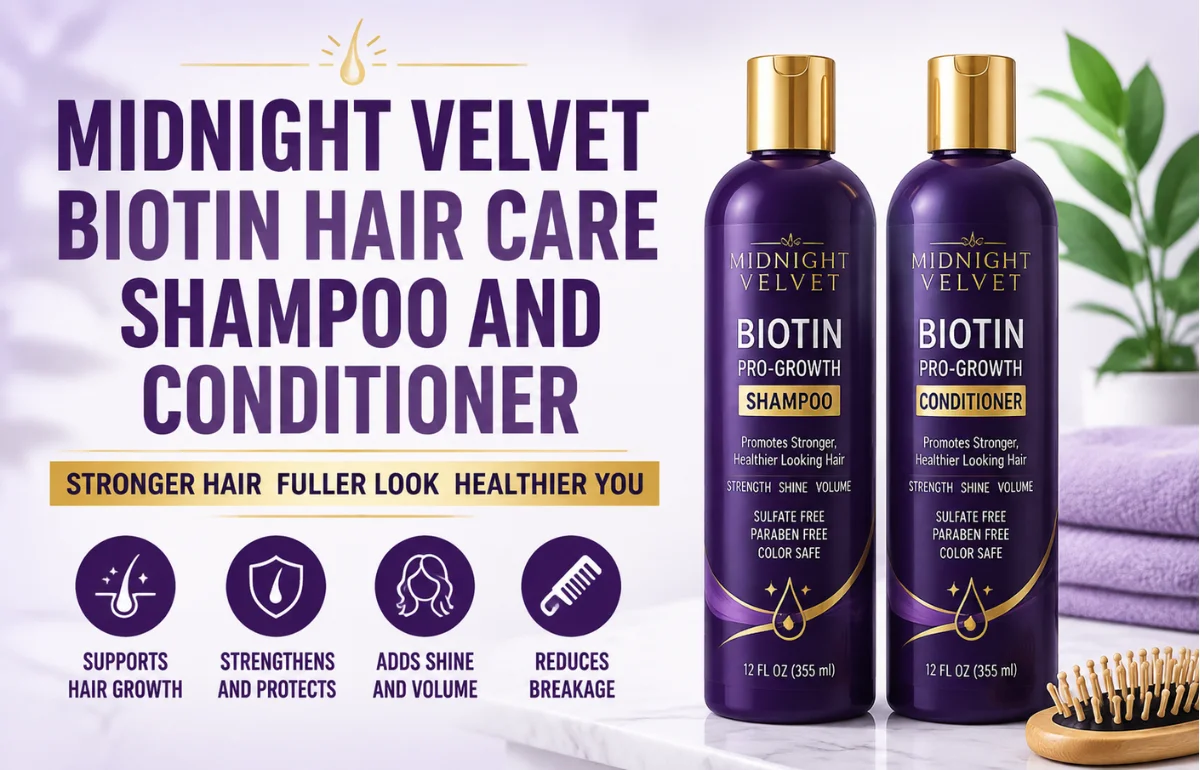
Midnight Velvet Biotin hair care shampoo and conditioner is a two-product cleansing and conditioning set designed for people concerned about weak, thinning, dull, or breakage-prone hair. Each bottle contains 12 fluid ounces, and the retailer describes the pair as a biotin-infused system intended to support strength, shine, healthier-looking growth, and protection against breakage. In practical terms, the shampoo removes oil and buildup, while the conditioner coats and softens the hair fiber so it is easier to detangle and less likely to snap during styling.
Midnight Velvet currently lists the set at $22.99, although price and availability can change. The key expectation I would set from the start is this: it may help hair look fuller and retain length by reducing breakage, but it should not be viewed as a medical treatment for ongoing hair loss.
What Is Included in the Midnight Velvet Biotin Hair Care Set?
The Midnight Velvet listing is straightforward: one biotin shampoo and one biotin conditioner, with 12 fluid ounces in each bottle. The brand markets the duo for improved hair quality, strength, shine, breakage protection, and possible support for regrowth.
A coordinating Biotin Pro-Growth Hair Oil is sold separately.
What the retailer page does not provide is equally important. It does not show a full ingredient list, detailed hair-type guidance, or a clearly named manufacturer.
The product name, bottle size, directions, and positioning closely match Difeel’s 12-ounce Pro-Growth Biotin shampoo and conditioner. I therefore use Difeel’s published formula as a likely reference when analyzing the set, but I would still check the ingredient panel on the bottles received. Retailers and manufacturers can update formulas without changing the basic product name.
How the Shampoo and Conditioner Work Together
A useful hair-growth routine is not only about stimulating follicles. It is also about keeping existing strands from breaking before they reach the length you want.
That distinction is where this pair makes the most sense. Shampoo handles scalp and root cleansing. Conditioner manages friction, dryness, tangling, and surface roughness along the lengths.
| Product | Main job | Notable formula features | Most realistic benefit |
|---|---|---|---|
| Biotin Pro-Growth Shampoo | Removes oil, sweat, styling residue, and scalp buildup | Cleansing agents, glycerin, biotin, panthenol, conditioning polymer, and hydrolyzed proteins | Cleaner roots, less limpness, and fuller-looking hair |
| Biotin Pro-Growth Conditioner | Softens, detangles, and coats the hair shaft | Fatty alcohols, conditioning agents, glycerin, dimethicone, biotin, panthenol, and hydrolyzed proteins | Better slip, reduced combing friction, smoother ends, and less breakage |
The likely shampoo formula combines sodium C14-16 olefin sulfonate, cocamidopropyl betaine, and decyl glucoside for cleansing. It also contains glycerin, biotin, panthenol, and hydrolyzed corn, wheat, soy, and quinoa proteins.
The conditioner uses fatty alcohols and cationic conditioning agents, plus glycerin, dimethicone, biotin, panthenol, and similar proteins.
In my experience evaluating hair-care formulas, this is a “cleanse, coat, and reinforce” system rather than a true follicle treatment. The proteins and film-forming ingredients can temporarily improve the feel and appearance of damaged strands.
The conditioner can also reduce the mechanical stress caused by combing, which matters because dermatologists recommend conditioning after shampooing to help reduce breakage and split ends.
What Biotin Can and Cannot Do for Hair
Biotin is vitamin B7, a nutrient involved in normal metabolism. A genuine biotin deficiency can cause thinning hair, but deficiency is rare in people who eat a normal mixed diet.
The National Institutes of Health also notes that evidence for biotin improving hair in otherwise healthy people is limited, even when discussing supplements, which have much longer exposure than rinse-off shampoo.
That does not make a biotin shampoo useless. It means the benefit should be described accurately.
A rinse-off biotin product may contribute to a conditioning formula, but there is not strong evidence that shampooed-on biotin reaches follicles in a way that reverses androgenetic alopecia, alopecia areata, thyroid-related shedding, postpartum shedding, or other medical causes of hair loss.
The visible improvement is more likely to come from cleaner roots, less residue, protein deposition, smoothing silicones, moisture retention, and reduced breakage.
When fewer strands snap along the shaft, hair may appear denser and may retain length more successfully.
Product Claims Versus Sensible Expectations
| Claim or goal | Sensible expectation |
|---|---|
| “Promotes growth” | May support length retention by reducing breakage; not proven to create new follicles |
| “Prevents hair loss” | May reduce breakage-related hair fall, but cannot diagnose or treat every cause of shedding |
| “Makes hair thicker” | Can make strands feel coated, smoother, or fuller-looking between washes |
| “Strengthens hair” | Protein and conditioning ingredients may temporarily improve manageability and resistance to snapping |
| “Improves shine” | Smoother cuticles and silicone-based conditioning can increase light reflection |
This claim-versus-outcome distinction is the most useful information missing from many retail descriptions.
“Hair fall” in the shower can be shed hair released from the root, broken pieces from the shaft, or a mixture of both. A conditioner can help with the breakage part. Persistent root-level shedding needs a cause-based evaluation.
Who May Like This Biotin Shampoo and Conditioner?
I see the Midnight Velvet Biotin hair care shampoo and conditioner as a potentially good fit for fine, limp, moderately oily, heat-styled, or breakage-prone hair.
The shampoo’s cleansing system may remove enough residue to give roots more lift, while the conditioner provides slip and softness.
It may also appeal to people who want a color-safe, sulfate-free, paraben-free, and phthalate-free formula. Those descriptions appear on the corresponding Difeel product pages.
However, “sulfate-free” does not automatically mean ultra-gentle. Sodium C14-16 olefin sulfonate is not a sulfate, but it can still produce a thorough cleanse.
That can be a benefit for an oily scalp or frequent product use. It may feel too clarifying when used often on very dry, highly porous, bleached, tightly coiled, or chemically relaxed hair.
Hair Types That May Need Adjustments
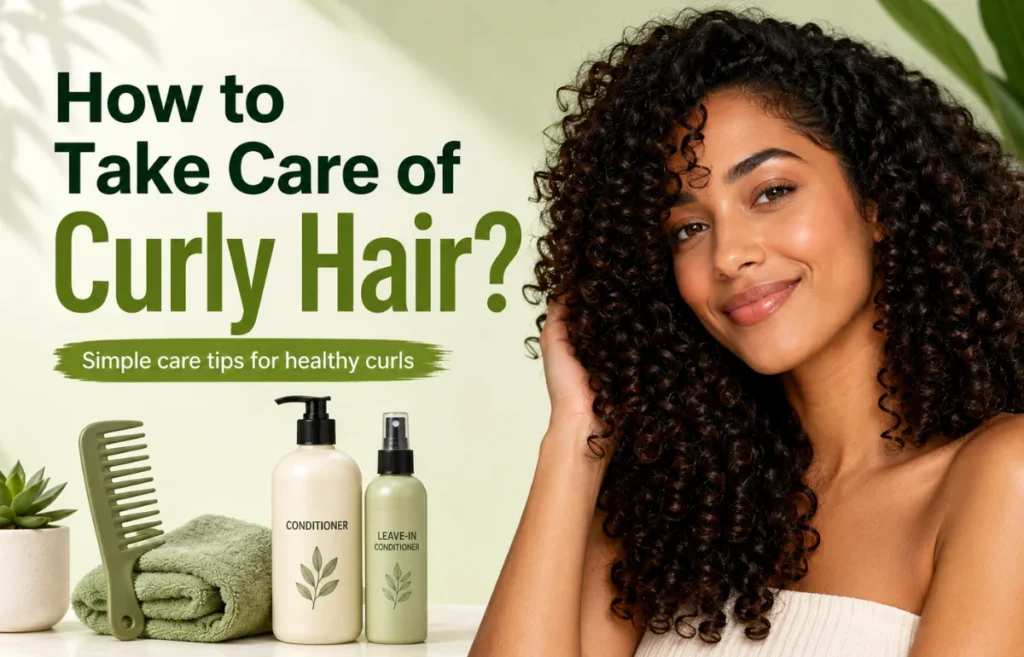
For dry curls, coils, or relaxed hair, I would start with the shampoo once weekly rather than automatically using it three or four times. Apply it mainly to the scalp and let the rinse water clean the lengths.
For fine hair, keep most conditioner from the ears downward. Too much near the roots can flatten the volume the shampoo creates.
For high-porosity or protein-sensitive hair, watch for a stiff, rough, or straw-like feel. The likely formulas contain several hydrolyzed proteins.
Some damaged hair responds well to them, while other hair feels better when protein products are alternated with a protein-free moisturizing conditioner.
For fragrance-sensitive or eczema-prone scalps, review the current label carefully. The likely formula contains fragrance and cocamidopropyl betaine.
Fragrance is a recognized contact-dermatitis trigger, and cocamidopropyl betaine can cause allergy in sensitized individuals. Stop use if itching, burning, swelling, or a persistent rash develops.
How to Use the Set for Better Results
The corresponding shampoo directions recommend use three to four times weekly, starting at the scalp, working the lather through the roots and lengths, and rinsing thoroughly.
The conditioner directions recommend squeezing out excess water, concentrating the product from the middle to the ends, leaving it for a few minutes, and then rinsing.
I would customize that schedule instead of treating it as a rule.
Match Washing Frequency to Your Scalp
An oily scalp, frequent exercise, or heavy styling-product use may justify several washes per week. A dry scalp or tightly textured hair may need less frequent shampooing.
Use enough product to clean the scalp, not enough to create the biggest possible lather. If the first cleanse barely foams because of oil or buildup, a small second cleanse is often better than one oversized application.
Massage Gently
Use finger pads, not nails. Scratching can irritate the scalp and tangle fragile roots.
Spend roughly one minute distributing the shampoo across the scalp. There is no need to scrub the ends aggressively; they are older, more weathered, and more likely to break.
Give the Conditioner Time
After rinsing, squeeze excess water from the hair so the conditioner is not immediately diluted. Apply it through the mid-lengths and ends, detangle carefully, and allow a few minutes before rinsing.
The conditioner’s fatty alcohols, conditioning agents, and silicones are designed to improve slip and smoothness. That benefit is practical, not merely cosmetic: less friction during detangling can mean fewer broken strands.
Judge It Over Several Washes
Do not measure success by whether new hair appears in one week. Instead, track easier detangling, fewer short broken pieces, improved softness, root volume, shine, and how long your ends remain intact.
Take a monthly photograph in the same lighting and part your hair in the same place. This separates real changes from day-to-day styling differences.
Possible Drawbacks to Consider
The largest drawback is the gap between the marketing language and the evidence for topical biotin.
The set may be a worthwhile cosmetic strengthening routine, but it should not delay professional care for sudden, patchy, painful, or rapidly worsening hair loss. The American Academy of Dermatology recommends seeing a dermatologist because hair loss has many causes and early diagnosis can improve the chance of an effective result.
The second concern is dryness. A strong-cleansing sulfate-free formula can still leave coarse or damaged hair feeling stripped if used too often.
The third is buildup. Dimethicone and other conditioning materials can make hair smoother, but very fine or low-porosity hair may eventually feel coated.
An occasional clarifying wash may help, although someone using this relatively cleansing shampoo may not need a separate clarifier.
The fourth is formula transparency. Midnight Velvet’s listing is brief, so ingredient-sensitive buyers should confirm the bottle label before use rather than relying only on a reseller description.
Is Midnight Velvet Biotin Hair Care Shampoo and Conditioner Worth It?
At the listed price of $22.99 for 24 total fluid ounces, the set sits in an accessible mid-budget range. Its value is strongest for someone who wants a coordinated shampoo-conditioner pair aimed at cleaner roots, smoother lengths, fuller appearance, and breakage control.
I would not buy it solely for the word “regrowth.” I would buy it for a practical hair-maintenance goal: remove buildup, improve manageability, reduce friction, and help fragile hair hold onto length.
My overall assessment is balanced. The formula profile is more substantial than a basic biotin label because it includes humectants, panthenol, multiple hydrolyzed proteins, conditioning polymers, fatty alcohols, and silicones.
At the same time, the shampoo may be more cleansing than very dry hair needs, and the product should not be confused with evidence-based treatment for diagnosed hair loss.
Frequently Asked Questions
Does Midnight Velvet Biotin shampoo help hair grow?
It may help hair retain length by reducing breakage and improving manageability, but strong evidence that rinse-off biotin directly causes new hair growth is lacking.
Is Midnight Velvet Biotin shampoo sulfate-free?
The corresponding Difeel formula is labeled sulfate-free, paraben-free, phthalate-free, and color-safe; verify the current bottle because retailer formulas can change.
How often should I use the shampoo and conditioner?
The published directions suggest shampooing three to four times weekly, but dry, curly, coily, or chemically treated hair may do better with less frequent use.
Can I use it on color-treated hair?
The corresponding formula is marketed as color-safe, although a strand test is sensible for freshly colored, bleached, or highly porous hair.
Is it suitable for a sensitive scalp?
It contains fragrance and likely contains cocamidopropyl betaine, so people with known fragrance allergies, eczema, or prior shampoo reactions should review the label and test cautiously.
Final Verdict
Midnight Velvet Biotin hair care shampoo and conditioner is best understood as a strengthening and breakage-management duo, not a guaranteed regrowth treatment.
It offers a useful combination of cleansing, conditioning, proteins, humectants, and smoothing ingredients that may make thin or fragile hair look fuller, shinier, and easier to handle.
Before ordering, check current availability and review the ingredient label when the set arrives. Then use it according to your scalp and hair texture, track breakage and manageability for a month, and consult a dermatologist if shedding is sudden, patchy, painful, or persistent.

Natalie Brooks is a hair care writer with 6 years of experience creating practical content about hair health, scalp care, hair routines, ingredients, and everyday maintenance. She focuses on helping readers understand their hair needs through simple, research-informed guidance while promoting realistic care practices and informed choices.