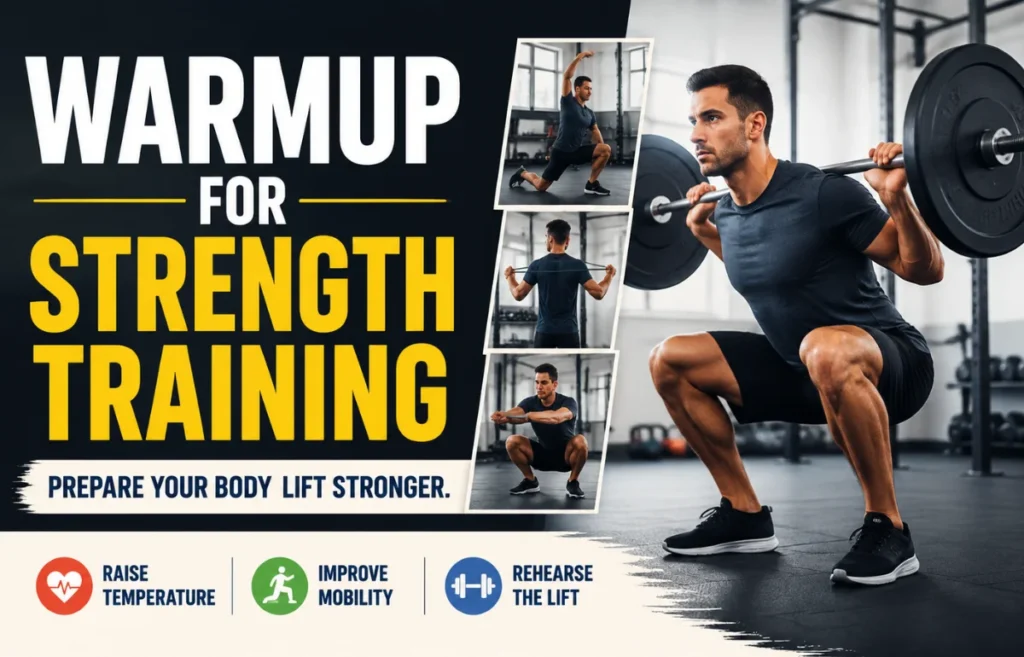
A warmup for leg day is a short period of light movement, dynamic mobility, muscle activation, and progressively heavier practice sets performed before lower-body strength training. Its purpose is to raise body temperature, increase blood flow, prepare the hips, knees, ankles, and trunk for movement, and rehearse the exercises you are about to perform.
A good warmup should make your first working sets feel smoother without tiring your legs. I prefer a simple approach: get physically warm, move the joints you are going to use, activate muscles where needed, and finish with lighter versions of your first main exercise.
For most people, that takes about 8–15 minutes rather than a long pre-workout routine.
Why a Proper Leg Day Warmup Matters
Leg training involves some of the largest and strongest muscles in the body, including the quadriceps, hamstrings, glutes, calves, and hip musculature.
Exercises such as squats, Romanian deadlifts, lunges, leg presses, and Bulgarian split squats also require coordination between the hips, knees, ankles, and trunk.
That is why I do not think of warming up as simply “stretching your legs.”
The real goal is readiness.
When we say readiness, we mean your fitness from top to bottom, which considers your hip condition. We have seen many suffering from hip issues for a long time without making major decisions. A hip replacement surgery Singapore might seem hectic, but it is not. It can offer a proper leg day after complete recovery.
A well-planned warmup can help you move through your available range of motion more comfortably, rehearse your lifting technique, and make the transition from normal daily activity to loaded exercise less abrupt.
It also gives you an opportunity to notice how your body feels that day before putting a heavy barbell on your back.
What Should a Warmup for Leg Day Include?
You do not need a complicated 20-exercise routine.
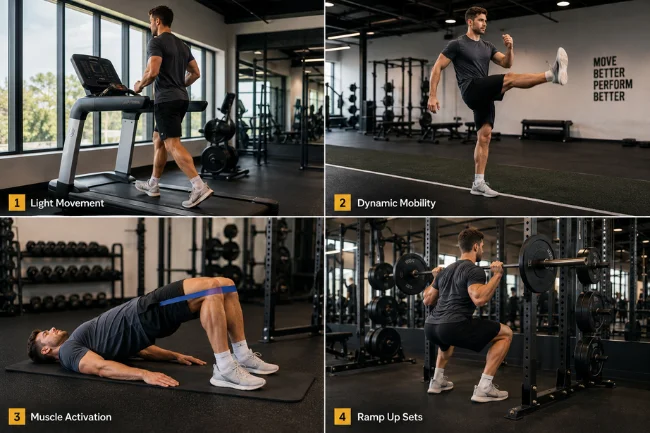
I recommend building your leg day warmup around four parts:
- Light general movement
- Dynamic mobility
- Targeted muscle activation
- Exercise-specific ramp-up sets
Each part has a different purpose, and together they create a much more useful warmup than randomly stretching for ten minutes.
1. Start With Light Movement
Begin with around three to five minutes of easy activity.
Walking on a treadmill, using a stationary bike, rowing lightly, or brisk walking can all work. The aim is simply to feel warmer and more physically alert.
This portion should not leave you breathing heavily.
If you walked to the gym or have already been physically active, you may need less general warmup than someone who just spent several hours sitting at a desk.
2. Add Dynamic Mobility
Dynamic mobility involves actively moving your joints through a comfortable range of motion instead of holding one stretched position.
For a lower-body workout, useful options include:
- Ankle rocks
- Leg swings
- Hip rotations
- Bodyweight squats
- Walking or reverse lunges
- Adductor rock-backs
The drills you choose should match your workout.
For example, before deep squats, I would give more attention to ankle and hip mobility. Before Romanian deadlifts, I would focus more on controlled hip hinging and hamstring movement.
You do not need to increase flexibility dramatically before training. You simply want access to the range of motion required for the exercises you plan to perform.
3. Use Muscle Activation Without Creating Fatigue
Activation exercises can help you feel and control specific muscles before heavier training.
Glute bridges, lateral band walks, calf raises, bodyweight split squats, and dead bugs are common examples.
The mistake is turning activation into a workout of its own.
If your glutes are already burning and your legs feel tired before the first loaded squat, you have probably done too much.
I usually prefer one or two short sets. The goal is to feel prepared, not exhausted.
4. Finish With Ramp-Up Sets
Ramp-up sets are one of the most useful parts of a warmup for leg day.
They are lighter sets of your first main exercise, with the weight gradually increasing as you approach your working load.
If you are starting with barbell squats, for example, your warmup should eventually include barbell squats. Mobility drills cannot completely replace practicing the actual loaded movement.
Ramp-up sets prepare your stance, technique, coordination, bracing, range of motion, and familiarity with the weight.
A 10-Minute Warmup for Leg Day
Here is a simple routine I would use as a starting point before a general squat-focused or mixed lower-body session.
| Exercise | Reps or Time | Main Purpose |
|---|---|---|
| Easy bike or brisk walk | 3 minutes | Increase body temperature |
| Ankle rocks | 8–10 each side | Prepare ankle movement |
| Leg swings | 10 each direction | Dynamic hip mobility |
| Bodyweight squats | 10–12 reps | Practice the squat pattern |
| Reverse or walking lunges | 6–8 each side | Prepare hips, knees, and balance |
| Glute bridges | 10–15 reps | Light glute activation |
| Ramp-up sets | 2–4 sets | Prepare for the main lift |
Move through these exercises smoothly rather than rushing.
If one drill does not help you feel better, you do not have to keep it simply because it appears in a warmup routine.
The warmup should adapt to your body and your workout.
Match Your Warmup to Your First Exercise
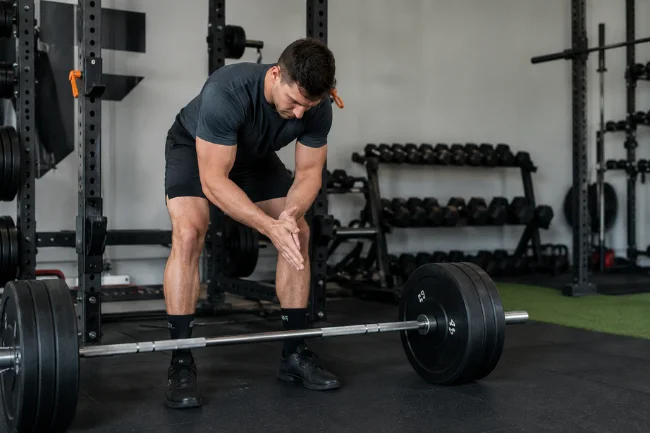
One thing many generic leg warmups miss is exercise specificity.
A squat workout, deadlift workout, and single-leg workout do not place identical demands on your body.
Your first major exercise should influence how you prepare.
Warmup Before Squats
Before back squats, front squats, hack squats, or goblet squats, focus on ankle movement, hip control, bracing, and the squat pattern itself.
A simple sequence might include ankle rocks, bodyweight squats, reverse lunges, and progressively heavier squat sets.
If your heels tend to rise or it takes several sets before your squat depth feels comfortable, spending a little extra time on ankle mobility and controlled squat repetitions may be useful.
Warmup Before Deadlifts or Romanian Deadlifts
For deadlift-focused training, I shift the emphasis toward hip hinging, hamstrings, glutes, trunk control, and the actual pulling pattern.
You might perform controlled bodyweight hip hinges, glute bridges, hamstring sweeps, and then several lighter deadlift or RDL sets.
The priority is not aggressively stretching your hamstrings.
It is making the hip hinge feel natural and controlled before the load becomes challenging.
Warmup Before Lunges and Bulgarian Split Squats
Single-leg exercises place greater demands on balance and hip stability.
Reverse lunges, bodyweight split squats, calf raises, and a small amount of lateral band work can fit well here.
This is also a good opportunity to notice left-to-right differences.
A small difference in mobility or coordination is common. Rather than forcing both sides into an identical position immediately, I prefer using the warmup to improve control progressively.
Dynamic vs. Static Stretching Before Leg Day
Dynamic and static stretching are not the same thing, and they do not have to be used in the same way.
| Warmup Method | Best Use | Practical Approach |
|---|---|---|
| Dynamic stretching | General pre-lifting preparation | Use before most leg workouts |
| Short static stretching | Addressing a specific tight area | Keep it moderate, then move dynamically |
| Long static stretching | Dedicated flexibility work | Usually better separated from heavy lifting |
| Ramp-up sets | Preparing for your main lift | Include before demanding working sets |
I generally favor dynamic movement before strength training.
Long, intense static stretching immediately before heavy or explosive sets is rarely necessary. If you like static stretching or find a short stretch useful for a particular area, follow it with active movement and exercise-specific warmup sets.
Your warmup should leave you feeling more responsive, not overly relaxed or fatigued.
How Long Should You Warm Up for Leg Day?
For most recreational lifters, around 8–15 minutes is a practical target.
You may need a little longer when training early in the morning, exercising in a cold environment, preparing for heavy low-repetition lifting, or arriving at the gym after sitting for several hours.
A lighter session may require less.
Instead of watching the clock alone, I prefer to judge the warmup by how the movement feels.
Your body should feel warmer, your range of motion should feel comfortable, and the first exercise should no longer feel unfamiliar.
How to Perform Ramp-Up Sets Without Getting Tired
Warmup sets should normally become heavier while the number of repetitions decreases.
Imagine that your first working squat set is 100 kg for six repetitions. A possible progression could look like this:
- Empty bar: 8–10 controlled reps
- 40 kg: 5–6 reps
- 60 kg: 3–5 reps
- 80 kg: 2–3 reps
- 100 kg: begin working sets
These numbers are examples, not universal percentages.
Someone lifting much heavier absolute loads may need additional intermediate sets. A beginner using relatively light weights may need fewer.
The key is avoiding unnecessary fatigue. Your warmup sets are practice, not bonus training volume.
My Three-Question Leg Day Readiness Check
Rather than following exactly the same warmup every workout, I like using a simple readiness check.
Before starting the first hard set, ask:
- Does the movement feel smoother than it did when I started?
- Can I reach my intended range of motion without forcing it?
- Do my final warmup reps feel stable and technically controlled?
If the answer to all three is yes, your warmup has probably done its job.
If one area still feels restricted, add one targeted drill or another practice set rather than restarting the entire routine.
I think of this as a minimum-effective-warmup approach. Your warmup earns its place by improving readiness. More exercises are not automatically better.
Common Leg Day Warmup Mistakes
Doing Too Much Cardio
Hard cardio before strength training can unnecessarily tire your legs.
Keep the opening cardio easy enough that you still feel fresh when you begin lifting.
Using Too Many Mobility Exercises
You do not need every hip and ankle drill you have ever seen online.
Choose exercises that solve a specific problem or prepare a movement you will actually perform.
Overdoing Glute Activation
Mini bands and glute exercises can be useful, but high-repetition activation circuits may fatigue the same muscles you need for heavy lifts.
Stop while you still feel fresh.
Skipping Exercise-Specific Warmup Sets
Leg swings and bodyweight squats do not completely prepare you to perform a challenging barbell squat.
As the workout approaches working intensity, your warmup should become increasingly specific to the main exercise.
Ignoring Unusual Pain
Normal stiffness may improve as you start moving. Sharp, worsening, or unusual pain is different.
Do not use the warmup to prove that you can push through pain. Modify the movement or load when necessary, and seek qualified professional advice when pain is persistent or concerning.
Can You Warm Up for Leg Day at Home?
Absolutely. Gym equipment is not required.
Try brisk marching for 60–90 seconds, followed by ankle rocks, bodyweight squats, reverse lunges, and glute bridges.
If you are training with dumbbells, kettlebells, or resistance bands, perform an easier version of your first exercise before moving to your normal working resistance.
The same rule applies everywhere: start general and gradually become more specific.
Should Beginners Warm Up Differently?
Beginners generally need simpler warmups rather than longer ones.
A few minutes of easy movement, basic dynamic mobility, and light practice sets can provide plenty of preparation.
For a beginner, those practice sets also provide valuable opportunities to rehearse stance, breathing, bracing, depth, and movement control.
More experienced lifters sometimes require additional ramp-up sets simply because the difference between an empty bar and their working weight is much greater.
FAQs About Warmup for Leg Day
How should I warm up before leg day?
Start with 3–5 minutes of easy movement, perform a few dynamic mobility and activation exercises, then use progressively heavier sets of your first main lift.
Is 5 minutes enough to warm up for leg day?
Five minutes may be enough for a light workout, but around 8–15 minutes is often more practical before demanding squats, deadlifts, or other heavy lower-body exercises.
Should I stretch before squats?
Dynamic mobility is a useful default before squats. If you use static stretching for a specific tight area, keep it moderate and follow it with active movement and squat warmup sets.
Do I need to activate my glutes before leg day?
Not necessarily. Glute activation can help when it improves control or muscle awareness, but it should be brief enough that it does not fatigue you before your main exercises.
Can I do leg day without warming up?
You can, but moving directly into challenging working sets is usually less practical than gradually preparing with light movement and progressively loaded practice sets.
Make Your Leg Day Warmup Work for You
The best warmup for leg day is not the routine with the most stretches, bands, or mobility drills. It is the routine that prepares you for the specific movements and loads you are about to train while preserving your energy for the workout.
Keep the formula simple: get warm, move dynamically, activate only what needs attention, and finish with progressively heavier sets of your first major exercise.
Use the 10-minute routine above on your next lower-body day, then adjust it according to your mobility, training experience, first exercise, and how your body responds. Your warmup should support your leg workout, not become another workout before it starts.

Lauren Mitchell is a fitness and exercise specialist with 11+ years of experience helping people build strength, improve mobility, and maintain healthier lifestyles. She provides evidence-based fitness guidance focused on effective workouts, injury prevention, and sustainable exercise habits.