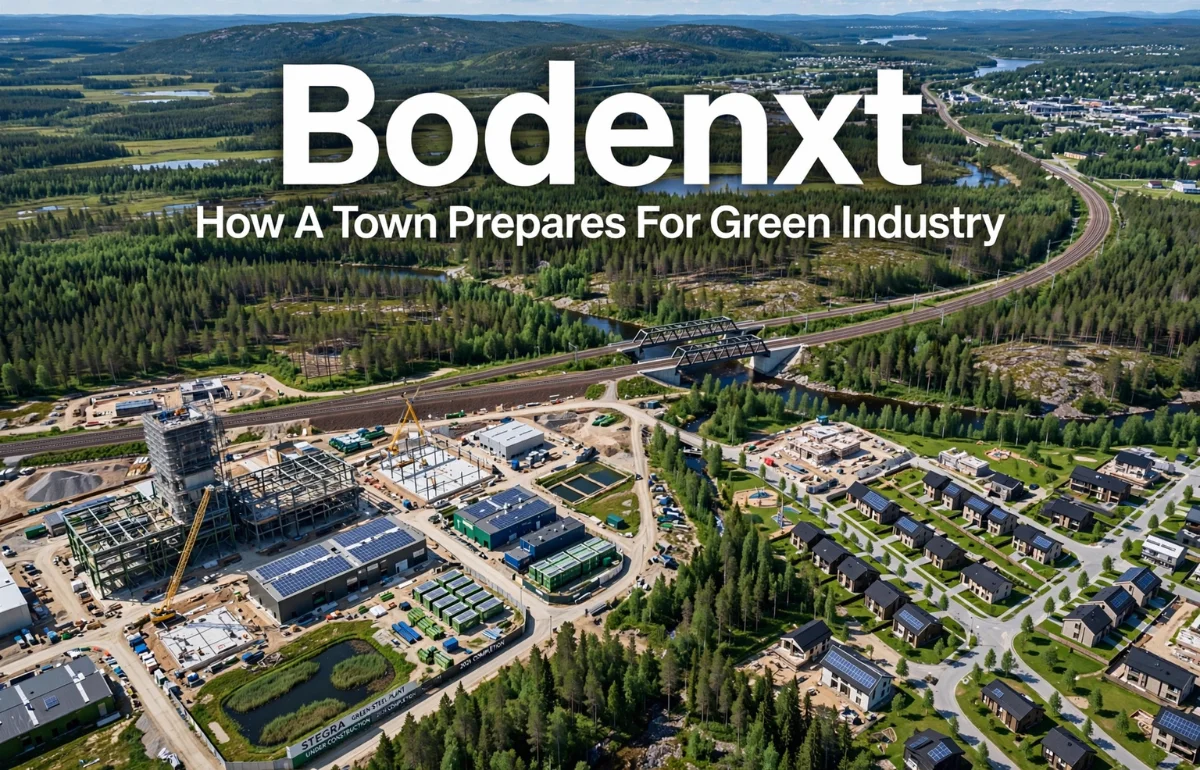
Bodenxt is Boden Municipality’s platform for managing the rapid green transformation taking place across the town of Boden in northern Sweden. It is not a steel company, a single construction project, or a new district. Instead, Bodenxt coordinates the housing, skills, business development, transport, utilities, and public services needed when a major industrial investment changes an entire community. Stegra’s green steel plant is the main accelerator, but Bodenxt covers the wider social and economic system around it. The municipality describes the task as compressing roughly 20 years of development into only a few years.
That distinction matters. People searching for Bodenxt often expect information about green steel, yet the more useful question is broader: how does a municipality prepare homes, workers, roads, schools, water systems, and local businesses quickly enough to support a new industrial economy?
What Is the Purpose of Bodenxt?
Bodenxt is designed to ensure that industrial growth produces a functioning, attractive community rather than an isolated factory surrounded by shortages.
Boden Municipality organizes the work through five subprojects: skills supply, living and housing, business development, infrastructure above ground, and infrastructure below ground. This connects workforce planning and relocation with land use, construction, transport, water, wastewater, energy, and municipal capacity.
When I assess large transformation programs, I look for the point where ambition becomes delivery. In Boden’s case, that point is whether a recruited engineer can find a home, a supplier can reach the industrial park, a school can provide relevant technical education, and utility systems can handle growth.
That is the practical value of Bodenxt.
Bodenxt and Stegra Are Connected, but They Are Not the Same
Stegra, previously known as H2 Green Steel, is building a large-scale green steel facility at Boden Industrial Park. Bodenxt is the municipality’s response to the wider transformation created by that investment and other growth drivers, including the expanding Swedish Armed Forces.
| Area | Bodenxt | Stegra |
|---|---|---|
| Type | Municipal transformation platform | Private industrial company |
| Responsibility | Community planning and growth coordination | Green hydrogen, iron, and steel production |
| Focus | Housing, skills, business, infrastructure, services | Building and operating the Boden plant |
| Geographic effect | Wider municipality and regional economy | Industrial park and supply chain |
| Success measure | A community able to absorb sustainable growth | Commercial near-zero-emissions steel production |
The relationship is best understood as an anchor-and-ecosystem model: Stegra is the anchor investment, while Bodenxt develops the ecosystem that allows the plant to operate and the community to benefit.
Why Boden Became a Center for Green Industry
Boden combines access to fossil-free electricity, industrial land, transport connections, technical expertise, and proximity to northern Sweden’s mining and energy economy.
At the center of Stegra’s plant is a hydrogen-based production chain. Electricity splits water into hydrogen and oxygen. The hydrogen then helps reduce iron ore without relying on the coal-intensive blast-furnace route used in conventional steelmaking.
The hydrogen facility is planned to contain 37 large electrolyzer modules, provide more than 700 megawatts of electrolysis capacity, and produce over 100,000 tonnes of green hydrogen per year. The wider site covers around 270 hectares.
Stegra says its process can reduce carbon dioxide emissions by up to 95 percent compared with steel made using coke-fired blast furnaces. The plant has also been recognized as a Strategic Net-Zero Project under the European framework.
The Five Working Areas Behind Bodenxt
Skills Supply
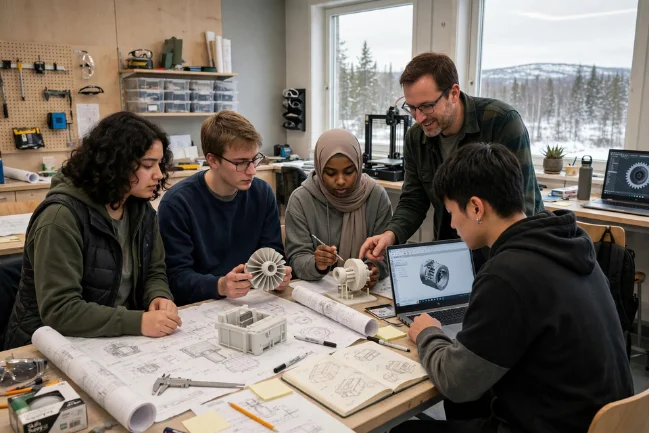
A functioning industrial cluster needs more than engineers. It also needs technicians, construction teams, teachers, healthcare workers, logistics employees, retail staff, and public-sector professionals.
Boden is adjusting education around this emerging labor market. The Upper Secondary Engineering Programme at Björknäsgymnasiet is scheduled to begin in autumn 2026. It combines technical study, workplace learning, industrial design, and product development, with Stegra, SMS Group Nordic, local industry, and the Swedish Armed Forces helping connect education to real work.
Living and Housing
Housing may be the clearest test of whether Bodenxt can turn temporary construction activity into permanent population growth.
Boden projects more than 4,000 additional residents by 2030, around 10,000 direct and indirect regional jobs, approximately 2,000 jobs linked to Stegra, and 1,300 apartments enabled through current development plans. The expansion of the Swedish Armed Forces creates additional demand.
Growth is already visible. Boden ended 2025 with 28,624 registered residents, 376 above its forecast. Municipal officials have also said that several thousand temporary workers are present without appearing in the registered population.
Yet in May 2026, the municipality reported that the rental vacancy rate was close to zero. That shortage can prevent new employees from settling and slow recruitment.
This is a central lesson: jobs do not automatically create a stable community. Housing delivery is the bridge between employment and long-term population growth.
Business Development
Bodenxt aims to spread economic benefits beyond one large employer.
Opportunities can emerge for construction firms, maintenance providers, logistics operators, engineering consultancies, retailers, technology companies, and industrial suppliers. A stronger local supplier base keeps more spending in the region and reduces dependence on imported services.
Boden ranked fourth nationally in Sweden’s Insikt 2025 survey and recorded a customer satisfaction score of 87 for business-facing regulatory services. Efficient permits and inspections may sound routine, but they strongly affect whether smaller companies invest and expand.
Infrastructure Above Ground
The clearest visible result is the railway to Boden Industrial Park.
The completed project includes six kilometers of track, nine bridges, and capacity for trains up to 1,000 meters long. It connects the industrial park with the Malmbanan line and the national rail network. The railway was delivered one month early and under budget through a public-private partnership involving Polar Structure and the municipality.
Road and cycling connections are also being developed. Current municipal information says the road and pedestrian-cycle route should reopen on October 1, 2026, while work toward Road 605 is expected to continue into autumn 2027.
These links can serve Stegra while making the wider industrial area more attractive to future companies.
Infrastructure Below Ground
Below-ground systems often determine the real limit of urban growth.
Water supply, wastewater treatment, drainage, power distribution, fiber, and other utilities must support a larger population and more intensive industrial activity. They are expensive and difficult to improvise after neighborhoods and businesses arrive.
This is why I see Bodenxt as a capacity-planning program as much as a sustainability initiative. The municipality is trying to build enough system capacity before shortages stop growth.
What Has Bodenxt Achieved So Far?
The program is still developing, but several results are measurable.
| Area | Reported progress | Remaining challenge |
|---|---|---|
| Population | 28,624 registered residents at the end of 2025 | Converting temporary workers into permanent residents |
| Relocation | Around 640 residents linked to Stegra-related moves | Securing homes for continued recruitment |
| Housing | 1,300 apartments enabled in current plans | Near-zero rental vacancy and developer financing |
| Rail | Six-kilometer railway completed early and under budget | Completing the road and logistics corridor |
| Skills | New engineering program begins in autumn 2026 | Filling industrial and public-service roles |
| Collaboration | Sustainability Center funded through 2029 | Creating lasting cross-sector institutions |
The relocation figures show how industrial employment reaches the community. By late 2025, the municipal Relocation Service reported roughly 275 Stegra employees already living in Boden. With accompanying adults and children, the estimated total connected to the company was about 640 new residents.
The Boden Sustainability Center is intended to create a long-term collaboration framework involving the municipality, businesses, academia, and civil society. Its budget exceeds SEK 16 million, and the project is planned to run from autumn 2026 to summer 2029.
The Real Innovation Is Municipal Execution
Most coverage focuses on green hydrogen and steel technology. Those subjects matter, but they can hide the more transferable lesson.
My reading of Bodenxt is that its real innovation is coordinated municipal execution. Housing, education, relocation, permitting, utilities, and transport are treated as parts of one system rather than separate administrative files.
Large industrial projects often move faster than public planning. A company may recruit internationally within months, while homes, roads, schools, and utility upgrades can take years. Bodenxt attempts to close that timing gap.
Not every problem is solved. The housing shortage is serious, infrastructure carries financial and operational risk, and the anchor project’s schedule remains uncertain. After closing a €1.4 billion financing round in June 2026, Stegra said it was ramping construction activity back up but that the project timeline remained under review.
A credible assessment therefore needs both optimism and caution. The initiative has produced infrastructure, population growth, relocation support, and new education programs. Its long-term success will depend on housing delivery, industrial commissioning, municipal finances, workforce retention, and diversification beyond one anchor company.
Why Bodenxt Matters Beyond Northern Sweden
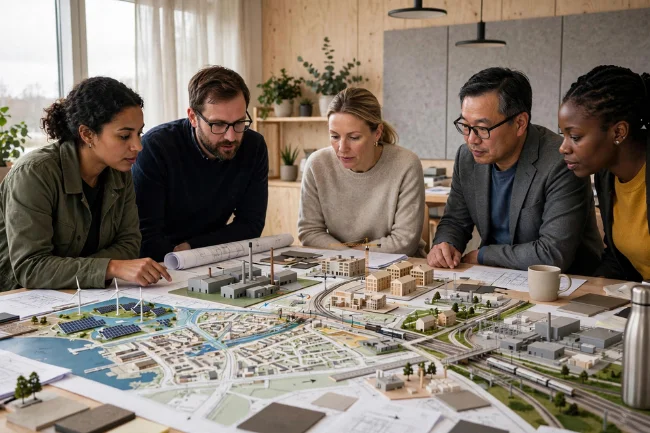
Bodenxt is a useful case study for towns facing rapid investment in clean energy, manufacturing, mining, data centers, or defense.
Its central lesson is simple: an industrial transition is also a housing transition, workforce transition, infrastructure transition, and public-service transition.
Other municipalities can copy the planning principle without copying Boden’s exact projects. They can identify the anchor investment, map the systems it will strain, create shared delivery teams, publish measurable targets, and monitor whether temporary activity becomes permanent local value.
Frequently Asked Questions
What does Bodenxt mean?
Bodenxt is Boden Municipality’s platform for coordinating green industrial and social transformation, including housing, skills, business development, and infrastructure.
Is Bodenxt the same as Stegra?
No. Stegra is building the green steel plant, while Bodenxt manages the wider municipal transformation around it.
Why is Bodenxt associated with green steel?
Stegra’s hydrogen-based steel project is the main accelerator behind Boden’s rapid growth, infrastructure investment, recruitment, and housing demand.
How many jobs could Bodenxt-related growth create?
Boden Municipality projects about 10,000 direct and indirect regional jobs, including roughly 2,000 linked to Stegra.
What is the biggest challenge facing Bodenxt?
Housing is one of the clearest constraints because rental vacancies are close to zero, making recruitment and permanent relocation harder.
What to Watch Next
Bodenxt is no longer only a vision. Rail infrastructure is complete, new residents have arrived, technical education is expanding, and major industrial construction continues.
The next stage will show whether Boden can turn that momentum into a balanced, permanent community. I would watch four indicators: housing completions, Stegra’s revised commissioning timeline, permanent population growth, and new businesses established beyond the steel project.
For residents, workers, investors, and local companies, the practical next step is to follow Boden Municipality’s project map and current Bodenxt updates. The most useful part of the story is now unfolding through delivery, not promises.

Ethan Caldwell is a business research writer with 9+ years of experience covering entrepreneurship, market trends, business strategies, and industry insights. He focuses on creating clear, data-informed articles that help readers understand modern business concepts.