
A TrafficGuard alternative is an ad fraud detection and prevention tool that helps advertisers identify suspicious clicks, automated traffic, fake conversions, and other invalid interactions that waste advertising budgets. These tools monitor paid campaigns, detect potentially fraudulent behavior, and apply protective measures to improve traffic quality and marketing performance.
Popular alternatives include ClickCease, ClickGUARD, Lunio, CHEQ, Fraud Blocker, Spider AF, AppsFlyer Protect360, and Adjust. However, they don’t all solve the same problems. Some focus on Google Ads click fraud, while others specialize in mobile app attribution or broader digital advertising protection.
If you’re searching for the best TrafficGuard alternative, I recommend comparing actual channel coverage, detection methods, reporting transparency, and total costs rather than relying on promises about recovered advertising spend.
Here’s how the leading options compare and what I’d consider before choosing one.
What Is TrafficGuard, and Why Consider an Alternative?
TrafficGuard is an advertising fraud prevention platform designed to detect and reduce invalid traffic across digital marketing campaigns.
Its solutions cover paid search, paid social, affiliate advertising, and mobile user acquisition. Depending on the product and plan, TrafficGuard provides automated fraud detection, traffic analysis, exclusion controls, and reporting.
The platform addresses several advertising problems:
- Repeated or fraudulent ad clicks
- Bot-generated visits and interactions
- Suspicious traffic from automated sources
- Mobile app install and attribution fraud
- Low-quality or fraudulent affiliate activity
- Invalid traffic affecting conversion reporting
These capabilities make TrafficGuard worth considering for businesses managing multiple advertising channels.
However, I wouldn’t assume that one platform is automatically the best choice for every advertiser.
A small business running Google Search campaigns has different requirements from a mobile gaming company acquiring thousands of app users.
An alternative might offer simpler campaign management, more flexible blocking rules, specialized mobile fraud protection, or pricing better suited to your advertising volume.
The goal isn’t necessarily to find a cheaper version of TrafficGuard. It’s to find software that solves your particular traffic-quality problem without creating unnecessary complexity.
Best TrafficGuard Alternatives: Quick Comparison
Before examining individual platforms, here’s a comparison of eight options worth researching in 2026.
| Alternative | Primary focus | Best suited for |
|---|---|---|
| ClickCease | PPC click fraud and bot protection | Small businesses and agencies |
| ClickGUARD | Customizable click fraud prevention | PPC managers wanting detailed control |
| Lunio | Cross-channel invalid traffic protection | Multichannel advertising teams |
| CHEQ | Traffic integrity and acquisition security | Enterprises and lead-generation businesses |
| Fraud Blocker | Automated click fraud detection | Small and medium-sized advertisers |
| Spider AF | Ad fraud and placement-quality protection | Performance marketers and agencies |
| AppsFlyer Protect360 | Mobile attribution and install fraud | Mobile app marketers |
| Adjust Fraud Prevention Suite | Mobile acquisition fraud prevention | App businesses using Adjust |
This comparison reflects each platform’s main positioning rather than every available feature.
Features, integrations, and pricing can differ between subscriptions. I recommend confirming coverage for your specific campaigns before purchasing.
8 Best TrafficGuard Alternatives Worth Considering in 2026
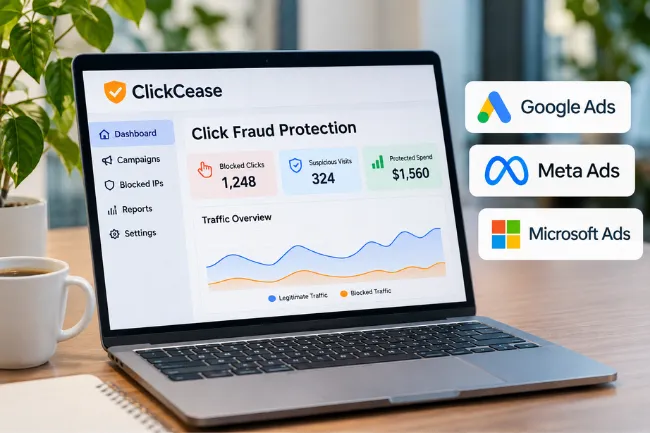
1. ClickCease: Best for Straightforward PPC Click Fraud Protection
ClickCease is one of the most recognizable alternatives for advertisers concerned about fraudulent clicks.
It offers protection for Google Ads, Meta Ads, and Microsoft Ads, making it relevant to businesses running search and social advertising campaigns.
The platform analyzes advertising interactions, identifies suspicious activity, and provides configurable filters for reducing unwanted traffic.
What interests me most is its practical emphasis on campaign protection without requiring a complete enterprise fraud-management system.
Key capabilities include:
- Automated click fraud monitoring
- Suspicious traffic analysis
- Customizable fraud filters
- Advertising account integrations
- Reports showing blocked activity and traffic patterns
ClickCease also offers broader protections associated with bots and website traffic, although availability depends on the plan.
For smaller marketing teams, its relatively accessible workflow may be attractive.
One consideration is usage-based billing. Advertisers should examine included traffic allowances and potential overage charges instead of comparing subscription prices alone.
Best for: Businesses and agencies seeking a manageable PPC fraud protection solution.
2. ClickGUARD: Best for Custom Fraud Prevention Rules
ClickGUARD stands out when detailed customization matters more than fully automated decision-making.
The platform provides click fraud protection for Google Ads, Microsoft Ads, and Meta Ads.
Alongside automated detection, advertisers can configure rules based on suspicious clicking patterns and campaign-specific requirements.
For example, a business might investigate unusually frequent interactions from the same source within a short period.
I particularly like the idea of controlling detection thresholds instead of accepting every automated classification without question.
Its notable capabilities include:
- Custom click protection rules
- IP and device-level analysis
- Visitor behavior monitoring
- Automated exclusions where supported
- Campaign reporting and agency features
However, customization introduces responsibility.
An overly aggressive rule might exclude legitimate visitors, especially in industries where customers research products repeatedly before buying.
ClickGUARD therefore suits someone willing to review data and refine settings rather than activate every restrictive option immediately.
Best for: Experienced PPC specialists and agencies that want greater control over blocking decisions.
3. Lunio: Best for Multichannel Advertising Protection
Lunio is worth examining when advertising activity extends beyond a single platform.
Formerly known as PPC Protect, Lunio focuses on detecting and reducing invalid traffic across paid media channels.
Its solutions address paid search, paid social, display advertising, and additional campaign environments.
One distinguishing feature is its approach to identifying suspicious traffic across channels rather than treating each advertising account as an entirely separate problem.
This matters because unwanted traffic sources may appear across several advertising networks.
Key capabilities include:
- Automated invalid traffic identification
- Cross-channel traffic analysis
- Campaign-level reporting
- Platform-specific exclusion methods
- Traffic quality auditing
Lunio uses methods appropriate to each advertising platform, including IP exclusions or audience exclusions where available.
That distinction matters because not every advertising network supports the same blocking controls.
Its pricing is customized according to factors such as advertising spend and channel coverage. Lunio also advertises a 14-day traffic audit.
I’d consider Lunio when managing substantial spending across several platforms and needing a consolidated view of traffic quality.
Best for: Growing brands and performance marketing teams managing multichannel campaigns.
4. CHEQ: Best for Enterprise Traffic Quality and Acquisition Security
CHEQ approaches ad fraud as part of a broader traffic integrity and security problem.
Its CHEQ Acquisition solution focuses on identifying invalid interactions across paid marketing campaigns and preventing suspicious activity from contaminating customer acquisition data.
Rather than concentrating exclusively on repeated clicks, CHEQ analyzes traffic behavior, execution environments, and network-level signals.
Its capabilities include:
- Real-time invalid traffic assessment
- Automated bot and suspicious activity detection
- Paid search, social, and display protection
- Traffic quality reporting
- Controls designed to protect marketing audiences and conversion data
This broader approach may be especially useful for businesses struggling with fake leads and unreliable conversion signals.
A bot-generated form submission can be more damaging than a wasted click because it may also influence automated campaign optimization.
However, enterprise-oriented functionality can involve additional implementation, evaluation, and commercial discussions.
I’d shortlist CHEQ when the problem extends beyond advertising costs into CRM data quality and marketing system integrity.
Best for: Enterprises, high-volume lead-generation companies, and organizations requiring broader traffic security.
5. Fraud Blocker: Best for Practical Google and Meta Ads Protection
Fraud Blocker concentrates on helping advertisers detect and reduce click fraud without requiring a particularly complex technology stack.
Its direct protection integrations focus on Google Ads and Meta Ads.
The software monitors suspicious behavior and uses automated controls to help prevent repeated unwanted advertising interactions.
Features include:
- Click fraud detection
- Automated source exclusions
- Suspicious traffic reporting
- IP monitoring
- Additional AI-based detection on eligible plans
Some plans also include email verification features, which may appeal to lead-generation businesses.
Fraud Blocker offers a seven-day trial and monthly subscription options.
One limitation deserves attention: direct protection for other networks isn’t equivalent to its Google and Meta integrations. Exporting suspicious IP addresses for use elsewhere introduces an additional process.
I would compare Fraud Blocker against ClickCease when simplicity, transparent plan limits, and PPC-focused protection are the priorities.
Best for: Smaller advertisers primarily using Google Ads and Meta Ads.
6. Spider AF: Best for Advertising Quality and Placement Control
Spider AF offers ad fraud protection with an emphasis on improving advertising traffic quality.
Its capabilities extend into identifying suspicious advertising activity and helping marketers manage undesirable placements.
This makes it interesting for campaigns where the problem isn’t only who clicks an advertisement, but also where advertising appears.
For example, low-quality websites designed primarily to generate advertising revenue can undermine campaign performance.
Spider AF addresses concerns such as:
- Fraudulent advertising interactions
- Unwanted traffic sources
- Low-quality advertising placements
- Brand safety risks
- Reporting and campaign optimization
Its product documentation also describes controls related to made-for-advertising websites.
I would investigate Spider AF particularly when display placements and advertising quality require closer attention.
However, channel coverage can vary by product and supported integration, so advertisers should verify their required networks before committing.
Best for: Agencies and performance marketers concerned about invalid traffic, media quality, and advertising placements.
7. AppsFlyer Protect360: Best for Mobile App Install Fraud
AppsFlyer Protect360 serves a different purpose from most conventional PPC click protection tools.
It focuses on mobile attribution fraud, including activity intended to claim credit for app installs or in-app conversions that shouldn’t be attributed to fraudulent sources.
This distinction is essential for app developers and mobile growth teams.
A fraudulent install attribution can lead advertisers to reward the wrong acquisition partner, even when a genuine user installed the application.
Protect360 addresses threats including:
- Install hijacking
- Click flooding
- Automated install fraud
- Suspicious in-app events
- Post-attribution fraud
Its reporting includes blocked fraud activity and fraud identified after attribution.
I find its combination of fraud prevention and attribution reporting particularly relevant for businesses making acquisition decisions using install and in-app event data.
However, Protect360 is part of the AppsFlyer ecosystem and shouldn’t be treated as a direct replacement for every TrafficGuard PPC or affiliate protection capability.
Best for: Mobile-first companies already using AppsFlyer or evaluating mobile measurement platforms.
8. Adjust Fraud Prevention Suite: Best for Mobile Attribution Integrity
Adjust Fraud Prevention Suite is another strong candidate for organizations focused on mobile user acquisition.
It targets fraudulent app engagement and attribution activity rather than primarily serving as a website PPC click blocker.
Its protections address techniques such as SDK spoofing, click injection, and fake installs.
These threats can distort mobile marketing reports and create inaccurate acquisition costs.
Notable capabilities include:
- Fraud filtering before attribution
- Click injection detection
- Fake install identification
- SDK-related security protections
- Mobile attribution reporting
The suite works within Adjust’s mobile measurement environment. Some fraud prevention capabilities require a separate eligible solution or subscription.
I would compare Adjust with AppsFlyer when choosing a mobile measurement partner, rather than judging either purely against conventional Google Ads click fraud products.
Best for: Mobile app businesses seeking integrated attribution measurement and fraud prevention.
How to Choose the Right TrafficGuard Alternative

A long feature list doesn’t automatically translate into better fraud protection.
When I evaluate these products, I start with the business problem and work backward toward the technology.
Match the Tool to Your Advertising Channels
First, identify where your advertising money goes.
A business spending almost everything on Google Search may not need an extensive mobile attribution platform.
A mobile gaming company working with app-install partners has a completely different fraud profile.
Check whether the software explicitly supports your campaign types, including Performance Max, search, paid social, display, affiliate, or app acquisition.
Don’t assume that supporting an advertising network means supporting every campaign format within it.
Understand Detection Versus Prevention
Fraud detection identifies suspicious traffic. Prevention attempts to stop future unwanted activity or exclude fraudulent sources.
These are related but different functions.
For example, software might identify an invalid click only after someone has reached your landing page.
An exclusion could then help prevent subsequent interactions, depending on the advertising platform’s capabilities.
I would ask vendors exactly when detection happens, how decisions are enforced, and which interactions have already been billed.
Demand Evidence Behind Fraud Decisions
A dashboard showing thousands of suspicious clicks can look impressive.
But that figure doesn’t necessarily prove thousands of paid fraudulent clicks were prevented.
I prefer systems that provide understandable reasons for classifications, timestamps, campaign information, and details about enforcement.
False positives matter too. Blocking a legitimate repeat customer could cost more than an occasional questionable click.
Consider the Full Subscription Cost
Pricing should reflect more than the advertised monthly fee.
I would evaluate traffic allowances, additional advertising accounts, supported websites, overage charges, contracts, and reporting access.
A lower entry price may become less attractive as traffic increases.
Likewise, enterprise software can be worthwhile when its capabilities solve problems that less expensive products cannot address.
How I Would Evaluate a TrafficGuard Alternative Before Switching
Instead of immediately replacing an existing platform, I recommend a controlled evaluation using real campaign data.
Establish a Baseline
Start with recent advertising performance.
Record your spend, clicks, conversions, cost per acquisition, qualified leads, and existing invalid traffic adjustments.
I would generally use several weeks of data, accounting for seasonality and campaign changes.
This creates a reference point against which the new solution can be assessed.
Verify Tracking and Classification
Confirm that the alternative can identify the traffic and conversion events relevant to your campaigns.
Ask whether it provides individual event records, classification reasons, and reporting exports.
Where available, begin in monitoring mode before applying aggressive exclusions.
This makes it easier to identify legitimate users who might otherwise be incorrectly classified.
Check Actual Enforcement
Ask the vendor to demonstrate how suspicious sources are excluded on each advertising network.
For mobile campaigns, determine whether fraud is blocked before attribution, flagged afterward, or both.
These distinctions affect whether the result is prevented spending, cleaner reporting, or possible billing reconciliation.
Measure Business Outcomes
After implementation, compare equivalent campaign periods and investigate changes in qualified conversions, acquisition costs, and traffic quality.
Avoid attributing every improvement to the fraud tool. Bid adjustments, seasonality, competitors, and landing-page changes can influence results.
Ideally, use a properly designed comparison group if campaign structure and volume allow.
The strongest evidence is a measurable improvement in business outcomes, not simply an increase in reported blocked traffic.
How Much Money Can Click Fraud Protection Actually Save?
This is where I think advertisers should be especially careful.
Google Ads already operates its own invalid traffic detection system and may issue credits when qualifying invalid interactions are identified after billing.
A third-party fraud tool may classify traffic differently, including activity Google’s systems have already filtered.
Therefore, a vendor’s estimated blocked traffic value shouldn’t automatically be treated as additional savings.
Consider this hypothetical example:
| Measurement | Monthly amount |
|---|---|
| Advertising spend | $10,000 |
| Assumed incremental waste avoided | 5% |
| Estimated spending avoided | $500 |
| Fraud prevention subscription | $150 |
| Potential net benefit before other costs | $350 |
These numbers are illustrative, not a prediction of what any tool will deliver.
Actual savings depend on how much additional waste the system prevents beyond existing advertising platform protections.
I would also consider improvements in lead quality and attribution accuracy, although those benefits should be measured separately rather than counted twice.
Common Mistakes to Avoid When Comparing Alternatives
One mistake is assuming that every short website visit represents fraud.
Real users sometimes leave quickly because the landing page is irrelevant, loads slowly, or doesn’t answer their question.
Another is comparing vendors solely by their advertised fraud detection percentages.
Different systems may use different definitions, making their headline figures difficult to compare fairly.
I would also avoid selecting a mobile attribution product to solve an ordinary website PPC problem without checking that it supports the required protection method.
Finally, don’t overlook privacy and data handling.
Fraud detection may involve IP addresses, device signals, or visitor behavior. Review data retention practices, applicable privacy requirements, and access permissions before implementing a tracking solution.
Which TrafficGuard Alternative Is Best for Your Business?
My shortlist would depend on the use case.
For a smaller business focused on straightforward PPC protection, I’d begin with ClickCease and Fraud Blocker.
For more customizable campaign rules, ClickGUARD deserves consideration.
For larger multichannel operations, I would investigate Lunio and CHEQ, while Spider AF is worth assessing when placement quality is a major concern.
For mobile app acquisition, AppsFlyer Protect360 and Adjust Fraud Prevention Suite are more directly relevant.
I wouldn’t automatically replace TrafficGuard if its existing mobile, affiliate, or Performance Max capabilities already match the business’s requirements.
The best decision comes from comparing measurable performance, functionality, and total costs.
Frequently Asked Questions
What is the best free TrafficGuard alternative?
Some providers offer limited trials or traffic audits, but these aren’t necessarily permanent free alternatives. Google Ads also includes built-in invalid traffic filtering.
Is ClickCease better than TrafficGuard?
ClickCease may suit businesses seeking straightforward PPC protection, while TrafficGuard offers broader solutions covering areas such as mobile acquisition and affiliate advertising.
Can TrafficGuard alternatives stop fake clicks?
They can detect suspicious activity and apply supported exclusions to reduce future invalid traffic, but no provider can guarantee complete prevention.
Which TrafficGuard alternative is best for Google Ads?
ClickCease, ClickGUARD, Fraud Blocker, and Lunio are worth comparing for Google Ads. The best choice depends on campaign types, spending, and required controls.
Do I need click fraud protection for a small business?
Not always. Review your advertising platform’s invalid traffic reports, lead quality, and acquisition costs before deciding whether additional software is justified.
Final Thoughts
Choosing the right trafficguard alternative comes down to understanding where your advertising budget is vulnerable and what protection you actually need.
For PPC campaigns, prioritize reliable detection, suitable exclusions, and clear reporting. For mobile acquisition, focus on attribution integrity and install fraud prevention.
My recommendation is to shortlist two or three relevant platforms, request a trial or demonstration, and compare their results against your existing campaign data.
A useful fraud prevention tool should do more than identify suspicious activity. It should help you make better advertising decisions, protect genuine customers, and spend your marketing budget more effectively.

Midori Michael is an independent digital content research writer with 8+ years of experience creating well-researched articles on digital marketing, business, technology, and lifestyle topics. She focuses on simplifying complex information through accurate research and clear editorial writing.