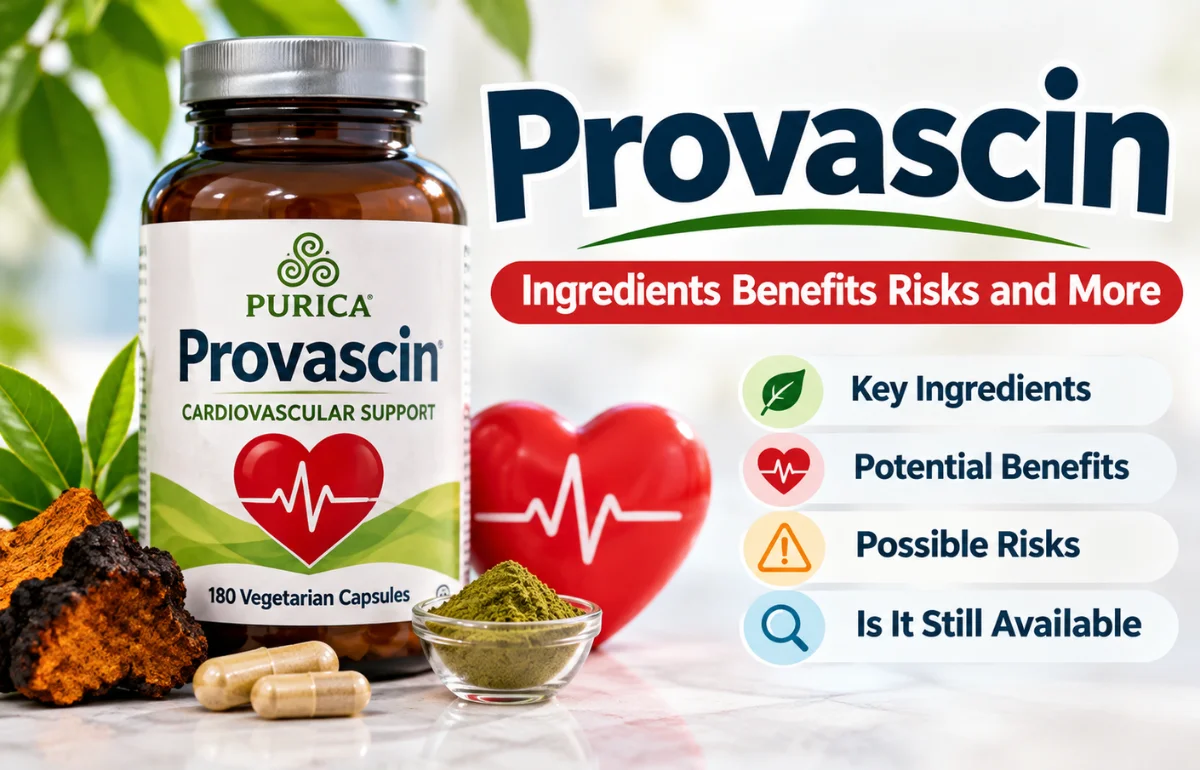
Provascin is a multi-ingredient nutritional supplement historically sold by the Canadian brand PURICA for cardiovascular and general wellness support. Its original capsule formula combined L-carnitine, coenzyme Q10 (CoQ10), chaga mushroom, and several other compounds associated with cellular energy and antioxidant activity. It was marketed as a supplement, not a prescription medicine or a proven treatment for heart disease.
If you’ve come across the name while researching circulation, cholesterol, or heart-health supplements, there’s a useful distinction to make immediately: the ingredients have their own research histories, but that doesn’t establish that Provascin itself delivers the advertised results.
I reviewed historical retailer descriptions and public health resources to separate what is documented from what remains uncertain, including whether the original product can still be purchased.
Provascin at a Glance
The best-documented version is PURICA Provascin, previously listed in 120-capsule and 240-capsule formats. An archived retail label describes eight principal ingredients, with L-carnitine and chaga among the largest amounts by weight.
Its broad positioning is part of the appeal. Rather than focusing on a single vitamin or mineral, the formula brings together ingredients involved in different biological processes. But a complex label isn’t necessarily a more effective label.
Here is my practical assessment: Provascin is a real historical supplement; its formula can be reconstructed from retailer records, and its original product-specific clinical benefits remain unconfirmed in the evidence I could verify.
Current availability is also uncertain. Those three facts should guide any buying decision.
Where Did Provascin Come From?
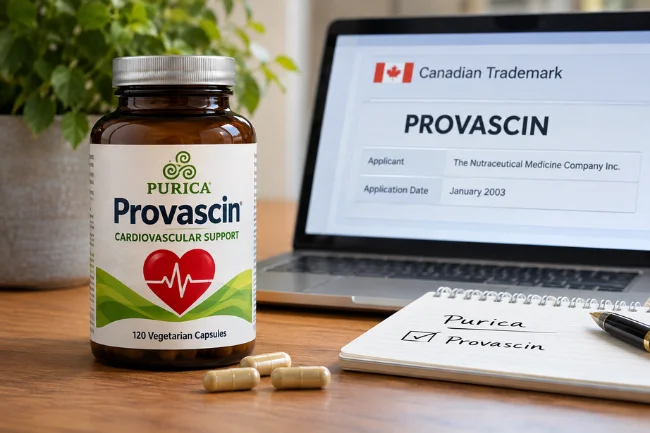
Provascin wasn’t an anonymous product name invented for a new online advertisement. Public trademark records link it to The Nutraceutical Medicine Company Inc., with a Canadian application dating to January 2003.
Later product listings associated it with PURICA, a Canadian natural-health brand.
The distinction matters because a trademark can document who used a product name, but it cannot tell us whether the supplement worked. It also cannot prove that a product is still being manufactured today.
When I examined retailer pages, I found a particularly useful clue. Vitamart displays an older Provascin listing with 120- and 240-capsule options, while marking the product discontinued and sold out.
National Nutrition has a separate 120-capsule listing stating that it no longer carries the item. Those are retailer-level records, not an official statement from PURICA announcing a global discontinuation date.
For that reason, I would describe the original supplement as historically documented but not reliably available, rather than claiming to know exactly when or why production stopped.
What Are the Ingredients in Provascin?
The following amounts come from a historical PURICA Provascin listing. They represent one capsule in that listing, not a verified label for any bottle offered today.
| Ingredient | Historical amount per capsule | Why it appeared in the formula |
|---|---|---|
| L-carnitine | 188 mg | Fatty-acid transport and energy metabolism |
| Alpha-ketoglutaric acid | 125 mg | Normal cellular energy pathways |
| Micronized chaga | 125 mg | Botanical compounds studied for antioxidant activity |
| Coenzyme Q10 | 38 mg | Mitochondrial energy production |
| Betaine hydrochloride | 31 mg | Acidifying ingredient used in some digestive formulas |
| DL-alpha-lipoic acid | 13 mg | Metabolic processes and antioxidant functions |
| Grape seed extract | 9 mg | Polyphenols, including proanthocyanidins |
| Green tea extract | 9 mg | Catechins and other plant compounds |
The historical listing also names microcrystalline cellulose, hypromellose, and plant-derived magnesium stearate as non-medicinal ingredients.
These help form the capsule; they shouldn’t be confused with its proposed health benefits.
L-Carnitine and CoQ10: The Energy Ingredients
L-carnitine helps the body move certain fatty acids into mitochondria, where cells can use them for energy. CoQ10 also participates in mitochondrial energy production.
These are genuine biological functions, not proof that swallowing either compound improves circulation or prevents a heart attack.
The National Institutes of Health reports mixed findings for carnitine supplements in cardiovascular research.
CoQ10 has also been studied in heart-related conditions, but the NIH says available evidence suggests it probably has no meaningful effect on blood pressure.
Another detail often missed in product reviews is dosage. A study involving a particular amount and form of CoQ10 cannot automatically validate a capsule containing 38 mg alongside seven other ingredients.
Absorption, frequency, participant health, and study outcomes all matter.
Chaga, Grape Seed, and Green Tea: The Botanical Side
Chaga is a fungus traditionally used in some wellness practices. Its natural compounds are interesting to researchers, yet most claims about its antioxidant activity are not backed by convincing trials showing improved cardiovascular outcomes in humans.
Grape seed extract contains polyphenols. Green tea extract contains catechins, including EGCG.
Some studies of these extracts suggest small changes in certain cardiovascular measurements, but that evidence does not demonstrate the same result from Provascin’s nine-milligram portions.
I also wouldn’t assume that an ingredient is harmless because it comes from a mushroom or plant.
Concentrated green tea extracts have been linked to uncommon cases of liver injury, and published case reports associate long-term, high-dose chaga consumption with kidney damage.
Those reports do not establish that Provascin causes these problems, but they make careful screening sensible.
The Remaining Metabolic Ingredients
Alpha-ketoglutaric acid participates in the body’s energy-producing pathways.
Alpha-lipoic acid is involved in metabolism and has been investigated for diabetic nerve symptoms, with inconsistent findings.
Betaine hydrochloride is better known from digestive supplement formulations; its presence shouldn’t be interpreted as evidence of a heart benefit.
Together, these ingredients make the formula biologically varied. What they don’t provide, on their own, is a reliable answer to whether the finished product improves someone’s health.
What Was Provascin Supposed to Do?
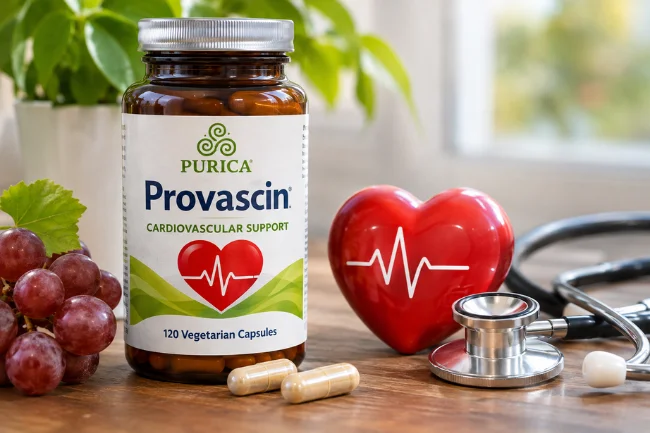
Historical descriptions connected Provascin with heart and blood-vessel wellness, normal circulation, antioxidant support, and cellular energy.
Some older marketing also mentioned cholesterol function, metabolism, and other broad wellness goals.
Cardiovascular and Circulation Support
A supplement can be marketed around healthy circulation without being shown to clear blocked arteries, reduce cardiovascular events, or treat high blood pressure.
Provascin belongs in that distinction.
Studies of grape seed extract and some other ingredients have investigated blood pressure and vascular function. Results differ by study design and dose.
Even where an individual extract has shown a modest effect, I cannot turn that result into a claim for the entire Provascin blend.
If someone has hypertension, chest pain, leg swelling, or an established heart condition, the sensible route is medical assessment and evidence-based care, not self-treatment with a historical supplement.
Energy and Antioxidant Support
Energy is another word that needs unpacking.
CoQ10 and L-carnitine participate in cellular energy production, but that doesn’t mean Provascin reliably makes a healthy person feel more energetic.
Likewise, antioxidant activity measured in a laboratory isn’t the same as a demonstrated health improvement.
The body has its own antioxidant systems, and taking more antioxidant compounds doesn’t automatically translate into fewer illnesses or better long-term outcomes.
These are plausible reasons for the ingredient selection, not verified consumer results.
Does Provascin Actually Work?
This is the question I would ask before looking at endorsements or product packaging.
I couldn’t verify robust published human trials testing the historical eight-ingredient Provascin formula against a placebo for meaningful cardiovascular outcomes.
That doesn’t prove the product has no effects. It means the available information is insufficient to conclude that it works as advertised.
Testimonials, marketing language, and studies of isolated ingredients can’t fill that evidence gap.
| Evidence type | What it can tell us | What it cannot establish |
|---|---|---|
| Historical product label | Reported ingredients and amounts | Whether the product improves health |
| Laboratory ingredient research | Possible biological mechanisms | Benefits in people taking Provascin |
| Human studies on single ingredients | Effects of particular ingredients and doses | Effects of the finished Provascin formula |
| Customer testimonials | Individual perceptions and experiences | Cause and effect or safety for everyone |
| Controlled trials of the exact formula | Potentially, whether Provascin works for studied outcomes | Effects beyond the tested population and conditions |
I find this evidence ladder more useful than a five-star rating.
It keeps an interesting ingredient from being mistaken for a proven treatment and helps readers understand why responsible reviews sometimes reach an uncertain answer.
Provascin Side Effects and Safety Concerns
Because the original product combined several active ingredients, a complete safety assessment should account for the blend, dose, other medicines, and personal medical history.
There isn’t enough direct product-specific research to assign a trustworthy frequency to adverse effects.
Possible Unwanted Effects
Depending on the ingredients and amounts used, potential concerns include nausea, stomach discomfort, headache, and sensitivity to particular components.
CoQ10 can cause mild digestive symptoms, while alpha-lipoic acid has been associated with nausea or heartburn in some studies.
Green tea extract deserves separate attention.
According to the U.S. National Center for Complementary and Integrative Health, concentrated extracts have occasionally been linked with liver problems.
That’s different from drinking ordinary brewed green tea.
Seek prompt medical advice if a supplement is followed by symptoms such as jaundice, dark urine, marked weakness, or an unusual reaction.
Severe chest pain or stroke-like symptoms require emergency care, regardless of supplement use.
Who Should Be Especially Careful?
I would not treat Provascin as a casual purchase for anyone taking warfarin or other blood-thinning medicines, diabetes treatments, or blood-pressure medication.
CoQ10 can interact with warfarin and insulin; green tea components may also change how certain medicines work.
People with kidney or liver disease, a seizure disorder, an autoimmune condition, or those using immune-suppressing medicines need professional advice before considering a multi-ingredient product.
The historical retailer warning also advised consultation during pregnancy or breastfeeding.
A useful rule is to show a pharmacist the complete label, not just the product name.
That gives them something concrete to check against your medicines and medical conditions.
How Much Provascin Should Someone Take?
Older seller descriptions contain dosage suggestions, including different capsule counts for different intended uses.
I would not follow those figures as current instructions, especially because some were associated with existing cardiovascular conditions.
The formula in a historical listing may not match a bottle found today, and an old retail webpage is not an adequate source for individualized dosing.
Taking more capsules doesn’t make an unproven supplement more effective. It simply increases exposure to the ingredients.
If you own a sealed, in-date bottle, check its full label, lot number, and any regulatory product number before discussing the dose with a healthcare professional.
If it is expired, lacks traceable labeling, or comes from a doubtful seller, I would leave it unopened.
Is Provascin FDA Approved or Licensed in Canada?
Provascin was marketed as a supplement, and the U.S. Food and Drug Administration does not approve dietary supplements for safety and effectiveness before they reach the market.
That differs from the approval process for prescription drugs.
Canada has a separate natural health product framework.
Licensed products generally display an eight-digit Natural Product Number, or NPN, which can be checked in Health Canada’s Licensed Natural Health Products Database.
I have not independently verified a currently valid NPN for a bottle of Provascin being sold now, so I would not assume that an old listing confirms present licensing.
Nor does a trademark registration equal health-product authorization.
These systems answer different questions: ownership of a name, permission to sell a regulated product, and scientific evidence of benefit are not interchangeable.
Can You Still Buy Provascin, and What Did It Cost?
As of November 2026, I couldn’t confirm dependable fresh stock of the original PURICA formula from the retailer records reviewed.
Vitamart labels its listing discontinued and sold out; National Nutrition says it no longer carries the 120-capsule item.
Vitamart’s archived page displays a price of CAD $28.99.
I would treat that as a historical listing price, not today’s guaranteed purchase price. A product page can show an amount long after an item becomes unavailable.
If another website claims to have Provascin, check whether the manufacturer, formula, expiration date, and packaging match the historical product.
Ask for a photograph of the actual bottle and label.
Be wary of a listing that offers only stock images, dramatic medical claims, or no identifiable seller.
Provascin vs Other Heart-Health Options
If the original supplement is unavailable, the next question isn’t necessarily, “What’s the closest copy?”
It’s, “What health outcome am I trying to achieve?”
Someone seeking help with high cholesterol needs a different conversation from someone investigating an isolated CoQ10 supplement.
A single-ingredient product may make dose and interaction checks simpler, but it still requires evidence for the intended use. Neither approach automatically replaces prescribed care.
For proven cardiovascular risk reduction, consider the fundamentals alongside professional advice: blood-pressure control, appropriate cholesterol treatment when indicated, regular movement, a heart-supportive diet, avoiding tobacco, and managing diabetes where relevant.
Those actions have a stronger basis than assuming an old multi-ingredient product will protect your heart.
How I Would Evaluate Any Provascin Listing
Before spending money, I would check five things: the exact manufacturer; a complete, legible ingredient panel; the expiration date and lot number; any applicable product license; and the credibility of the seller.
I would also ask whether there’s a good reason to use this particular blend instead of addressing a specific health concern directly.
Genuine customer reviews can help reveal delivery problems or packaging differences, but they cannot establish that a supplement prevents disease.
And if a seller promises to reverse plaque, replace statins, or cure cardiovascular illness, I would regard that as a warning sign, not a selling point.
The best decision is sometimes not to buy anything until the health goal and evidence are clear.
Final Verdict
Provascin has a traceable history and a documented multi-ingredient formula, but its proposed cardiovascular benefits should not be mistaken for demonstrated clinical results.
The original PURICA version also appears difficult to obtain through established retailers, with no manufacturer-wide discontinuation date confirmed in the records I reviewed.
If you’re considering a bottle, verify its identity and ask a healthcare professional to assess the complete ingredient list, particularly if you take medication.
For heart-health concerns, start with your actual risk factors and treatments rather than an unproven supplement claim.
Frequently Asked Questions
What is Provascin used for?
Provascin was marketed for cardiovascular wellness, circulation, cellular energy, and antioxidant support. These uses are not proof that it treats heart disease.
Is Provascin the same as a blood-pressure medicine?
No. Provascin was a nutritional supplement, not a prescription treatment for hypertension or another cardiovascular condition.
Does Provascin contain CoQ10?
Yes. A historical PURICA label lists 38 mg of coenzyme Q10 per capsule alongside seven other principal ingredients.
Is Provascin discontinued?
Several retailers mark the original product as unavailable or discontinued, but I could not verify an official manufacturer-wide discontinuation date.
Can Provascin cause side effects?
Potential effects depend on ingredients, dose, and medical history. Drug interactions and digestive symptoms are among the reasons to consult a clinician before use.
ⓘ Medical Disclaimer
This article about Provascin is for informational purposes only and does not replace professional medical advice. The benefits, safety, and availability of supplements may vary. Always consult a qualified healthcare professional before taking any supplement, especially if you have a medical condition or take prescription medication. Never stop or change prescribed treatment without medical guidance.

Claire Morgan is a health and wellness writer with 7 years of experience creating clear, research-informed content on nutrition, sleep, movement, preventive habits, and everyday wellbeing. She focuses on making reliable health information practical and easy to understand. Her articles are educational and do not replace professional medical advice.