
Harm OCD treatment usually combines a specific form of talk therapy called Exposure and Response Prevention (ERP) with, in many cases, medication such as an SSRI. A skilled harm OCD therapist helps a person face the scary “what if” thoughts without performing the mental or physical rituals that usually follow, which over time weakens the grip of those thoughts. Treatment does not erase intrusive thoughts completely, but it changes the relationship a person has with them, so the thoughts stop running the show.
The rest of this article breaks down what harm OCD actually looks like, why so many people go years without the right diagnosis, and how to deal with harm OCD in a way that actually leads somewhere. None of this replaces a real conversation with a licensed clinician, but it should give a clearer sense of what to expect and what questions to ask.
What Is Harm OCD, Really?
Harm OCD is a subtype of obsessive-compulsive disorder built around unwanted, intrusive thoughts about hurting someone – a stranger, a partner, a child, or even oneself. These thoughts show up uninvited: while holding a kitchen knife, driving past a cyclist, or standing near a staircase with a baby in arms. The mind throws out a horrifying “what if,” and because the thought feels so out of character, the person becomes convinced something is deeply wrong with them.
The Fear Doesn’t Mean What It Feels Like It Means
People with harm OCD are not more likely to act on these thoughts than anyone else. The distress itself is the giveaway. Someone with genuine violent intent typically isn’t tormented by the idea, while someone with harm OCD is horrified by it, which is exactly why they spend hours checking, avoiding, or seeking reassurance to make the fear disappear.
Why Getting the Right Help Matters
Left untreated, harm OCD tends to expand. A person might avoid kitchens, babies, or driving, and reassurance-seeking can pull in family and friends. Shame builds quietly, so many people suffer for years before mentioning it to a doctor. A 2024 study on harm-related obsessions found that many clinicians understand the theory behind exposure work but hesitate to apply it fully. This is part of why finding a therapist trained specifically in harm ocd treatment, rather than general anxiety counseling, makes such a meaningful difference in outcomes.
Exposure and Response Prevention (ERP)
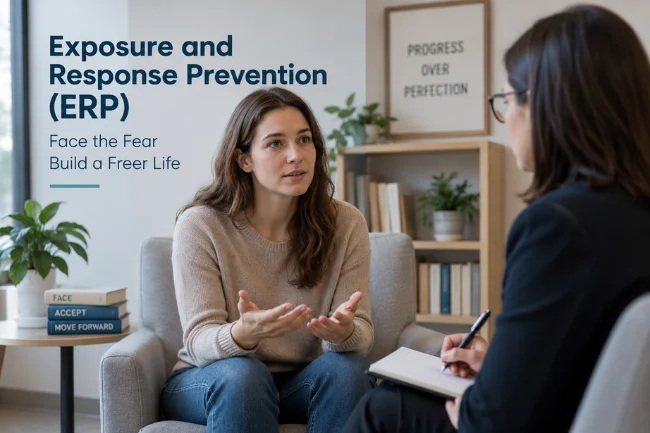
ERP is considered the gold-standard approach for these symptoms. A therapist guides the person to gradually and deliberately face the situations or thoughts that trigger fear – holding a knife while cooking, sitting with a scary intrusive image, or writing out the feared thought on paper – while resisting the urge to perform a compulsion or seek reassurance.
Over repeated sessions, the brain learns that the anxiety fades on its own and that nothing catastrophic happens. Access to this kind of care has also expanded recently; a 2025 study on video-based teletherapy for OCD in children and adolescents found meaningful symptom improvement using a relatively modest amount of therapist time, which is encouraging for anyone who can’t find a specialist nearby.
Acceptance and Commitment Therapy (ACT)
ACT teaches a person to let intrusive thoughts pass through the mind without engaging in a mental tug-of-war with them. Rather than trying to prove the thought wrong or push it away, the goal is to notice it, label it as “just a thought,” and keep moving toward things that matter, like work, relationships, and daily routines. Many clinicians blend ACT skills with ERP for a fuller toolkit.
Medication Support
For many people, a selective serotonin reuptake inhibitor (SSRI) is prescribed alongside therapy, sometimes at a higher dose than what’s typically used for depression. Medication doesn’t erase intrusive thoughts, but it can lower baseline anxiety enough to make exposure exercises more manageable.
This decision is made with a psychiatrist or prescribing physician, not a therapist alone, and it’s usually just one piece of a broader answer to how to treat harm OCD rather than a stand-alone fix.
Signs You Might Need a Harm OCD Therapist
Not everyone with an occasional unsettling thought needs professional support, but certain patterns are strong signals that it’s time to reach out.
- The thoughts repeat constantly and feel impossible to shake off, even when the person logically knows they don’t want to act on them.
- Daily routines have shrunk – avoiding certain rooms, objects, or people because of the fear a thought might come true.
- Reassurance-seeking has become frequent, whether that’s googling symptoms, confessing thoughts to loved ones, or repeatedly asking “am I a bad person?”
- Mental rituals are running in the background, such as replaying an event to “check” that nothing bad happened.
- The distress is interfering with work, sleep, or relationships, and self-help alone hasn’t been enough.
A trained specialist recognizes these patterns quickly and won’t react to the content of the thoughts with alarm, which itself can be a relief for someone who has been carrying this alone.
How to Deal With Harm OCD Day to Day

Alongside formal treatment, a few practical habits make daily life more manageable while the deeper work happens in therapy.
- Name the thought without arguing with it. Something like “this is an OCD thought” creates a small but useful distance, rather than analyzing whether it’s true.
- Resist the urge to seek reassurance. Every time reassurance is given, it briefly quiets the anxiety but strengthens the cycle for next time.
- Keep doing the avoided activity. If cooking or holding a baby has been avoided, gently returning to it, ideally guided by a therapist, breaks the avoidance pattern.
- Limit checking behaviors, whether that’s mentally replaying moments or searching online for reassurance about intrusive thoughts.
- Build in stress-reduction basics – sleep, movement, and reducing caffeine can lower the overall anxiety level that fuels intrusive thoughts.
These steps are a starting point for how to deal with harm OCD, but they work best alongside therapy, not as a replacement for it. Managing it entirely alone often means the same avoidance and reassurance loops keep repeating.
How to Treat Harm OCD: Building a Realistic Plan
Knowing how to treat harm OCD usually starts with getting an accurate diagnosis, since these thoughts are frequently mistaken for depression, generalized anxiety, or a personality concern. A specialist familiar with OCD subtypes can usually recognize the pattern within the first session or two.
- Get assessed by someone who specializes in OCD, ideally using a structured tool that screens for OCD subtypes rather than general anxiety.
- Start ERP with a trained clinician, building a gradual list of feared situations to work through at a manageable pace.
- Discuss medication options with a psychiatrist if anxiety is too high to engage with exposure work, or if symptoms are severe.
- Add supportive practices like ACT-based mindfulness skills to manage thoughts between sessions.
- Track progress over weeks, not days – meaningful shifts typically take consistent practice over several months.
Moving Forward With the Right Support

Harm OCD can feel isolating, mostly because the thoughts seem too dark to say out loud. But this subtype is well understood, and the treatments described here have consistently helped people rebuild the parts of life that fear had shrunk down. Progress rarely happens overnight, yet with the right therapist and a steady approach, the thoughts lose their grip and stop dictating daily choices.
This article is for general informational purposes only and is not a substitute for a diagnosis or treatment plan from a licensed mental health professional. For more information, call (718) 522-3600.
If someone is in crisis or feels they may act on thoughts of harming themselves or others, call 911 or go to the nearest emergency room immediately. In the U.S., the 988 Suicide and Crisis Lifeline is also available by calling or texting 988.
FAQ
What is harm OCD and how is it different from having violent intentions?
Harm OCD involves intrusive, unwanted thoughts about causing harm that create intense fear and guilt. The key difference from actual violent intent is the emotional reaction – people with harm OCD are distressed by the thoughts and avoid anything connected to them, rather than feeling drawn toward acting on them.
How do you get rid of harm OCD thoughts?
The thoughts themselves usually can’t be forced away, and trying to do so often makes them louder. What actually helps is changing the response to the thought through ERP, learning to sit with the discomfort rather than performing a mental or physical ritual to neutralize it.
Can someone treat harm OCD on their own without therapy?
Some people manage mild symptoms with self-guided ERP resources and workbooks, but most benefit far more from working with a specialist, especially once compulsions or avoidance have already become established habits.
Is harm OCD a sign that something is fundamentally wrong with a person’s character?
No. Harm OCD tends to occur in people who deeply care about not hurting others – the distress comes from a mismatch between someone’s values and an unwanted thought, not a hidden desire to act on it.
What should someone look for when choosing a harm OCD therapist?
Look for a clinician trained specifically in ERP for OCD, ideally with direct experience treating harm-themed obsessions, who responds to the content calmly and explains the process clearly before starting.

Sophia Bennett is a mental health writer with 8 years of experience creating thoughtful, research-informed content about emotional wellbeing, stress management, mindfulness, self-care, and healthy coping strategies. She focuses on making mental wellness topics easier to understand while encouraging readers to seek support from qualified mental health professionals when needed.