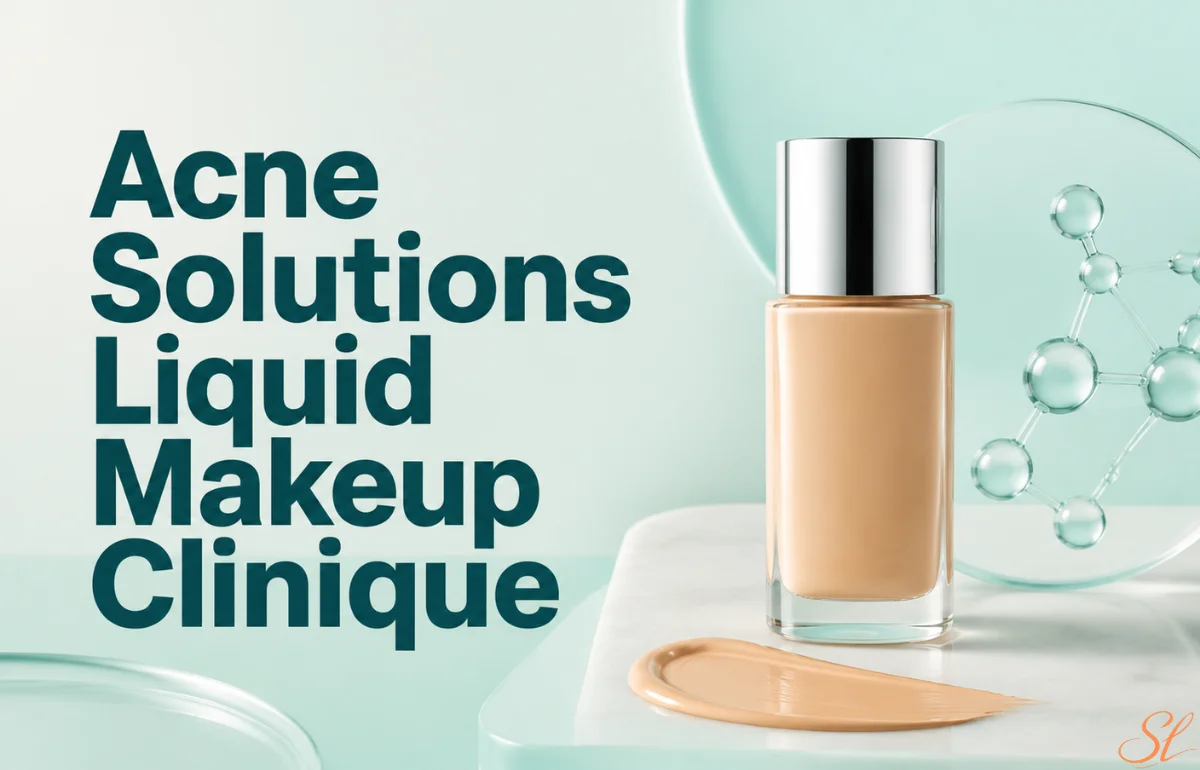
Acne Solutions Liquid Makeup Clinique is a liquid foundation designed for acne-prone skin. It combines moderate, natural-matte coverage with salicylic acid, an acne-fighting ingredient that helps clear clogged pores. The formula is oil-free, fragrance-free, non-acnegenic, and intended to control excess shine while covering redness, blemishes, and uneven skin tone.
Unlike a standard foundation that only changes how the skin looks, this product is positioned as treatment makeup. That means it provides cosmetic coverage while supporting an acne-care routine. It is not, however, a substitute for medical treatment when acne is painful, cystic, persistent, or causing scars.
Acne Solutions Liquid Makeup Clinique at a Glance
Clinique sells the product as Acne Solutions Liquid Makeup in the United States. In some markets, including the United Kingdom, it is called Anti-Blemish Solutions Liquid Makeup.
The current US product page lists 24 shades, while the UK version lists 22. Shade selection and product claims can therefore differ slightly by country.
| Feature | Current product information |
|---|---|
| Product type | Liquid acne-treatment foundation |
| Coverage | Moderate |
| Finish | Natural matte |
| Key ingredient | Salicylic acid |
| Additional highlighted ingredient | Lactobacillus ferment |
| Recommended skin types | Dry combination, combination oily, and oily |
| Formula claims | Oil-free, fragrance-free, non-acnegenic |
| Wear claims | Up to 24 hours, transfer-proof, waterproof, and humidity-resistant |
| US shade range | 24 shades |
| Size | 1 oz/30 ml |
| Sunscreen | No SPF claim on the current US listing |
These details come from Clinique’s current US product listing. Always check the packaging in your country because formulas, shade availability, and labeling can change.
How Does Clinique Acne Solutions Foundation Work?

The product has two jobs: creating an even complexion immediately and helping manage pore congestion over time.
Its pigments disguise redness, post-acne marks, and active blemishes. Meanwhile, salicylic acid works inside and around clogged pores by loosening accumulated dead skin cells and oil.
The American Academy of Dermatology describes salicylic acid as an acne treatment that opens clogged pores and exfoliates the skin. It is most useful for whiteheads, blackheads, and some pimples, although it cannot address every cause or type of acne.
Salicylic acid provides the treatment component
Salicylic acid is a beta-hydroxy acid, or BHA. Because it is oil-soluble, it can work within oily pores rather than exfoliating only the skin’s surface.
This makes it a logical addition to makeup for oily, congested, and blemish-prone skin. Still, I would not judge the entire product by this ingredient alone. A foundation must also sit comfortably, match the skin, remain hygienic, and come off completely at night.
The current product page does not clearly state the salicylic acid percentage in the information available online. I would check the Drug Facts or ingredient panel on the package instead of relying on percentages quoted by third-party sellers.
Lactobacillus ferment supports visible comfort
Clinique also highlights lactobacillus ferment, which the company describes as a postbiotic technology that helps visibly reduce irritation and support a balanced skin microbiome.
That does not turn the foundation into a barrier-repair treatment, but it may help make an acne-focused formula feel less aggressive than a purely oil-absorbing base.
Oil control helps makeup last on blemish-prone skin
Excess sebum can cause foundation to separate around the nose, forehead, and chin. Acne Solutions Liquid Makeup has an oil-free, natural-matte formula designed to control oil and shine.
Clinique also claims that it resists caking, settling, creasing, poring, sweat, humidity, water, and transfer. These are manufacturer claims rather than a guarantee that it will behave identically on every skin type.
What Coverage and Finish Should You Expect?
Clinique classifies this foundation as moderate coverage with a natural-matte finish. That is a sensible balance for everyday acne makeup.
Moderate coverage can soften general redness and uneven tone without creating the thick layer that often makes raised blemishes look more obvious. Deeply colored marks or inflamed spots may still need a small amount of concealer.
The finish is not meant to look completely flat. On well-prepared skin, it should appear matte enough to reduce shine while retaining some natural dimension.
On dehydrated or peeling areas, however, any matte foundation can catch around loose skin. If acne medication has left your face tight or flaky, skin preparation matters more than adding another layer of foundation.
Who Is It Best For?
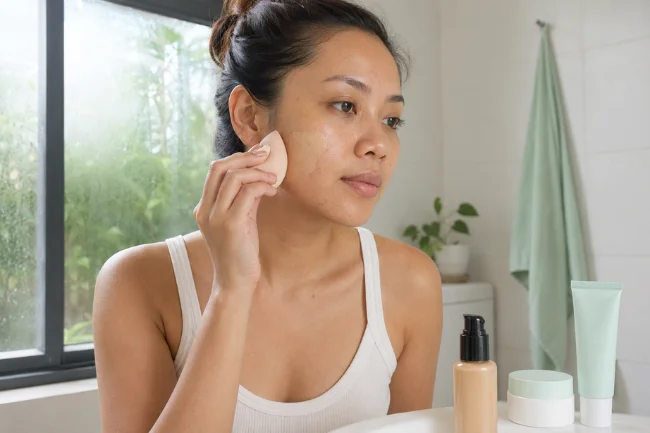
I would place Acne Solutions Liquid Makeup Clinique on the shortlist for someone who:
- Has oily or combination skin with recurring clogged pores
- Wants moderate rather than full coverage
- Prefers a natural-matte finish
- Needs fragrance-free, oil-free makeup
- Lives or works in a humid environment
- Wants foundation that supports, rather than replaces, an acne routine
- Is willing to use moisturizer and sunscreen underneath it
It may also work for dry-combination skin, which Clinique includes among the suitable skin types. The dry areas must be moisturized properly, or the finish may emphasize texture.
Who may need a different foundation?
This product may not be the strongest match if your skin is very dry, visibly peeling, or highly reactive to exfoliating acids.
It may also fall short if you want full coverage in a single layer, a luminous finish, or foundation with built-in sun protection. The current US listing does not advertise SPF, so I would treat it as makeup without sunscreen.
Anyone using prescription acne medication should check the combined routine with a dermatologist or pharmacist. Applying several irritating products at once can produce burning, redness, and peeling that people sometimes mistake for acne “purging.”
Clinique Acne Solutions vs. Other Makeup Options
The right option depends on whether your priority is treatment support, fuller camouflage, hydration, or sun protection.
| Makeup option | Main advantage | Main limitation | Best suited to |
|---|---|---|---|
| Clinique Acne Solutions Liquid Makeup | Salicylic acid, oil control, and moderate coverage | May highlight dry or peeling areas | Oily or combination acne-prone skin |
| Standard non-comedogenic foundation | Wider choice of finishes and coverage | Usually provides no acne-treatment benefit | Stable acne with specific makeup preferences |
| Full-coverage foundation and concealer | Covers discoloration with less spot concealer | Can look heavier over raised blemishes | Prominent post-acne marks |
| Tinted non-comedogenic sunscreen | Coverage and daily UV protection | Usually lighter coverage and less oil control | Minimal makeup days and outdoor use |
“Non-acnegenic” or “non-comedogenic” does not mean a product can never cause a breakout. It means the formula is designed to avoid clogging pores for most users.
The American Academy of Dermatology recommends looking for labels such as oil-free, non-comedogenic, or “won’t clog pores” when choosing makeup for acne-prone skin.
How to Choose the Right Clinique Shade
Clinique uses codes such as CN and WN. According to the brand, CN means cool-neutral and WN means warm-neutral.
Do not choose a shade by matching it to the center of your face, where acne, redness, and oil can distort the color. Test it along the jawline so you can compare the shade with both your face and neck.
I recommend swatching three nearby shades, allowing them to dry fully, and checking them in daylight. A wet swatch may appear different after the volatile ingredients evaporate.
Avoid using redness as your undertone guide. Surface redness can exist on warm, neutral, or cool skin. The correct shade should merge with your overall skin tone rather than match an inflamed blemish.
How to Apply Acne Solutions Liquid Makeup
1. Begin with gentle skin preparation
Wash your face with a mild cleanser and pat it dry. Do not scrub active breakouts or use a rough cleansing brush immediately before makeup.
Apply a lightweight, non-comedogenic moisturizer. Even oily skin needs hydration, especially when salicylic acid, benzoyl peroxide, adapalene, or prescription treatments are part of the routine.
2. Apply a separate sunscreen
Use a broad-spectrum, water-resistant sunscreen with SPF 30 or higher during the day. The American Academy of Dermatology recommends this level of protection and advises acne-prone users to look for non-comedogenic sunscreen.
Allow the sunscreen to settle before applying foundation. This reduces pilling and prevents the base from becoming patchy.
3. Use a thin first layer
Dispense a small amount onto clean fingers, a palette, or the back of a freshly washed hand. Apply the foundation from the center of the face outward.
I prefer a thin first layer because piling matte foundation directly onto a blemish makes its texture more visible. Build coverage only where the color still looks uneven.
Use a clean, damp sponge for softer coverage or a brush for slightly stronger coverage. Press or stipple over active spots instead of rubbing them.
4. Conceal only where necessary
Let the first layer settle. Add a tiny amount of non-comedogenic concealer to individual marks rather than applying another heavy coat over the entire face.
Powder only the areas that become oily. Heavy powder over dry acne medication patches can make the complexion look cracked.
A Better Way to Test Whether It Suits Your Skin
Many reviews confuse three separate issues: a new breakout, irritation from active ingredients, and acne that was already developing beneath the skin.
I recommend a controlled wear test instead of changing the entire routine at once:
- Patch-test the foundation on a small facial area.
- Keep the rest of your skincare unchanged.
- Introduce the foundation for shorter wear periods.
- Record burning, itching, tightness, flaking, and new bumps.
- Check where new blemishes appear rather than counting only the total.
- Clean applicators weekly and remove the makeup every night.
This simple one-variable method provides better information than starting a new cleanser, serum, foundation, and spot treatment on the same day.
A reaction that causes immediate itching, swelling, or burning is not a sign that the product is “working.” Remove it and stop using it. Seek medical care for a serious reaction.
Can It Replace Your Regular Acne Treatment?
No. This is the most common misconception surrounding treatment foundation.
Acne Solutions Liquid Makeup can complement an acne routine, but makeup application is not a standardized medication dose. People apply different amounts, wear it for different periods, and may skip it on certain days.
Clinique reports that clinical testing on 22 women found significantly fewer visibly clogged pores on bare skin after 10 days of use. That result is encouraging, but the study size is small, and the claim focuses on visible clogged pores rather than every form or severity of acne.
Persistent inflammatory acne, nodules, cysts, or scarring usually require a more deliberate treatment plan. A dermatologist can determine whether benzoyl peroxide, a topical retinoid, antibiotics, hormonal treatment, or another option is appropriate.
Common Mistakes That Can Undermine the Formula
Applying it over irritated skin
If your skin barrier is already inflamed, adding salicylic acid makeup may increase discomfort. Reduce competing exfoliants and speak with a professional if irritation continues.
Treating matte coverage as oil treatment
A matte finish controls the appearance of shine. It does not address hormonal changes, medication effects, stress, or other factors that can influence sebum and acne.
Sleeping in the foundation
Long-wear and waterproof claims make proper removal even more relevant. Remove all makeup before bed, then cleanse gently without scrubbing.
Using dirty tools
Brushes and sponges collect oil, product residue, and skin cells. The American Academy of Dermatology recommends washing makeup brushes weekly and not sharing them.
Skipping sunscreen
Post-acne discoloration can become more noticeable with repeated sun exposure. Foundation without an SPF claim should never be treated as adequate UV protection.
Is Acne Solutions Liquid Makeup Clinique Worth Buying?
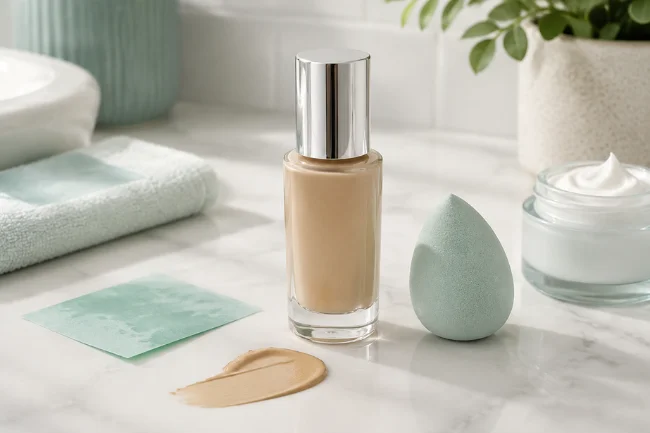
It is a strong option if you need moderate coverage, reliable shine control, and an acne-conscious formula in one product. The combination of salicylic acid, an oil-free base, fragrance-free positioning, and non-acnegenic testing addresses several real concerns for blemish-prone skin.
Its limitations are equally clear. It is not a complete acne treatment; it does not provide the advertised sun protection on the current US listing, and the matte finish may expose dehydration or peeling.
My recommendation is to choose it for the makeup performance first and view the acne-care ingredient as a useful secondary benefit. A foundation you dislike wearing will not become a smart purchase simply because it contains salicylic acid.
Frequently Asked Questions
Is Clinique Acne Solutions Liquid Makeup good for acne?
It is designed for acne-prone skin and contains salicylic acid, but moderate or severe acne may still require separate treatment from a dermatologist.
Does Clinique Acne Solutions Foundation provide full coverage?
No. Clinique describes it as moderate coverage, although you can build it carefully or add concealer to individual marks.
Is Clinique Acne Solutions Liquid Makeup suitable for oily skin?
Yes. Its oil-free, natural-matte formula is intended to control oil and shine on combination-oily and oily skin.
Does Clinique Acne Solutions Liquid Makeup have SPF?
The current US product page does not list an SPF claim. Apply a separate broad-spectrum, water-resistant SPF 30 or higher sunscreen underneath it.
Can I wear Clinique Acne Solutions Foundation every day?
Daily wear may be suitable if your skin tolerates it, but remove it every night and reduce use if you develop persistent dryness, burning, or irritation.
The Bottom Line
Acne Solutions Liquid Makeup Clinique bridges makeup and acne care more convincingly than a standard matte foundation. It covers redness, reduces visible shine, and includes salicylic acid without relying on fragrance or added oil.
Choose the correct shade, introduce it without changing several other products, and evaluate both your makeup result and your bare skin. If breakouts remain painful, widespread, or persistent, make a dermatologist appointment instead of expecting foundation to solve a medical skin condition.

Mia Anderson is a skincare writer with 8 years of experience creating practical, research-informed content about skincare routines, skin health, ingredients, and everyday self-care habits. She focuses on helping readers understand skincare choices through simple explanations and realistic routines while encouraging professional advice for specific skin concerns.