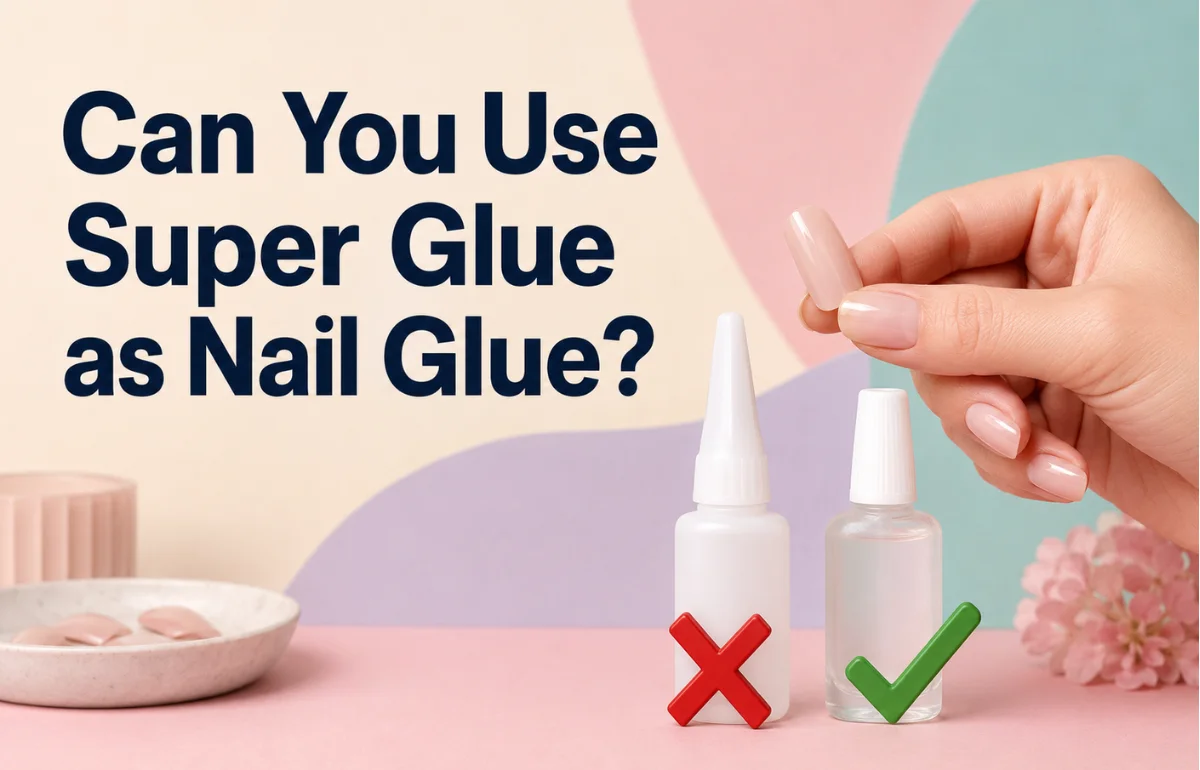
If you are wondering, “Can you use super glue as nail glue?” the practical answer is no—even though it may physically attach a press-on nail. Both products often contain fast-bonding cyanoacrylate, but household super glue is made and labeled for repairing materials such as plastic, metal, rubber, or ceramic, not for cosmetic use on the human nail. Its formula, flow, applicator, curing behavior, and removal instructions may differ from those of nail adhesive. Super glue can also bond skin within seconds, irritate the eyes and airways, trigger contact dermatitis, and generate enough heat to burn skin if wet glue contacts cotton or wool. I recommend using a nail adhesive as directed, or adhesive tabs when you want a short-term, easier-to-remove manicure.
Can You Use Super Glue as Nail Glue in an Emergency?
Super glue can create a bond between a fake nail and a natural nail, so the question is not whether it works. The real question is whether the shortcut is worth an avoidable risk. I do not consider it a sensible emergency substitute.
A household adhesive may spread onto the cuticle or sidewalls before you can control it. Because cyanoacrylate cures rapidly around moisture, a spill can bond skin almost immediately. Removing a poorly placed bond can then strip layers from the nail plate or injure surrounding skin.
The label matters. Cosmetic nail glue includes directions for applying and removing artificial nails. Household super glue is sold for home, office, craft, or repair work. Using it on nails means improvising with placement, exposure, and removal.
My rule is simple: if a product is not labeled for nails, I do not put it on nails. A cheap tube of proper nail adhesive costs far less than treating a glued eyelid, painful skin tear, allergic rash, or damaged nail.
Why Super Glue and Nail Glue Seem Like the Same Product
Cyanoacrylates are a family of fast-setting adhesives. Water and normal surface moisture initiate polymerization, linking small molecules into a hardened plastic bond.
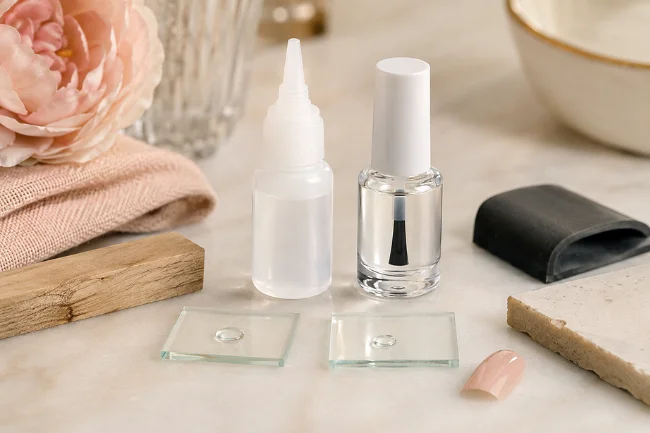
Some products genuinely share the same main ingredient. For example, one current KISS nail-glue formula lists ethyl cyanoacrylate along with triacetin, polymethyl methacrylate, and BHA. Loctite describes one of its household super glues as an ethyl cyanoacrylate adhesive. That ingredient overlap is real, not an internet myth.
But a shared lead ingredient does not prove that two finished products have the same viscosity, additives, applicator, curing profile, or intended-use testing. The KISS product directions cover nail preparation, application, and acetone-based removal. The Loctite product page describes repairs to wood, rubber, metal, leather, and hard plastics.
That is the missing distinction in many quick answers online: chemistry tells you how an adhesive bonds, while formulation and labeling tell you where and how the finished product is meant to be used.
Super Glue vs. Nail Glue
Nail glue is not harmless simply because it is a beauty product. The FDA’s nail-product guidance advises consumers to read labels, follow warnings, use nail products with good ventilation, and watch for infection or allergic reactions. The advantage is not that nail glue is risk-free; it is that you are using a product designed and instructed for that job.
The Main Risks of Using Super Glue on Nails
Skin and eye bonding
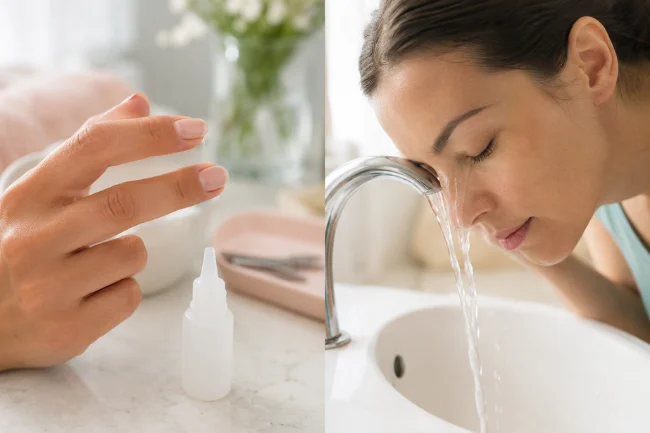
Cyanoacrylate can bond fingers, cuticles, or eyelids in seconds. Pulling bonded skin apart can cause a tear. The same danger exists with nail glue, but a household applicator may be poorly suited to a small, curved nail.
If glue reaches an eye, do not force the eyelids apart. Poison Control advises rinsing with water for 15 minutes and obtaining case-specific guidance. In the United States, Poison Control is available at 1-800-222-1222 or through webPOISONCONTROL. Severe eye pain, vision changes, breathing trouble, or a significant burn requires urgent medical care.
Heat Burns, Especially Around Cotton or Wool
This is the risk many nail articles miss. Cyanoacrylate hardening releases heat. Cotton and wool can accelerate that reaction, causing a rapid temperature rise and, in uncommon but documented cases, a deep burn.
Published case reports describe full-thickness injuries after nail adhesive spilled onto cotton clothing, including burns requiring surgery and skin grafting. The problem applies to cyanoacrylate nail glue and household super glue. Never wipe fresh cyanoacrylate with a cotton pad, swab, towel, or wool fabric.
Irritation and Allergic Contact Dermatitis
Liquid cyanoacrylate and its vapors may irritate the skin, eyes, nose, or throat. Repeated exposure can also lead to sensitization, meaning a person may develop an allergic reaction after earlier uses seemed fine.
Warning signs include redness, swelling, itching, blistering, or a rash extending beyond the application area. Stop using the adhesive and get medical advice if those symptoms develop. Switching brands without checking the ingredient list may not solve the problem because multiple nail, lash, household, and medical adhesives can contain related acrylates or cyanoacrylates.
Natural-Nail Damage During Removal
Damage often occurs when someone pries off a press-on before the bond has softened. That force can lift keratin layers from the nail plate, leaving it thin, rough, or tender.
More glue is not better. Excess adhesive increases the chance of skin contact and creates a thicker bond that takes longer to dissolve. It can also make the press-on sit unevenly, concentrating leverage at one edge.
Trapped Moisture and Hidden Nail Problems
Do not glue over a green, yellow, darkened, painful, swollen, or partially detached natural nail. Adhesive and a press-on can hide a developing infection or injury and delay proper assessment.
The same warning applies to a split that reaches the pink attached portion of the nail, a bleeding nail, or broken surrounding skin. Household super glue is not wound glue. Medical tissue adhesives are specifically formulated and used for selected wounds; they are not ordinary craft glue in clinical packaging.
A Better Choice for Each Nail Situation
Adhesive tabs suit short-term manicures. They may not survive prolonged water exposure or heavy hand use, but the weaker bond helps when easy removal matters.
For longer wear, buy fresh nail glue from a reputable seller and follow its label. Do not use a thickened, leaking, or unlabelled product. Apply the instructed amount in a ventilated area.
What to Do If You Already Used Super Glue on a Fake Nail
Do not panic, and do not pull the nail off. If there is no pain, burn, rash, or skin bonding, focus on controlled removal rather than testing how firmly it is attached.
- Stop filing or prying at the press-on. Mechanical force is what commonly damages the nail plate.
- Soak the fingertip in warm, soapy water to begin loosening edges and any bonded skin.
- If the skin is intact and the exposure is away from the eyes, an acetone-based remover may help soften cyanoacrylate. Follow the remover label, use ventilation, and stop if it causes marked irritation.
- Gently work only at an edge that releases without pain. Never force a manicure stick or metal tool under a firmly bonded nail.
- Wash the area after removal and apply a plain moisturizer or cuticle oil to counter dryness.
Choose professional removal if the artificial nail will not soften, the natural nail hurts, or glue covers a large area of skin. Get prompt medical help for blistering, intense heat, spreading redness, drainage, breathing symptoms, eye exposure, or a deep nail injury.
Do not use acetone on an eye, inside the mouth, or on an open wound. For accidental exposure involving those areas, contact a poison center or healthcare professional rather than experimenting with home solvents.
How to Use Actual Nail Glue More Safely
I treat removal planning as part of application. Before opening the bottle, I check that I have the correct remover, ventilation, a stable work surface, and no cotton or wool directly beneath my hands.
Start with clean, dry, healthy nails and choose press-ons that fit without being forced. Follow the product’s exact preparation instructions; aggressive buffing can thin the nail plate before the glue even touches it.
Use a controlled amount and keep adhesive off the cuticle and surrounding skin. Cap the bottle immediately, store it upright and away from children, and never hold the tube in your mouth to open it. When removal day comes, soften the bond for as long as the label requires and accept that safe removal may be slow.
The Bottom Line
So, can you use super glue as nail glue? It may attach a fake nail, but it is the wrong product for the job. Similar cyanoacrylate chemistry does not erase meaningful differences in formulation, packaging, labeled use, and removal guidance.
Use cosmetic nail glue for longer wear, adhesive tabs for short wear, and no glue at all on an injured, infected, or discolored nail. If super glue is already on your nail, resist the urge to pry: soften the bond, remove it patiently, and get professional help if pain, burning, rash, or eye exposure occurs.
Frequently Asked Questions
Is nail glue the same as super glue?
Not exactly. Both may contain cyanoacrylate, but the finished formulas, applicators, directions, and intended uses can differ.
Can I use Gorilla Super Glue for press-on nails?
No. It is a household repair adhesive, not a cosmetic nail product; use labeled nail glue or adhesive tabs instead.
Will super glue ruin my natural nails?
It can contribute to damage, especially if the press-on is pried off and layers of the natural nail are stripped away.
How do I remove super glue from my nails without acetone?
Soak in warm, soapy water and patiently loosen only released edges; oil or petroleum jelly may help separate bonded skin, but do not force it.
Can I put nail glue on a split natural nail?
Only use a product labeled for minor nail repair on a superficial crack. Do not glue a deep, bleeding, painful, or infected split.

Isabella Hart is a beauty and self-care writer with 7 years of experience creating practical content about skincare routines, beauty habits, personal care, and confidence-building practices. She focuses on sharing simple, research-informed guidance to help readers make informed choices and develop routines that support healthy, natural beauty.