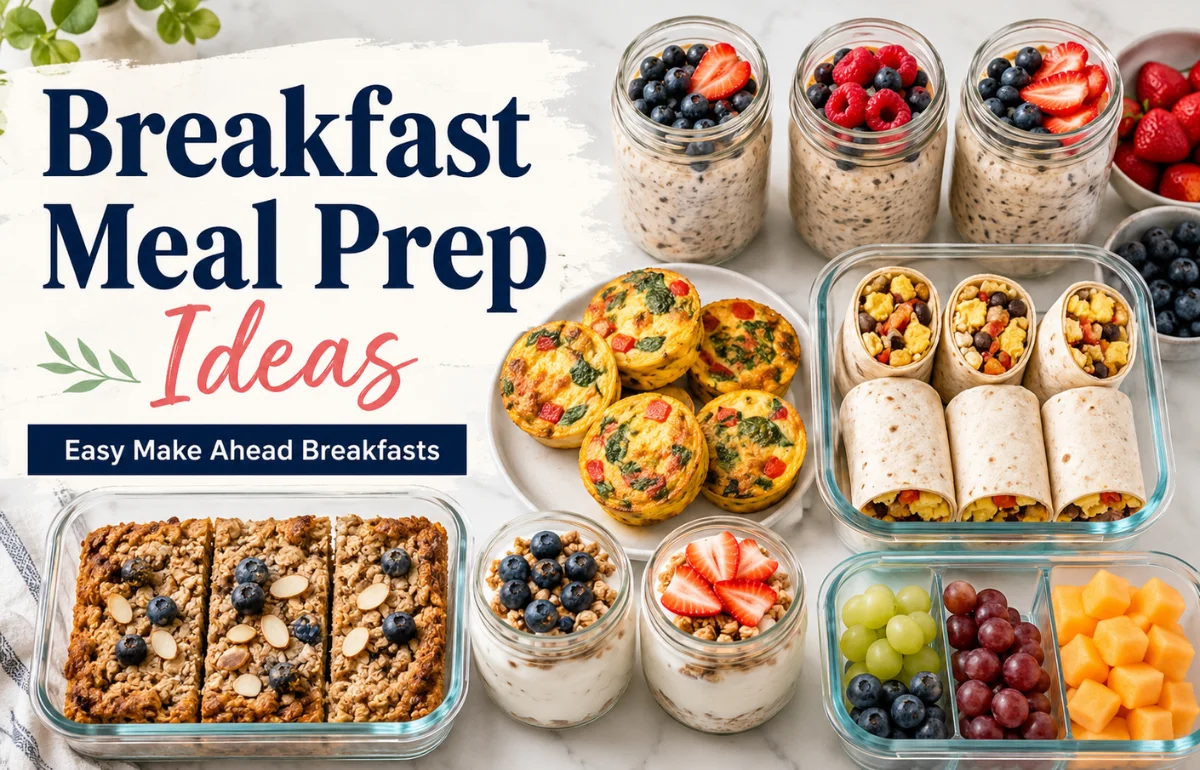
Breakfast meal prep ideas are breakfasts or breakfast components you prepare ahead of time so you can eat quickly during busy mornings without cooking everything from scratch. They can include overnight oats, egg muffins, breakfast burritos, yogurt jars, baked oatmeal, smoothie packs, breakfast sandwiches, and even simple combinations of prepared ingredients.
I use breakfast meal prep for one main reason: mornings become much easier when I already know what I am going to eat. Instead of deciding between skipping breakfast, grabbing something random, or spending 20 minutes cooking, I can open the refrigerator and have a balanced meal ready in minutes.
The best breakfast meal prep ideas are not simply recipes that survive overnight. They should store well, taste good after reheating or chilling, fit your schedule, and provide enough protein, fiber, and satisfying ingredients to carry you through the morning.
Why Breakfast Meal Prep Works So Well
Meal prepping breakfast removes one of the first decisions of the day.
I have found that breakfast is often easier to prep consistently than lunch or dinner because many breakfast foods use inexpensive ingredients, require minimal cooking, and can be portioned several days in advance.
A good make-ahead breakfast can also help reduce food waste. Half a container of berries, leftover vegetables, cooked potatoes, tortillas, yogurt, and even small portions of cheese can often be turned into breakfast instead of being forgotten in the refrigerator.
The key is choosing foods based on how you plan to eat them.
A breakfast you will eat at your desk needs different preparation than one you will reheat at home. Likewise, a meal you are preparing for tomorrow does not need the same freezer-friendly ingredients as one you want to keep for several weeks.
How to Choose the Right Breakfast Meal Prep
Before preparing five identical breakfasts, I recommend answering three questions:
- Will I eat this cold, warm, or either way?
- How many mornings am I actually preparing for?
- Do I need something portable?
These questions sound simple, but they prevent one of the most common meal-prep mistakes: preparing food that technically lasts but does not fit your real routine.
Here is a quick comparison.
| Breakfast type | Best for | Typical prep effort | Freezer-friendly | Easy to take to work |
|---|---|---|---|---|
| Overnight oats | No-cook mornings | Very low | Usually no | Yes |
| Egg muffins | High-protein breakfast | Low | Yes | Yes |
| Breakfast burritos | Filling portable meals | Medium | Yes | Yes |
| Baked oatmeal | Batch cooking | Low | Yes | Yes |
| Yogurt jars | Quick cold breakfast | Very low | No | Yes |
| Smoothie packs | Fast blended breakfast | Low | Yes | Yes |
| Breakfast sandwiches | Freezer meal prep | Medium | Yes | Yes |
| Chia pudding | No-cook breakfast | Very low | Usually no | Yes |
I usually mix two types rather than eating exactly the same breakfast all week. For example, I may prepare overnight oats for two mornings and freezer breakfast burritos for another two.
That small amount of variety makes meal prep easier to stick with.
12 Practical Breakfast Meal Prep Ideas
1. Overnight Oats
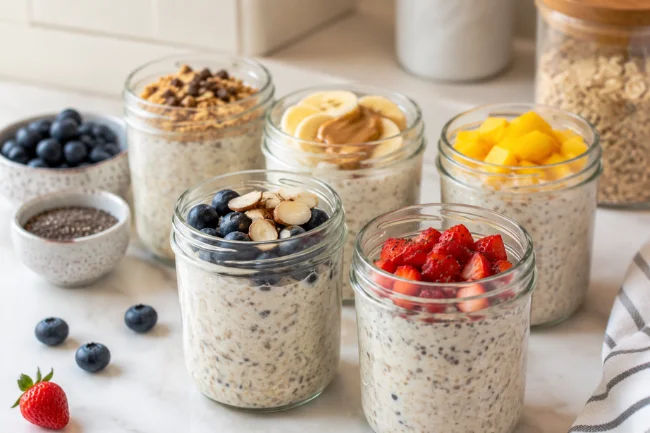
Overnight oats are one of the easiest breakfast meal prep ideas because there is almost no cooking involved.
Combine rolled oats with milk or a milk alternative and refrigerate them overnight. For a more filling version, I add Greek yogurt, chia seeds, nut butter, fruit, or a small amount of protein powder.
A useful trick is keeping crunchy toppings separate. Nuts, granola, toasted coconut, and seeds stay much better when added immediately before eating.
2. Egg Muffins
Egg muffins are essentially miniature baked omelets prepared in a muffin pan.
I like them because they make leftover vegetables useful. Spinach, peppers, mushrooms, broccoli, onions, cooked potatoes, turkey, cheese, and herbs can all work.
Prepare a batch, refrigerate several portions, and freeze extras.
They are especially useful for people looking for high-protein breakfast meal prep without relying on sweet foods.
3. Freezer Breakfast Burritos
Breakfast burritos take slightly more effort upfront, but they are among the most convenient freezer breakfasts.
A basic combination might include scrambled eggs, beans, potatoes, vegetables, cheese, or cooked breakfast meat wrapped in a tortilla.
The biggest mistake I see is filling them while the ingredients are still steaming hot. Excess moisture creates soggy tortillas.
I let the filling cool before wrapping and freezing each burrito individually.
4. Greek Yogurt Breakfast Jars
For mornings when cooking sounds unrealistic, yogurt jars are hard to beat.
Portion Greek yogurt into containers and add fruit, cinnamon, nut butter, seeds, or other toppings.
Keep granola or cereal separate until serving if you want it crunchy.
This is also one of the easiest breakfast options to adjust according to appetite. Someone wanting a lighter breakfast can keep it simple, while a more substantial version can include oats, nuts, fruit, and nut butter.
5. Baked Oatmeal
Baked oatmeal combines the convenience of a casserole with the familiar texture and flavor of oatmeal.
Instead of cooking oats every morning, bake one large dish and divide it into individual portions.
Blueberries, bananas, apples, cinnamon, walnuts, pumpkin, raisins, and peanut butter all work well.
I prefer baked oatmeal on colder mornings because it reheats better than many other make-ahead breakfasts.
6. Chia Seed Pudding
Chia pudding is another useful no-cook option.
Chia seeds absorb liquid and develop a thick texture after several hours in the refrigerator. Fruit, cocoa powder, vanilla, cinnamon, yogurt, nut butter, and coconut can change the flavor without changing the basic preparation method.
If you do not enjoy the texture of plain chia pudding, combining chia seeds with overnight oats creates a softer result.
7. Breakfast Sandwiches
Homemade breakfast sandwiches are especially useful if you often buy breakfast on the way to work.
English muffins, bagels, biscuits, or other breads can be combined with egg, cheese, vegetables, or breakfast meat.
For freezer meal prep, I let every cooked component cool before assembling the sandwiches.
I also avoid adding watery fresh ingredients such as tomato before freezing. Those are better added after reheating.
8. Smoothie Freezer Packs
Smoothie packs solve the part of smoothie-making that usually takes the most time: finding, washing, chopping, and measuring everything.
Place fruit, spinach, kale, avocado, ginger, or other freezer-friendly ingredients into individual bags or containers.
In the morning, empty one pack into a blender and add your preferred liquid.
I keep protein powder, yogurt, milk, and other wet ingredients out of the freezer pack unless the recipe specifically calls for freezing them.
9. Breakfast Bowls
A savory breakfast bowl can be a refreshing change if most of your meal prep is sweet.
Try preparing combinations of roasted potatoes, eggs, beans, vegetables, quinoa, avocado, salsa, cheese, or leftover roasted vegetables.
For better texture, I store avocado and fresh salsa separately rather than mixing everything several days ahead.
Breakfast bowls are also excellent for using ingredients left over from dinner.
10. Make-Ahead Pancakes or Waffles
Pancakes and waffles freeze surprisingly well.
Cook a full batch, let them cool, and freeze them with separation between portions so they do not form one large frozen stack.
They can then be reheated individually.
To make the meal more filling, pair pancakes or waffles with Greek yogurt, cottage cheese, eggs, nut butter, or fruit rather than treating the bread portion as the entire breakfast.
11. Cottage Cheese Bowls
Cottage cheese works well for both sweet and savory meal prep.
For a sweet version, add berries, peaches, pineapple, cinnamon, seeds, or chopped nuts.
For a savory breakfast, try cucumber, tomato, black pepper, herbs, avocado, or a boiled egg.
I prefer assembling two or three days at a time because very juicy fruit and vegetables can release water as they sit.
12. Homemade Breakfast Boxes
Breakfast boxes are useful when you want variety without following a recipe.
Choose several small foods and divide them into containers.
For example:
- Hard-boiled eggs
- Fresh fruit
- Cheese
- Whole-grain crackers
- Nuts or seeds
- Yogurt
- Nut butter
- Cut vegetables
This approach works especially well for people who prefer smaller portions or snack-style breakfasts.
A Simple Formula for Building a Better Meal-Prep Breakfast
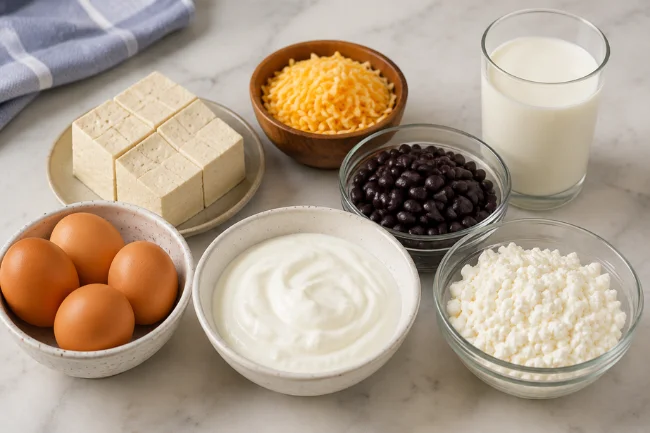
Rather than searching for a new recipe every week, I use a basic formula.
Start with:
A Protein Source
Examples include eggs, Greek yogurt, cottage cheese, beans, milk, tofu, cheese, or another protein-rich food that suits your diet.
A Fiber-Rich Ingredient
Think oats, berries, apples, vegetables, chia seeds, beans, or whole grains.
A Satisfying Fat or Flavor Ingredient
Nut butter, nuts, seeds, avocado, cheese, olives, or similar ingredients can add flavor and staying power.
Something You Actually Enjoy Eating
This part matters more than people think.
A technically perfect meal-prep breakfast is useless if you dislike it by Wednesday.
I would rather prepare three breakfasts I genuinely look forward to than seven containers I start avoiding after two days.
Best Breakfast Meal Prep Ideas by Goal
Different breakfasts solve different problems.
| Your priority | Good options |
|---|---|
| Fastest morning | Overnight oats, yogurt jars, chia pudding |
| High-protein | Egg muffins, yogurt bowls, cottage cheese bowls |
| Freezer-friendly | Burritos, sandwiches, pancakes, waffles |
| No cooking | Overnight oats, yogurt jars, chia pudding |
| Portable | Burritos, egg muffins, breakfast boxes |
| Budget-friendly | Oats, eggs, baked oatmeal, homemade pancakes |
| Savory breakfast | Egg muffins, breakfast bowls, burritos |
| Meal prep for families | Baked oatmeal, pancakes, waffles, egg muffins |
Using a goal-based approach is more useful than simply collecting recipes because it helps you choose something that matches your schedule.
How I Prep Several Breakfasts Without Spending My Whole Sunday Cooking
I do not believe meal prep needs to mean producing seven complete containers.
Instead, I usually prepare a few flexible components.
For example, I might bake egg muffins, wash berries, portion yogurt, cook oats, and freeze two breakfast sandwiches.
That gives me several possible combinations without creating a refrigerator full of identical meals.
A practical breakfast prep session might look like this:
- Bake one tray of egg muffins.
- Prepare two jars of overnight oats.
- Wash and dry fruit.
- Portion nuts or granola separately.
- Freeze two breakfast sandwiches.
- Place frequently used ingredients where they are easy to reach.
The result is less rigid than traditional meal prep but still removes most of the work from weekday mornings.
How to Prevent Soggy or Unappetizing Meal-Prep Breakfasts
Texture is one reason people stop meal prepping breakfast.
I follow a simple rule: separate ingredients based on moisture.
Keep crunchy ingredients away from yogurt or oatmeal until serving. Let cooked ingredients cool before wrapping them in bread or tortillas. Store juicy fruit separately when necessary.
For breakfast sandwiches and burritos, cooling the filling before wrapping makes a noticeable difference.
For oats and chia pudding, adding nuts, seeds, cereal, or granola at the last minute preserves crunch.
Meal prep works better when food still feels freshly assembled, even if most of the work was done days earlier.
Refrigerator and Freezer Planning
Not every breakfast should be prepared seven days ahead.
As a practical habit, I make refrigerated breakfasts in smaller batches and use freezing for foods I want to keep longer.
Cooked egg dishes, burritos, pancakes, waffles, baked oatmeal, and breakfast sandwiches are generally better freezer candidates than yogurt jars or fully assembled fresh-fruit breakfasts.
Labeling freezer items with the name and date also prevents the mystery-container problem.
For food safety, follow current USDA or local food-safety guidance for storing cooked foods, eggs, dairy products, and leftovers, especially if food will be kept for several days.
Common Breakfast Meal Prep Mistakes
The first mistake is trying to prepare too much.
If you regularly eat breakfast away from home twice a week, prepping seven homemade breakfasts creates unnecessary waste.
The second is ignoring texture. Foods that taste good immediately may not taste good after four days fully assembled.
The third is making breakfast too small. A tiny container may look convenient but can leave you hungry shortly afterward.
And the fourth is choosing meals based entirely on what looks good online rather than what fits your morning routine.
The best meal prep is the one you will actually eat.
FAQs About Breakfast Meal Prep Ideas
What are the best foods to meal prep for breakfast?
Oats, eggs, yogurt, chia seeds, fruit, breakfast burritos, baked oatmeal, pancakes, waffles, and breakfast sandwiches are all practical options.
Can I meal prep breakfast for an entire week?
You can, but I prefer refrigerating only the portions needed for the next few days and freezing suitable extras for later in the week.
What are good high-protein breakfast meal prep ideas?
Egg muffins, Greek yogurt bowls, cottage cheese bowls, breakfast burritos, tofu scrambles, and protein-rich overnight oats are useful options.
How do I keep meal-prep breakfasts from getting soggy?
Keep wet and crunchy ingredients separate, cool hot fillings before wrapping them, and add granola, nuts, or fresh toppings shortly before eating.
What is the easiest breakfast to meal prep?
Overnight oats and yogurt jars are among the easiest because they require little or no cooking and can be prepared in individual containers.
Make Breakfast Easier, Not More Complicated
The most useful breakfast meal prep ideas are the ones that remove work from your morning without turning Sunday into a second job.
Start with two or three breakfasts rather than preparing an entire week at once. Choose one refrigerator option and one freezer-friendly option, then adjust based on what you actually eat.
Once you know which combinations fit your schedule, repeat them, change the flavors, and keep a few reliable breakfasts in rotation. A little preparation can turn breakfast from a daily decision into one of the simplest meals of the day.

Dr. Hannah Collins is a nutrition and diet specialist with 13+ years of experience helping people make informed food choices and develop healthier eating habits. She shares evidence-based nutrition guidance focused on balanced diets, meal planning, healthy lifestyles, and sustainable wellness.