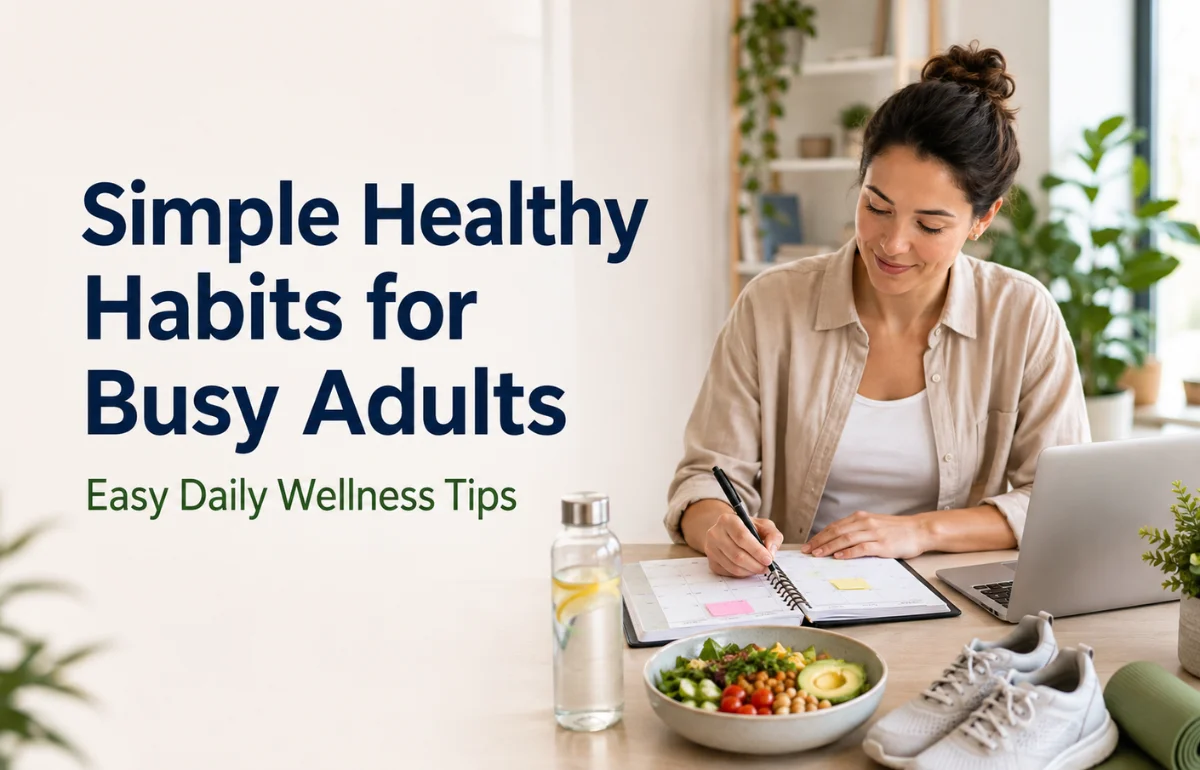
Simple healthy habits for busy adults are small, repeatable actions that support energy, fitness, nutrition, sleep, and stress control without requiring a complete lifestyle overhaul. They include drinking water at reliable cues, building balanced meals from convenient foods, moving in short bursts, protecting a consistent sleep window, and using brief recovery practices during the workday.
The goal is not to perform every habit perfectly. It is to create a basic “health floor” that you can maintain even when meetings run late, family duties pile up, or motivation drops. I’ve found that busy people usually do better when a healthy action is attached to something already in the day—such as waking up, eating lunch, ending a call, or brushing their teeth—rather than added as another major project.
Why Healthy Habits Often Fail When Life Gets Busy
Most health advice assumes open mornings, predictable evenings, and plenty of mental space. Real adults may be handling work, caregiving, commuting, household tasks, and constant notifications.
The best healthy routine for busy people is not the most ambitious one. It is the one with the least friction.
A habit has friction when it requires too many decisions, special equipment, extra travel, or perfect timing. A gym session across town has high friction. A 10-minute walk after lunch has low friction.
Build the low-friction version first, then expand it when your schedule allows.
Start With a Personal “Health Floor”
A health floor is the smallest set of daily wellness habits that keeps you connected to your health on difficult days. It is not the maximum you can do. It is the minimum you can repeat.
For one person, that floor might be water by noon, vegetables at one meal, two short walks, and a bedtime alarm. The floor should feel almost too manageable.
Consistency creates a base; intensity can come later.
| High-friction health goal | Lower-friction habit that still counts |
|---|---|
| Cook every meal from scratch | Keep three balanced, five-minute meals available |
| Exercise for an hour daily | Accumulate movement in 5–15-minute blocks |
| Meditate for 30 minutes | Take six slow breaths before opening email |
| Sleep perfectly every night | Keep a reliable shutdown and lights-out window |
| Eliminate all snacks | Pair a convenient snack with protein or produce |
1. Make Water the Default, Not a Memory Test
“Drink more water” is vague advice. A better habit is to connect water to events that already happen.
I like a three-cue system: drink after waking, with lunch, and during the transition between work and home. Keep a reusable bottle where you can see it, and refill it at the same points each day.
Water needs vary with body size, climate, activity, pregnancy, medications, and health conditions, so one target is not right for everyone. CDC guidance recommends carrying a bottle and choosing water instead of sugary drinks; adequate water also helps prevent dehydration.
People with fluid restrictions or certain medical conditions should follow their clinician’s advice rather than a general hydration rule.
2. Use a Simple Formula for Fast, Balanced Meals
Busy adults do not need a new recipe every night. They need a repeatable meal structure.
Use this formula:
Protein + produce + high-fiber carbohydrate + optional healthy fat.
Examples include rotisserie chicken, frozen vegetables, and microwave brown rice; Greek yogurt, berries, oats, and nuts; or beans, bagged salad, whole-grain bread, and olive-oil dressing.
Public-health guidance emphasizes nutrient-dense foods such as vegetables, fruit, whole grains, legumes, nuts, seeds, dairy or alternatives, and lean protein sources.
Keep an “Emergency Meal Shelf”
Stock quick foods that are reasonably balanced and unlikely to spoil:
- Canned beans or lentils
- Tuna or salmon pouches
- Frozen vegetables and fruit
- Eggs or plain yogurt
- Microwave whole grains
- Soup with vegetables and protein
- Nuts and whole-grain crackers
The missing piece in many meal-prep plans is failure planning. Your emergency shelf is not a lesser backup; it is part of the system.
3. Add Movement in Small “Activity Snacks”
A workout is only one form of physical activity. Walking to an errand, taking stairs, carrying groceries, cleaning, cycling, and short strength sessions all count.
WHO guidance says adults should aim for 150–300 minutes of moderate aerobic activity per week, or 75–150 minutes of vigorous activity, and that any amount of physical activity is better than none.
Break the weekly number down. Ten minutes before work, ten after lunch, and ten in the evening create 30 minutes of movement without finding a separate hour.
Try Movement Triggers
Walk during calls that do not require a screen. Take a short lap after lunch. Park slightly farther away. Move for five minutes after arriving home before sitting down.
These quick healthy habits reduce the need to “find time” because they use time already present in your day.
4. Strength Train Twice a Week With a Short Routine
Strength training does not require a full gym program. U.S. physical activity guidance recommends work for all major muscle groups on at least two days each week.
A compact home session might include:
- A squat or sit-to-stand
- A wall or counter push-up
- A hip hinge
- A resistance-band row
- A loaded carry
One or two controlled sets can be a realistic starting point.
Choose movements appropriate for your ability. Seek individualized advice if you have pain, balance problems, recent surgery, pregnancy-related limitations, or a medical condition.
5. Break Up Long Periods of Sitting
WHO advises adults to limit sedentary time and replace some of it with physical activity of any intensity.
I use a “close one loop, move one minute” rule. After finishing a document, meeting, billing task, or email batch, stand up.
Refill water, stretch, walk to another room, or do several slow sit-to-stands. Natural transitions may be easier to sustain than an alarm that interrupts focused work every 30 minutes.
6. Protect a Consistent Sleep Opportunity
Sleep is not leftover time. It needs a place on the schedule.
CDC guidance states that adults ages 18–60 generally need at least seven hours of sleep, while individual needs and recommendations vary by age.
Work backward from the time you must wake up. Create a bedtime range that allows enough sleep, then set a shutdown alarm 30–60 minutes beforehand.
The alarm is not a command to fall asleep. It is a cue to stop adding tasks.
A brief evening reset can also reduce morning decisions:
- Set out clothes.
- Pack your work or gym bag.
- Prepare breakfast ingredients.
- Write down tomorrow’s first task.
- Put unnecessary devices outside the bedroom.
Regular difficulty falling asleep, frequent waking, loud snoring, gasping during sleep, or ongoing exhaustion deserves a conversation with a healthcare professional.
7. Use a Two-Minute Stress Reset
Stress management does not have to mean a long meditation session. It can be a small pause that helps you shift from reacting to responding.
Try breathing slowly for two minutes, with a comfortable inhale and an unforced, slightly longer exhale. NIH and NCCIH resources describe controlled or diaphragmatic breathing as a simple relaxation practice that may help reduce stress.
Attach the reset to a predictable pressure point: before checking messages, after a difficult call, before entering the house, or while waiting for a meeting.
Breathing exercises do not replace mental-health care. Persistent anxiety, low mood, panic, trauma symptoms, or thoughts of self-harm require professional support.
8. Create Better Defaults in Your Environment
Willpower is unreliable when you are tired. Environment is more dependable.
Put fruit where you can see it. Keep walking shoes near the door. Place resistance bands beside your desk. Store nutritious snacks at eye level. Remove work notifications from the bedroom.
I call this a friction audit: make healthy actions easier by one step and unhealthy autopilot choices harder by one step.
Ask four questions:
- What healthy action do I keep forgetting?
- What object would remind me?
- Where should that object live?
- What can I prepare once to avoid repeated decisions?
This works well for healthy lifestyle habits for working adults because it changes the setup, not just the intention.
9. Use Weekly Preparation, Not Daily Perfection
A 20-minute weekly reset can save more effort than trying to be disciplined every day.
Check your calendar and identify the two busiest days. Plan the easiest meals for those days. Choose two strength-training windows. Restock portable snacks. Decide where short walks can fit. Set one realistic bedtime target.
| Time cue | Minimum habit | Expanded option |
|---|---|---|
| After waking | Drink water | Add five minutes of mobility |
| After lunch | Walk for five minutes | Walk briskly for 15 minutes |
| Mid-afternoon | Eat a protein-and-produce snack | Prepare tomorrow’s snack too |
| End of work | Take six slow breaths | Add a 10-minute walk |
| Before bed | Start shutdown routine | Read or stretch for 20 minutes |
The minimum column protects consistency. The expanded column gives you room to do more without making “more” the daily requirement.
10. Track Evidence of Consistency, Not a Perfect Streak
Many people stop after missing one or two days because the streak feels broken. I prefer a weekly score.
Choose three to five habits and mark each day they happen. At the end of the week, ask:
- Which habit happened most often?
- Which habit had too much friction?
- What small change would make it easier?
- Which cue helped me remember?
Five days out of seven is useful information, not failure. The aim is a routine that survives deadlines, travel, family needs, and low-energy days.
How to Choose the Best Habits for Your Life
Do not start all ten habits at once. Pick one that improves several parts of your day.
A consistent sleep window may make cooking and exercise easier. Preparing a balanced lunch may reduce afternoon hunger and unplanned purchases. A daily walk can provide movement and a mental break.
Start with the habit that is both valuable and easy to repeat. Keep it small for two weeks, then add another when the first feels ordinary.
The best simple healthy habits for busy adults are not impressive from the outside. They are quiet, reliable, and built into real life.
Frequently Asked Questions
What is the easiest healthy habit to start?
Place water where you work and drink at three existing cues, such as waking, lunch, and the end of your workday.
How can a busy person exercise every day?
Use 5–15-minute activity blocks, walking calls, stairs, active errands, and short home routines instead of waiting for a full workout hour.
What are healthy meals for people with no time to cook?
Combine a convenient protein, fruit or vegetables, and a high-fiber carbohydrate, using foods such as eggs, beans, frozen vegetables, yogurt, or microwave grains.
How many healthy habits should I start at once?
Start with one or two habits and repeat them for about two weeks before adding more, especially if your schedule is unpredictable.
Can small health habits really make a difference?
Yes. Small actions accumulate and can move you toward evidence-based goals for activity, nutrition, hydration, sleep, and stress management.
Build Your Health Floor This Week
Choose one daily cue and attach one action to it today. Put a water bottle beside your laptop, schedule two short walks, stock one emergency meal, or set a shutdown alarm for bedtime.
Keep the action small enough to repeat on your busiest day. Once it becomes part of the day rather than another task on the list, build the next habit on top of it.

Claire Morgan is a health and wellness writer with 7 years of experience creating clear, research-informed content on nutrition, sleep, movement, preventive habits, and everyday wellbeing. She focuses on making reliable health information practical and easy to understand. Her articles are educational and do not replace professional medical advice.