
Bridal skincare in South Asian traditions has always blended ritual and beauty, from the haldi ceremony with turmeric paste to ubtan masks made with gram flour, sandalwood and rose water. Today, many brides, especially in multicultural cities like Dubai and Sharjah, combine these customs with modern dermatology treatments such as facials, chemical peels or laser therapies. The key is timing and care: traditional pastes should be patch-tested, and clinical treatments should be planned weeks or months before the wedding, not days, so the skin has time to settle and glow naturally on the big day.
Some traditions are about beauty. The best ones are about blessing.
The Meaning Behind the Haldi Ceremony
In many Hindu, Sikh and other South Asian weddings, the haldi ceremony takes place shortly before the wedding. Family members apply a paste made mainly from turmeric to the bride’s and groom’s face and body.
The ritual carries layered meaning:
- Blessing and protection for the couple’s new life
- Purification before a sacred ceremony
- Celebration and joy, often with music and laughter
- Beauty, as turmeric is traditionally associated with radiant skin
For many families, the emotional and spiritual significance matters far more than any cosmetic effect.
Ubtan and Other Traditional Ingredients
Beyond haldi, brides have long used homemade preparations known as ubtan, typically mixing ingredients such as:
| Ingredient | Traditional purpose | Things to keep in mind |
|---|---|---|
| Turmeric | Brightening and ritual blessing | Can temporarily stain the skin yellow |
| Gram flour (besan) | Gentle exfoliation | May dry out sensitive skin |
| Sandalwood | Cooling and fragrance | Some people react to fragrances |
| Rose water | Freshness and soothing | Usually gentle, but quality varies |
| Milk or yoghurt | Softening | Not suitable for everyone |
| Saffron | Glow and luxury | Expensive and sometimes adulterated |
These recipes connect generations, but natural doesn’t always mean suitable for every skin type.
Patch Testing Matters
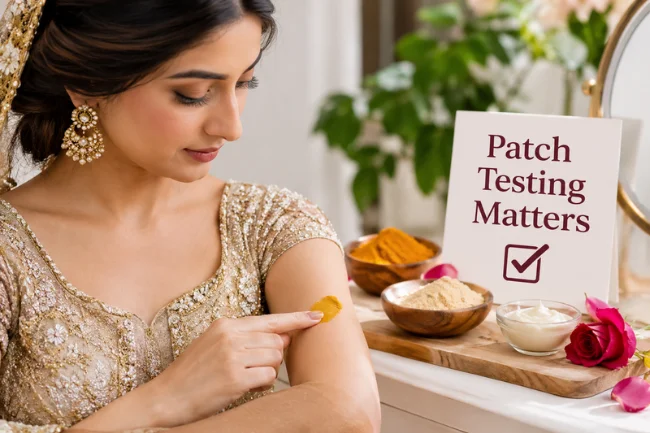
Traditional pastes and modern products alike can cause irritation or allergic reactions. Dermatology resource DermNet explains how contact dermatitis can occur when skin reacts to substances it touches, including plant-based ingredients and fragrances.
Before the wedding week:
- Test any paste or mask on a small patch of skin.
- Wait at least 24 to 48 hours to check for redness or itching.
- Avoid new products in the final few days.
- Keep pastes away from the eyes and broken skin.
A reaction a day before the ceremony can be stressful and hard to hide.
Modern Treatments Brides Consider
Many brides now add professional treatments to their preparations, such as:
- Medical-grade facials for hydration and clarity
- Gentle chemical peels to refresh dull skin
- Laser treatments for pigmentation or hair removal
- Skin boosters for hydration
- Professional acne management
These can be effective, but they need to be planned carefully. Some treatments cause temporary redness or peeling, and certain lasers require several sessions spaced weeks apart.
A Sensible Timeline
| Time before wedding | Suggested focus |
|---|---|
| 6 to 12 months | Consultation, laser hair removal or pigmentation plans |
| 3 to 6 months | Ongoing treatments and a consistent skincare routine |
| 1 to 2 months | Gentle facials and final adjustments |
| 2 to 3 weeks | Avoid new strong treatments |
| Wedding week | Hydration, rest and traditional rituals |
Starting early leaves time to correct any unexpected reactions.
Getting Professional Advice
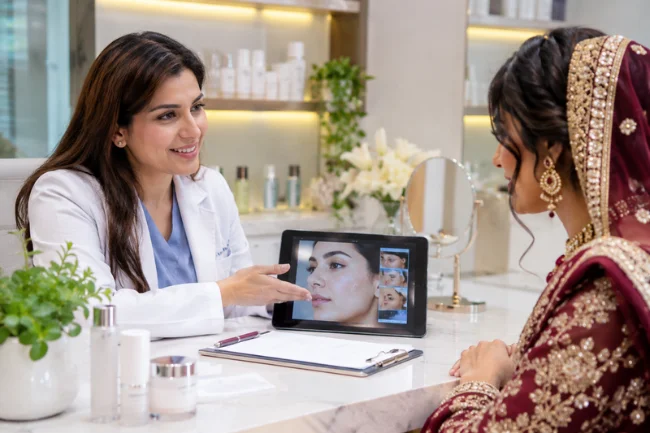
Because every skin type responds differently, especially in hot and humid climates like the UAE, professional guidance can help brides avoid mistakes. Medical aesthetic clinics such as Cosmolaser in Sharjah offer consultations where brides can discuss goals, skin type and timing, and plan treatments that work alongside family traditions rather than replacing them.
Doctors can also advise whether certain treatments should be avoided before a haldi ceremony, or how long to wait after a peel before applying traditional pastes.
Caring for Skin in the UAE Climate
Brides in the Gulf face extra challenges:
- Strong sun, which can worsen pigmentation
- Heat and humidity, which may trigger breakouts
- Air-conditioned interiors, which dry the skin
Daily sunscreen, gentle cleansing and good hydration are just as important as any special treatment.
Don’t Forget Wellbeing
The weeks before a wedding are often busy and emotional. Rest, water, balanced meals and moments of calm all show up in the skin. Many brides also find comfort in prayer, meditation or quiet time with family, which supports the spiritual purpose behind the celebrations.
Common Mistakes to Avoid
Brides sometimes:
- Try new treatments days before the wedding
- Skip patch tests for homemade pastes
- Overuse scrubs, damaging the skin barrier
- Forget sunscreen
- Ignore stress and sleep
Honouring Tradition, Caring for Skin
Bridal glow traditions like haldi and ubtan carry centuries of meaning, love and blessing. Modern skincare doesn’t need to replace them. It can simply help them shine.
With careful planning, patch testing and professional advice where needed, brides can enjoy both the rituals of their heritage and skin that feels healthy and radiant on their special day.
🛡️ Disclaimer
This article is for informational purposes only and does not replace professional medical advice. Consult a qualified dermatologist before trying new skincare products or treatments, especially before your wedding.

Mia Anderson is a skincare writer with 8 years of experience creating practical, research-informed content about skincare routines, skin health, ingredients, and everyday self-care habits. She focuses on helping readers understand skincare choices through simple explanations and realistic routines while encouraging professional advice for specific skin concerns.