
Dog spewing yellow means a dog is vomiting yellow-colored liquid, mucus, or foam, often containing bile. Bile is a digestive fluid produced by the liver, stored in the gallbladder, and released into the small intestine to help digest fats. When this fluid moves backward into the stomach, it can appear in vomit, especially when the stomach is empty.
Sometimes, yellow vomiting happens because a dog hasn’t eaten for several hours. However, it can also indicate stomach irritation, pancreatitis, intestinal blockage, infection, or another medical problem.
I recommend looking beyond the vomit’s color. How often your dog vomits, when it happens, and whether your pet is behaving normally are more useful clues.
Understanding these differences can help you decide when home monitoring is reasonable and when veterinary attention is necessary.
What Does It Mean When a Dog Spews Yellow?
Yellow vomit usually indicates that bile or another yellow-colored substance is mixed with stomach fluids. It may look watery, thick, slimy, or foamy.
Bile normally travels from the liver and gallbladder into the small intestine. However, digestive fluids can sometimes flow backward into the stomach and contribute to nausea and vomiting.
The yellow color itself doesn’t establish a diagnosis.
For example, a dog that vomits yellow foam before breakfast but remains energetic may have a very different problem from a dog vomiting repeatedly after swallowing a toy.
I find it helpful to consider three basic questions:
- Did the vomiting happen after a long period without food?
- Is the dog eating, drinking, and behaving normally afterward?
- Is this an isolated episode or a recurring problem?
These questions don’t replace veterinary examination, but they provide useful context when assessing a dog’s condition.
Yellow Foam vs. Yellow Liquid: Is There a Difference?
Yellow foam generally contains digestive fluid mixed with mucus and air. It can appear bubbly or frothy.
Yellow liquid is usually more watery and may contain bile, stomach secretions, or recently swallowed water.
Neither appearance reliably identifies the underlying cause. The accompanying symptoms and vomiting pattern matter much more than whether the material looks foamy or watery.
10 Common Causes of Dog Spewing Yellow
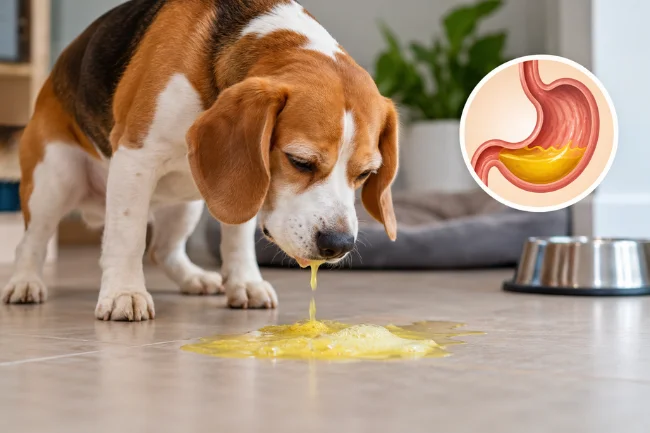
Several digestive and general health conditions can cause yellow vomiting. Some are relatively mild, while others require prompt treatment.
1. Empty Stomach and Bile Irritation
One common explanation is that a dog has gone too long without eating.
When the stomach remains empty, digestive secretions may contribute to irritation, nausea, and vomiting. The dog may bring up yellow fluid because little or no food remains in the stomach.
This often happens early in the morning or late at night.
An otherwise healthy dog may recover quickly and show interest in breakfast. However, repeated empty-stomach vomiting still deserves veterinary attention.
2. Bilious Vomiting Syndrome
Bilious vomiting syndrome (BVS) is associated with recurring episodes of yellow or foamy vomiting, particularly after prolonged fasting.
Veterinarians suspect that fluid from the small intestine can reflux into the stomach, irritating its lining.
Dogs with this condition often remain active, maintain their weight, and behave normally between episodes.
The University of Illinois Veterinary Teaching Hospital explains that BVS is generally diagnosed after considering and excluding other causes.
A late-evening meal may help some affected dogs, but recurrent vomiting should not automatically be labeled BVS.
3. Eating Something That Irritates the Stomach
Dogs sometimes eat spoiled food, garbage, grass, or unfamiliar objects that irritate their digestive systems.
This behavior, often called dietary indiscretion, may cause nausea and vomiting.
For example, a dog that raids the kitchen bin might vomit food initially and later produce yellow fluid once its stomach becomes empty.
If vomiting continues, the dog seems uncomfortable, or a harmful substance may have been swallowed, veterinary assessment is necessary.
4. Sudden Changes in Dog Food
Switching dog food abruptly can upset digestion, especially in dogs with sensitive stomachs.
New ingredients, rich treats, unfamiliar proteins, or unusually fatty meals may trigger gastrointestinal symptoms.
Some dogs develop vomiting alongside gas, loose stools, or reduced appetite.
I would avoid introducing several new foods simultaneously because doing so makes identifying the trigger difficult.
When changing diets for a healthy dog, gradually introducing the replacement food is usually preferable unless a veterinarian recommends otherwise.
5. Gastroenteritis
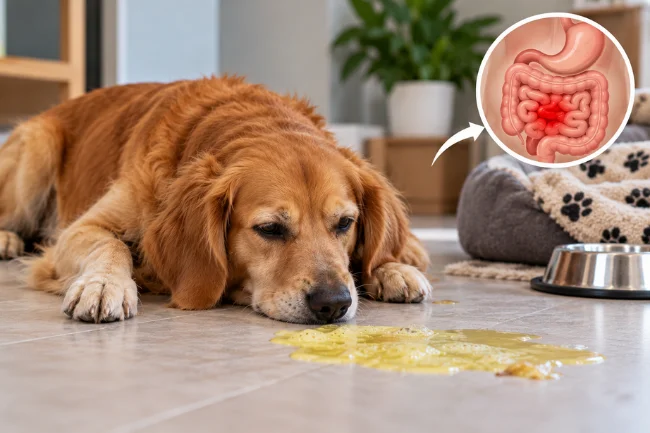
Gastroenteritis refers to inflammation of the stomach and intestines.
It may develop from infections, irritating food, or other gastrointestinal problems. Vomiting, diarrhea, nausea, and reduced appetite are possible symptoms.
A dog may initially vomit undigested food before producing yellow liquid as vomiting continues.
Although mild cases can improve with supportive care, repeated vomiting and diarrhea can lead to dehydration.
Puppies and small dogs are particularly vulnerable to fluid loss.
6. Intestinal Parasites
Roundworms, hookworms, Giardia, and other intestinal parasites can interfere with normal digestion.
Depending on the parasite and severity, affected dogs may experience vomiting, diarrhea, weight loss, or changes in appetite.
Yellow vomit alone cannot confirm a parasitic infection.
Veterinarians may recommend fecal testing and an appropriate deworming or antiparasitic treatment.
Regular parasite prevention and cleaning up feces promptly can help reduce exposure.
7. Pancreatitis
Pancreatitis occurs when the pancreas becomes inflamed.
Dogs with pancreatitis may vomit repeatedly, refuse food, appear weak, or experience abdominal pain. Some also develop diarrhea and dehydration.
Although a rich or fatty meal can be associated with pancreatitis, the condition can occur without an obvious dietary trigger.
A dog vomiting yellow bile while showing abdominal discomfort or marked lethargy needs prompt veterinary assessment.
Severe pancreatitis may require hospitalization, intravenous fluids, pain relief, and nutritional support.
8. Intestinal Blockage
A swallowed sock, bone fragment, toy, or another object can become lodged in the digestive tract.
An obstruction may prevent food and fluid from moving normally, leading to repeated vomiting, abdominal pain, and appetite loss.
Some dogs continue passing stool, particularly with partial blockages, so normal bowel movements do not completely rule out an obstruction.
This is a potentially life-threatening emergency.
If your dog may have swallowed a foreign object and is vomiting, seek veterinary care immediately rather than attempting home remedies.
9. Toxic Substances or Medication Reactions
Dogs can develop vomiting after ingesting toxic foods, household chemicals, poisonous plants, or medications.
Certain prescribed medicines may also irritate the stomach or cause nausea as a side effect.
Potentially dangerous exposures include chocolate, grapes, raisins, xylitol-containing products, and human painkillers.
The vomit may appear yellow simply because the stomach is empty.
If poisoning is possible, contact a veterinarian or animal poison service immediately. Never induce vomiting or give another medication unless specifically instructed by a veterinary professional.
10. Underlying Medical Conditions
Not every cause of yellow vomiting begins in the digestive tract.
Kidney disease, liver disorders, diabetes-related complications, hormonal conditions, and chronic inflammatory gastrointestinal disease can all produce vomiting.
These conditions may also cause increased thirst, changes in urination, unexplained weight loss, or persistent appetite changes.
A dog experiencing recurring yellow vomiting deserves a proper examination, even if the episodes seem mild.
Older dogs and those with existing medical conditions may require additional testing.
What Your Dog’s Yellow Vomit Can Tell You
Appearance provides useful information, but it cannot confirm a particular illness.
| Appearance | Possible Explanation | What to Consider |
|---|---|---|
| Yellow, watery liquid | Bile mixed with stomach fluids | Recent meals and vomiting frequency |
| Yellow, foamy vomit | Digestive fluid, mucus, and air | Empty stomach or gastrointestinal irritation |
| Yellow vomit with food | Partially digested food and digestive fluids | Dietary changes or digestive upset |
| Yellow-green vomit | Bile or other colored stomach contents | Repeated episodes and additional symptoms |
| Yellow vomit with blood | Possible gastrointestinal bleeding | Prompt veterinary evaluation |
One detail I would never ignore is the difference between vomiting and regurgitation.
Vomiting typically involves nausea, retching, and abdominal contractions. Regurgitation is more passive, often bringing up undigested food without noticeable effort.
This distinction helps veterinarians determine whether the problem may involve the stomach or esophagus.
When Is a Dog Spewing Yellow an Emergency?
A single episode in an otherwise healthy adult dog isn’t always an emergency.
However, I would not judge the situation by color alone. Your dog’s behavior and other symptoms should determine how urgently you seek help.
| Situation | Recommended Action |
|---|---|
| One episode, dog remains active and comfortable | Monitor closely and contact your vet if symptoms return |
| Repeated yellow vomiting or inability to keep water down | Seek prompt veterinary care |
| Vomiting with weakness, severe diarrhea, or appetite loss | Arrange urgent veterinary assessment |
| Bloated abdomen with repeated unsuccessful retching | Go to an emergency veterinarian immediately |
| Blood in vomit, collapse, or suspected poisoning | Seek emergency veterinary attention |
| Vomiting in a young puppy or medically fragile dog | Contact a veterinarian promptly |
Warning Signs That Should Never Be Ignored
Seek immediate veterinary care if your dog develops a swollen or painful abdomen, collapses, has difficulty breathing, or repeatedly tries to vomit without producing anything.
Blood in vomit, black tarry stools, severe weakness, or suspected toxin exposure are also serious warning signs.
Repeated unsuccessful retching with abdominal swelling can indicate gastric dilatation-volvulus (GDV), commonly called bloat. This condition can become fatal without emergency treatment.
Even without obvious emergency symptoms, vomiting that continues or recurs should be assessed rather than ignored.
What Should I Do If My Dog Is Vomiting Yellow?
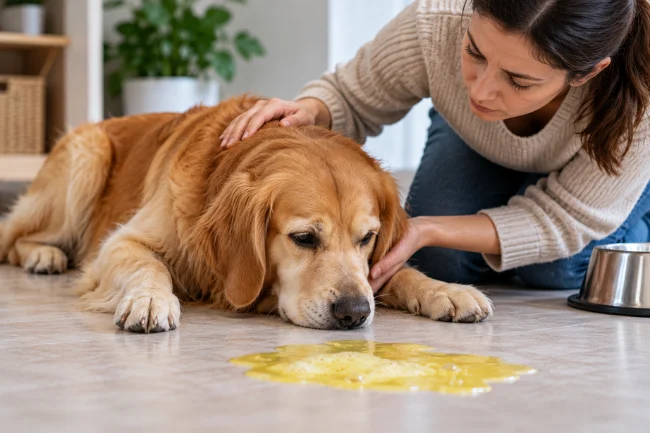
If your dog has vomited once and otherwise appears comfortable, several sensible measures can help you monitor the situation safely.
Check Your Dog’s Overall Condition
Start by observing activity, appetite, breathing, and responsiveness.
A comfortable dog that wants to play presents a different picture from one that refuses to move or appears painful.
Look for repeated lip licking, drooling, restlessness, or reluctance to eat. These may indicate nausea.
If your dog seems unusually tired or uncomfortable, contact your veterinarian rather than experimenting with home treatments.
Keep Fresh Water Available
Vomiting causes fluid loss, which can contribute to dehydration.
Provide access to clean drinking water. If your dog gulps water and vomits again, ask your veterinarian how to manage fluids safely.
Never force water into a vomiting dog’s mouth.
Dogs that cannot keep fluids down may require veterinary treatment, including injectable or intravenous fluids.
Offer Food Carefully
If an otherwise healthy adult dog has stopped vomiting and shows interest in food, ask your veterinarian whether small portions of an easily digestible diet are appropriate.
A veterinary gastrointestinal diet may be preferable to improvised homemade meals.
Avoid fatty leftovers, heavily seasoned foods, and unfamiliar treats.
I wouldn’t automatically impose a lengthy fast, particularly on puppies, toy breeds, diabetic dogs, or pets with other health concerns.
Feeding advice should depend on the dog’s age, condition, and suspected cause.
Avoid Unapproved Home Remedies
Human antacids, painkillers, anti-nausea medicines, and herbal preparations aren’t automatically safe for dogs.
Some medications can cause serious complications or interfere with veterinary treatment.
Avoid using internet-recommended remedies simply because the vomit looks yellow.
If medication is necessary, a veterinarian can choose an appropriate treatment based on the diagnosis, health history, and body weight.
Why Is My Dog Throwing Up Yellow Bile in the Morning?
Morning vomiting has a particularly recognizable pattern.
A dog eats dinner, sleeps through the night, and brings up yellow foam shortly before breakfast. Afterward, the dog may behave completely normally.
This pattern can occur with bilious vomiting syndrome, although other causes remain possible.
For dogs diagnosed with BVS, veterinarians may recommend dividing the daily food allowance into smaller meals and providing a small portion before bedtime.
For example, instead of increasing a dog’s total daily food, some of the regular dinner portion can be reserved for a late-evening feeding.
I would change one feeding variable at a time and monitor the result. That makes it easier to identify whether meal timing actually helps.
If the vomiting continues despite adjustments, further veterinary investigation is appropriate.
How Do Veterinarians Diagnose Yellow Vomiting in Dogs?
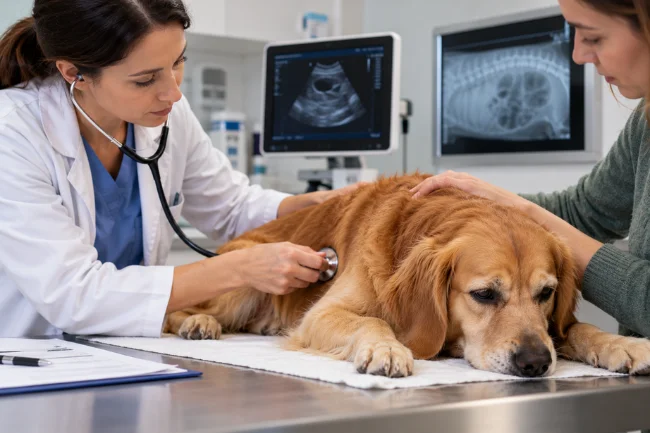
A veterinarian begins with the dog’s medical history and a physical examination.
They may ask when vomiting started, how frequently it occurs, what the dog eats, and whether any foreign objects or toxic substances could have been swallowed.
Depending on the findings, diagnostic tests may include bloodwork, urinalysis, fecal examination, abdominal X-rays, and ultrasound.
Blood tests can help identify dehydration, organ abnormalities, and certain metabolic problems.
Imaging may reveal intestinal obstruction or other changes requiring further assessment.
For persistent unexplained vomiting, specialized testing or endoscopy may sometimes be necessary.
The goal isn’t simply to stop the vomiting. It’s to identify and treat the condition responsible.
Veterinary Treatment Options for Yellow Vomiting
Treatment varies considerably depending on the diagnosis.
For mild digestive upset, a veterinarian may recommend a highly digestible diet, adjusted feeding portions, and careful hydration.
Dogs with dehydration may require fluid therapy. Those with significant nausea may receive prescription anti-vomiting medication.
If pancreatitis is diagnosed, treatment may include pain management, nutritional support, fluids, and a specialized diet.
Parasites require appropriate treatment, while intestinal obstruction may need endoscopic removal or surgery.
For confirmed bilious vomiting syndrome, feeding schedule adjustments can be particularly useful. Some dogs also need veterinarian-prescribed medication.
The most effective treatment addresses the cause rather than the yellow color itself.
How to Prevent Your Dog From Vomiting Yellow Bile
Not every episode is preventable, but practical habits can reduce certain triggers.
Maintain Consistent Feeding Times
Regular mealtimes help establish a predictable digestive routine.
If your veterinarian identifies empty-stomach vomiting, spreading the same daily food allowance across more meals may help.
An automatic feeder can be useful when early-morning or late-night feeding is difficult.
Make Dietary Changes Gradually
Avoid abruptly changing your dog’s regular food without a medical reason.
Introduce new diets gradually when appropriate, and monitor for vomiting, diarrhea, or appetite changes.
Keep treats within your dog’s nutritional needs rather than letting snacks replace balanced meals.
Reduce Access to Dangerous Items
Store medicines, cleaning products, toxic foods, and small swallowable objects securely.
Choose suitable chew toys and replace damaged toys that could break into pieces.
Maintain recommended parasite prevention and routine veterinary checkups.
These precautions support digestive health while reducing the risk of preventable emergencies.
A Useful Vomiting Record Most Dog Owners Overlook
One practical habit I strongly recommend is keeping a short vomiting record before a veterinary appointment.
Instead of writing only “my dog threw up yellow,” capture the circumstances surrounding each episode.
Record the time, last meal, appearance of the vomit, frequency, appetite, energy level, and any unusual behavior.
I would also note new treats, medicines, possible exposure to garbage, and changes in bowel movements.
Photographing the vomit can help, particularly if its appearance changes between episodes.
The timing may reveal a consistent pre-breakfast pattern, while vomiting after meals or alongside diarrhea could suggest a different concern.
This information isn’t a substitute for diagnostic testing. It simply gives your veterinarian a clearer history.
Common Misconceptions About Dogs Vomiting Yellow
Yellow Vomit Always Means Liver Disease
This is incorrect.
Although bile originates in the liver, vomiting bile does not automatically indicate liver damage.
The yellow appearance often reflects the presence of digestive fluid rather than disease in the organ producing it.
A Dog Acting Normal Cannot Be Sick
Dogs sometimes behave normally between episodes of vomiting.
Certain chronic digestive disorders and partial intestinal blockages may produce intermittent symptoms.
Repeated vomiting deserves investigation even when a dog seems energetic afterward.
Grass Is a Reliable Cure for Vomiting
Some dogs eat grass before vomiting, but grass is not a proven treatment for nausea.
Eating excessive plant material may even irritate the digestive tract.
I would focus on identifying the underlying cause rather than encouraging grass consumption.
Conclusion
Dog spewing yellow most often describes vomiting bile-stained liquid or foam, but the cause can range from an empty stomach to a serious medical condition.
I recommend paying attention to the vomiting pattern, appetite, energy level, and accompanying symptoms rather than relying on color alone.
If your dog vomits repeatedly, appears unwell, or develops warning signs, contact a veterinarian promptly. Early assessment can prevent complications and help your dog return to normal eating and activity.
Frequently Asked Questions
1. Why is my dog spewing yellow liquid but acting normal?
An empty stomach or bilious vomiting syndrome may explain it. However, recurrent episodes should be checked by a veterinarian.
2. Is yellow vomit in dogs always bile?
No. Yellow vomit commonly contains bile, but food, stomach secretions, or other substances may also contribute to its color.
3. Can I feed my dog after it vomits yellow foam?
If vomiting has stopped and your dog seems well, a veterinarian may recommend a small, easily digestible meal. Avoid forcing food.
4. Why does my dog vomit yellow bile every morning?
Recurring morning vomiting may be associated with prolonged fasting or bilious vomiting syndrome. A veterinarian should confirm the cause.
5. When should I worry about my dog vomiting yellow?
Seek veterinary attention for repeated vomiting, weakness, abdominal pain, blood, or inability to keep water down. Severe symptoms require emergency care.

Claire Morgan is a health and wellness writer with 7 years of experience creating clear, research-informed content on nutrition, sleep, movement, preventive habits, and everyday wellbeing. She focuses on making reliable health information practical and easy to understand. Her articles are educational and do not replace professional medical advice.