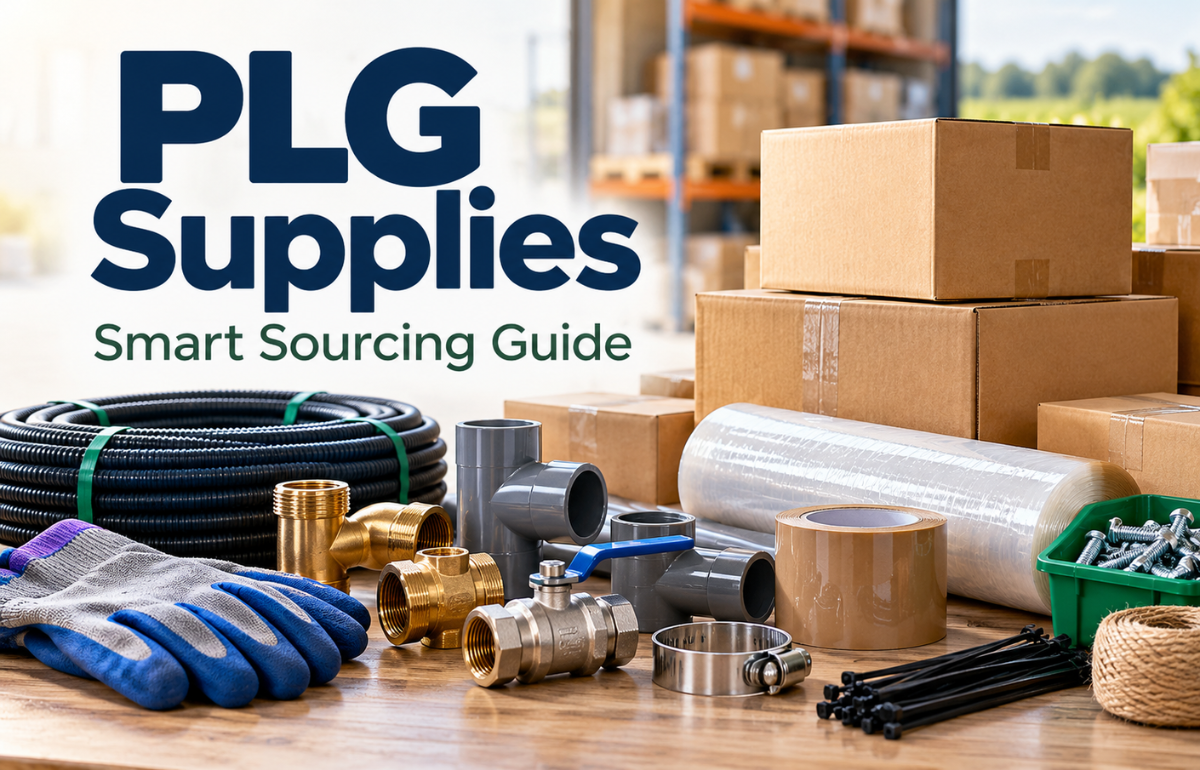
PLG Supplies is a name associated with business supplies, but it does not identify one universal product category or company. Most notably, PLG Supplies Ltd. presents itself as a US-based wholesale distributor of industrial, office, packaging, plumbing, gas, medical, and safety products. A similarly named business, PLG Country Store, sells farm, garden, hardware, and outdoor essentials near Norwich, England. In technology, PLG also stands for product-led growth, which is a different concept altogether. The practical starting point is to identify which business or meaning you need before comparing products, prices, and delivery options.
I find this distinction more useful than a long list of possible acronyms. If you need boxes for a warehouse, feed for a smallholding, or software to improve onboarding, you are making three very different purchasing decisions. Here is how I would approach each one.
What Does PLG Supplies Mean?
The phrase appears in different online contexts, and not every website using it refers to the same organization. That creates understandable confusion, especially when search results blend wholesale companies, local retailers, and technology advice.
| Name or use | Main focus | Who it serves | What to check first |
|---|---|---|---|
| PLG Supplies Ltd. (US website) | Industrial, office, packaging, plumbing, gas, medical, and safety supplies | Businesses and institutions | Business identity, quotation, delivery, and product specifications |
| PLG Country Store Ltd. (UK) | Animal feed, fencing, hardware, clothing, garden and smallholding goods | Local shoppers, rural businesses, and trades | Stock, collection options, delivery zone, and opening times |
| PLG in software | Product-led growth strategies and tools | SaaS and digital product teams | Onboarding, analytics, experimentation, and integration needs |
| PLG as a trade shorthand | Sometimes described as plumbing, lighting, and general supplies | Buyers researching construction categories | Confirm the seller actually uses that terminology |
I would not assume that the US distributor and UK store share ownership just because their names look similar. Nor would I treat expressions such as “Powerful Logistics Grid” as a recognized industry standard without independent evidence. A precise company name and website tell you far more than an unexplained acronym.
What Products Does PLG Supplies Ltd. Offer?

On its website, PLG Supplies Ltd. describes a business-to-business wholesale service aimed at facilities, offices, manufacturers, clinics, contractors, and logistics operators. These are advertised product categories, not a guarantee that every listed item is currently in stock. For a substantial order, I would request written availability and specifications.
Industrial Tools and Workplace Essentials
Industrial products include hand tools, power tools, machinery accessories, cleaning products, and safety equipment. Office items include paper, toner, stationery, and furniture.
Consolidated buying helps only when the supplier delivers the right brands, quantities, and replacement parts reliably.
Packaging and Shipping Materials
For warehouses and online retailers, the advertised range includes corrugated cartons, bubble wrap, foam, stretch film, polybags, pallet protection, tape, strapping, and shipping labels.
I would compare these by specification rather than product name alone. Carton dimensions and strength, film thickness, adhesive performance, and barcode compatibility can all affect how goods move through a packing operation. A cheaper roll of tape is not a saving if it fails on heavily loaded cartons.
Plumbing, Gas, and Maintenance Products
The company’s website lists PVC, CPVC, PEX, and copper pipes alongside valves, unions, elbows, water meters, regulators, hoses, and fittings. Such products can serve building maintenance and installation work, provided they match the intended system.
Before buying, confirm diameter, material, pressure rating, connection type, and applicable local requirements. Gas fittings deserve particular care: a familiar-looking connector is not proof of compatibility. Installation and inspection should be handled by appropriately qualified professionals where required.
Medical, Hygiene, and Protective Supplies
Advertised items include disposable gloves, masks, gowns, face shields, first-aid products, disinfectants, and testing-related supplies. Buyers in healthcare settings need more than a general promise of quality.
I would ask for the product’s intended use, manufacturer information, relevant regulatory status, shelf life, batch or lot details, and storage requirements. The correct documentation varies by item. A cleaning glove and a medical examination glove should not be evaluated as interchangeable products.
PLG Country Store: The UK Business Behind Many Norwich Searches
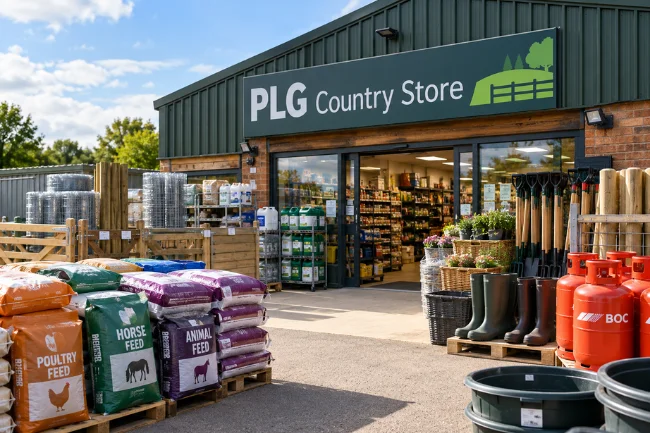
People searching for PLG Supplies in Taverham or Norwich may actually want PLG Country Store. Its official website describes a family-run business serving customers from Fir Covert Road North, Taverham, Norwich NR10 4DT. It describes itself as family-run since 1990.
There is also a useful historical detail. Companies House records PLG Country Store Ltd., company number 02984289, as incorporated on 28 October 1994. Its previous legal name was PLG Farm Supplies Limited until May 2024. Trading history and incorporation dates can differ.
What Can You Buy at the Country Store?
The store lists animal and poultry feed, bedding, water troughs, fencing wire, gates, timber, hardware, fixings, gardening products, tools, outdoor clothing, and footwear. Its website also lists bottled gas products and indicates that it acts as an agent for BOC gases.
The mix suits rural customers who may need poultry supplies, fence repairs, and waterproof boots in the same week.
Opening Hours, Collection, and Deliveries
The published opening hours are Monday to Friday, 8:00 a.m. to 4:30 p.m.; Saturday, 8:30 a.m. to 12:30 p.m.; and closed Sunday. The store offers free click and collect. Its instructions say to wait for the ready-to-collect message and bring purchase confirmation and identification.
The official delivery page currently lists the following rates. These are the site’s published figures checked in October 2026, not permanent guarantees.
| Delivery option | Published charge | Free-delivery threshold |
|---|---|---|
| Local, up to 10 miles; £25 minimum order | £10 | Orders over £250 |
| Local, 10–15 miles; £50 minimum order | £15 | Orders over £350 |
| Local, 15–20 miles; £100 minimum order | £20 | Orders over £450 |
| Local, 20–25 miles; £150 minimum order | £25 | Orders over £500 |
| Standard delivery | £4.99 | Orders over £75 |
| Click and collect | Free | No stated spend threshold |
Local deliveries are generally listed as taking three to five working days. I would still confirm the checkout total and delivery date, particularly for bulky or urgent items.
How to Choose a Reliable PLG Supplier
A supplier’s catalogue is only the beginning. I prefer evaluating purchases in the order that problems tend to arise: identity, compatibility, availability, total cost, and support after delivery.
1. Confirm the Company and Sales Channel
Start with the legal business name, location, contact details, and website. Check whether you are speaking to a wholesale distributor, a physical retailer, or an unrelated business using similar initials.
For a UK company, Companies House can help confirm incorporation and filed details. For a US supplier, verify registration with the relevant state authority where possible. Registration does not certify product quality, so I would also look for independent, specific reviews and clear purchasing terms.
2. Write Specifications Before Requesting Quotes
“Safety gloves” or “shipping boxes” is too vague for a meaningful comparison. State the exact size, material, quantity, technical requirement, packaging unit, and acceptable alternatives. Add the delivery destination and latest usable arrival date.
I would separate must-haves from preferences. A particular colour might be negotiable; a required protective rating or pipe connection often is not. This small distinction prevents a low-priced substitution from becoming an expensive mistake.
3. Compare the Delivered Cost, Not the Shelf Price
Here is an illustrative example I use to show why price-per-item comparisons can mislead. Supplier A offers 80 boxes at $12 each plus $95 delivery: $1,055 before applicable taxes. Supplier B offers the same quantity at $11.50 each but charges $170 delivery: $1,090.
Supplier B has the lower advertised unit price, yet its order costs $35 more. The comparison should also account for lead times, damage rates, return charges, and any quantity discounts. For repeat orders, I would measure cost per usable item delivered on time rather than the cheapest figure on a product page.
4. Ask How Problems Are Resolved
Before committing, check who pays return postage, what happens if an item is damaged, and whether the seller will replace incorrect stock. Review order cutoffs, tracking arrangements, warranty handling, and customer service response channels.
The US wholesale site’s published terms state that orders are intended for business customers, shipping is within the United States, and ordinary returns have a 15-day window subject to conditions. The UK store publishes a separate returns policy. Read the policy for the actual seller; do not transfer one business’s rules to the other. Any applicable statutory rights also matter.
Making Repeat Purchasing Easier Without Overstocking
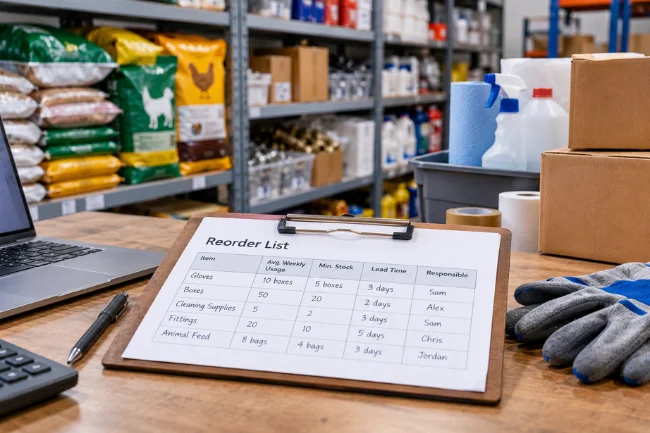
Smart sourcing is not automatically about sophisticated software. For a small operation, a well-kept reorder sheet may prevent more disruptions than a complex dashboard nobody updates.
Keep a Short List of Critical Items
I would start with the products that can stop work when they run out: gloves, boxes, cleaning consumables, common fittings, or animal feed. Record average weekly usage, minimum stock, supplier lead time, and the person responsible for reordering.
Then group supplies by urgency. Frequently used, inexpensive essentials deserve straightforward replenishment rules. High-value or specialized items may need approval and project-specific ordering.
Use a Realistic Reorder Point
A simple method is: reorder point = expected usage during lead time + safety stock. Suppose a site uses six cartons of packaging per day, delivery usually takes seven days, and management wants 18 cartons as a buffer. Reordering at approximately 60 cartons gives 42 for expected lead-time use plus 18 for unexpected demand.
This is a planning example, not a universal stock target. If usage fluctuates sharply or lead times are unreliable, review the buffer using actual historical records. Inventory tied up in a warehouse has a cost, just as a stockout does.
Review Supplier Performance Regularly
I would track four practical measures: on-time delivery rate, order accuracy, damaged or rejected items, and the final cost per order. Monthly reviews reveal whether delays and replacements are cancelling apparent savings.
For multi-site operations, shared item descriptions and purchasing records become particularly valuable. They reduce duplicate orders and make it easier to spot which locations are carrying excess stock.
Quality, Compliance, and Sustainability: Questions Worth Asking
Low prices should never override suitability. For protective equipment, ask which recognized performance requirements apply to the job. For electrical, plumbing, and gas components, verify compatibility and any local certification or installation rules. For medical items, verify the intended use and required regulatory documentation.
Sustainability claims also deserve a closer look. Recycled packaging can be useful, but it still needs to protect products effectively. Refillable or reusable containers may lower waste, yet cleaning, transport, and return logistics affect the real benefit.
I would ask suppliers for measurable details rather than labels such as “eco-friendly”: recycled content, packaging weight, durability, replacement frequency, and disposal guidance. A product that lasts twice as long may be a better purchase than one carrying a vague green claim.
Common Mistakes When Researching PLG Supplies

The first mistake is assuming every search result describes the same company. A Norwich store page, a US wholesale catalogue, and an article about product-led growth can share initials without sharing services or ownership.
Another is assuming that a long list of products equals confirmed stock. Product pages change, and large orders can require special sourcing. Written confirmation matters more than a broad advertising claim.
The third is choosing the lowest unit price without adding delivery, taxes, handling, and potential replacement costs. The fourth is buying regulated or technical items before checking compatibility and documentation.
Finally, I would avoid copying delivery prices from old articles. Retail rates, minimum orders, and collection arrangements change. Going directly to a seller’s current policy is safer than relying on a number that may have been correct last year.
Does PLG Also Mean Product-Led Growth?
Yes. In software, product-led growth describes a business approach in which the product experience helps attract, activate, retain, and expand customers. Teams commonly use onboarding platforms, product analytics, customer messaging, feature flags, and experimentation tools.
Those tools can support a PLG strategy, but they are not the same as industrial or farm supplies. Similarly, expressions such as “plumbing, lighting, and general” may be used descriptively in some articles but should not be mistaken for the official definition of every company named PLG.
If your goal is software adoption, compare tools by integration requirements, privacy controls, activation metrics, and usability. If your goal is purchasing physical materials, product specifications and fulfilment terms deserve the attention instead.
My Quick Checklist Before Placing an Order
When I evaluate an unfamiliar supplier, I want clear answers to six questions:
- Am I dealing with the correct registered business and website?
- Is the exact product suitable for its intended use?
- Is the required quantity actually available?
- What will I pay after shipping, taxes, and any extra charges?
- When should the order arrive, and how will it be tracked?
- Who handles defects, returns, and missing items?
For a small order, these checks take little effort. For repeat purchasing or safety-critical equipment, I would keep answers and quotations in writing. That record makes future orders easier and gives everyone a shared reference if something goes wrong.
Frequently Asked Questions
What Is PLG Supplies?
PLG Supplies can refer to a US B2B wholesale supplier; similar searches may also lead to PLG Country Store in Norwich or to product-led growth in software.
Is PLG Supplies the Same as PLG Country Store?
They should be treated as separate businesses unless a reliable source establishes a formal relationship. Their advertised products and markets differ.
Where Is PLG Country Store Located?
Its official website lists Fir Covert Road North, Taverham, Norwich NR10 4DT, England.
Does PLG Country Store Offer Delivery and Click and Collect?
Yes. Its website lists free click and collect, local delivery bands, and standard delivery; check current charges before ordering.
Can Businesses Order PLG Supplies in Bulk?
The US PLG Supplies Ltd. website advertises wholesale orders and quotations. Confirm quantities, terms, product suitability, and supplier credentials directly.
Final Thoughts
The best way to understand PLG Supplies is to match the name to the need. A US procurement team may be researching a multi-category wholesale distributor, while a Norfolk shopper may simply need feed, fencing, or tools from a nearby country store. A software team means something else entirely.
I would begin with the correct official website, write down the exact products required, and compare the total delivered cost alongside quality and support. That turns a confusing search term into a confident, practical buying decision.

Ethan Caldwell is a business research writer with 9+ years of experience covering entrepreneurship, market trends, business strategies, and industry insights. He focuses on creating clear, data-informed articles that help readers understand modern business concepts.