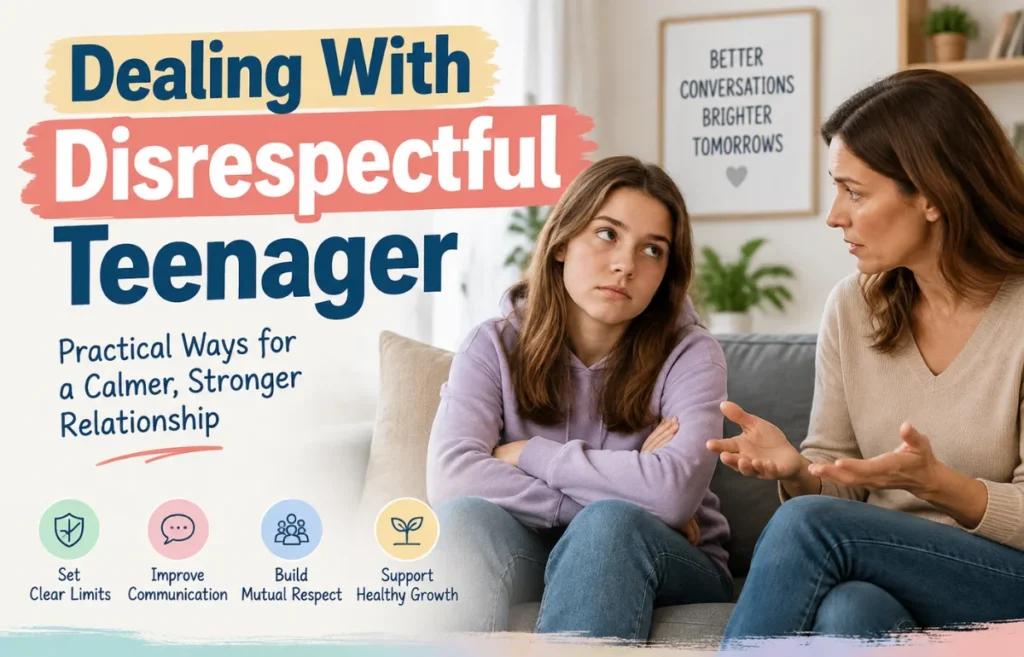
3 year old tantrums are emotional outbursts that happen when a child becomes frustrated, angry, or overwhelmed and cannot yet manage those feelings consistently. They may involve crying, screaming, dropping to the floor, or sometimes hitting and kicking. At three, children are developing independence, language, and self-control, so their ability to cope can fall short of what they want to do.
Tantrums are common at this age, but their frequency, intensity, and effect on everyday life matter. The American Academy of Child and Adolescent Psychiatry describes them as responses to frustration or distress, rather than a diagnosis in themselves.
I approach the subject with two questions: what support does the child need right now, and what skill can be practiced later? That distinction helps turn broad advice into something usable when your child is screaming beside the shopping cart.
Why Does a Three-Year-Old Have Tantrums?
A three-year-old may insist on opening a yogurt, then cry because the lid will not move. The desire for independence is real. So is the frustration when the task exceeds their current ability.
Nemours KidsHealth identifies developing language, a wish for control, hunger, tiredness, and discomfort as common factors behind tantrums. Several can occur together.
I would look beyond the final trigger. The wrong cup may be the last disappointment in a morning that already included a rushed breakfast and a difficult goodbye.
Being Able to Talk Does Not Mean Being Able to Cope
By three, most children can manage short back-and-forth conversations, according to the CDC’s developmental milestones. That does not mean they can reliably describe complicated feelings or negotiate calmly when upset.
A child who explains a dinosaur’s name clearly may still scream when another child takes it. Vocabulary and emotional regulation are different skills.
Instead of asking, “Why can’t you just tell me?”, I would offer a usable phrase later: “I was still playing,” or “Help me open it.” Keep the replacement language short enough to remember.
Look for Patterns Around Transitions
Stopping play, leaving the playground, getting dressed, and turning off a screen all involve moving away from something the child wants.
For a practical example, consider leaving a sandpit. “We’re going now” arrives with no visible ending. “Fill this last bucket, then shoes” gives the activity a finish the child can understand.
That is a suggested adjustment, not a guarantee. A child can understand the plan and still dislike it. The useful question is whether the transition becomes more manageable over repeated attempts.
Are 3 Year Old Tantrums Normal?
Yes, tantrums can be part of typical development at three. The NHS notes that they generally become less common as communication improves and are much less common by age four.
However, “common” does not mean every pattern should be dismissed. I would consider what happens between episodes, whether anyone gets hurt, and whether family activities or preschool attendance are being disrupted.
| What you notice | How to approach it |
|---|---|
| Crying after a limit, followed by a return to play | Respond calmly and watch for repeat triggers. |
| More outbursts on unusually tiring days | Review sleep, meals, rest, and demands. |
| Episodes becoming more frequent or intense | Arrange a conversation with the pediatrician. |
| Repeated injury, self-injury, or inability to recover | Seek professional assessment rather than relying on home strategies alone. |
| Loss of language or other previously learned skills | Raise the developmental change promptly with the child’s doctor. |
This table is a discussion aid, not a diagnostic checklist. A single difficult afternoon cannot describe a child’s whole development.
What to Do During a Tantrum
When a child is already overwhelmed, a long explanation is unlikely to be useful. Current CDC emotion-coaching guidance recommends ensuring safety, staying nearby, and waiting until both adult and child are calm before working through feelings and solutions.
Make the Space Safe
Move hard or breakable objects away. Give siblings space. If your child is near traffic, stairs, or another immediate hazard, move them to safety.
For hitting, a brief boundary is enough: “I won’t let you hit. I’m moving back.” Avoid turning safety into a lecture about being a good child.
Do not hit, shake, or pin the child down to make the crying stop. If you cannot keep everyone safe, get help. Nemours recommends moving a child who may hurt themselves or others to a quiet, safe place.
Use a Short Sentence, Then Pause
I would choose one sentence that acknowledges the problem and one that explains what happens next:
“You wanted more playground time. We’re leaving now.”
Then pause. Repeating the message louder, adding five reasons, or demanding an answer creates more conversation for an already upset child to manage.
You do not have to find perfect words. A steady voice and a clear response are more realistic goals than producing a carefully rehearsed speech while carrying bags and watching another child.
Offer Comfort Without Forcing It
Some children welcome a hug; others pull away. Ask briefly, or offer an open hand, and notice the response. The CDC recommends respecting children’s verbal and nonverbal signals when offering physical connection.
For a child who rejects touch, “I’ll sit here” may be enough. Avoid repeatedly reaching for them after they have shown that they want space, unless safety requires intervention.
Comfort can coexist with the original limit. You can hold an upset child while the tablet stays off. Reassurance does not require granting the request that started the argument.
Hold the Boundary Without Bargaining
If the answer changes only after screaming becomes louder, the child may learn to repeat that sequence. The CDC’s behavior guidance recommends consistent follow-through and consequences related to the behavior.
Suppose a toy is being thrown at someone. Remove the toy to protect them, explain briefly, and discuss safe play later. There is no need to add an unrelated threat about canceling a weekend visit.
Also check whether the original request was reasonable. If a shoe hurts, fix the shoe. Meeting a genuine need is different from offering a reward to stop a protest.
What Should You Say Instead of “Stop Crying”?
I prefer language that tells the child what they can do, rather than demanding an emotion disappear. These are illustrative scripts to adapt, not phrases that work for every child.
| Situation | Instead of | Try |
|---|---|---|
| Your child wants a forbidden item | “Stop making a scene.” | “That stays on the shelf. You can help carry this.” |
| Your child hits | “You’re being naughty.” | “I won’t let you hit. Move your hands away.” |
| Your child struggles with a task | “It’s easy. Just do it.” | “That part is tricky. Show me where you need help.” |
| Your child refuses to leave | “I’m leaving without you.” | “It’s time to go. Walk with me or I’ll help you.” |
| Your child rejects a hug | “Come here right now.” | “You want space. I’ll stay nearby.” |
Offer choices only when both options are available. “Do you want to leave?” creates confusion if leaving is not optional.
Should You Ignore a Tantrum or Use Time-Out?
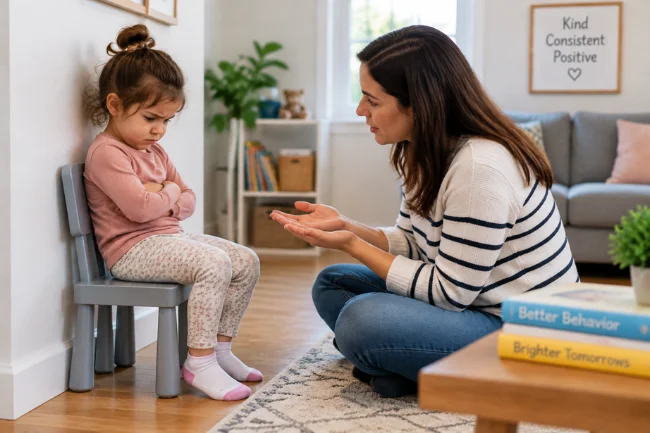
There is no single response for every outburst. Briefly withholding attention from safe, minor attention-seeking behavior can be appropriate. Ignoring pain, fear, injury, or escalating distress is a different matter.
The American Academy of Pediatrics includes selective ignoring and time-out among discipline options, alongside clear limits, redirection, and positive attention. It advises against spanking, yelling, and shaming.
I would avoid treating crying itself as the rule violation. Identify the behavior you are addressing: hitting, throwing something dangerous, or another clearly explained action.
If you use time-out, learn an age-appropriate method and apply it calmly. Do not improvise locked-room isolation or frightening threats. If discipline repeatedly becomes a physical struggle, ask your pediatrician for help choosing a workable approach.
What to Do After Your Child Calms Down
Once your child can engage again, reconnect and keep the discussion brief. You do not need a detailed investigation into every tear.
Try: “You were upset when the blocks fell. Next time, you can ask me to help rebuild.” Then practice the words together if your child is willing.
Notice the skill you want repeated: “You moved your hands away when you were angry.” The CDC recommends specific positive attention to encourage desired behavior.
If someone was hurt, help your child participate in repair: checking on the person or helping restore the activity. Keep it practical rather than staging a forced performance of remorse.
If you shouted, take responsibility: “I shouted. That was my mistake. Next time I’ll pause.” The AAP recommends apologizing and explaining how you will respond differently after a parenting mistake.
How to Reduce Everyday Tantrum Triggers
Preventing 3 year old tantrums does not mean removing every disappointment. It means making everyday expectations manageable while giving your child repeated opportunities to practice.
Make One Difficult Routine More Predictable
The CDC’s guidance on routines emphasizes predictability, simple expectations, and follow-through. Start with the part of your day that regularly becomes difficult.
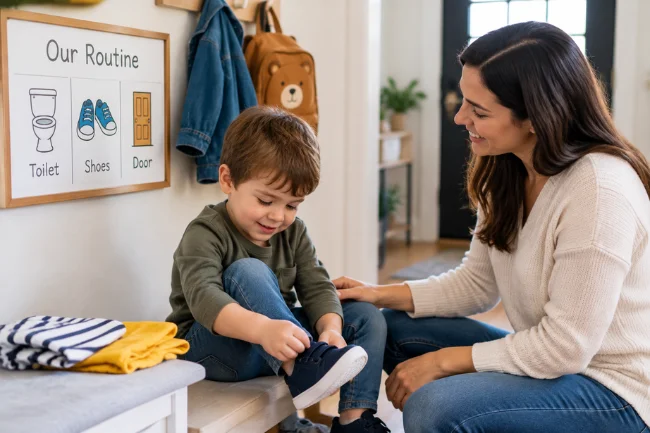
For dressing, I might suggest laying out two suitable outfits before breakfast. For leaving home, use a small picture sequence: toilet, shoes, door. For bedtime, keep the order familiar even when the exact time varies.
Explain changes before everyone is upset. “Tonight Grandma will read the story” is easier to introduce during dinner than during an argument beside the bed.
Practice Coping Skills When Nothing Is Wrong
The CDC’s three-year milestones guidance suggests teaching children feeling words and ways to settle, such as deep breaths, a favorite toy, or a quiet place.
Turn practice into a short moment during play. A toy animal can feel frustrated when its tower falls. Ask, “What could the bear do?” Try asking for help, rebuilding, or taking a break.
Do not make successful breathing another demand during the loudest moment. Practice gives your child options; it does not create an obligation to perform calmness on command.
Use a Simple Log to Find What You Are Missing
“My child melts down all the time” captures exhaustion, but it does not identify what to change. I suggest a brief, private log that separates observation from interpretation.
After an episode, record the situation, what happened just beforehand, the child’s actions, your response, and how recovery looked. Add relevant context such as an unusually late meal or poor night’s sleep.
Write “cried when the bath ended,” rather than “wanted to control me.” The first describes something you can examine. The second assigns a motive you cannot confirm.
Here is an illustrative entry:
“Tuesday, bath time. Asked to get out without warning. Cried and splashed. I removed the slippery toys, stayed close, and repeated that bath time was finished. Settled after drying and choosing pajamas.”
For the next few baths, try one adjustment: agree on the last bath activity before pulling the plug. Keep other parts of the routine similar so the comparison is useful.
Record easier days too. Perhaps the same ending went smoothly when the child was less tired or had a clear role in putting toys away.
This is not an experiment that proves a cause. It is a way to arrive at a better question. “Does a visible ending help?” is more actionable than “How do I stop all tantrums?”
Look for progress beyond silence: fewer unsafe actions, shorter recovery, or accepting help sooner. A child may still cry while learning to cope more safely.
When to Seek Help for Severe Tantrums
Contact your child’s pediatrician if outbursts repeatedly involve dangerous aggression or self-injury, are unusually prolonged or frequent, or interfere with preschool, relationships, and daily activities.
AACAP identifies tantrums lasting longer than 25 minutes, difficulty calming, and harmful behavior as reasons for assessment. This is not a diagnostic stopwatch: a shorter episode can still be serious when someone is unsafe.
Discuss loss of previously acquired skills or concerns about communication too. The CDC advises acting early on developmental concerns, rather than waiting for a child to grow out of them.
Bring your notes and ask preschool staff what they observe. Different patterns across settings are useful information, not proof that one caregiver is causing the problem.
Get urgent help for immediate danger or serious injury. If you fear you might hurt your child, have a trusted adult take over if possible and seek immediate support.
Start With the Next Difficult Moment
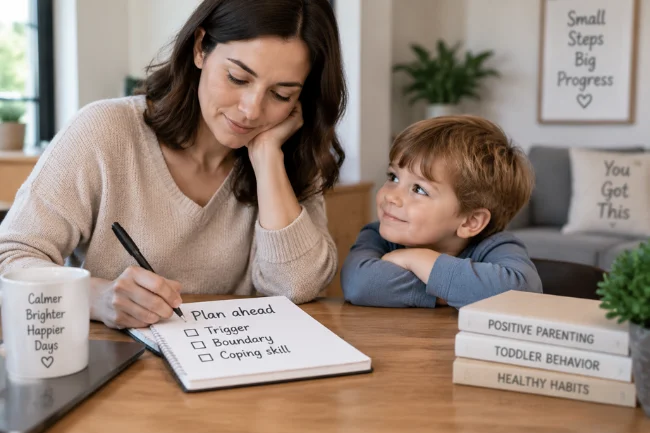
Managing 3 year old tantrums takes more than finding the right sentence. I would begin with one predictable trigger, one clear boundary, and one coping skill to practice when everyone is calm.
Choose that situation today and write down your response before it happens again. If episodes are unsafe or increasingly disruptive, make a pediatric appointment alongside those changes.
Frequently Asked Questions
Is it normal for a three-year-old to have tantrums every day?
Daily tantrums can happen, but frequency alone does not tell the whole story. Discuss repeated intense, prolonged, or disruptive episodes with your pediatrician.
Why are my three-year-old’s tantrums getting worse?
Review tiredness, hunger, discomfort, communication frustration, and recent changes. A persistent increase in severity or frequency deserves a conversation with your child’s doctor.
What should I do when my three-year-old hits during a tantrum?
Protect everyone, move dangerous objects away, and state a short limit. Teach an alternative after your child settles; never hit back.
Should I hug my child during a tantrum?
Offer a hug if your child welcomes it. If they pull away, stay nearby and give space while maintaining safety.
At what age do tantrums usually improve?
Tantrums generally become less common as communication and coping skills develop. The NHS notes that they are much less common by age four.
Explore more parenting guidance to support your child’s development and everyday family life.

Elena Whitmore is a parenting writer with 7 years of experience covering child development, family wellbeing, and everyday parenting. She translates research into practical guidance to help parents strengthen family relationships and support their children’s emotional and physical development.