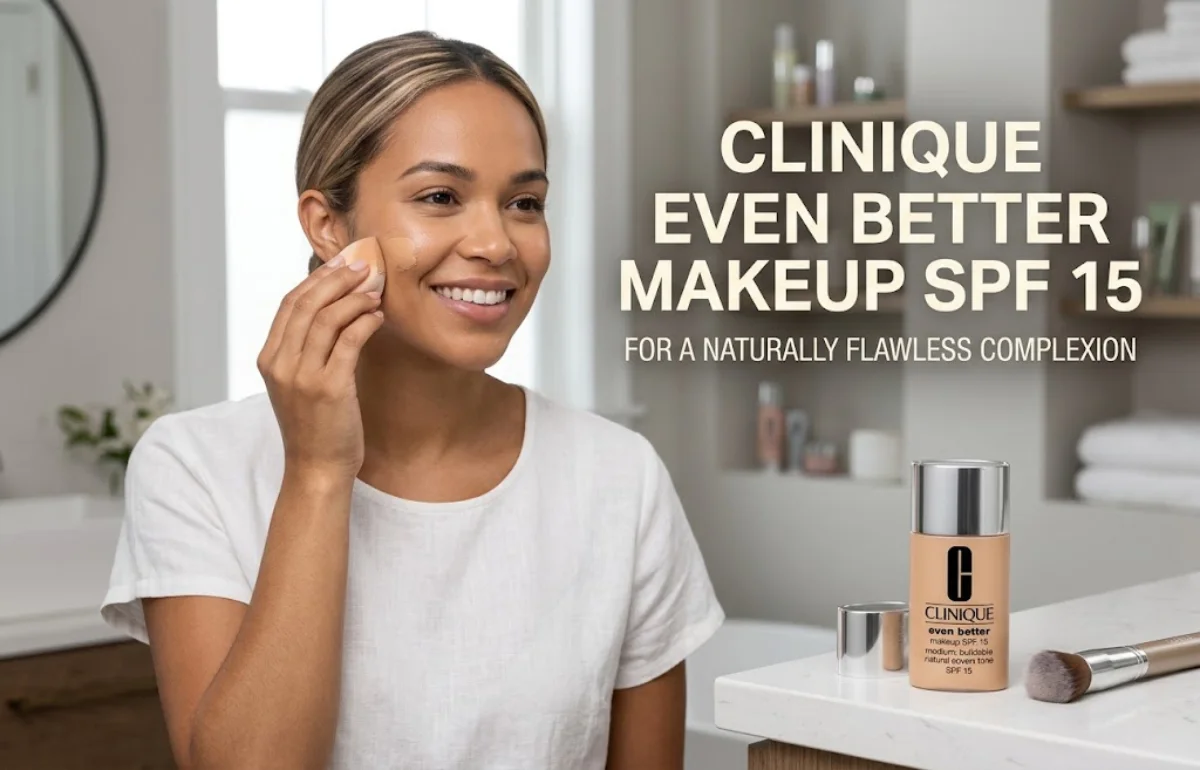
Clinique Even Better Makeup SPF 15 is a dermatologist-developed liquid foundation that gives medium, buildable coverage while providing broad-spectrum sun protection factor 15. It’s formulated with vitamin C and a polymer blend called BetterFlex Technology, and it’s designed to even out skin tone, smooth the look of texture, and visibly reduce dark spots after twelve weeks of daily use. It comes in 50 shades and works best on dry to combination-oily skin types that want a natural finish rather than a thick, mask-like look.
I’ve worn this foundation on and off for a few years now, through humid summers and dry, flaky winters, and it’s one of the few drugstore-adjacent formulas that never left my skin feeling suffocated by the end of the day.
That’s the quick answer. Now let’s get into what’s actually in the bottle, how it behaves on real skin, who it suits, and where it genuinely falls short, because no foundation is perfect for everyone.
What’s Actually Inside The Formula
The active sunscreen ingredients in Clinique Even Better Makeup SPF 15 are octinoxate, titanium dioxide, and zinc oxide. That combination is why the brand can label it broad spectrum, meaning it filters both UVB rays (the ones that cause sunburn) and UVA rays (the ones tied to premature aging and pigmentation).
Beyond the sunscreen filters, the formula leans on silicones like dimethicone and phenyl trimethicone for that silky, smooth-over-pores texture, plus glycerin for a bit of hydration. Vitamin C, listed as tetrahexyldecyl ascorbate and magnesium ascorbyl phosphate, is the ingredient doing the heavy lifting for brightening.
What stood out to me when I actually read the ingredient list is that it’s fragrance-free, talc-free, and free of parabens, phthalates, sodium lauryl sulfate, and synthetic dyes. For anyone with reactive or easily irritated skin, that ingredient philosophy matters more than most marketing copy lets on.
A Quick Look At The Brand Behind The Formula

Clinique was born in 1968 after a beauty editor asked a dermatologist whether great skin could actually be created through formulation rather than luck. That question became the foundation of the brand, and it’s still the reason Clinique products go through such heavy allergy testing today, reportedly around 7,200 individual tests across its skincare and makeup lines.
That background matters when you’re evaluating Clinique Even Better Makeup SPF 15, because it explains the fragrance-free, ophthalmologist-tested, dermatologist-developed positioning you see printed on the box. It’s not just marketing language borrowed from a trend cycle. The brand has built its identity around this exact promise for more than five decades, and this foundation is a fairly clear extension of that philosophy rather than a one-off product.
How It Performs On Skin, From My Own Experience
I have combination skin that leans oily around the T-zone and gets tight and flaky on my cheeks in winter. Clinique Even Better Makeup SPF 15 has handled both extremes reasonably well, though not flawlessly.
On humid days, it holds up for a solid six to eight hours before I notice any shine breaking through around my nose. It’s not a full matte finish, so if you’re someone who needs a foundation that locks your face down for twelve hours straight, this isn’t that. It settles into a soft, natural satin instead of a flat matte, which honestly photographs better in daylight than most matte formulas I’ve tried.
The real strength, in my experience, is how it looks on dry patches. Because the base is creamy rather than powdery, it doesn’t cling to flaky skin the way some long-wear foundations do. I don’t need to prep with three layers of moisturizer just to avoid looking cakey.
Coverage-wise, one thin layer evens out redness and minor discoloration. Building it up over acne scars or stubborn dark spots takes two light layers, and even then it stays looking like skin rather than a mask. That’s the trade-off with a medium coverage foundation: you get a believable finish, but heavy blemishes or deep hyperpigmentation may still need a concealer on top.
The SPF 15 Factor: What It Actually Protects Against
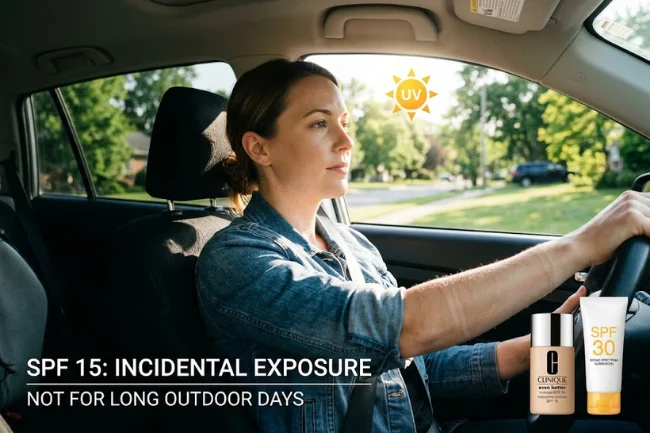
Here’s something a lot of reviews gloss over. SPF 15 is on the lower end of what dermatologists generally recommend for daily sun protection, and most skin doctors suggest SPF 30 or higher as a baseline, especially for anyone spending real time outdoors.
That doesn’t make the SPF in Clinique Even Better Makeup SPF 15 useless. It adds a layer of defense against incidental daily exposure, like walking to your car or sitting near a window. But if you’re going to be outside for an extended period, this foundation should never be your only line of defense.
My honest approach, and one that dermatologists would back, is to apply a proper broad-spectrum sunscreen with SPF 30 or higher underneath your makeup, then let this foundation act as a top-up rather than your primary shield. I made the mistake early on of relying on the foundation alone during a long outdoor event and came home with visible tan lines where my base makeup had worn thin. That was a useful, if slightly annoying, lesson.
Shade Range And Undertone Matching
One area where this foundation genuinely earns its reputation is shade inclusivity. With 50 shades spanning from very fair to deep, there’s a realistic chance of finding a close match regardless of your skin tone.
Clinique labels its shades with either CN or WN before the number and name. CN stands for cool-neutral undertones, while WN stands for warm-neutral undertones. This labeling system trips a lot of first-time buyers up, so here’s a simple breakdown.
If you’re shopping online without swatching in person, my recommendation is to check your jawline in natural daylight and compare it against a white piece of paper. Cool undertones will look slightly pink or rosy next to white, while warm undertones will look more golden or yellow.
Who This Foundation Is Actually Suited For
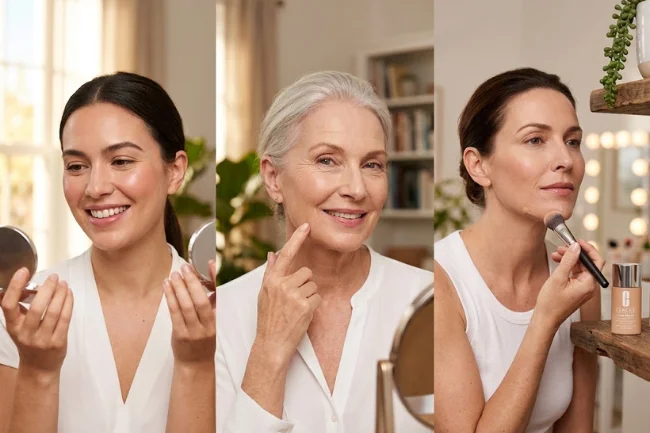
Clinique markets this as ideal for dry to combination-oily skin, and that lines up with what I’ve experienced and what shows up consistently in customer feedback across retailers. It’s not marketed for extremely oily, acne-prone skin, and if oil control is your number one priority, you may find yourself blotting more than you’d like by midday.
It also tends to get praised heavily by mature skin users. Several long-time wearers mention that it doesn’t settle into fine lines the way some full-coverage formulas do, and the lightweight, hydrating base sits more comfortably on skin that’s lost some of its natural moisture with age.
Application Tips That Actually Make A Difference
The brand’s official instruction is simple: start in the center of your face and blend outward, building coverage only where you need it. In practice, a few small adjustments made a noticeable difference for me.
Using a damp makeup sponge instead of a dry brush thins the product out and gives a more skin-like finish rather than a painted-on look. A little goes further than you’d expect, since the formula is fairly pigmented for a medium coverage product.
Letting your moisturizer fully absorb before applying this foundation also matters. Because the base is creamy, applying it over a half-absorbed moisturizer can cause slight pilling, especially around the nose and chin.
Clinique Even Better Makeup SPF 15 Versus Even Better Clinical Vitamin Makeup SPF 45
Clinique also sells a newer, higher-SPF option called Even Better Clinical Vitamin Makeup SPF 45. Since the names are so similar, a lot of shoppers end up confused about which one to buy. Here’s how they actually compare.
If your priority is coverage and correcting existing discoloration, the SPF 15 version is the stronger pick. If your priority is stronger daily sun defense with a lighter, dewier finish, the SPF 45 version is worth considering instead.
Does It Actually Reduce Dark Spots?
Clinique’s clinical claim, based on a 12-week test involving 22 women, is that consistent daily use visibly reduces the appearance of dark spots on bare skin. I want to be transparent here: that’s a small sample size, and results from any skincare-adjacent claim like this will vary by individual.
What I can say from personal use is that the vitamin C content combined with daily SPF habit-building did seem to keep my post-acne marks from getting darker over a few months, which lines up with how vitamin C and sun protection are generally understood to work together. I wouldn’t buy this foundation expecting dramatic spot-fading results on its own, but as part of a broader routine that includes actual skincare treatment, it’s a reasonable supporting player.
Common Mistakes People Make With This Foundation
A few patterns show up again and again in reviews and in my own trial and error, so it’s worth naming them directly.
Skipping sunscreen underneath because the foundation “already has SPF” is probably the most common one. SPF 15 fades in effectiveness as the product wears through the day, and a thin layer of foundation rarely delivers the full labeled protection anyway, since most people apply far less than the amount used in lab testing.
Another mistake is applying too much product at once. Because the pigment load is fairly strong, piling it on in one thick layer often looks heavier and more obvious than building it gradually in two thin ones.
Storing the bottle somewhere hot, like a car dashboard or a sunny bathroom windowsill, can also break down the SPF filters faster and shorten the product’s effective shelf life, which typically sits around 12 months after opening.
A smaller but common mistake is skipping the shake before use. Because the formula separates slightly over weeks of sitting, a quick shake redistributes the sunscreen filters and pigment evenly, so the last third of the bottle performs just as well as the first application did.
Price, Availability, And Value
Clinique Even Better Makeup SPF 15 retails around 39 dollars for a 1 fluid ounce bottle, positioning it in the mid-range prestige category rather than drugstore or ultra-luxury pricing. It’s sold through Clinique’s own site, Sephora, Ulta, Nordstrom, Macy’s, and several other major retailers, so availability isn’t a concern.
Given that a single bottle realistically lasts two to three months with daily use, the cost per wear works out to be fairly reasonable for a foundation with a dermatologist-developed formula and a fragrance-free, allergy-tested track record.
Final Thoughts On Clinique Even Better Makeup SPF 15
After extended use, my take is that Clinique Even Better Makeup SPF 15 earns its long-standing popularity honestly. It’s not the most glamorous or trend-driven foundation on the shelf, but it delivers a comfortable, natural-looking finish, a genuinely wide shade range, and a formula that respects sensitive skin without sacrificing coverage.
The SPF 15 is a nice bonus rather than a substitute for real sun protection, and treating it that way will save you from the sunburn surprise I learned about the hard way. If you want a reliable, everyday medium coverage foundation that won’t aggravate reactive skin, this one deserves a spot on your testing list. Try a sample size or a shade-matched trial size before committing to the full bottle, and pair it with a proper SPF 30 or higher sunscreen underneath for genuine daily protection.
Frequently Asked Questions
Is Clinique Even Better Makeup SPF 15 good for oily skin?
It works reasonably well for combination-oily skin, but it’s not a mattifying formula, so very oily skin types may need blotting papers or a setting powder by midday.
Does Clinique Even Better Makeup SPF 15 contain fragrance?
No, it’s 100 percent fragrance-free and allergy tested, which makes it a common recommendation for sensitive or reactive skin.
How long does one bottle of Clinique Even Better Makeup SPF 15 last?
With daily use, one 1 fluid ounce bottle typically lasts two to three months, depending on how much coverage you build each time.
Can I wear Clinique Even Better Makeup SPF 15 without additional sunscreen?
You can, but SPF 15 alone isn’t considered sufficient for extended sun exposure, so applying a broad-spectrum SPF 30 or higher underneath is the safer choice.
What is the difference between CN and WN shades in Clinique Even Better Makeup?
CN stands for cool-neutral undertones, typically suited to skin with pink or blue undertones, while WN stands for warm-neutral undertones, suited to skin with golden or yellow undertones.

Isabella Hart is a beauty and self-care writer with 7 years of experience creating practical content about skincare routines, beauty habits, personal care, and confidence-building practices. She focuses on sharing simple, research-informed guidance to help readers make informed choices and develop routines that support healthy, natural beauty.