

The Ultimate Guide to Nataraja Dance Images: Symbolism & Spiritual Secrets
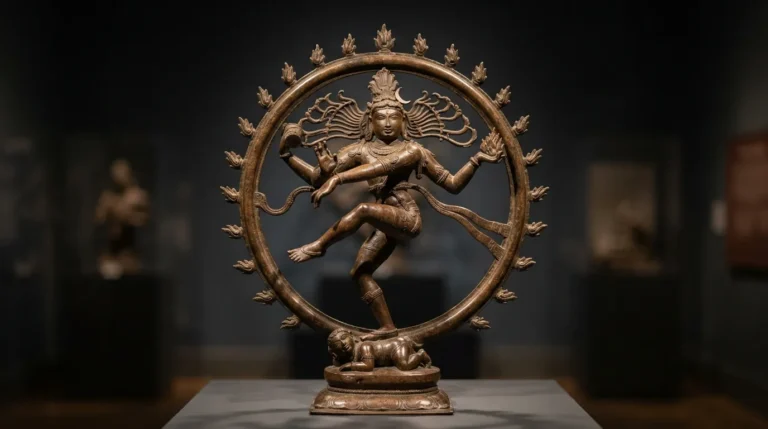
This image illustrates the iconic Chola dynasty bronze sculpture of Lord Shiva in his Nataraja form. Captured in a 3/4th studio lighting setup, this visual highlights the impeccable craftsmanship of ancient Indian metalworkers. The bronze texture reflects a warm, ancient patina. Lord Shiva is depicted balancing on his right leg over the dwarf demon Apasmara, which symbolizes the subduing of ignorance and ego. His left leg is gracefully raised across his body, representing liberation (Moksha) and the path to spiritual freedom. Surrounding the deity is a perfect circular Prabhamandala (halo of fire) with individual stylized flame tongues sculpted along the outer rim. This image is perfect for understanding the classic, historical proportions of the cosmic dance.
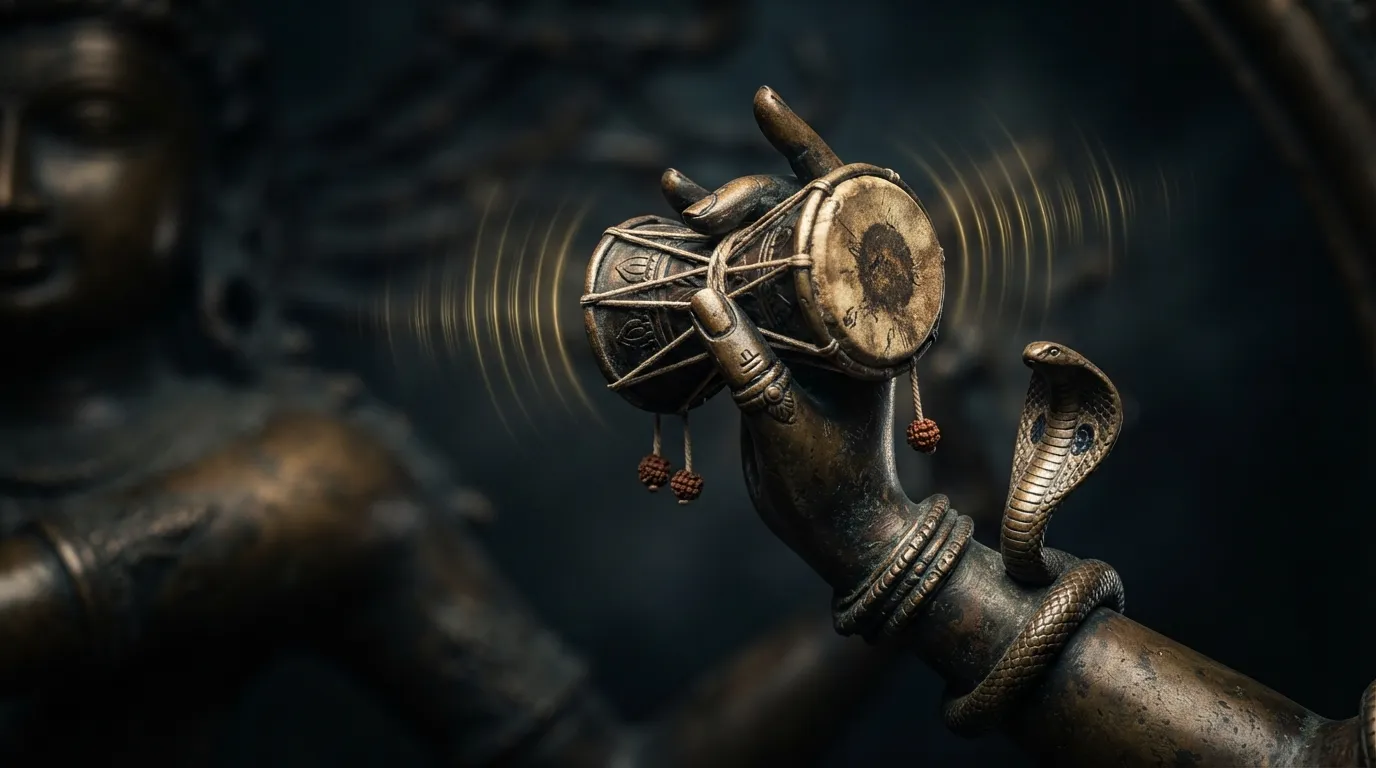
A macro close-up shot focusing on the upper right hand of the Nataraja figure. The hand is elegantly posed in the damru-hasta mudra, firmly grasping the small, hourglass-shaped drum known as the Damru. Visualized in a mystical dark background, subtle golden ripples or sound waves emanate from the drum, representing the primordial vibration (Nada Brahma) that initiated the creation of the universe. A sacred cobra snake is wrapped around the wrist, indicating Shiva’s mastery over death and cycles of rebirth. The lighting is sharp and dramatic, highlighting the fine lines of the bronze fingers and the textured leather surface of the miniature drum heads.
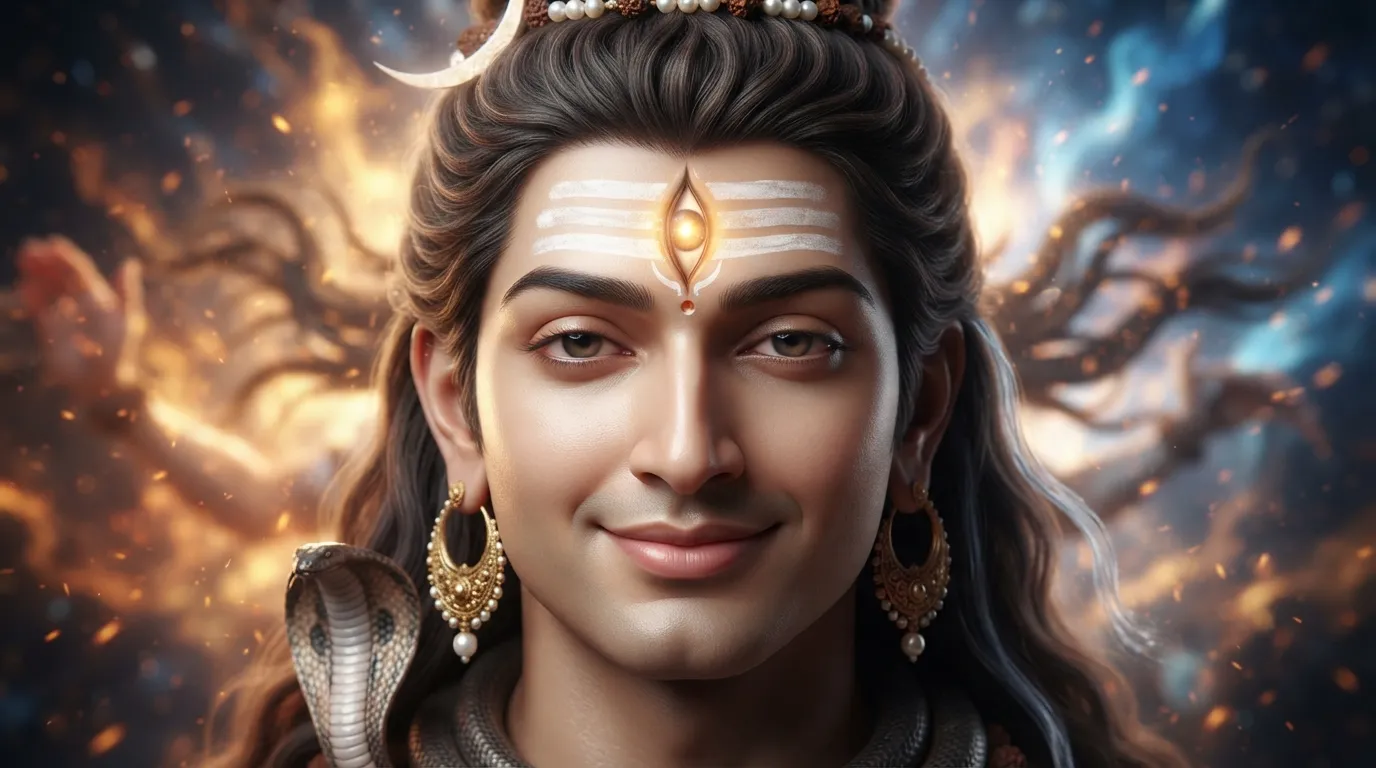
An extreme close-up of the serene face of Lord Shiva as Nataraja. Despite the intense, fast-paced cosmic dance of destruction, his face remains perfectly calm, symmetrical, and smiling gently, symbolizing his inner peace amidst external chaos. Positioned vertically on his forehead is his third eye (Jnana Chakshu), slightly open and glowing with a soft, golden, divine light. This eye represents transcendent wisdom, spiritual vision, and the destruction of the material illusion. The lighting is soft and focused on the center of the face, casting gentle shadows that accentuate the elegant Chola-style facial features, such as the sharp nose, arched eyebrows, and elongated ears.
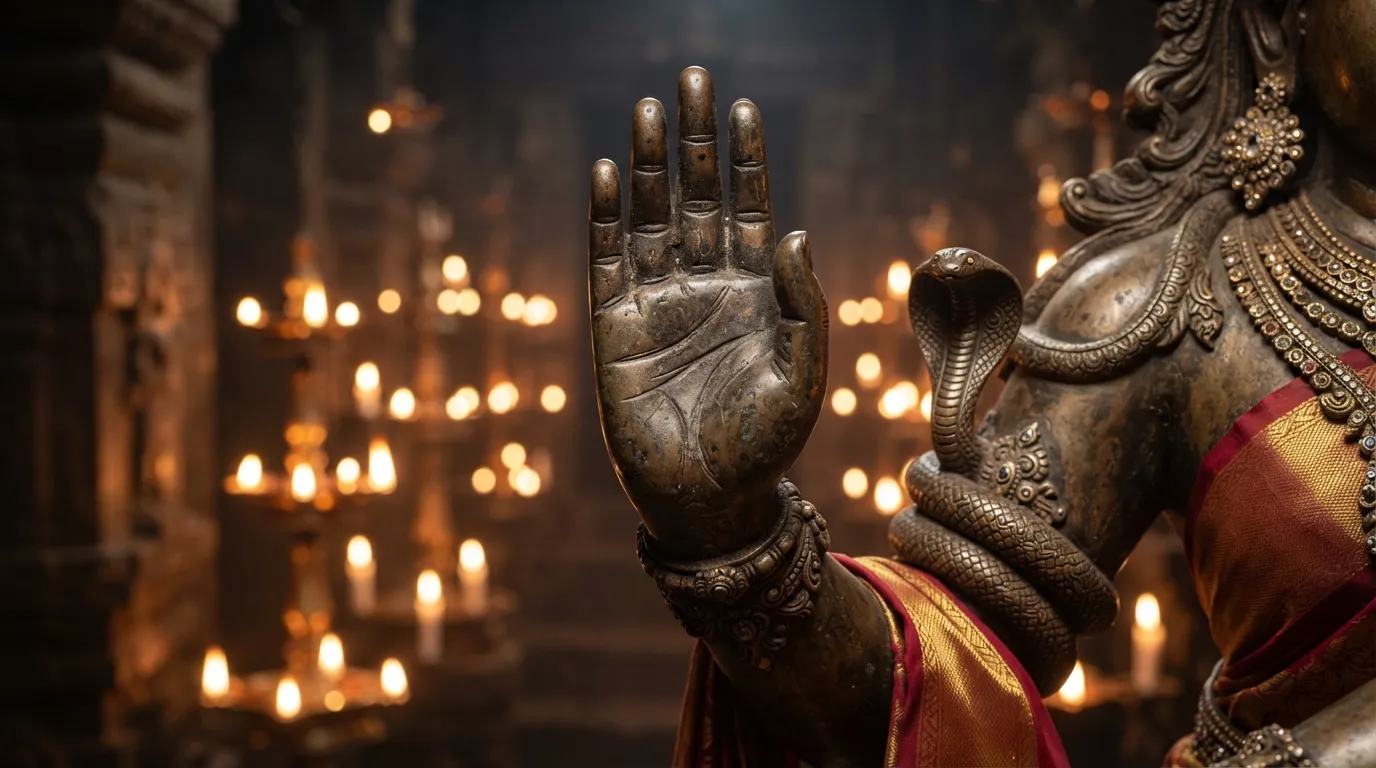
A detailed study of the lower right hand of the Nataraja deity, raised in the Abhaya Mudra (the “fear not” gesture). The palm is open, facing directly outward toward the viewer with fingers pointing vertically upward. Wrapped around the forearm is a detailed coiled serpent, symbolizing the transition of the soul. The background features a soft, warm bokeh of temple oil lamps, emphasizing the peaceful and reassuring nature of this hand gesture. This hand acts as a beacon of comfort amidst the fiery cosmic dance, promising divine protection and spiritual shelter to all seekers who approach with a pure heart.
A detailed study of the lower right hand of the Nataraja deity, raised in the Abhaya Mudra (the “fear not” gesture). The palm is open, facing directly outward toward the viewer with fingers pointing vertically upward. Wrapped around the forearm is a detailed coiled serpent, symbolizing the transition of the soul. The background features a soft, warm bokeh of temple oil lamps, emphasizing the peaceful and reassuring nature of this hand gesture. This hand acts as a beacon of comfort amidst the fiery cosmic dance, promising divine protection and spiritual shelter to all seekers who approach with a pure heart.
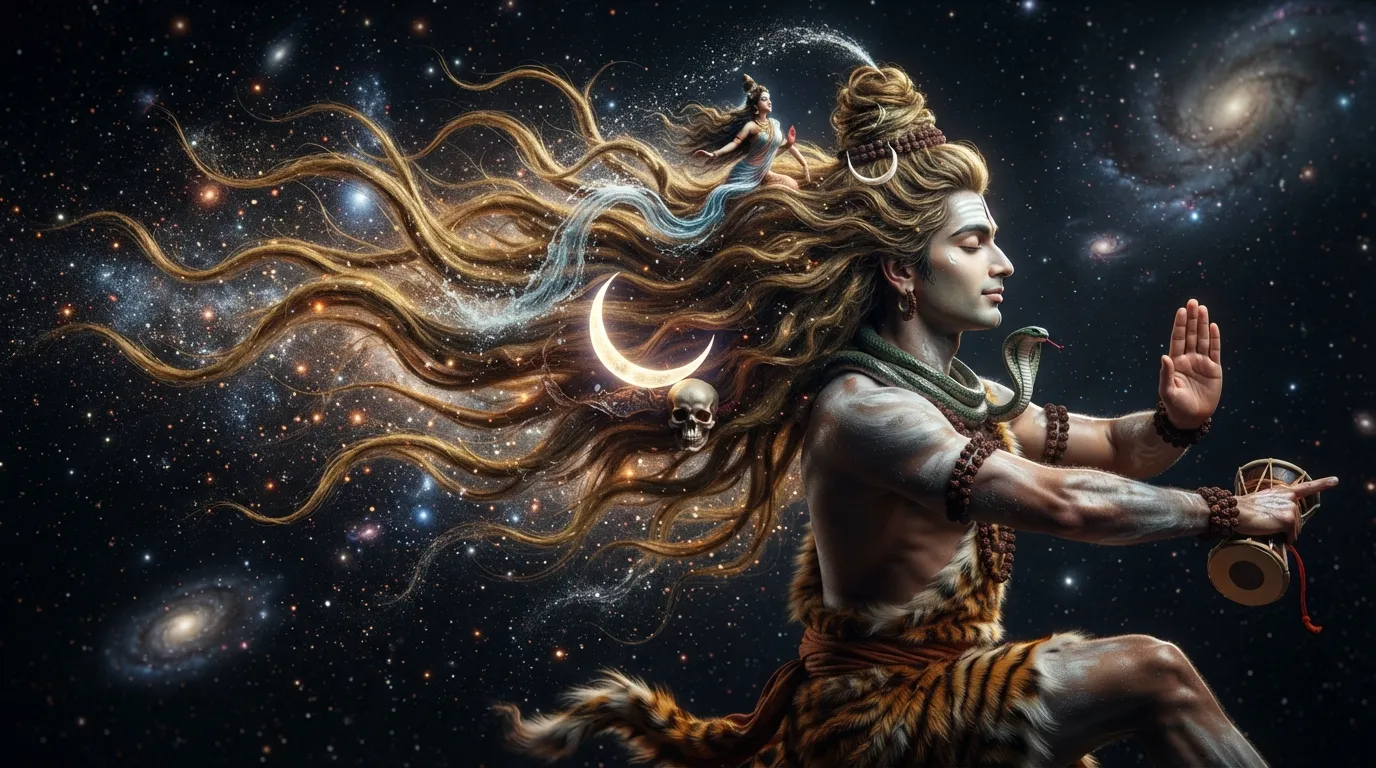
A stunning side-profile image capturing the wild, horizontal strands of Shiva’s matted hair (Jata) flying outward due to the speed of the cosmic dance. Intricately woven within these flowing locks are key symbolic elements: a tiny figure of the Goddess Ganga cascading down (representing the descent of the sacred river Ganges), a delicate crescent moon symbolizing the cyclical nature of seasons, and a small skull signifying mortality. The background is dark, mimicking a starry cosmic void, which makes the golden-bronze hair strands stand out vividly. This visual masterfully captures the contrast between Shiva’s calm facial expression and the extreme, wild energy of his physical movement.
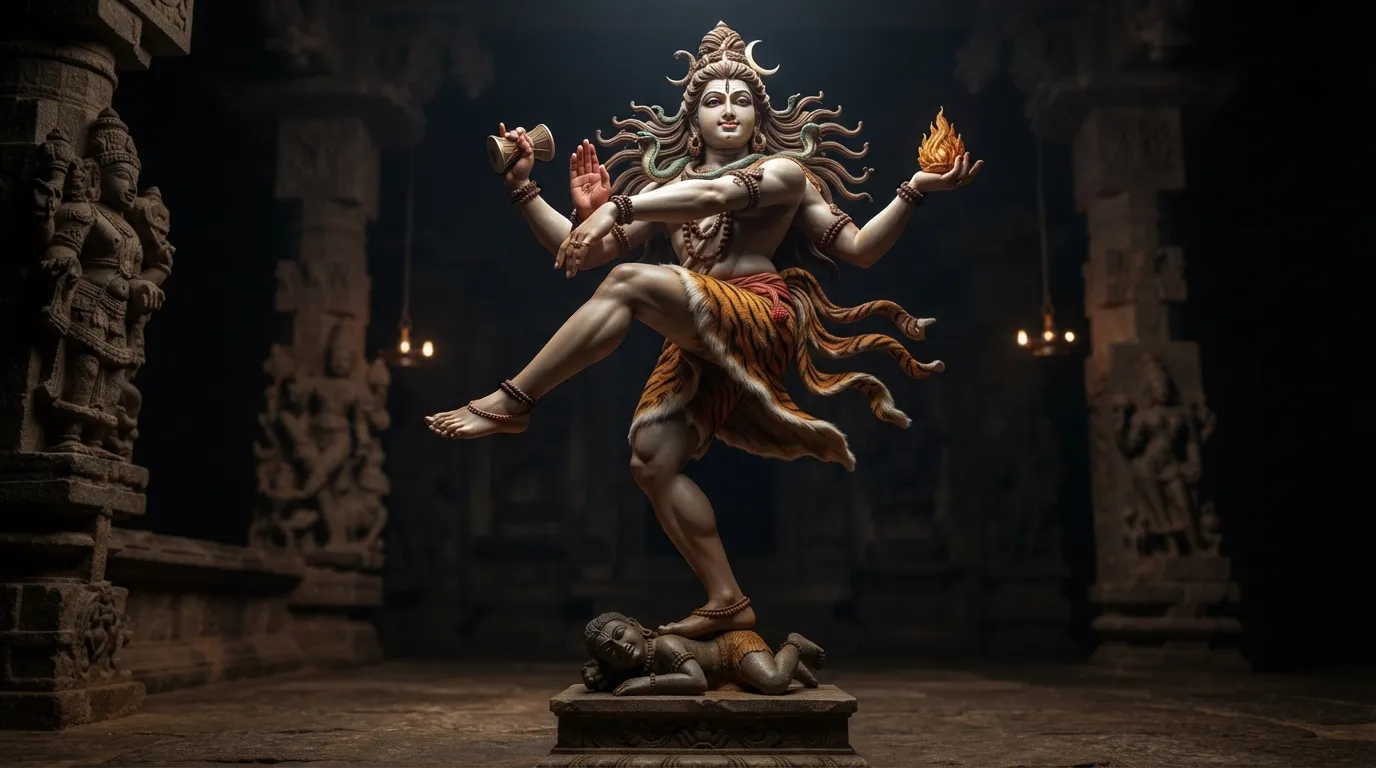
This image highlights the elegant relationship between the lower left hand and the raised left leg of Shiva. The hand is swept across the chest in the Gajahasta Mudra (resembling an elephant’s trunk), pointing directly down toward the elevated left foot. The raised foot is suspended gracefully in the air, symbolizing Moksha or liberation from worldly suffering and the illusion of Maya. The camera angle is low, looking slightly upward to capture the dynamic posture of the legs. The contrast between the grounded right foot and the elevated left foot is beautifully rendered with soft, directional lighting that isolates these two primary components of the dance of bliss (Ananda Tandava).
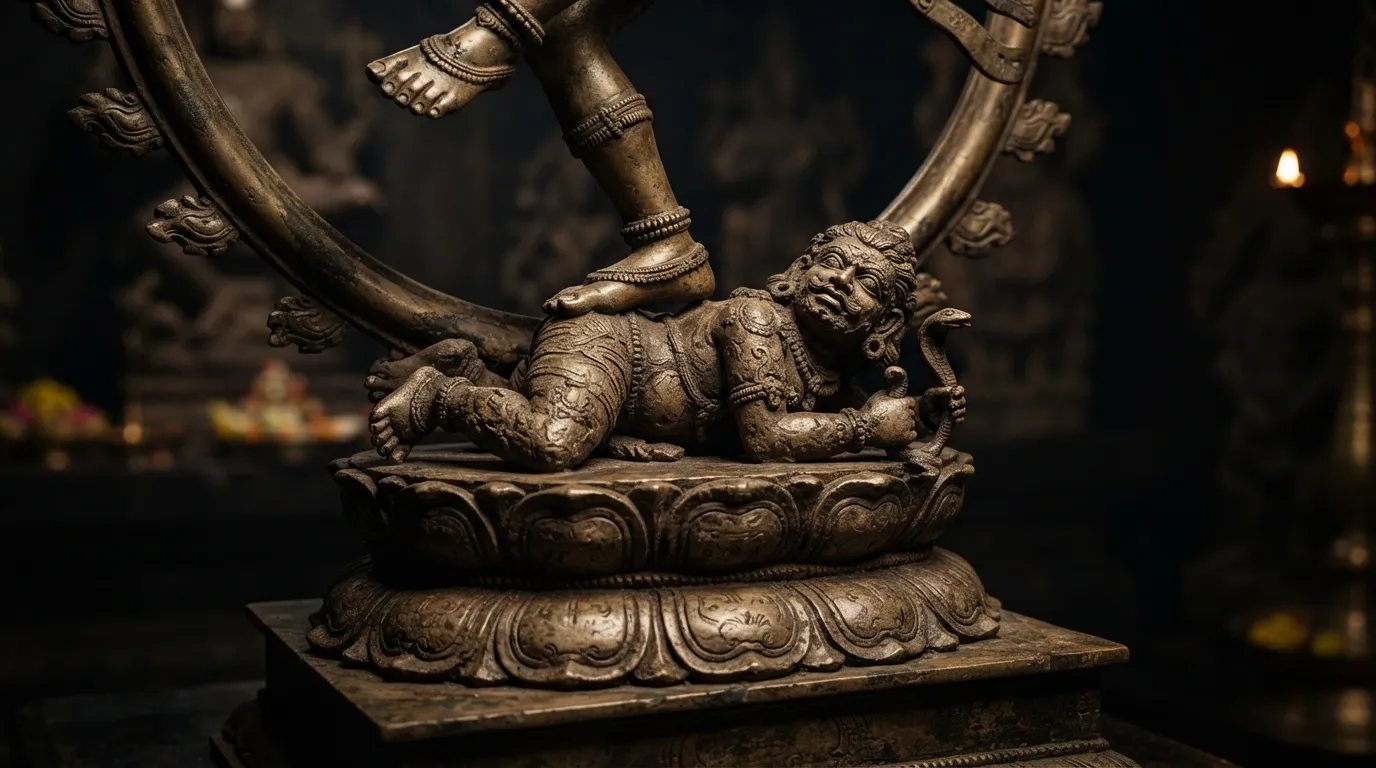
A dramatic close-up focusing on the base of the Nataraja sculpture. Lord Shiva’s right foot is firmly placed on the back of the dwarf demon, Apasmara, who lies flat on a double-lotus pedestal (mahabhambandala). Apasmara is depicted looking upward with a submissive expression, representing the triumph of divine knowledge and consciousness over spiritual ignorance, forgetfulness, and ego. Shiva does not destroy the demon, but subdues him to maintain cosmic balance. The texture of the stone or metal pedestal is highly detailed, showing fine carvings of lotus petals. The dramatic, low-key lighting emphasizes the depth and anatomical details of both figures, highlighting the symbolic weight of the foundation of the cosmic dance.
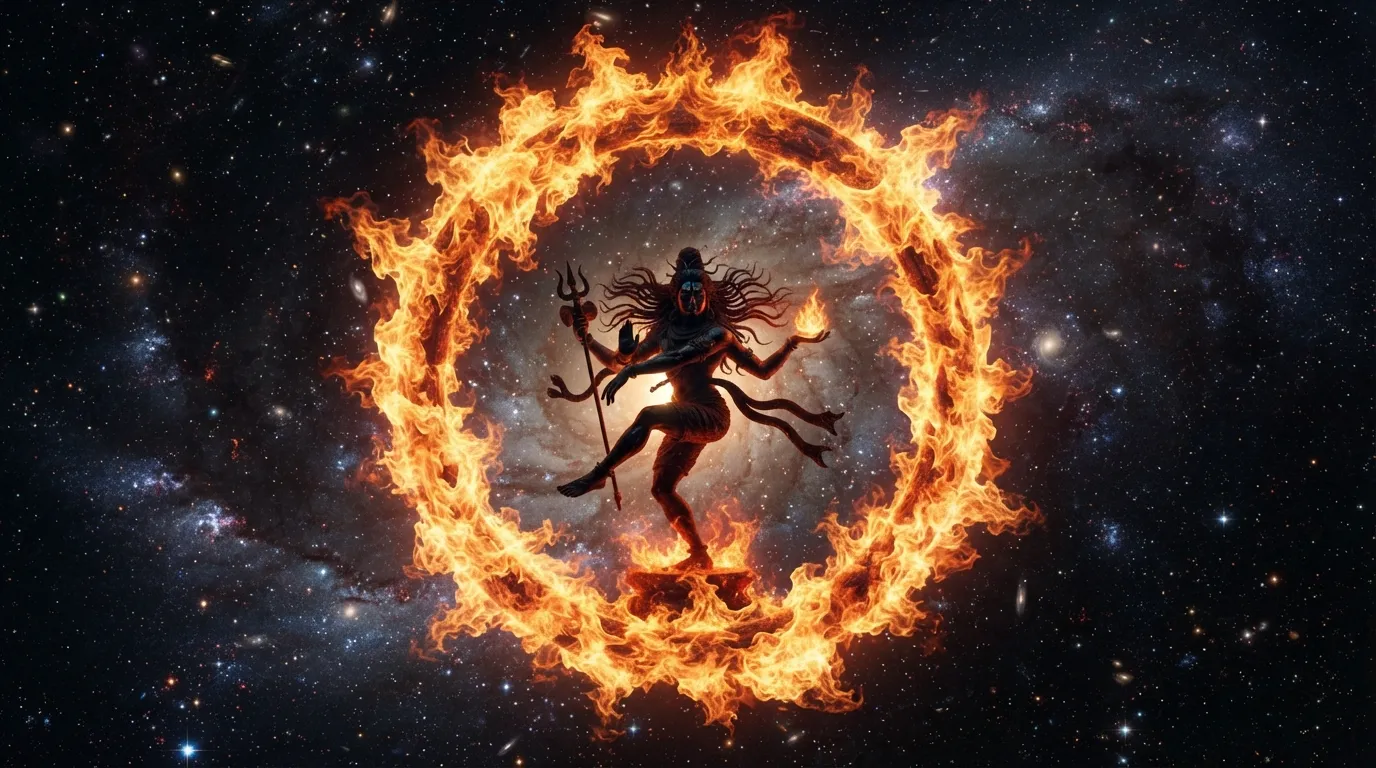
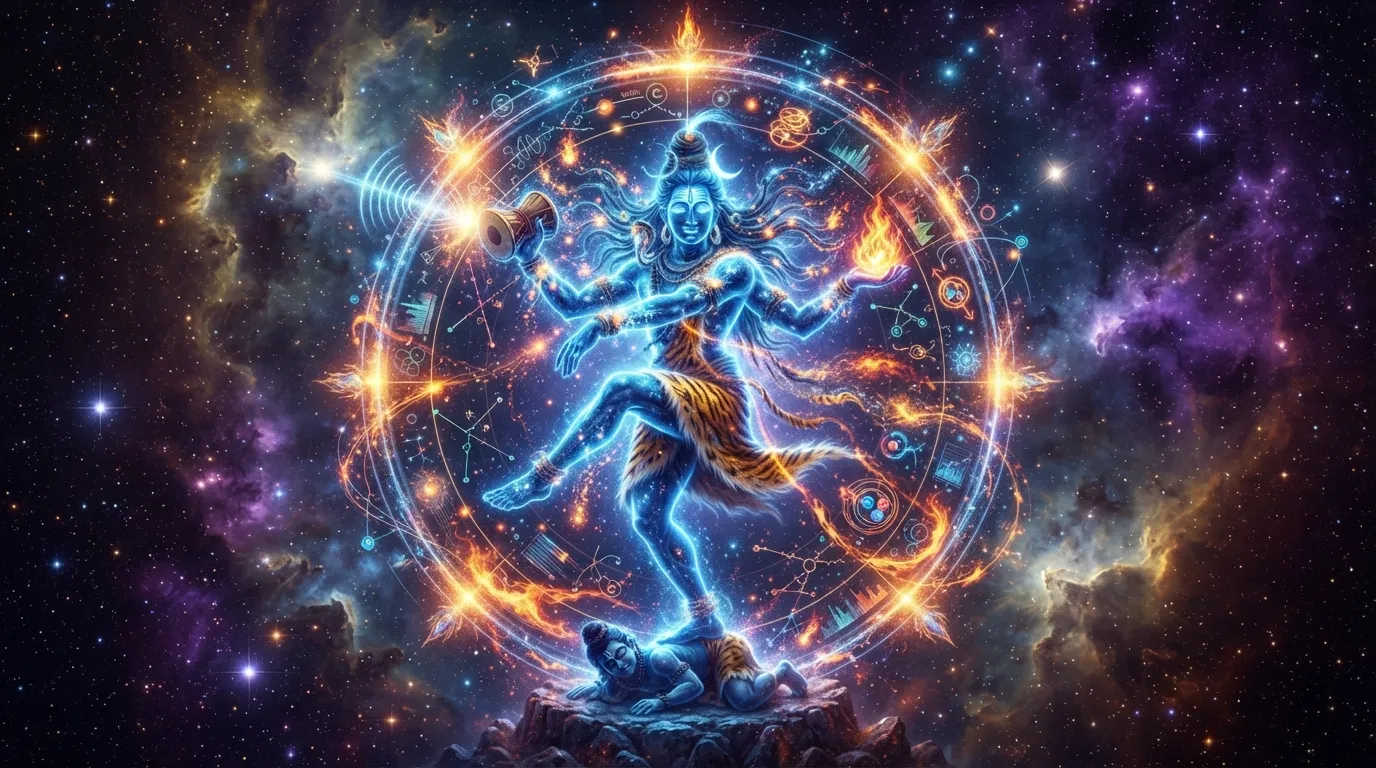
A spectacular wide-angle shot focusing on the Prabhamandala, the complete halo of flames that encircles the entire figure of Lord Shiva. The ring is illustrated as an intense, glowing circle of cosmic fire, with individual flames realistically flicking outward into a dark, nebulous sky filled with stardust. The ring of fire represents the physical, material universe of Maya (illusion) and the unending cycle of time (Samsara). The central figure of Shiva is silhouetted against the bright glow of the ring, creating a mesmerizing halo effect. The play of high contrast between the brilliant yellow-red flames and the deep black background makes this a visually dramatic and philosophically profound representation of the cosmos.
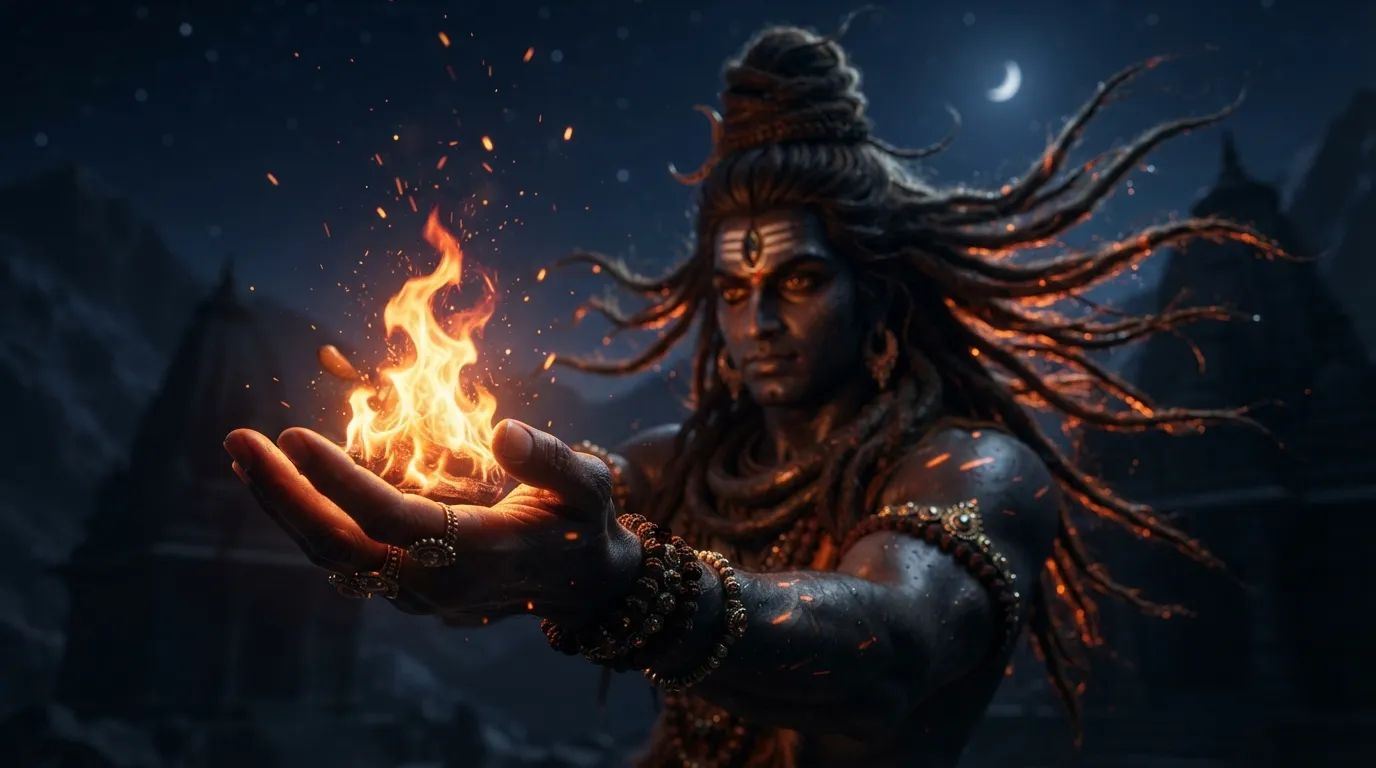
This highly focused, cinematic close-up captures the upper left hand of the dancing Shiva holding the sacred flame, Agni. The flame rests gently in the palm of his hand, depicted as a physical, glowing fire with embers rising upward into a deep navy-blue night sky. In Hindu cosmology, while the drum in the right hand represents creation, the fire in the left hand balances it by representing destruction, purification, and renewal. This contrast shows that all endings are merely transitions to new beginnings. The warm orange light from the flame casts realistic reflections across Shiva’s arm and his matted, flying dreadlocks, creating a powerful visual balance between light and shadow.