

10 Auspicious Lord Shiva Images in Pink – Each Holding Trident with Divine Grace

This image shows Lord Shiva sitting in Padmasana on a snowy Himalayan peak, dressed in pink robes. His eyes are closed, face calm, and the trident (Trishul) stands vertically next to him, embedded in the snow. The pink dawn sky in the background reflects off his skin. This pose represents “Sthitaprajna” – steady wisdom. For devotees, it’s a reminder that true power lies in inner silence. The trident nearby, not held but present, shows that Shiva is always ready to protect, even in meditation. Ideal for morning prayer or yoga room wallpaper.
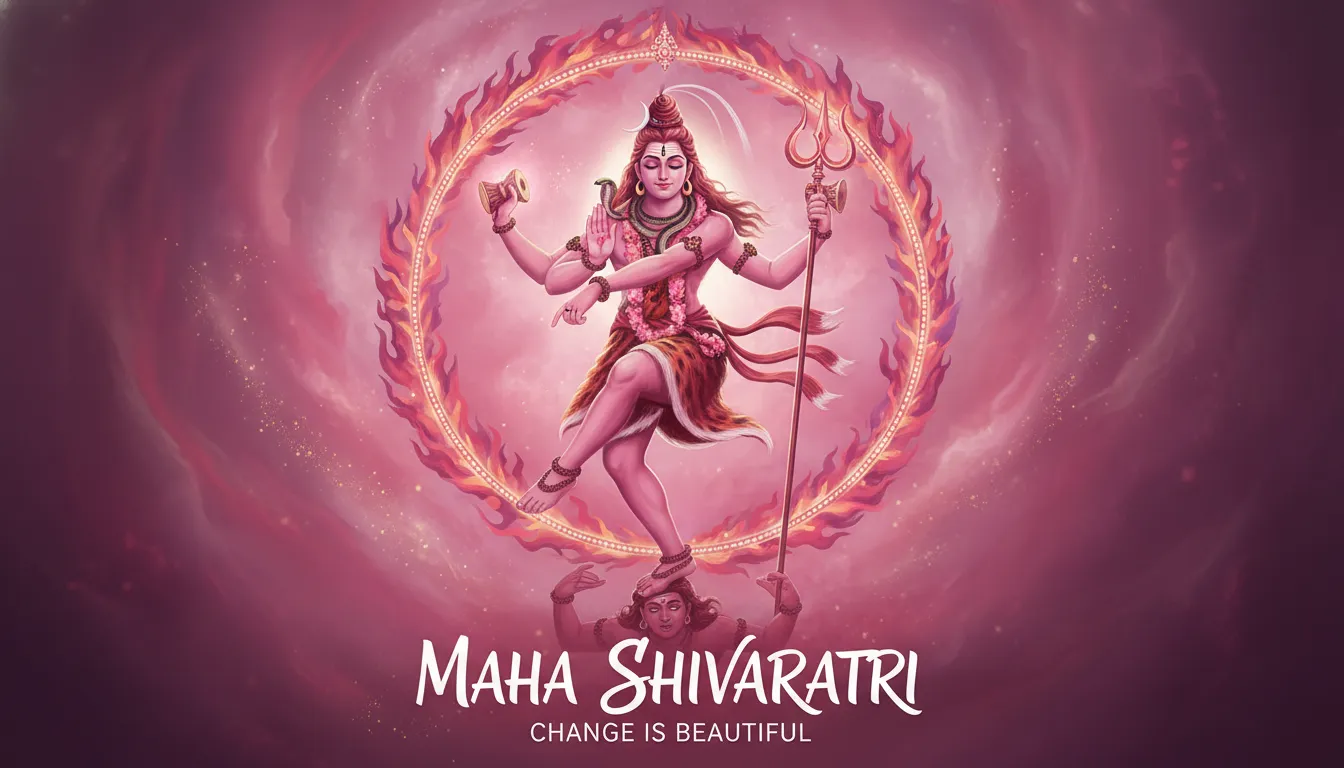
In this dynamic artwork, Shiva’s body is painted in shades of rose and magenta, with four arms. One hand holds a damru, another points to the lifted foot, while the third holds the trident that curves into a flaming circle around him. The fourth hand shows “Abhaya Mudra.” The pink color softens the usual ferocity of Nataraja, adding compassion to the dance. The trident’s three prongs represent creation, preservation, and destruction – all performed with loving grace. This image is perfect for understanding that change is beautiful. Use it as a devotional poster for festivals like Maha Shivaratri.
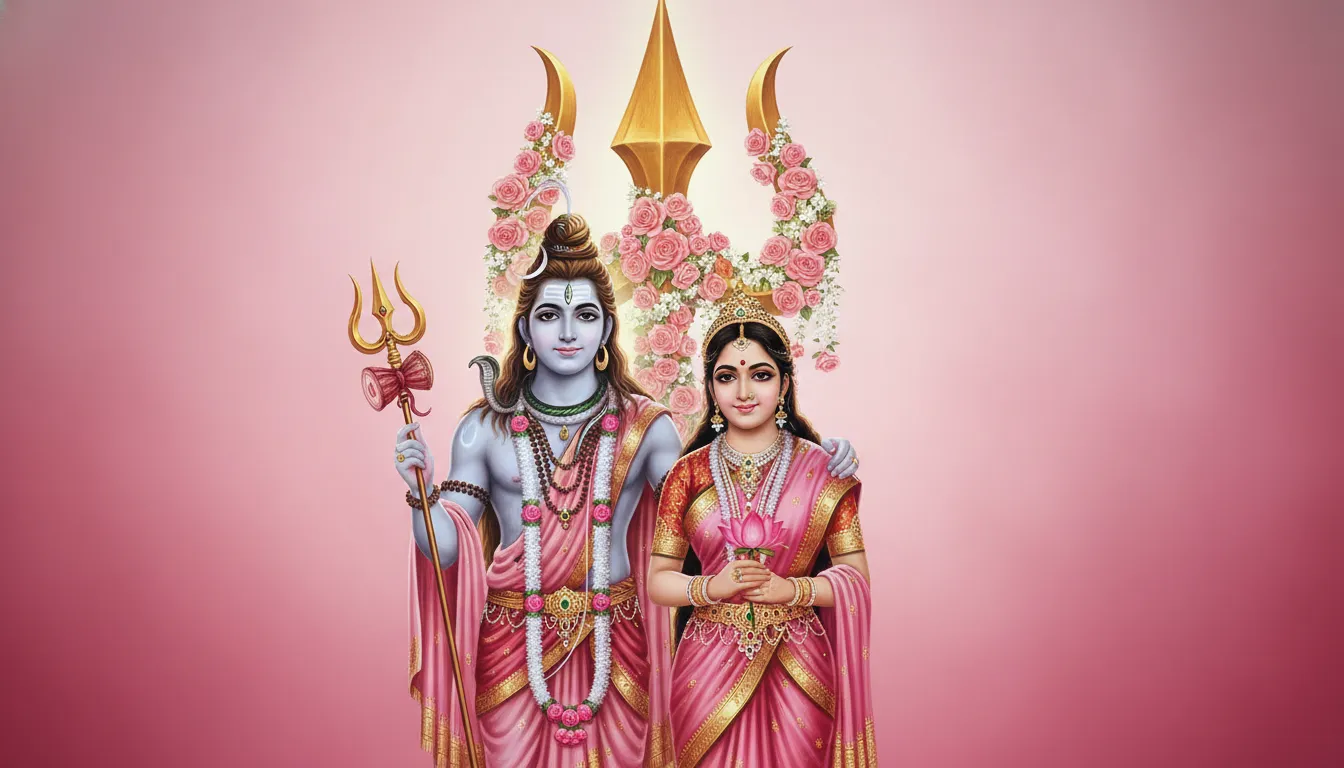
This image depicts Shiva and Parvati side by side, both wearing pink silk garments. Behind them, a giant trident is wrapped with pink roses and jasmine garlands. Shiva’s hand rests on Parvati’s shoulder, and he holds a smaller trident in the other hand. Parvati holds a pink lotus. The pink background highlights their eternal bond. Unlike fierce images, this one shows Shiva as a loving husband. The trident here doesn’t represent destruction but protection of marriage and family. This picture is ideal for couples or for those seeking harmony in relationships. It can be used in wedding invitations or as a blessing for a peaceful home.
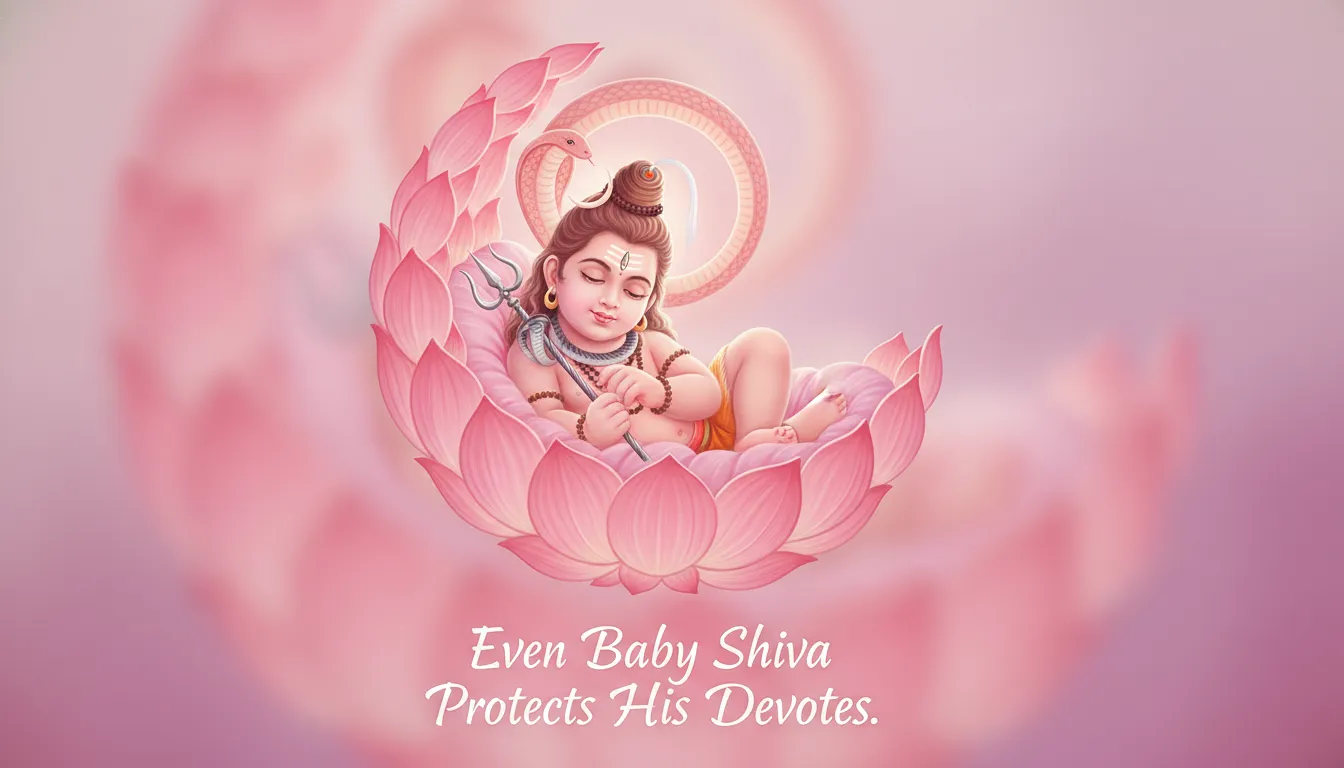
A rare and heartwarming image: Lord Shiva as a baby (Bala Shiva) lying on soft pink lotus petals inside a crescent-shaped cradle. His skin has a pinkish glow, and he holds a tiny, harmless trident like a toy. A pink serpent forms a halo over his head. This image teaches that divine qualities – including the trident’s power – are inherent from birth. The pink shade emphasizes tenderness. Great for a child’s room or as a gift for new parents. It also helps children learn about Shiva without fear. The caption reminds us: even baby Shiva protects his devotees.
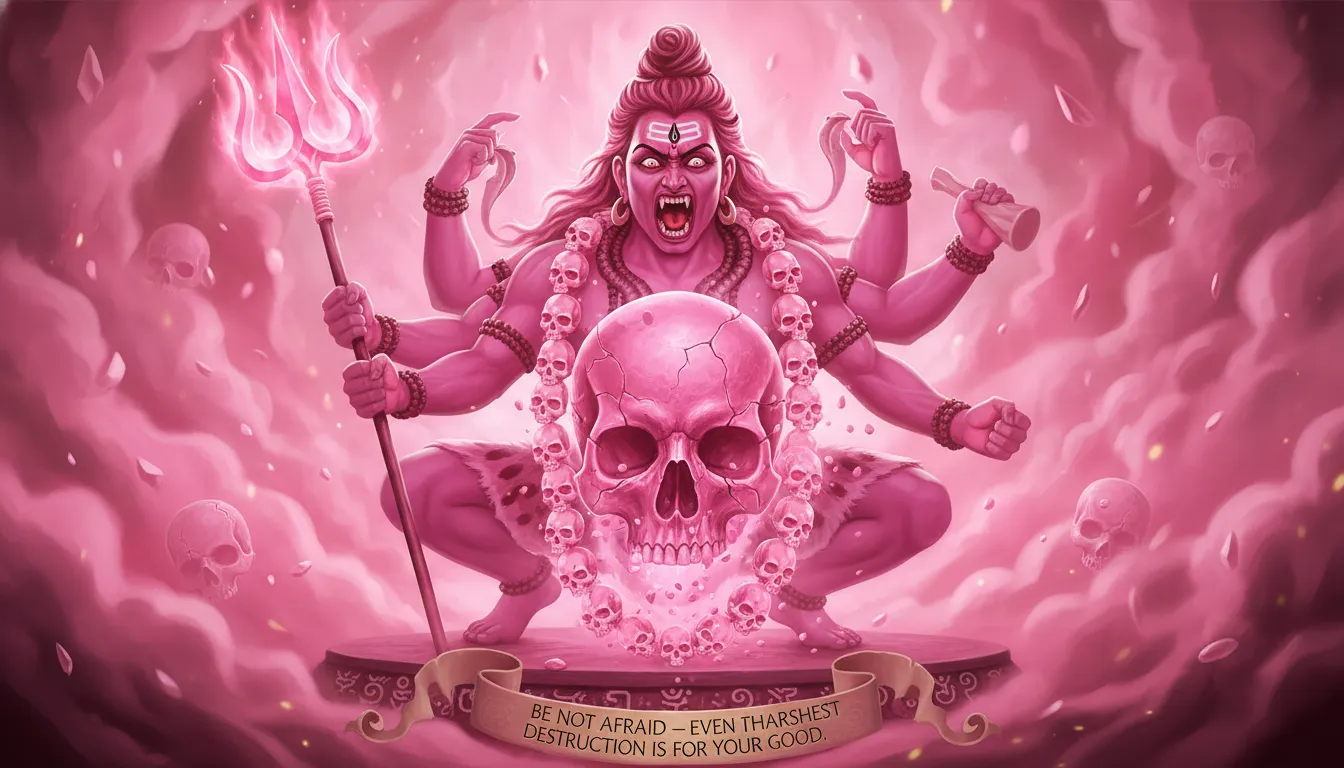
Yes, pink can be fierce. This image shows Lord Bhairava (a terrifying form of Shiva) with dark pink skin, bloodshot eyes, and a garland of skulls. But the skulls are pink quartz, and the flames from his trident are soft pink fire. He holds the trident high, piercing a large skull – symbolizing the death of ego. Despite the fear factor, the pink color adds a twist: ultimate destruction is done with a mother’s love. This image is for those facing deep fears or major life changes. It says, “Be not afraid – even the harshest destruction is for your good.
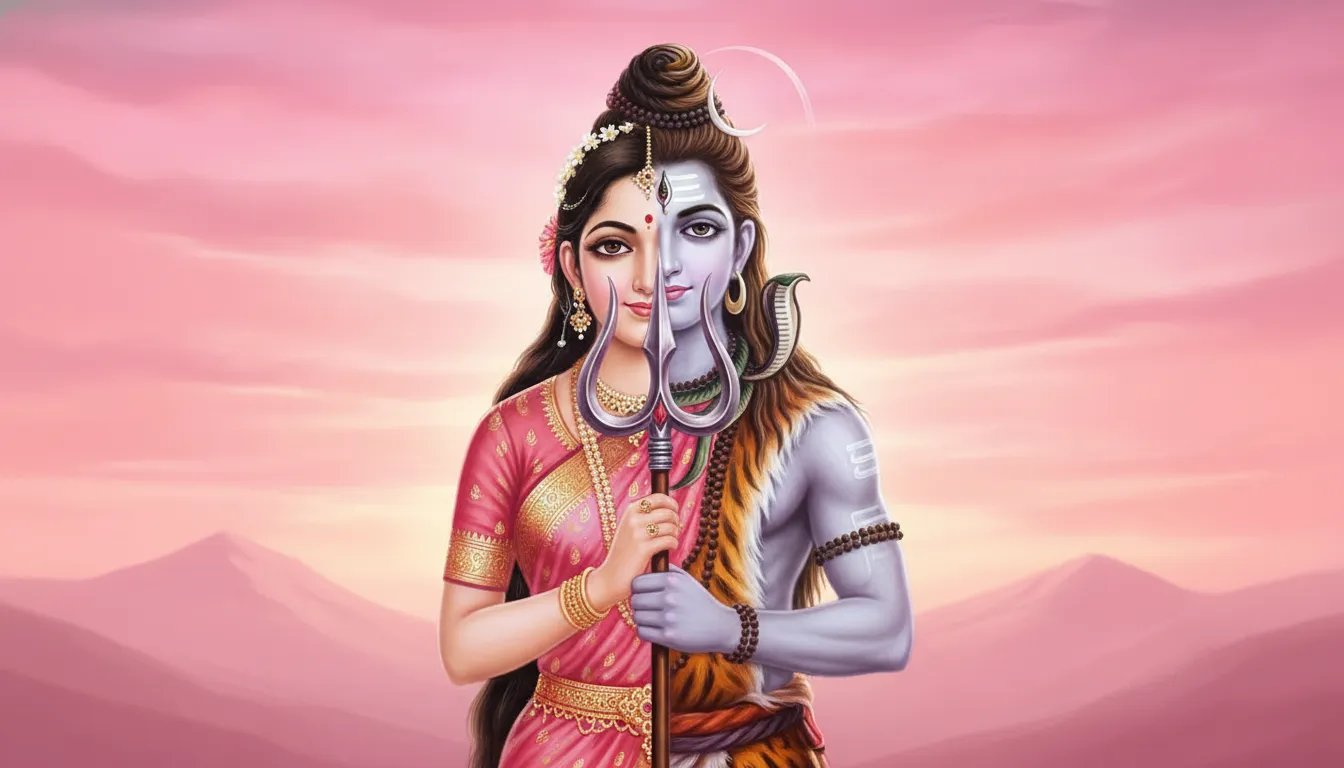
Ardhanarishvara is Shiva and Parvati fused into one body. In this pink version, the right half (Shiva) has matted hair, third eye, and holds a trident. The left half (Parvati) wears a pink saree, has a gentle smile, and also touches the same trident. The background is a pink sunset. This image breaks the idea that trident is only masculine – here feminine energy equally wields it. The pink color represents the balance of male and female. Perfect for gender equality discussions, art collectors, or anyone seeking inner balance. The description can be used in blogs about symbolism in Hinduism.
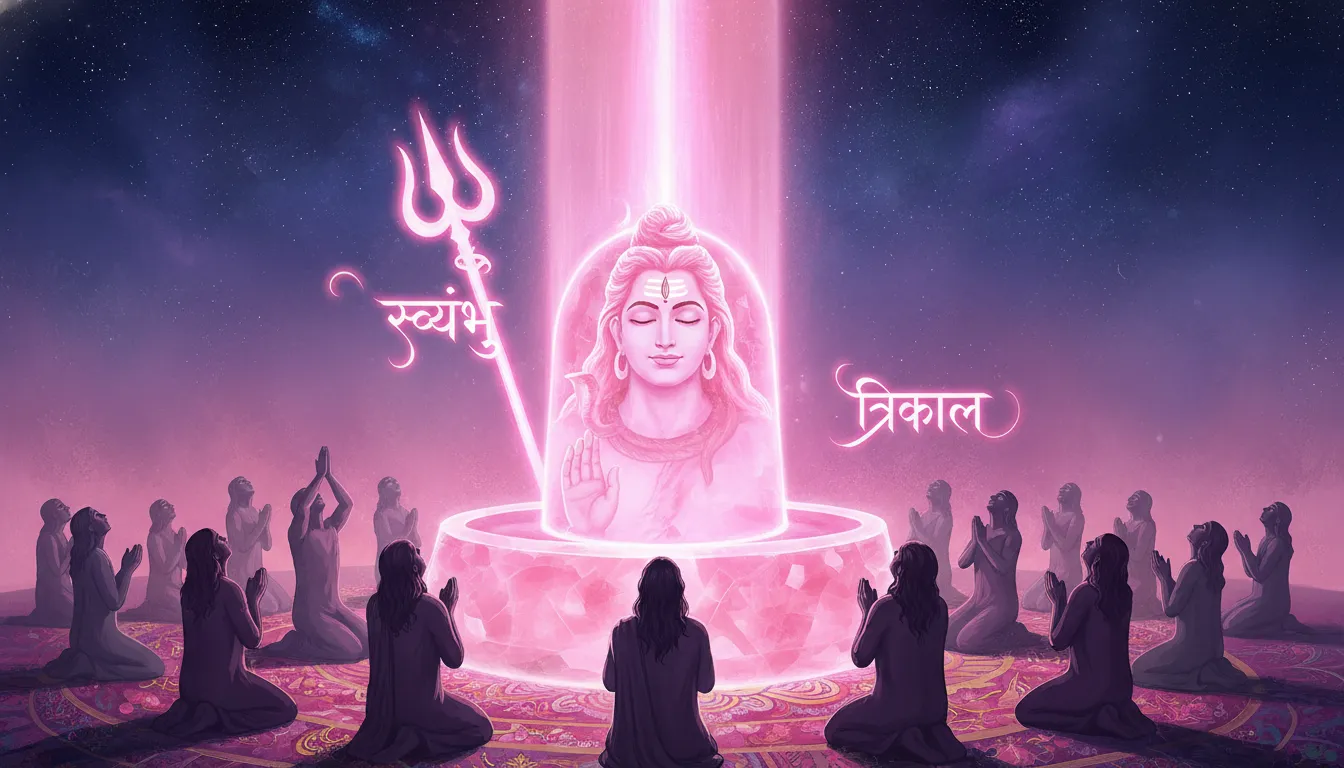
This abstract image shows a glowing pink lingam in the center, from which Lord Shiva’s upper torso emerges. Instead of a metal trident, he holds a trident-shaped beam of pink light that extends to the sky. Below, worshippers look up in awe. The pink color makes the scene serene rather than intimidating. This represents Shiva as “Swayambhu” (self-manifested) and the trident as the three aspects of time (past, present, future). Ideal for temple websites, spiritual blogs about the origin of Shiva, or as a meditation aid for understanding formless-form.
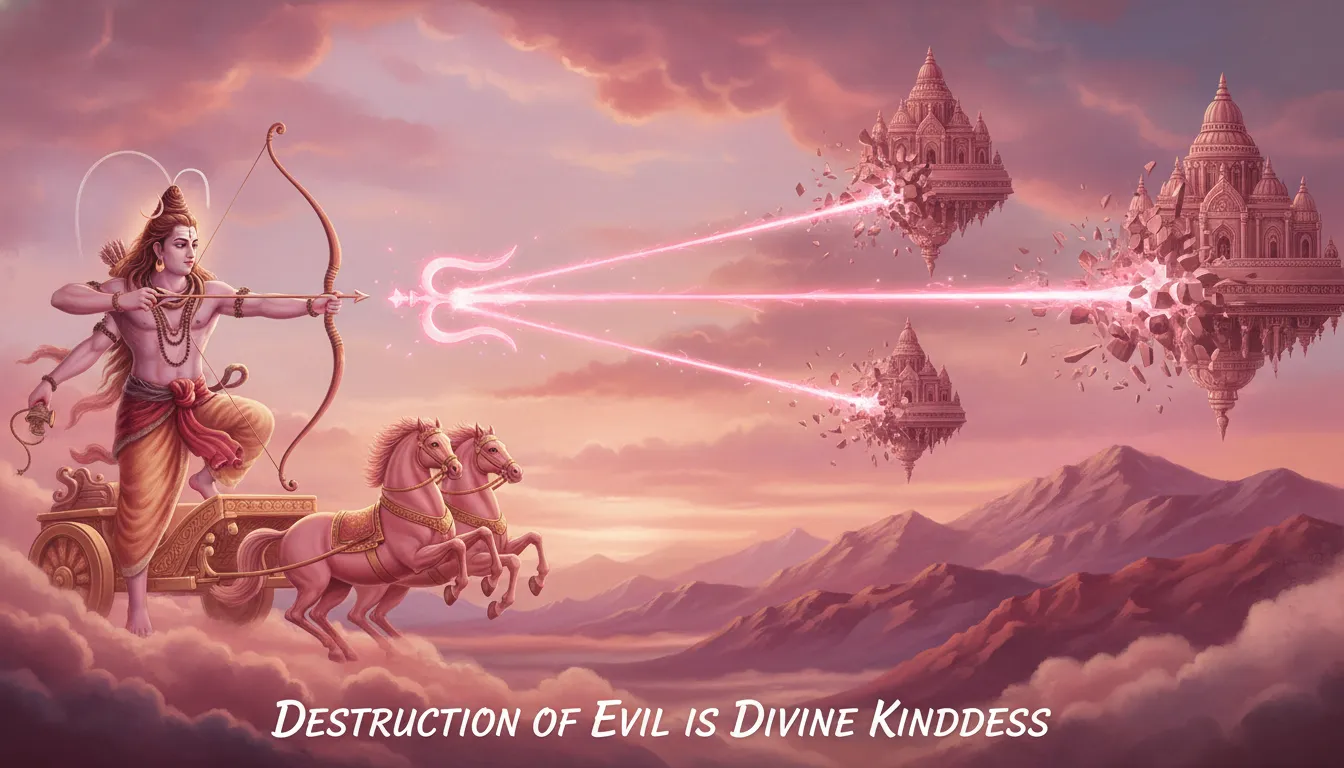
This dramatic image shows Shiva as Tripurantaka, the destroyer of three demon cities (Tripura). He stands on a chariot, bow drawn but instead of arrow, he flings a giant pink trident that splits into three prongs, each hitting one floating pink city. The entire scene – sky, mountains, Shiva’s skin – is in various shades of pink. The message: destruction of evil (ego, greed, anger) is an act of divine kindness. The soft color softens the violence into a metaphor. Perfect for illustrating Hindu myths in a non-graphic way, or for articles on “Shiva’s leelas” with aesthetic appeal.
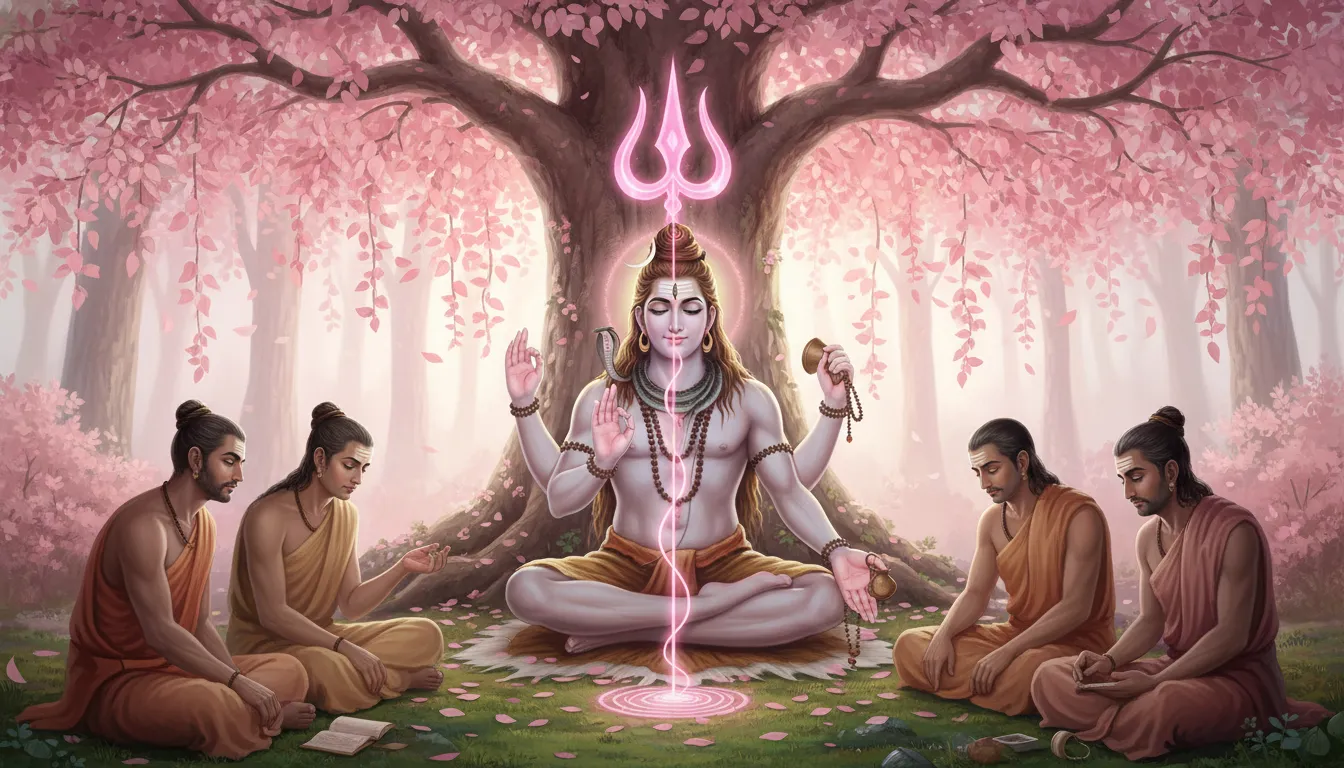
This image presents Shiva as Dakshinamurti (the silent teacher), seated under a pink-leaved banyan tree. Four disciples sit below. Behind Shiva, a subtle pink trident floats upright, each prong aligned with the three main nadis (Ida, Pingala, Sushumna). His hand forms the chin mudra. He holds no weapon – the trident is purely symbolic of energy channels. This pink depiction makes yoga accessible and gentle. Yoga practitioners and wellness bloggers can use this image for articles on chakras, kundalini, or Shiva as Adiyogi. The trident here is not for war but for inner awakening.
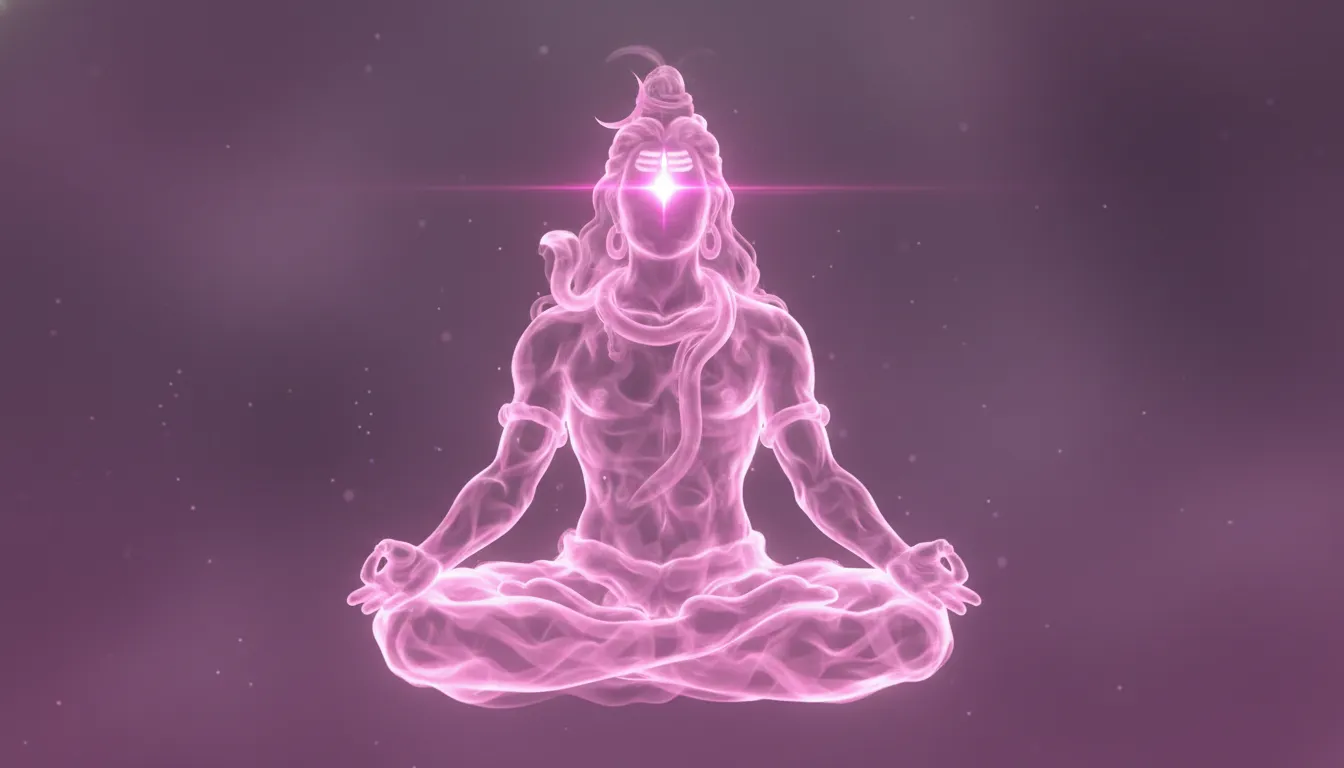
The most abstract of the set: Shiva is not a solid body but a swirl of pink smoke taking the shape of a meditating figure. The trident is shown as three streaks of magenta light merging into his third eye. There is no weapon left – only awareness. This represents the ultimate goal of Shaivism: to transcend all instruments, even divine ones. Pink symbolizes the heart chakra fully open. This image is best for advanced spiritual practitioners, meditation app backgrounds, or poetry websites about non-duality. It ends the series on a quiet, profound note.