

Authentic Indus Valley Civilisation Shivling Images and Archaeological Findings
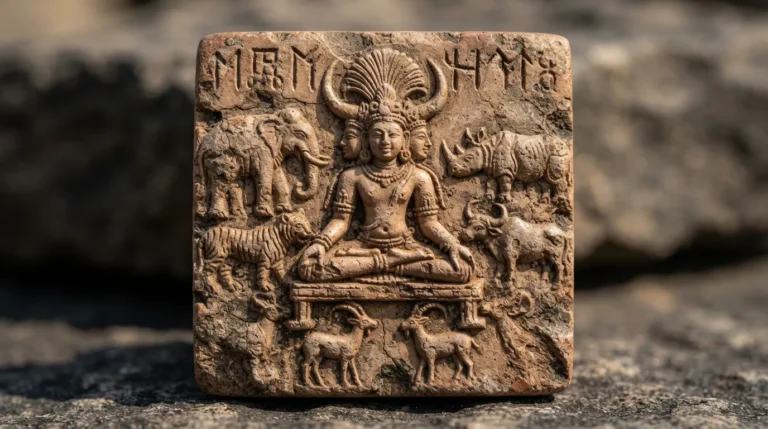
A highly detailed, close-up photograph of an ancient, weathered terracotta square seal from the Indus Valley Civilisation, specifically Mohenjo-daro. The seal features an intricate carving of a three-faced male figure sitting in a meditative, cross-legged yogic posture on a low platform. He wears a large, stylized horned headdress with a central fan-like structure. The figure is surrounded by carefully carved wild animals: an elephant and a Bengal tiger on his right, a rhinoceros and a water buffalo on his left, and two ibexes or deer looking up from beneath the platform. The texture of the seal shows realistic signs of aging, cracks, and stone erosion, with ancient Indus script characters clearly visible at the top edge. The lighting is dramatic, highlighting the deep relief carvings and historical authenticity.
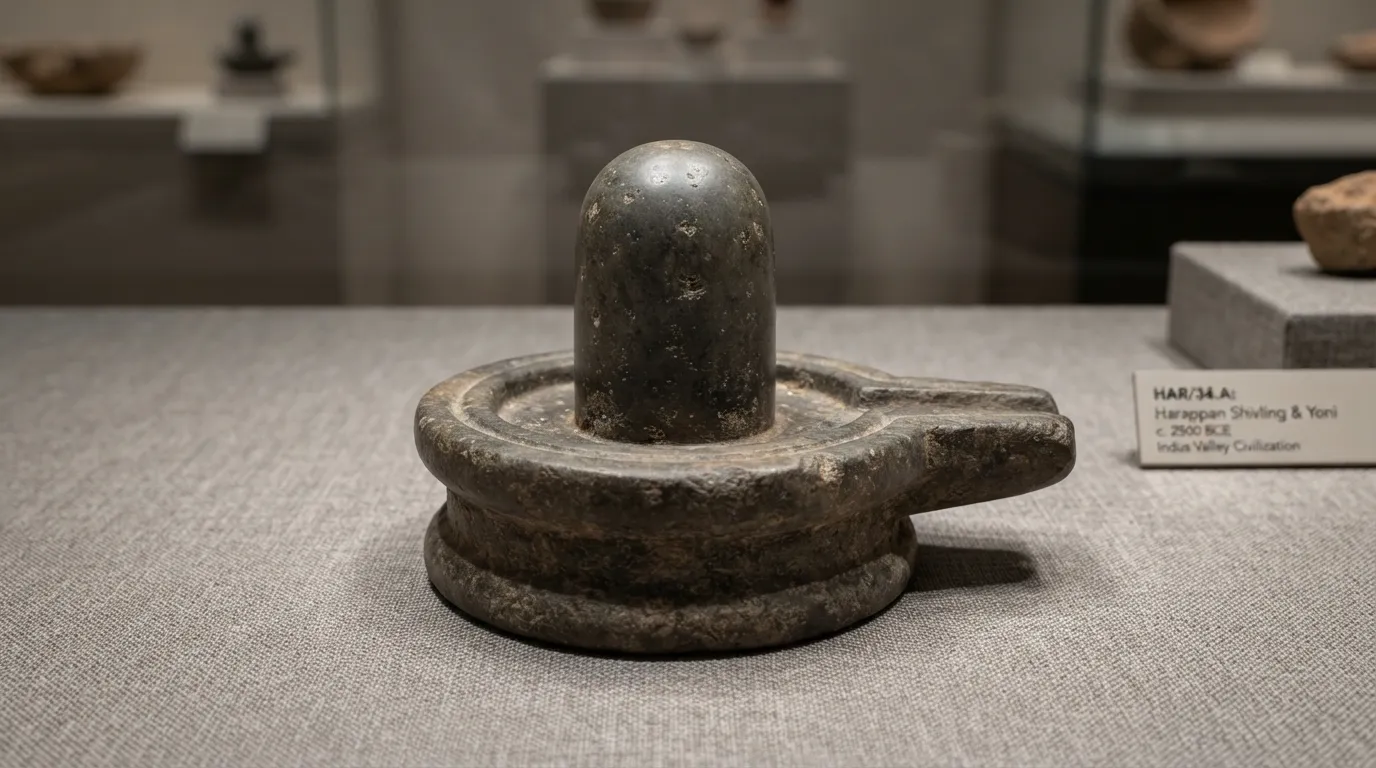
A professional archaeological studio photograph of small, ancient stone artifacts excavated from the Harappa site. The center displays a cylindrical, smooth, dark grey stone structure with a rounded top, closely resembling a traditional Hindu Shivling. It rests perfectly within a circular, ring-like stone base that functions as a Yoni. The surface of the stone shows subtle pitting, mineral deposits, and centuries-old wear. The artifacts are placed on a clean, neutral museum display background with soft, focused museum lighting that captures the precise geometry and sacred symmetry of these early spiritual symbols.
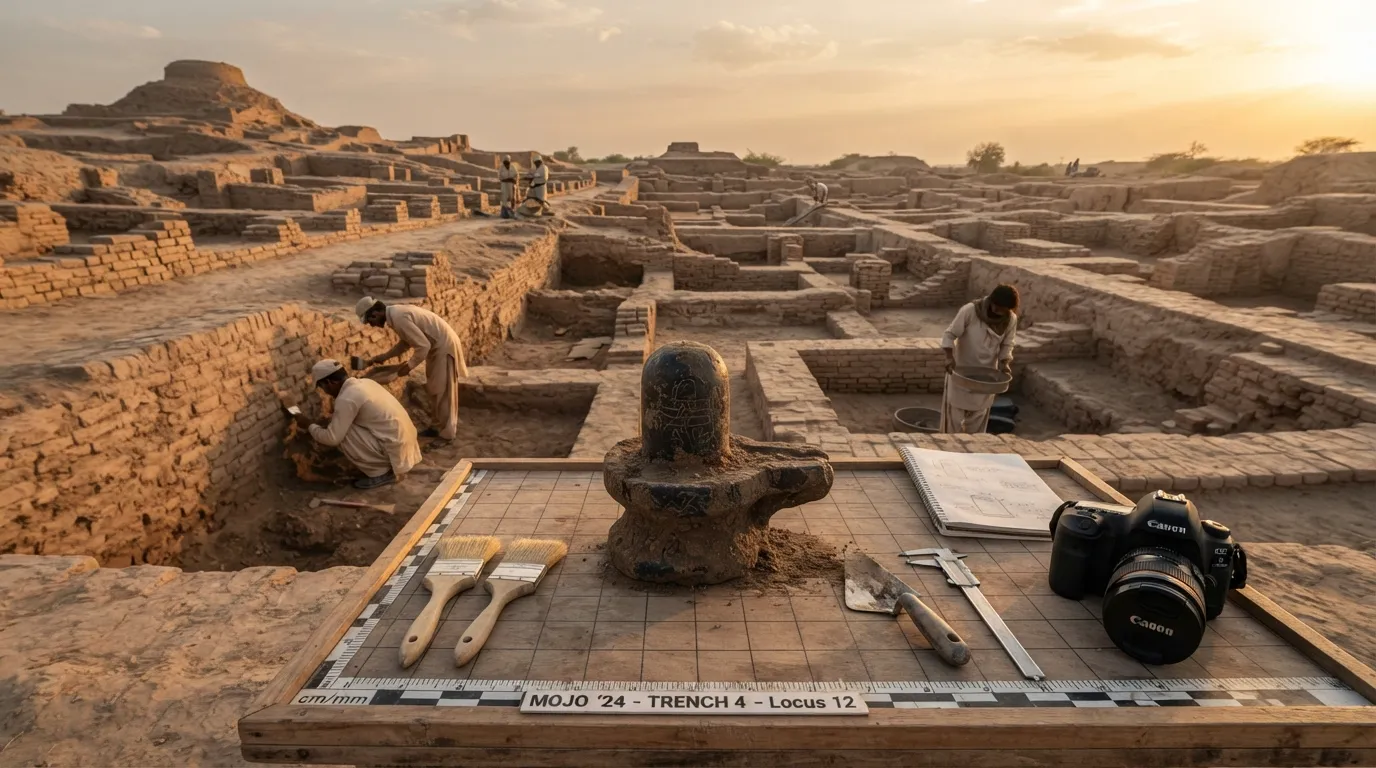
A wide-angle, realistic cinematic shot of an active archaeological excavation site in Mohenjo-daro during the golden hour sun. The scene features deep, structured trenches revealing ancient baked brick walls and foundations of the Indus Valley Civilisation. In the foreground, on a clean wooden grid board used by archaeologists, rests a newly discovered, dirt-stained stone Shivling artifact next to measuring tools, brushes, and a camera. The background shows the vast, dusty plains of the historical site under a warm, atmospheric sky, blending scientific discovery with ancient heritage.
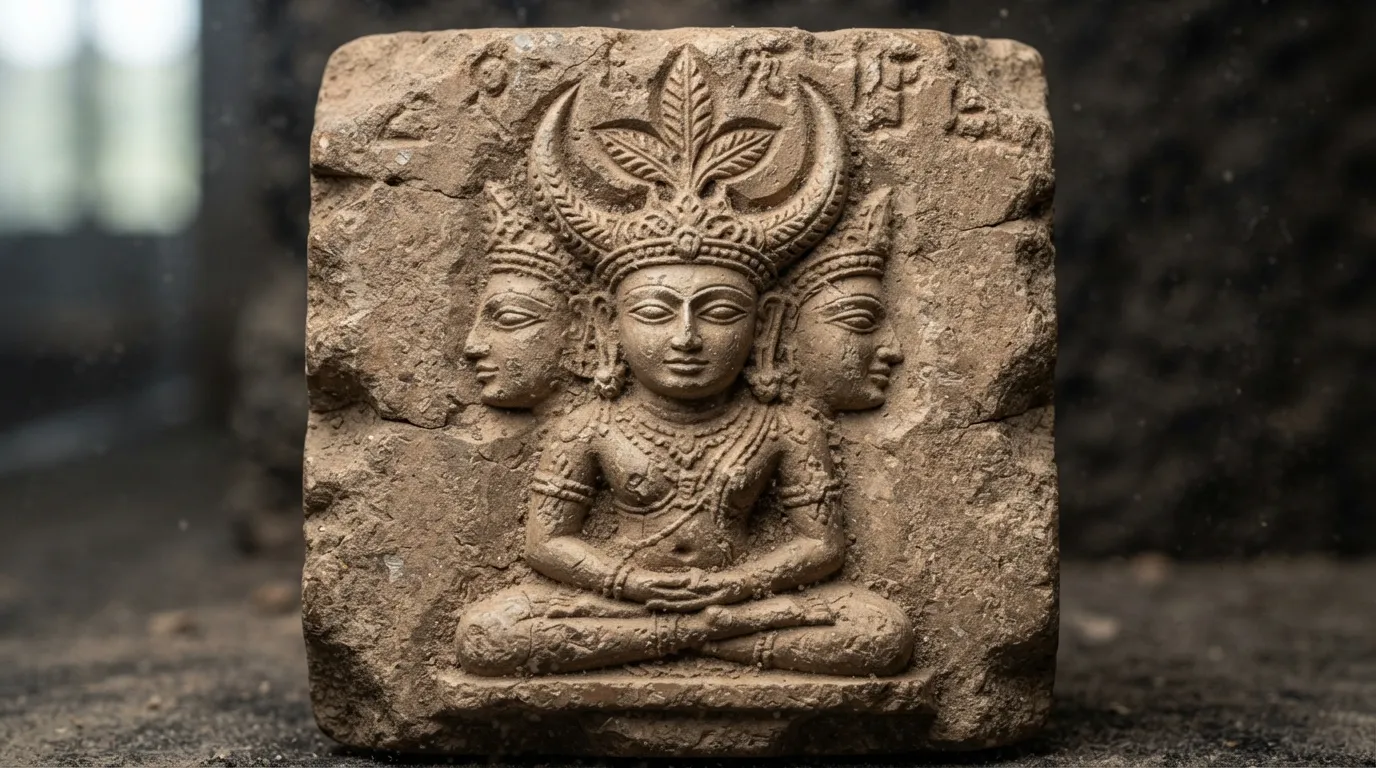
A macro, high-contrast photograph focusing on a stone tablet carving from the Harappan era. The artifact displays a distinct three-faced spiritual figure in deep meditation. The central face has a serene, stoic expression with elongated eyes, while the two side profiles are subtly chiseled into the stone. The figure wears an elaborate, double-horned crown with a central plant or leaf motif rising upward. The stone texture is coarse, dusty, and beige-toned, with visible grain and ancient fractures that emphasize its 5,000-year-old history.
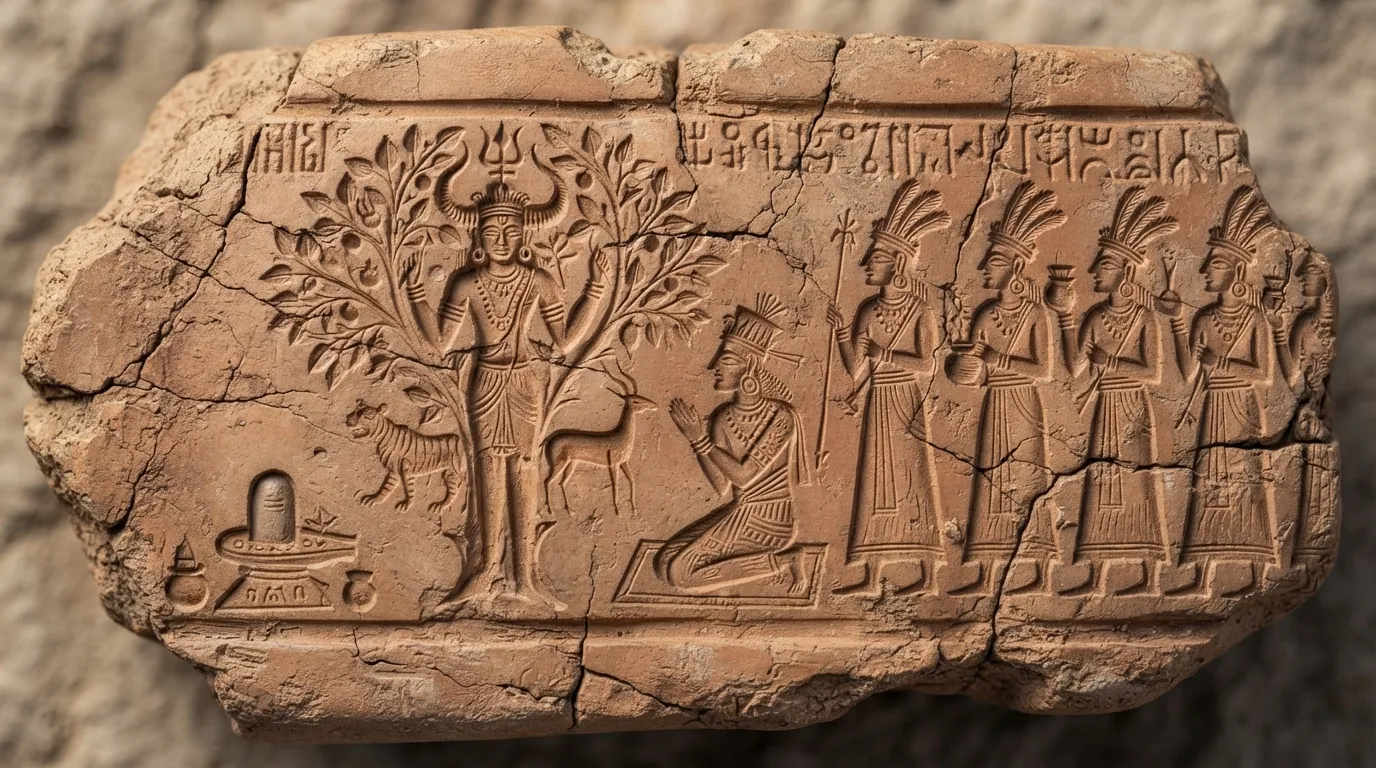
A detailed view of a clay impression made by an ancient Indus Valley cylindrical seal. The impression reveals a panoramic narrative scene: a horned deity stands inside a sacred Pipal tree, while a high priest or worshipper kneels before him in deep reverence. Behind the worshipper, a procession of seven figures wearing long tunics and ceremonial headdresses walk in perfect unison. At the bottom corner, a small, stylized cylindrical stone marker resembling a primitive Shivling stands on an altar. The texture is that of dried, cracked Indus river clay with sharp, clear incised lines.
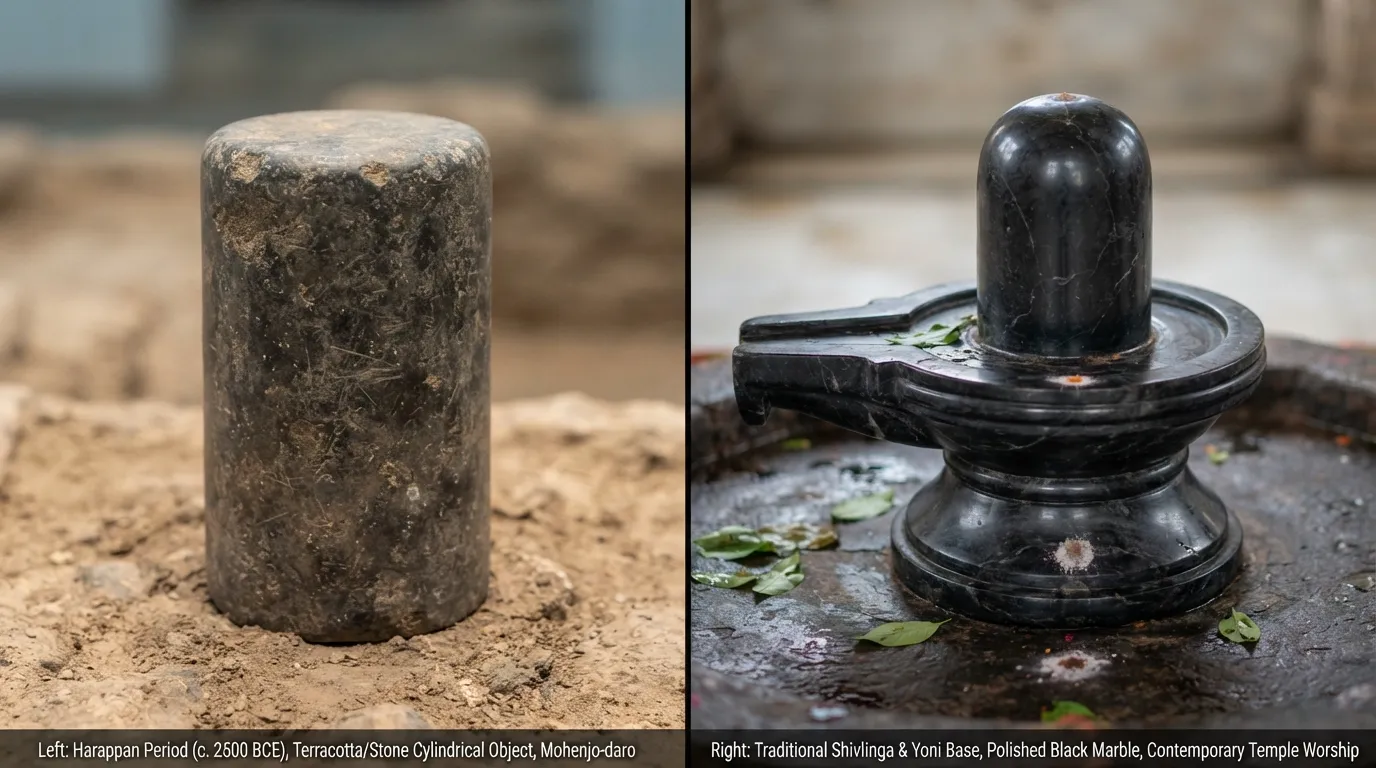
A side-by-side comparative split image for educational analysis. On the left side, an authentic, weathered, dark grey cylindrical stone artifact from the Harappan excavation, covered in soil patina and historical scratches. On the right side, a polished, traditional black marble Shivling resting on a Yoni base as seen in ancient Indian temples. The lighting is uniform and soft across both sides to allow viewers and researchers to clearly study the shared geometry, proportions, and symbolic continuity spanning thousands of years.
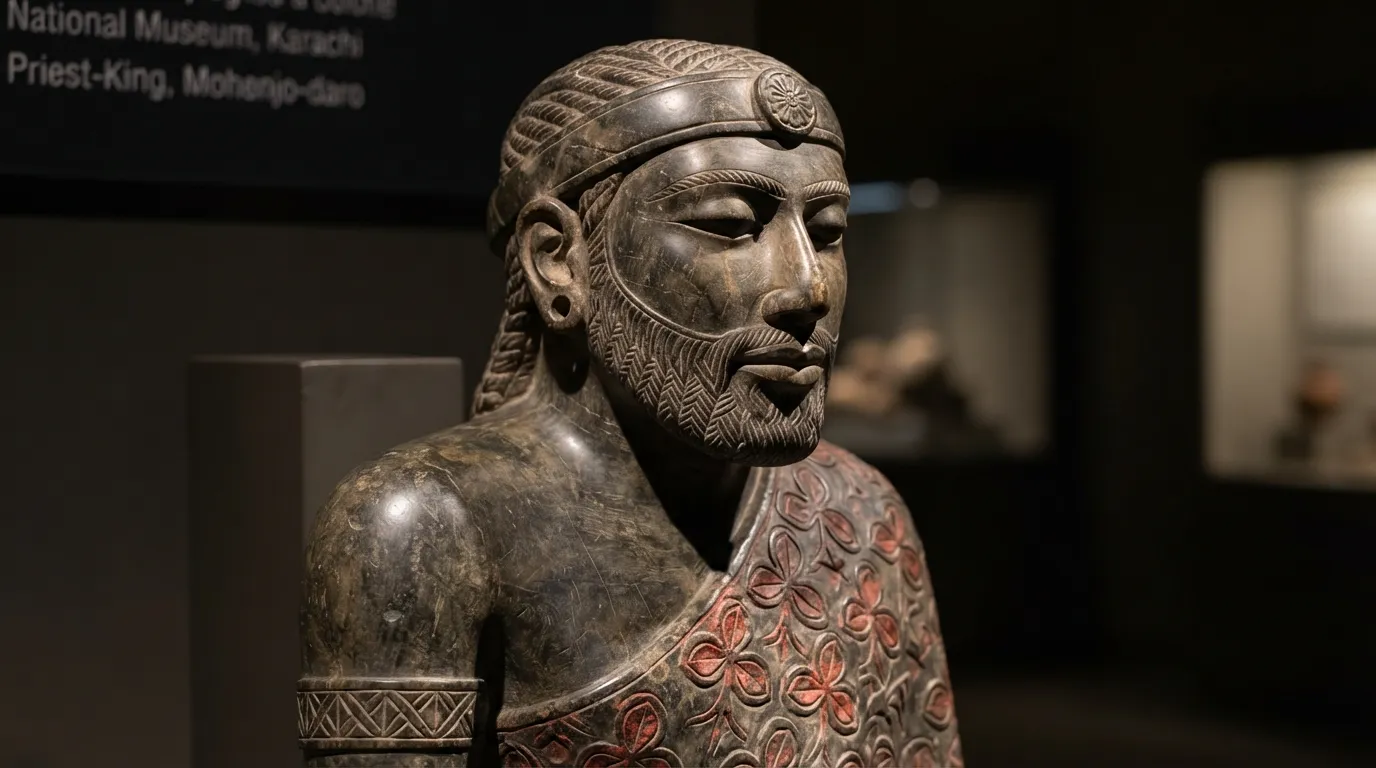
A dramatic museum-grade close-up photograph of the famous “Priest-King” steatite bust from Mohenjo-daro. The statue features a well-groomed, stylized beard, a thick headband with a central circular amulet, and an armband. His robe is draped carefully over one shoulder, adorned with a highly detailed trefoil (three-leaf) pattern filled with red pigment remnants. The lighting is focused from the top-left, casting soft shadows that highlight the smooth steatite stone texture, his contemplative downward-looking eyes, and the calm, spiritual aura of the artifact.
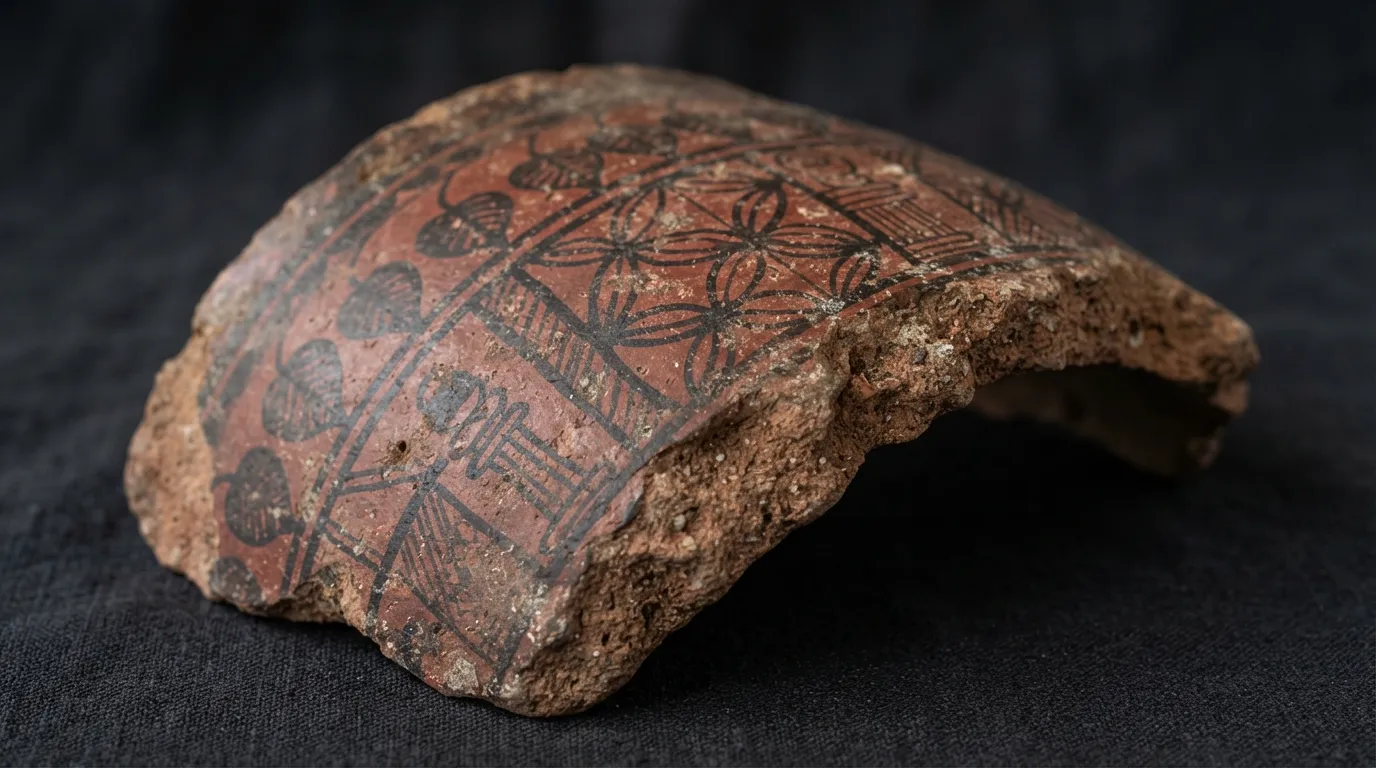
A close-up studio shot of a large, curved terracotta pottery fragment from the Indus Valley Civilisation. The surface is painted with a dark red slip and decorated with intricate black lines. The painted motifs include repeating sacred Pipal leaves, intersecting circles, and abstract, stylized pillar structures that historians link to early nature and lingam worship. The edges of the pottery shard are rough and broken, revealing the coarse clay composition, while the painted surface remains remarkably preserved with a matte finish.
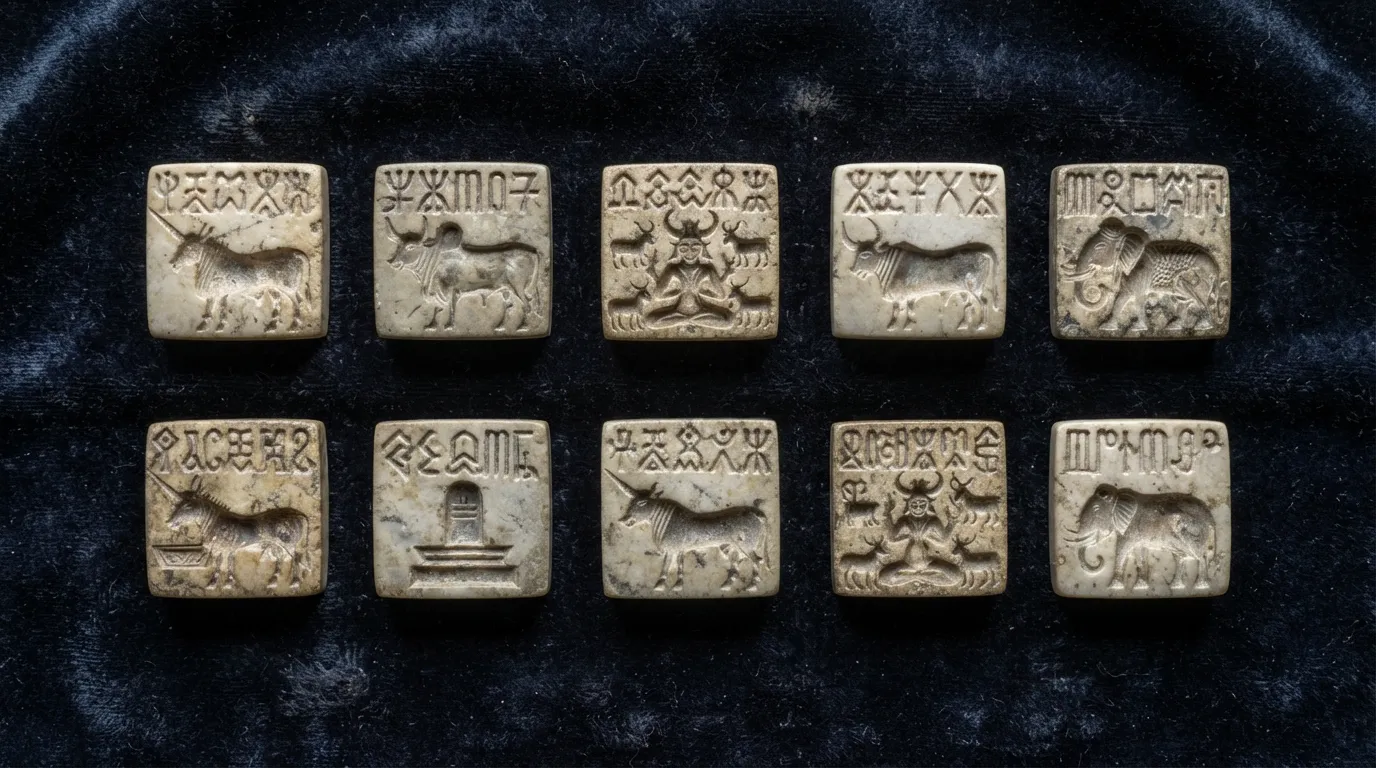
A flat-lay, high-resolution photograph displaying a curated collection of ten small, square and rectangular steatite seals from the Harappan civilization, neatly arranged on a dark velvet cloth. Each seal features unique carvings: some show the unicorn-like single-horned bull, others show the Pashupati figure, and a few display geometric abstract columns resembling early miniature shrines or Shivlings. The unique pictographic Indus script is sharply etched across the top of every individual seal, showcasing incredible ancient craftsmanship at a miniature scale.
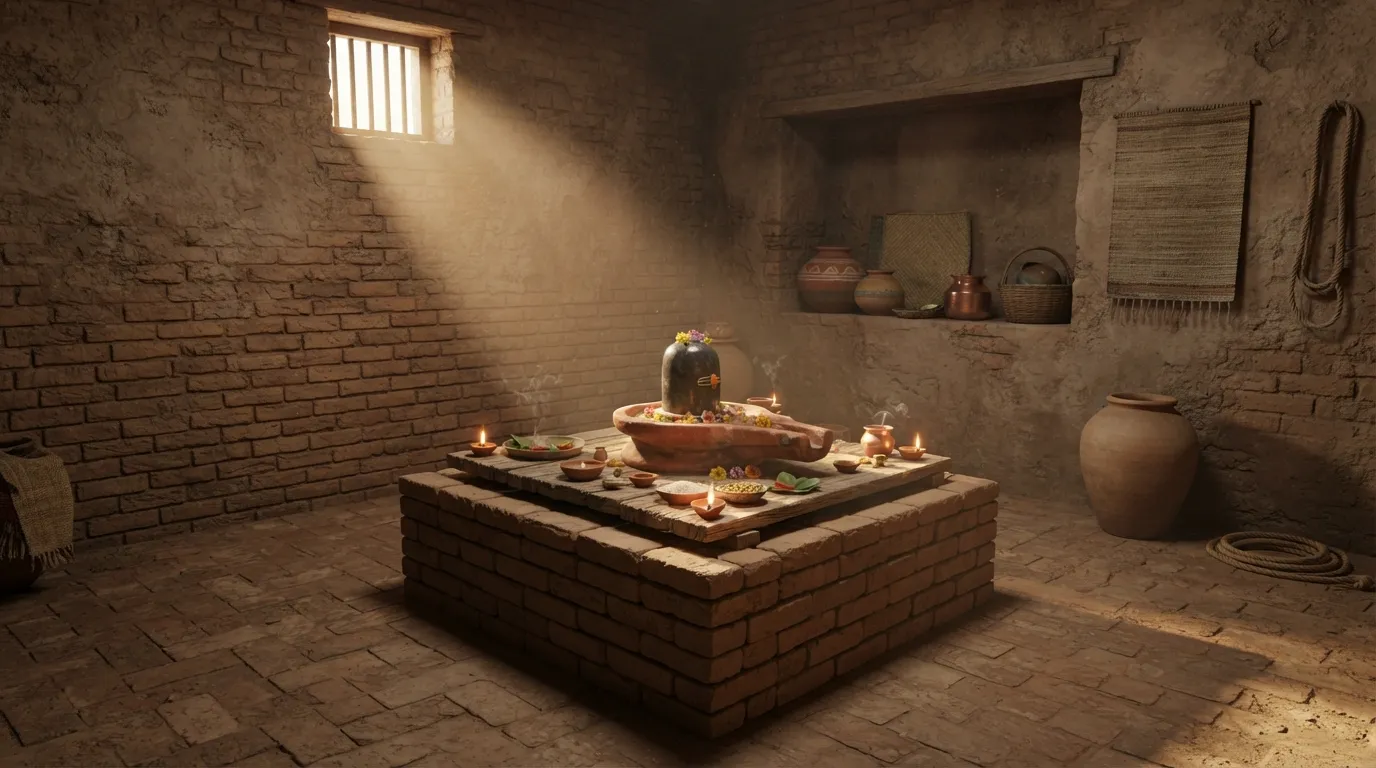
A photorealistic 3D digital reconstruction of the interior of a house in Mohenjo-daro. The room is built with neat, sun-dried clay bricks, with sunlight streaming through a high, small ventilation window. In the center of the room is a raised brick platform acting as a domestic altar. On top of the altar rests an authentic, smooth stone Shivling in a terracotta base, surrounded by small clay lamps (diyas) emitting a warm, soft glow, offering bowls with grains, and painted earthenware pots. The atmosphere is peaceful, historical, and deeply spiritual, providing an educational visualization of ancient daily worship.