

Lord Shiva Images HD 1080p Download 3D - Best Collection 2026
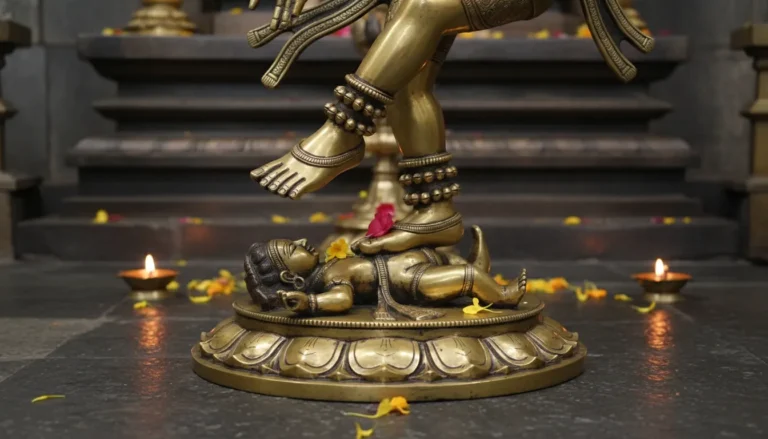
This ground-level view captures the feet and anklets of the Golden Nataraja. Unlike ordinary statues, this sculpture shows layered anklets (Padaraksha) with multiple rows of spherical bells. Each bell is individually carved and hollow, designed to produce a sweet chime (though metal, the idea is symbolic). The right foot rests firmly on Apasmara while the left foot is lifted. The toes are elongated and natural, indicating divine anatomy in classical Indian art. The anklets represent the rhythmic beat of time that governs all existence.
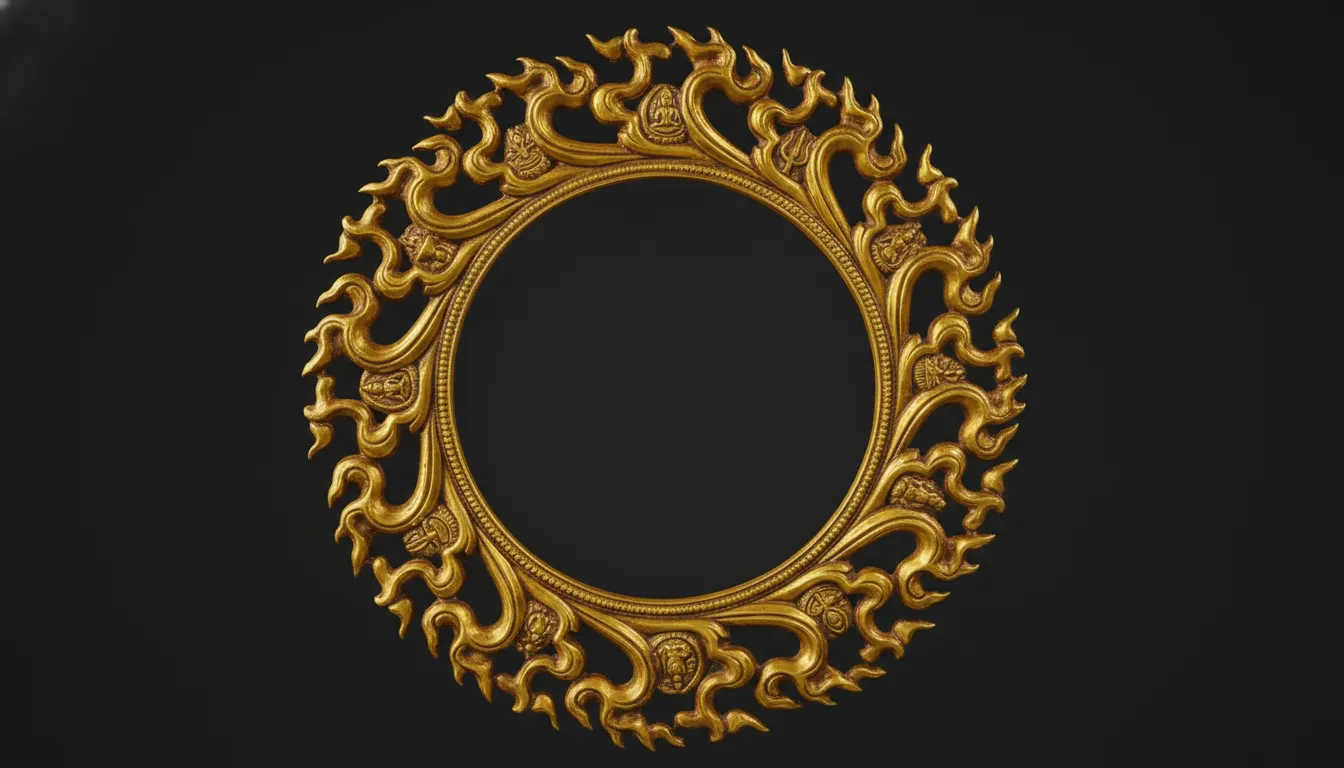
Here we examine the outer ring of the Golden Nataraja – the Prabha Mandala (circle of light). Decorated with perpetual flames, this ring symbolizes the universe’s cyclical nature: creation, preservation, and destruction. Each flame is carved with distinct curves, appearing to move dynamically. The ring connects all five acts of Shiva (Panchakritya): Srishti (creation), Sthiti (preservation), Samhara (destruction), Tirobhava (illusion), and Anugraha (liberation). Without this ring, the dance is incomplete. The golden finish makes each flame glow like eternal cosmic fire.
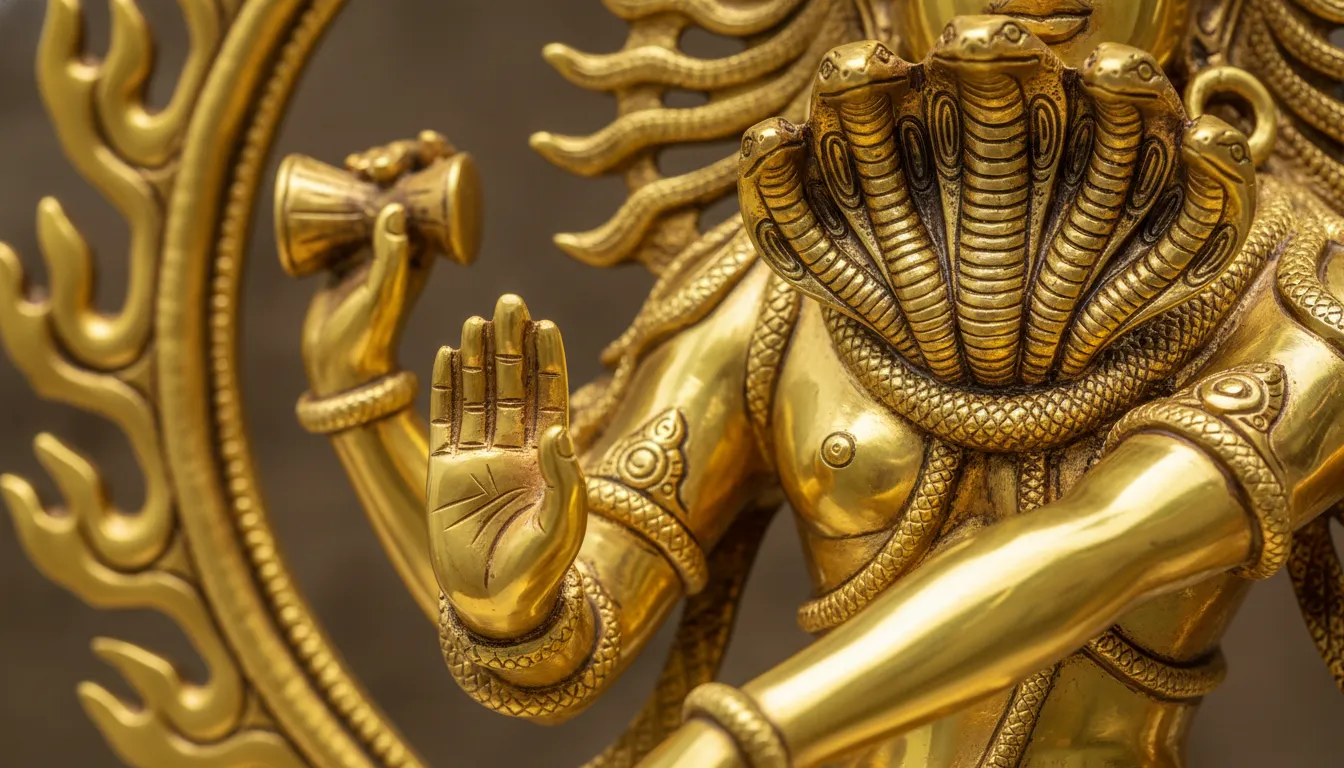
This image focuses on the serpent adorning the Golden Nataraja. A multi-hooded cobra is coiled around his upper arm, another around his neck as a garland. In Shaivism, the serpent represents the kundalini energy – primal cosmic power residing at the base of the spine. By wearing the snake, Shiva shows that he has mastered this energy and can wear poison as ornament. The serpent’s hoods are spread protectively, and each scale is engraved with micro-lines. The contrast between the snake’s texture and the smooth golden body creates artistic depth.
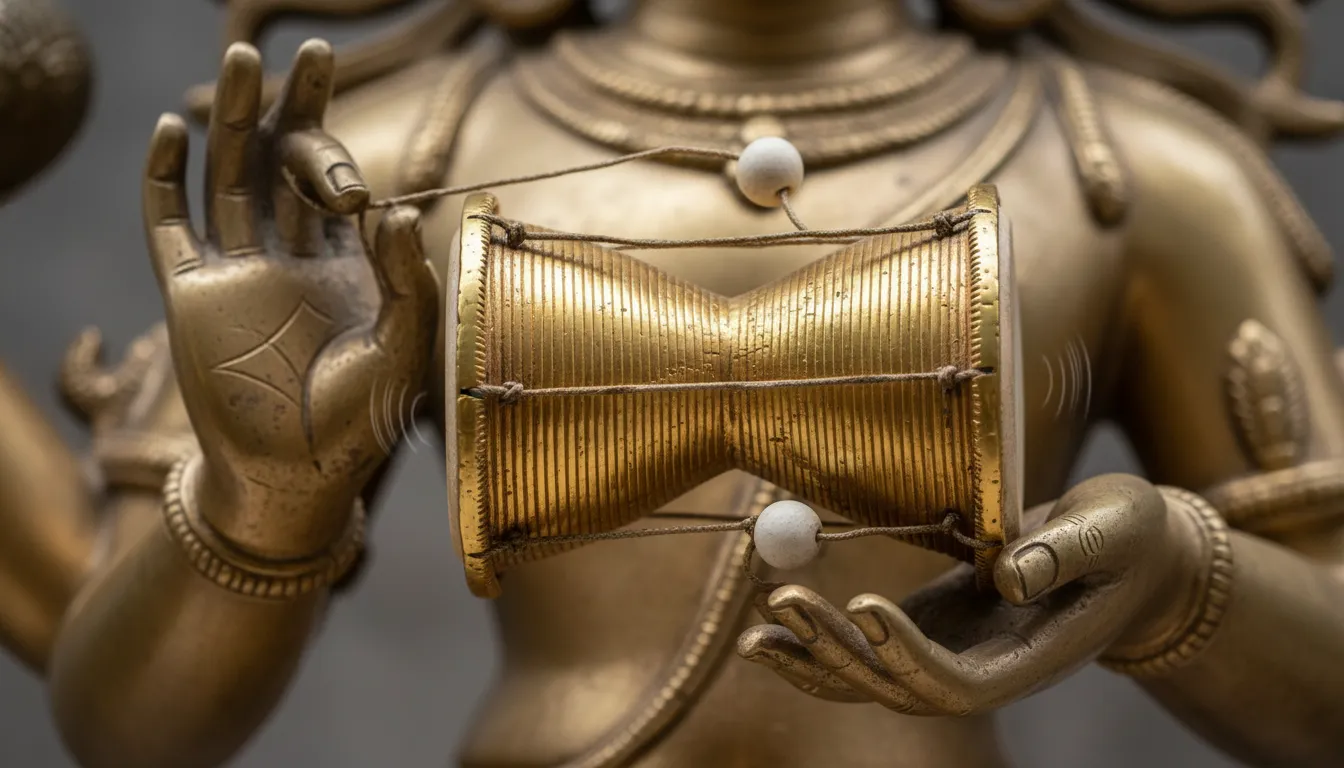
Zooming in on Nataraja’s upper right hand, we see the Damaru – an hourglass-shaped drum. According to Hindu cosmology, when Lord Shiva dances, the Damaru produces the first sound (Om/Aum), from which all languages, mantras, and music evolved. This golden Damaru features fine grooves and a taut leather membrane on both sides. Two tiny beads strike the drum’s surface, mimicking the duality of the universe (male/female, light/dark). The precision of this miniature drum in metal form shows the sculptor’s mastery over symbolic micro-details.
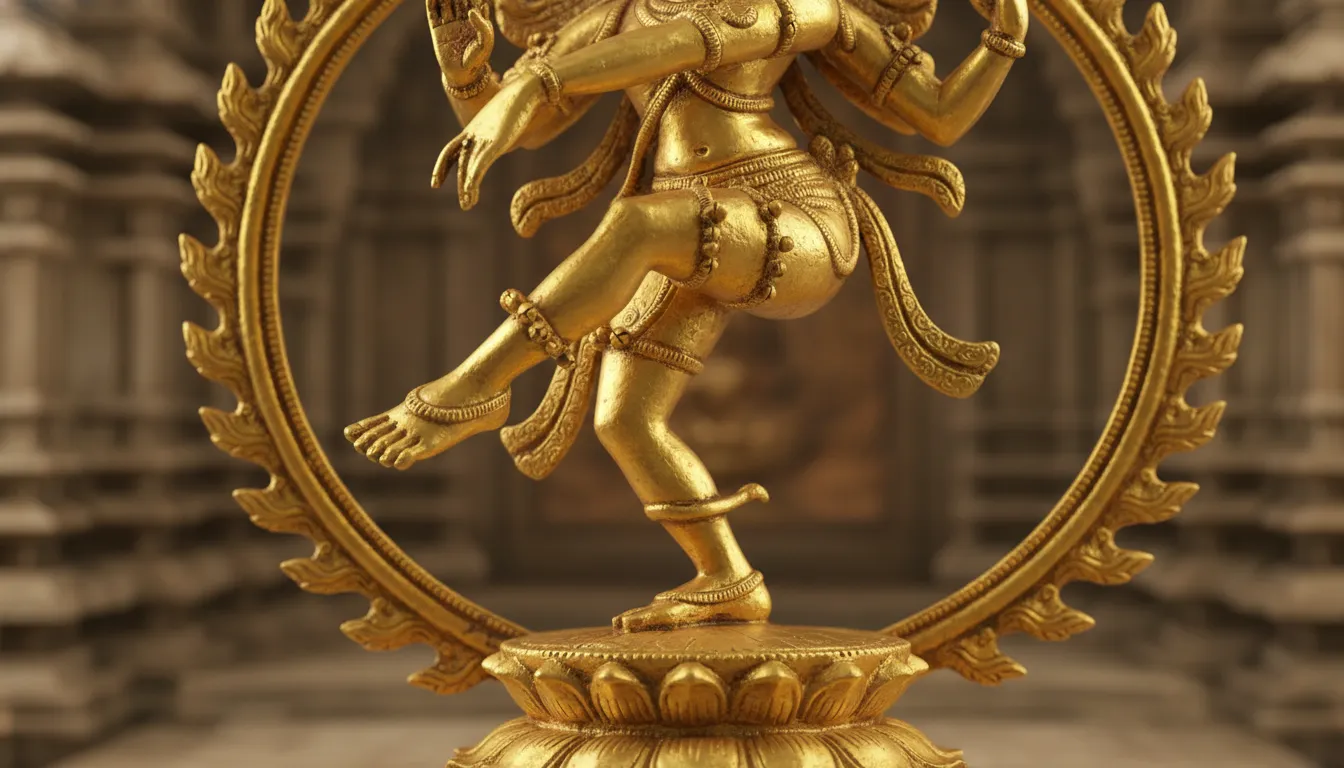
This image highlights the Golden Nataraja’s left leg raised diagonally across the body. This posture is called Kunchita Pada (bent leg) and symbolizes the path to liberation (Moksha). For devotees, this raised leg is a promise that surrendering to the divine dance removes all karmic bonds. The leg is adorned with golden anklets with tiny bells (ghungroos), each bell representing a note of creation. The dynamic angle of the leg creates a sense of movement frozen in time, making the sculpture appear weightless and celestial.
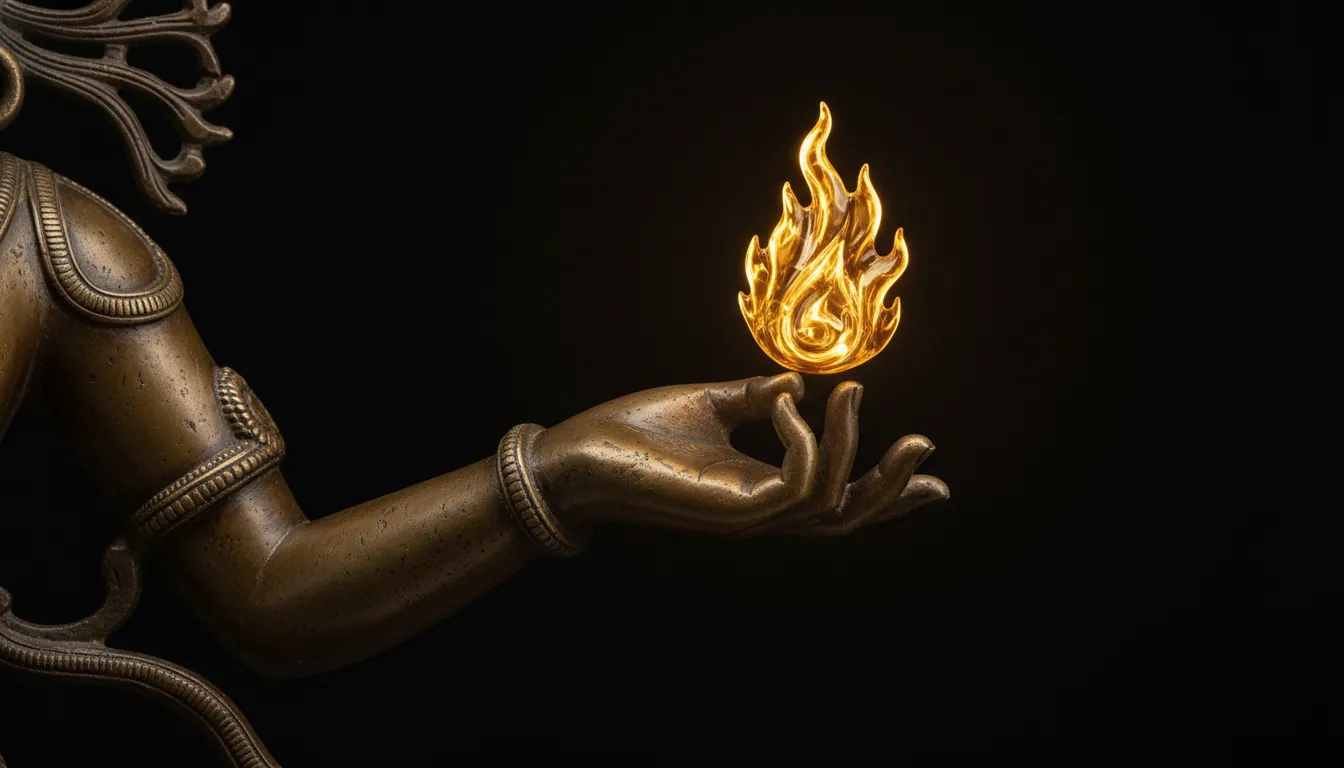
This isolated image focuses on Nataraja’s left hand, which holds a small but potent flame of fire (Agni). Unlike violent destruction, this fire represents the dissolution of the universe at the end of an eon, making way for new creation. The fingers are posed in a graceful, almost flower-like gesture (Katakahasta), balancing the raw element of fire. The golden texture makes the flame appear alive, flickering eternally. This image captures the paradox of Shiva – the destroyer who creates, the terrifying who is supremely beautiful.
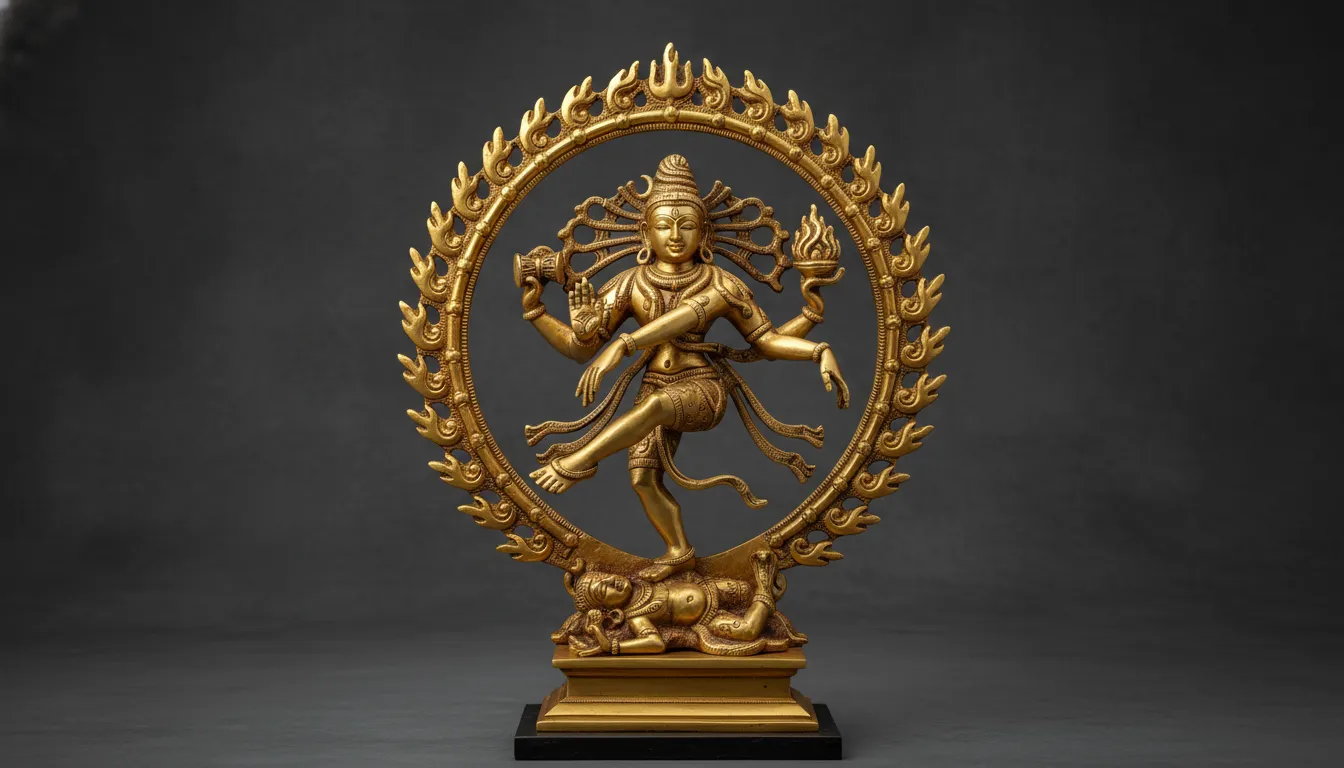
In this full frontal view, the Classic Golden Nataraja Sculpture reveals its complete cosmic dance form. Lord Shiva stands majestically within a circular ring of fire (Prabha Mandala), representing the cycle of creation and destruction. His right hand holds the damaru (drum) signaling the sound of creation, while his left hand carries the Agni (fire) of destruction. The raised left foot signifies liberation, and the right foot crushes the demon Apasmara, symbolizing victory over ignorance. The golden hue reflects divine energy and timeless artistry.
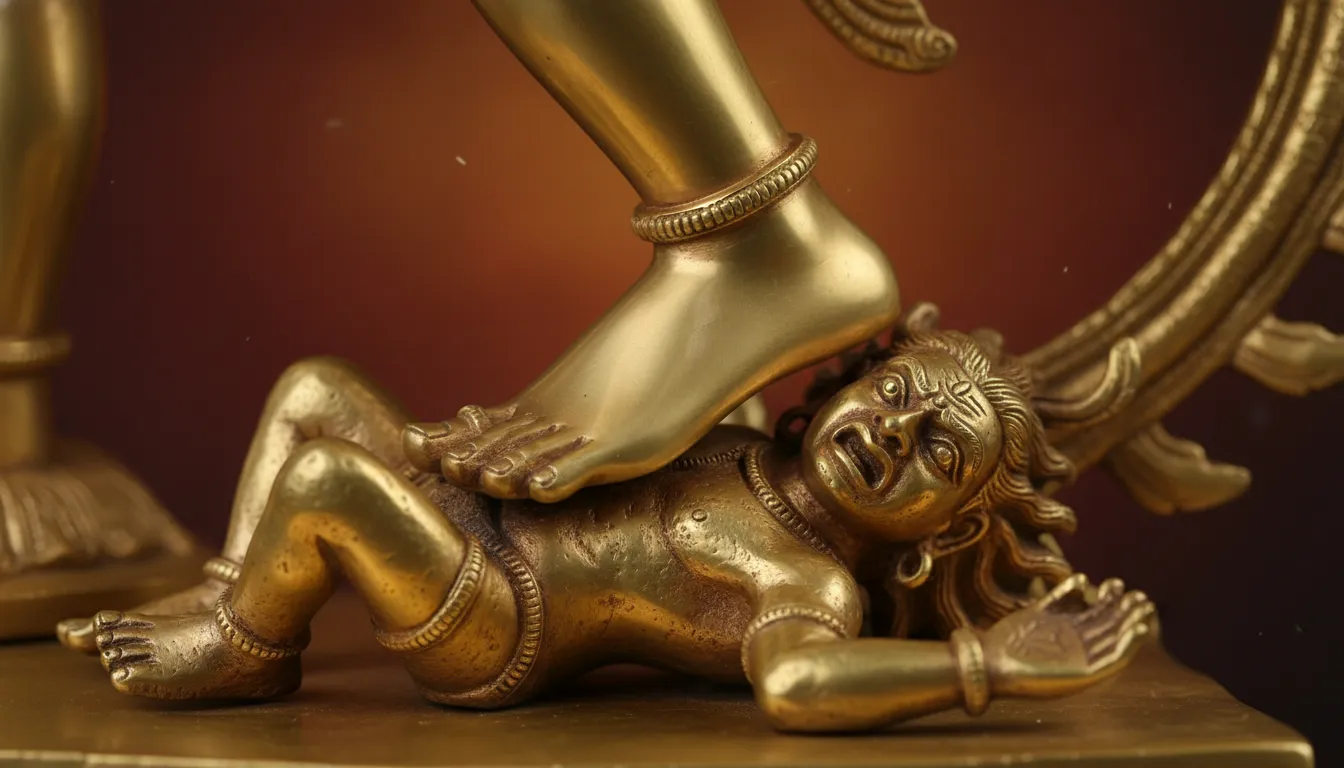
A crucial symbolic element of the Golden Nataraja sculpture is the demon underfoot. This image provides a sharp close-up of Lord Shiva’s right foot pressing down on Apasmara – a dwarf-like demon representing spiritual ignorance, ego, and forgetfulness. The demon is carved with a distressed expression, clutching the ground. This act of crushing is not violent but compassionate, as it frees the soul from bondage. The golden patina highlights every wrinkle and muscle of the demon, contrasting divine grace with human flaws.
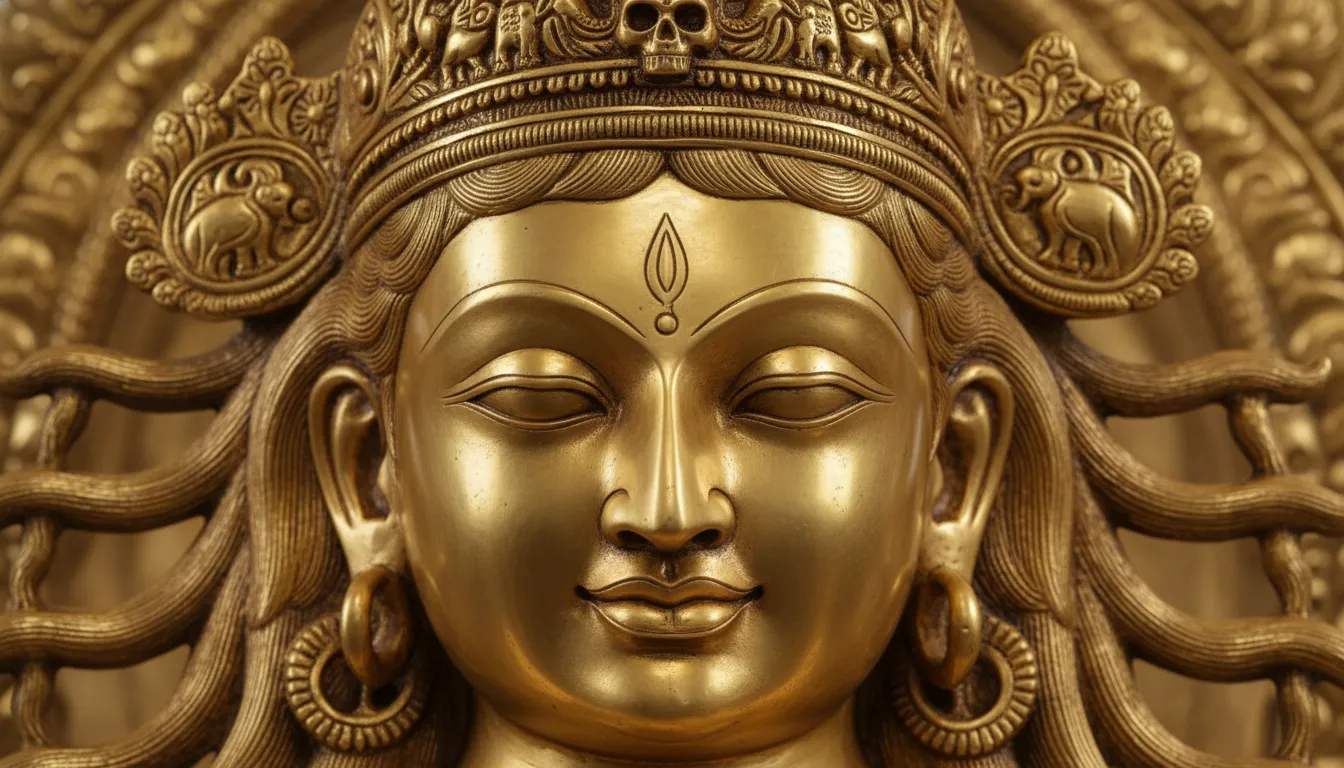
This detailed close-up shifts focus to the face of the Golden Nataraja. The sculptor has carved a remarkably serene yet powerful expression – eyes half-closed in cosmic contemplation, lips slightly curved in a knowing smile. The ornate golden crown (Jata Mukuta) is intricately decorated with traditional South Indian temple motifs, including a small skull and crescent moon, symbolizing Lord Shiva as the conqueror of time. Each strand of hair is meticulously defined, showcasing the exceptional craftsmanship of this sacred golden sculpture.
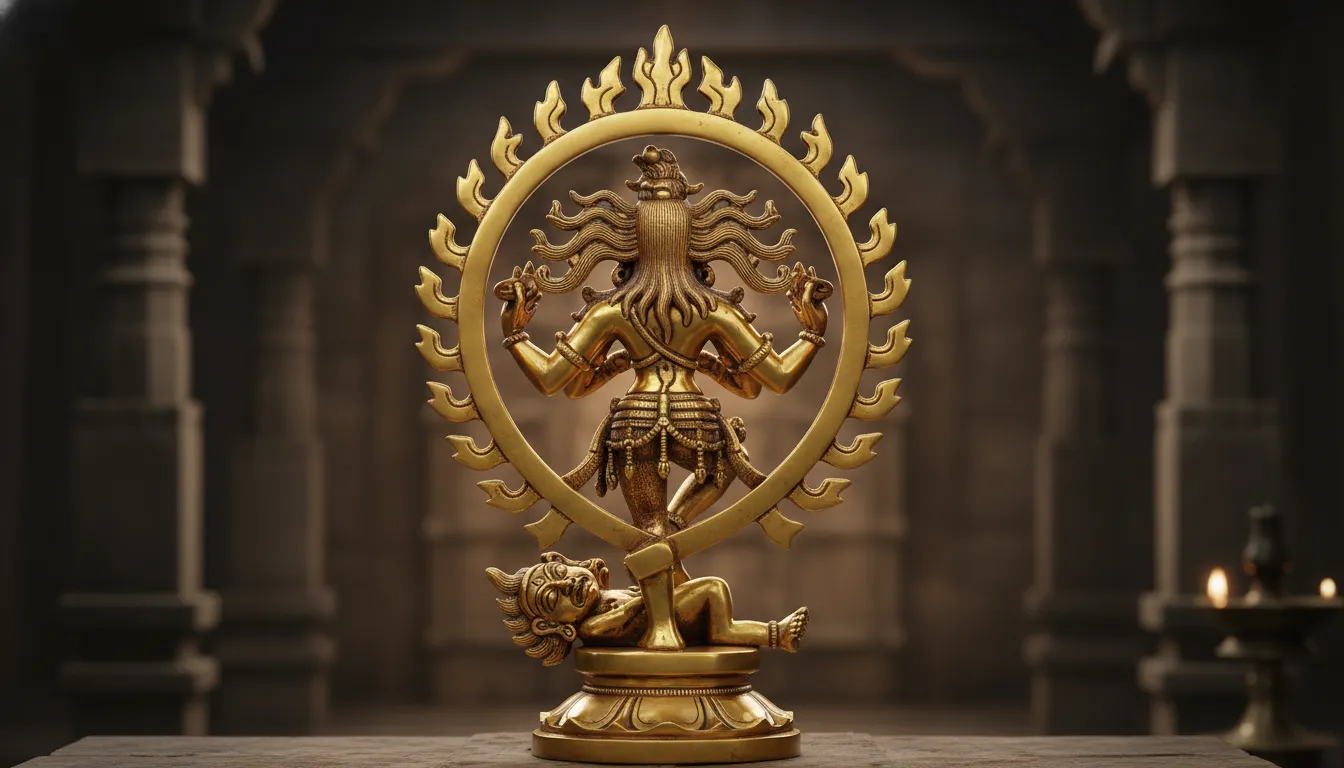
Unlike common front-facing photos, this unique back-angle view of the Golden Nataraja reveals hidden craftsmanship. The back of the cosmic ring shows additional flame motifs, while the back of Shiva’s hair (Jata) cascades down with snakes and a river goddess (Ganga) carved in miniature. His waistband (Mekhala) is intricately tied with dangling golden chains. Even the back of the demon Apasmara shows terrified facial features. This image proves that traditional sculptors treated every angle as sacred, ensuring that the sculpture tells its story from all directions.