

The Sacred Mysteries: 10 Famous Significances of Ice Shivling Formations
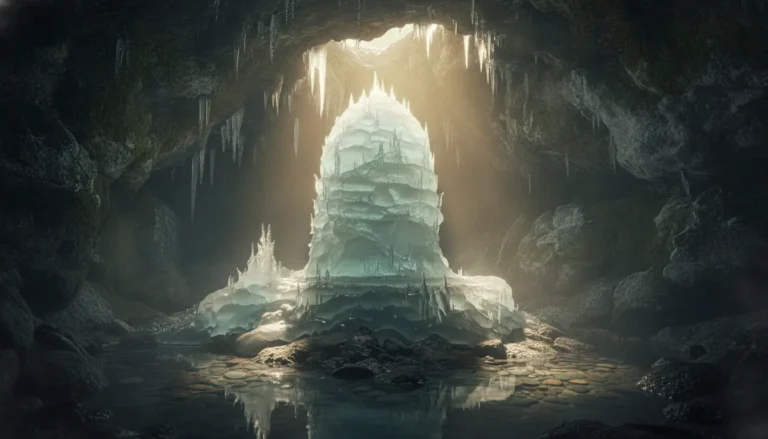
This image captures the primary and most prominent of the famous significances of the ice Shivling: its status as a Swayambhu (self-manifested) form of Lord Shiva. Formed by pure water droplets freezing drop-by-drop inside high-altitude Himalayan caves, this icy structure is not carved by human hands. Spiritually, it signifies the raw, unpolluted, and eternal presence of the cosmic creator in the physical world, reminding devotees of the pure and formless nature of the supreme consciousness.
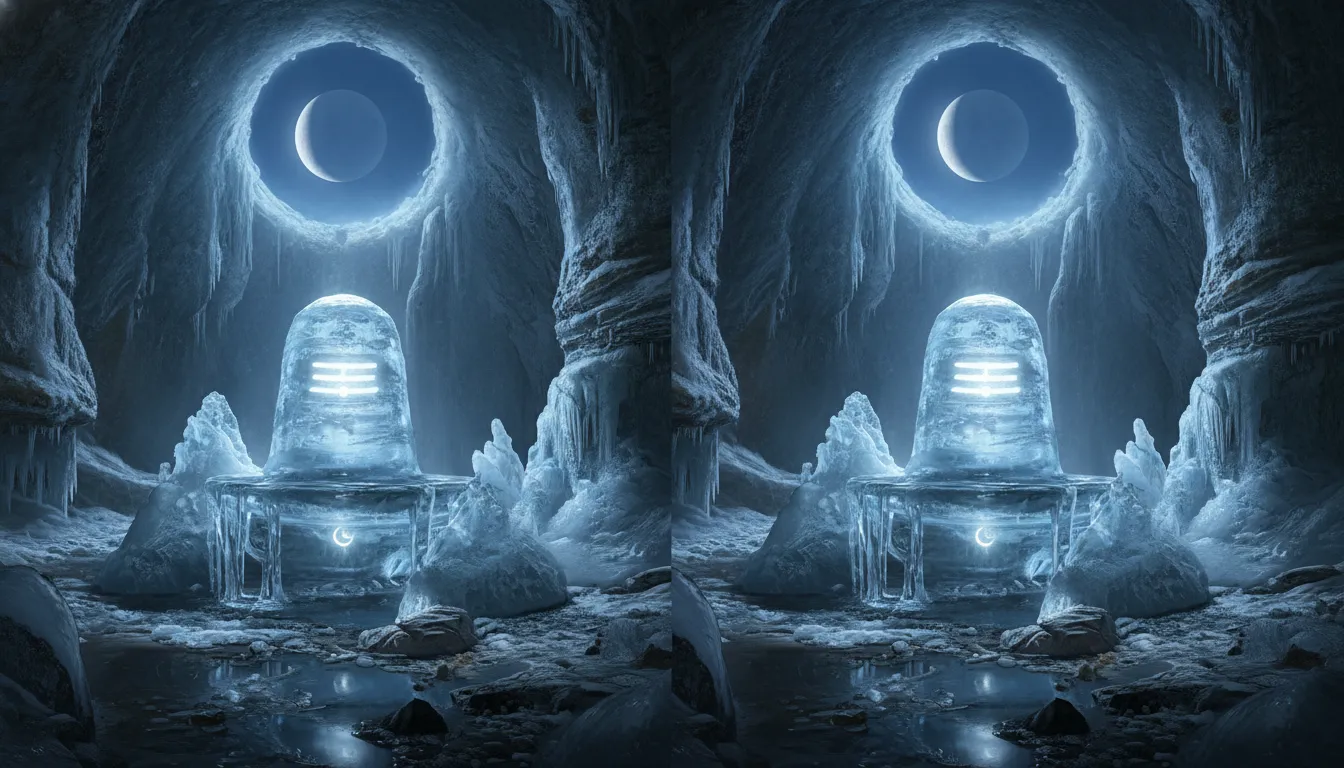
One of the most scientifically intriguing and famous significances of the ice Shivling images is its dynamic relationship with the moon phases. The ice stalagmite naturally waxes (grows) during the bright lunar fortnight and wanes (shrinks) after the full moon night (Purnima). This visual cycle represents the rhythm of cosmic time, the constant changes in human life, and Lord Shiva’s deep mythological connection with the crescent moon adorned on his head.
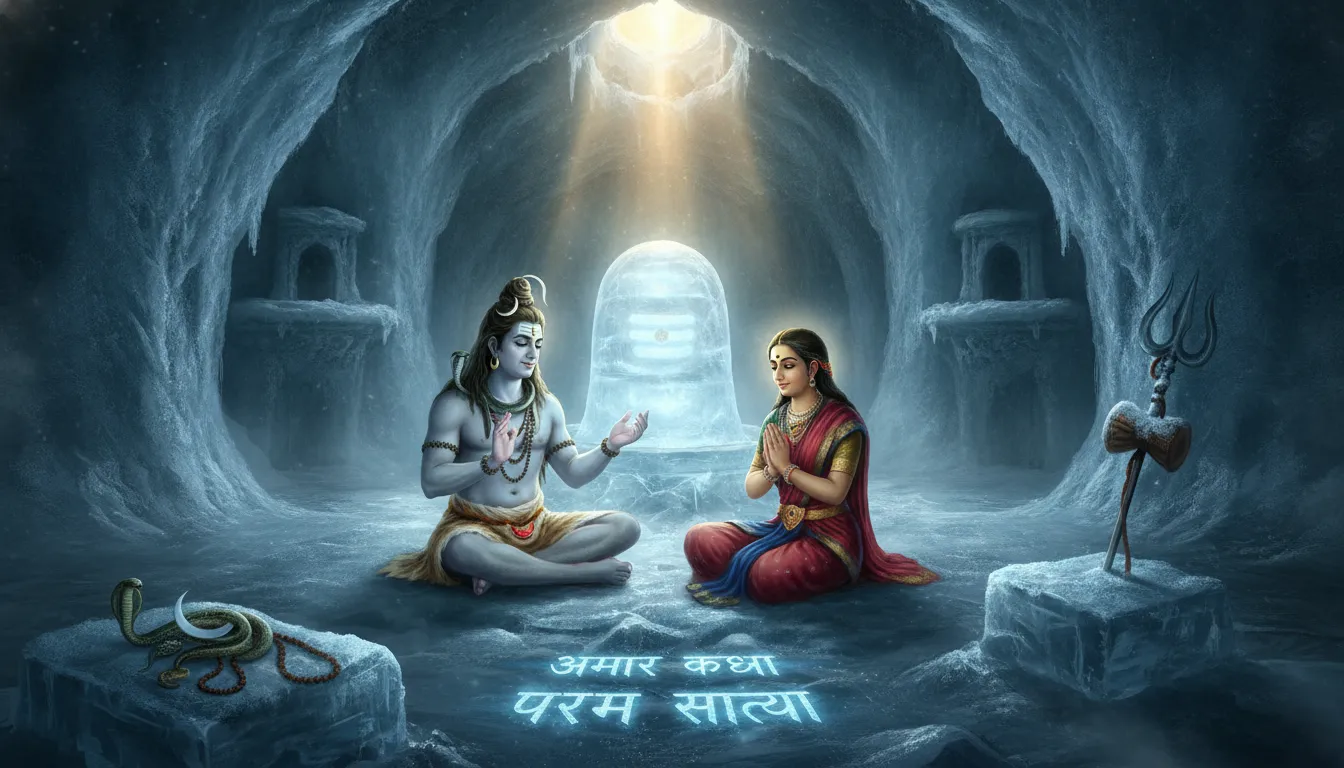
Mythological records highlight that the ice Shivling cave is the exact location where Lord Shiva chose to narrate the Amar Katha—the secret of immortality and cosmic creation—to his consort, Goddess Parvati. To ensure complete secrecy, Lord Shiva left all his worldly ornaments and companions behind before entering. This specific image description underscores the significance of the site as the ultimate source of transcendental spiritual knowledge and absolute divine truth.
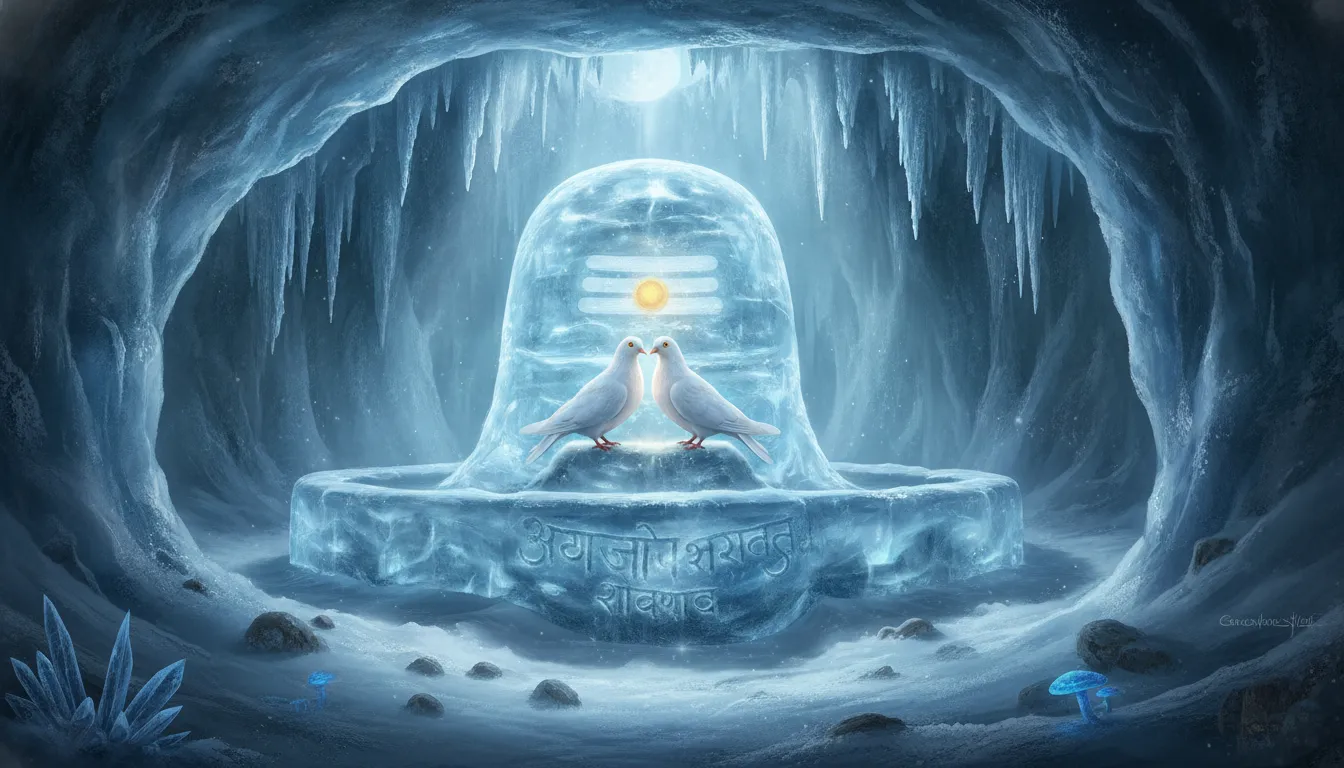
A fascinating element visible in many historical records and accounts of the ice Shivling is the presence of a unique pair of doves inside the freezing cave. Legend states that these birds accidentally overheard the secret of immortality being narrated by Lord Shiva. Having learned the secret, they became immortal and are believed to reside permanently in the cave. Their depiction symbolizes the profound idea that even simple creatures can attain spiritual liberation through divine proximity.
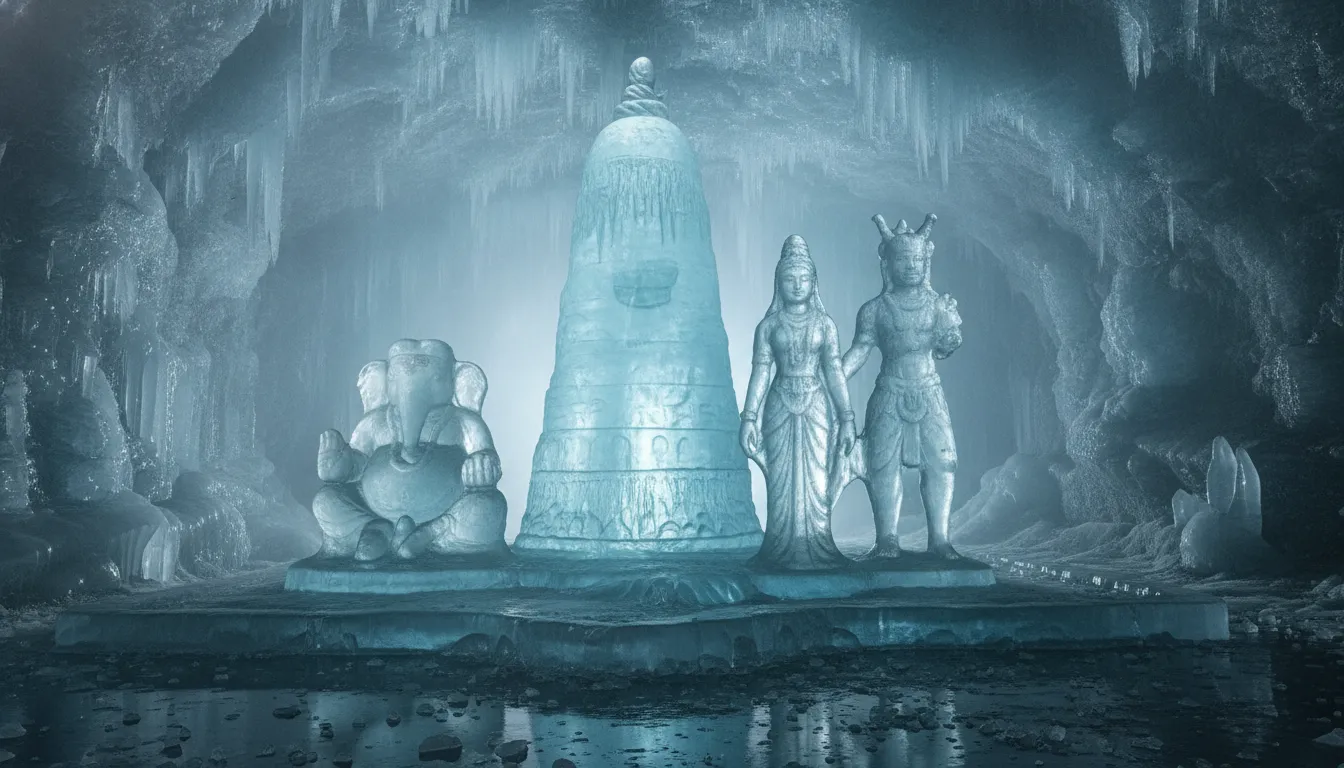
While the largest ice column represents Lord Shiva, the cave uniquely houses smaller natural ice stalagmites that complete the divine family. To the left of the main structure sits an ice formation revered as Lord Ganesha, while to the right are manifestations of Goddess Parvati and Bhairava. This arrangement highlights a famous significance regarding family unity, cosmic balance, and the convergence of masculine and feminine spiritual energies within the universe.
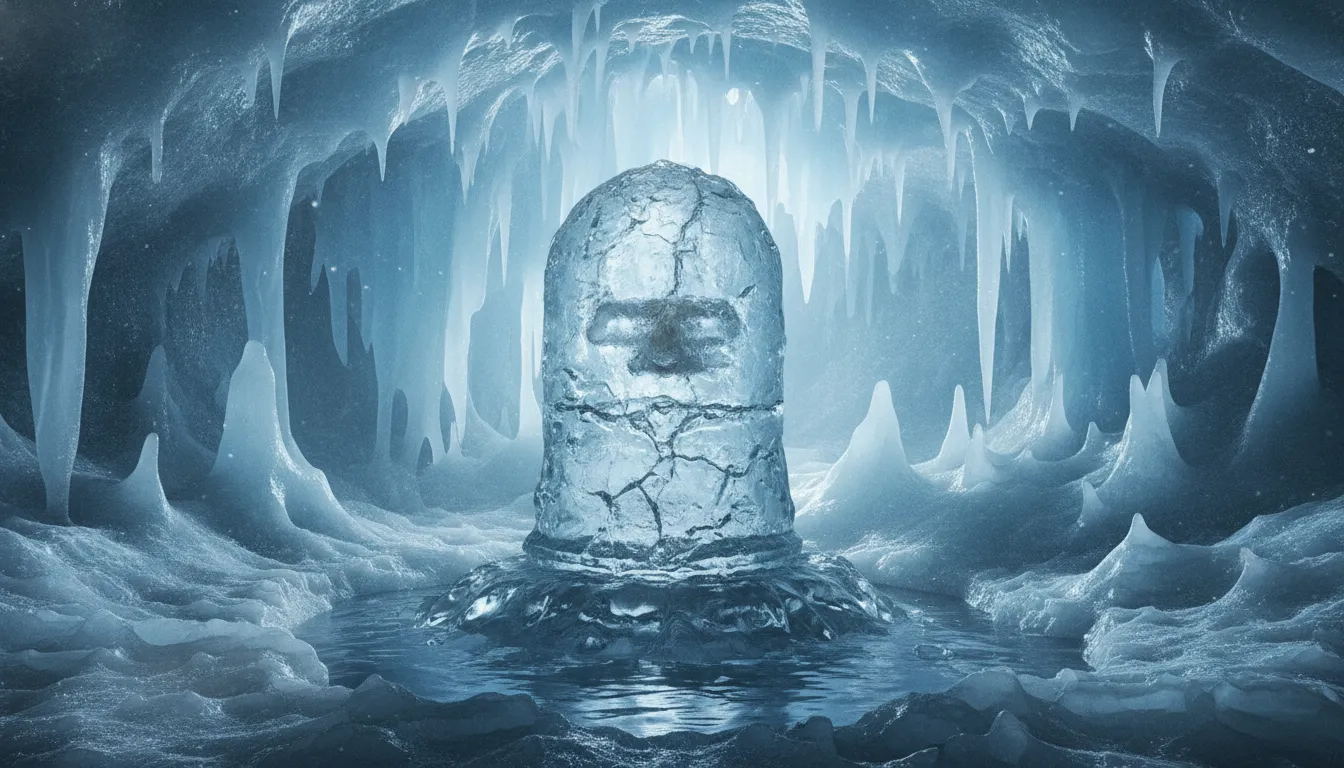
Unlike traditional temple deities decorated with gold and silk, the ice Shivling stands bare, cold, and pure. This represents Lord Shiva’s identity as the supreme ascetic (Adiyogi) who renounces all material wealth and comfort. The freezing environment and the solid structure of ice emphasize the beauty of inner peace, emotional detachment, and unbroken deep meditation (Samadhi) amidst the chaotic changes of the outer world.
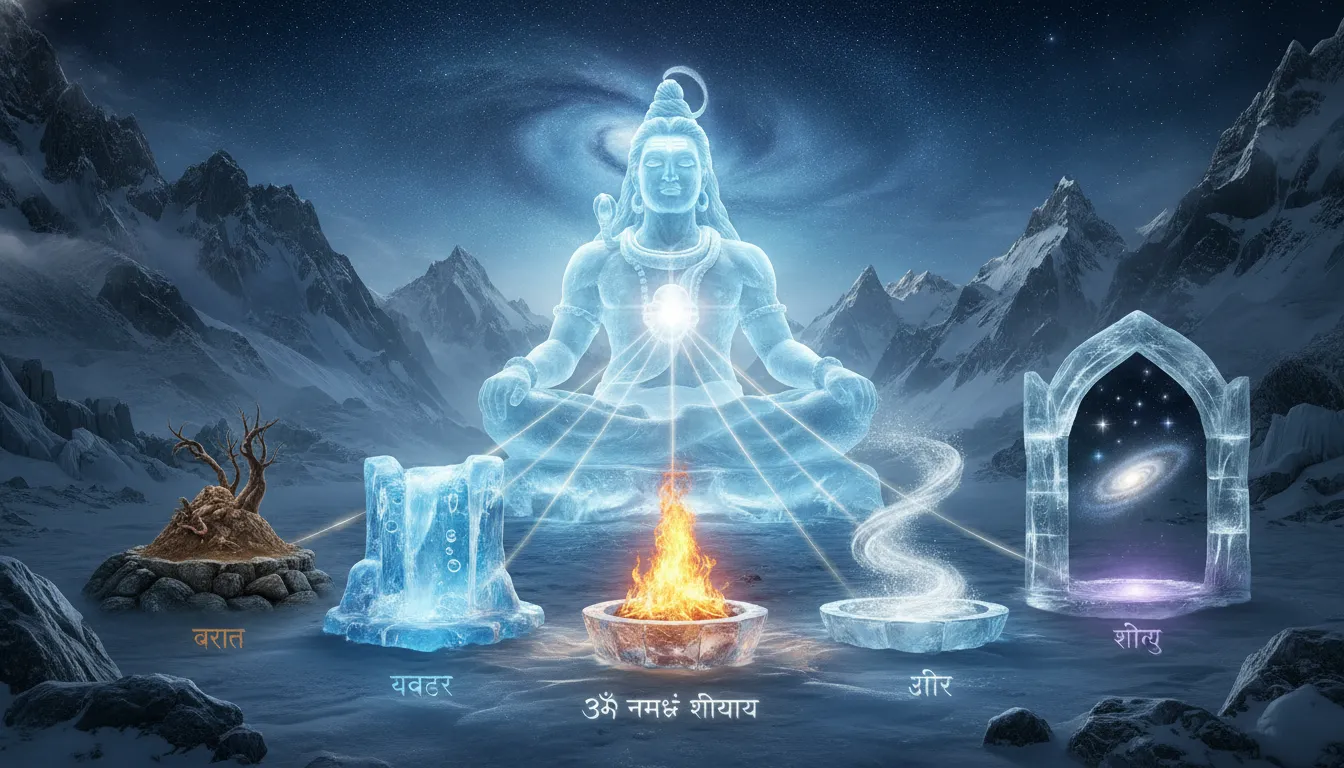
Before entering the inner sanctum to form the ice Shivling, legend states that Lord Shiva systematically sacrificed the five physical elements (Panch Bhoota): Earth, Water, Fire, Air, and Sky at Panjtarni. The crystal-clear ice structure embodies the purification of these elements. This significance teaches spiritual seekers to look beyond their physical bodies made of these five elements and focus on the immortal soul resting within.
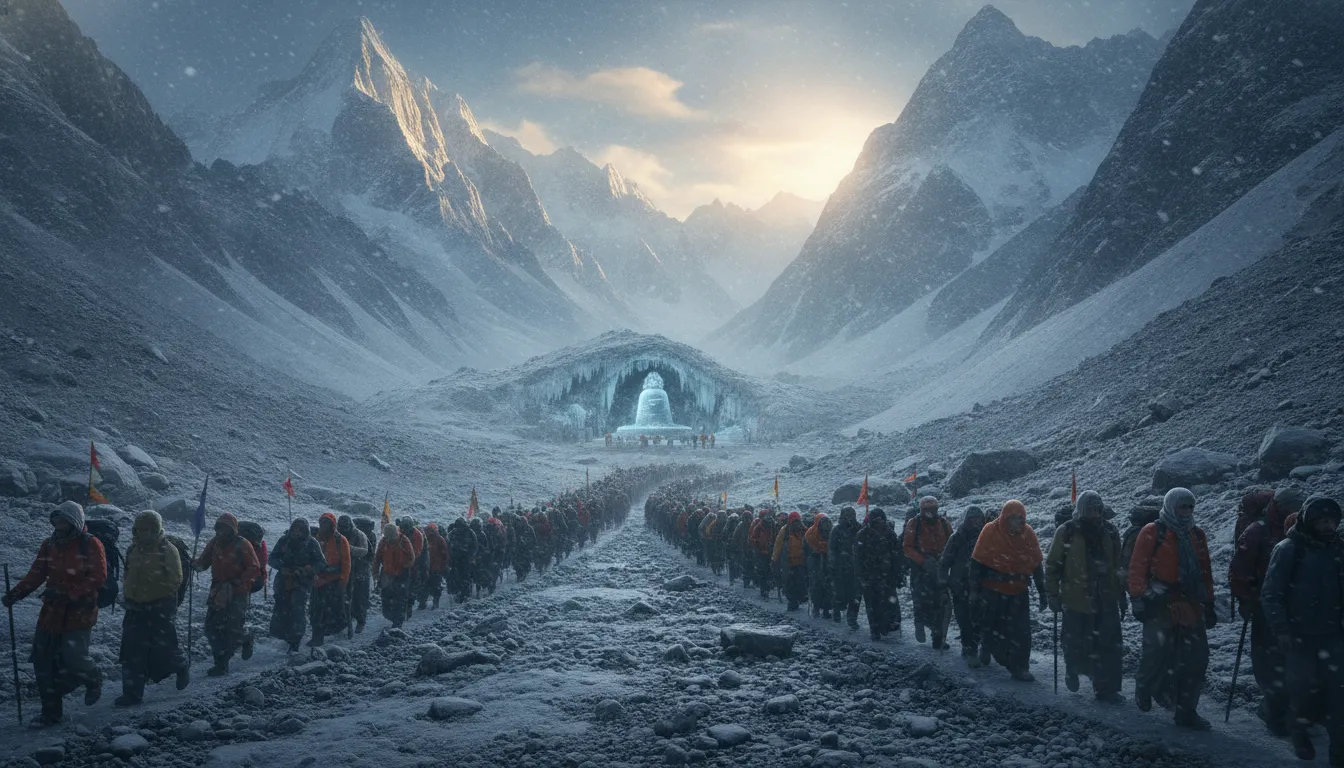
The journey to witness the ice Shivling images in real life involves traveling through dangerous altitudes, freezing temperatures, and rugged mountainous terrain. The immense effort made by lakhs of pilgrims every summer highlights the significance of devotion, perseverance, and spiritual endurance. Overcoming these physical barriers symbolizes the soul’s difficult struggle to cross the ocean of earthly existence and achieve final union with the divine.
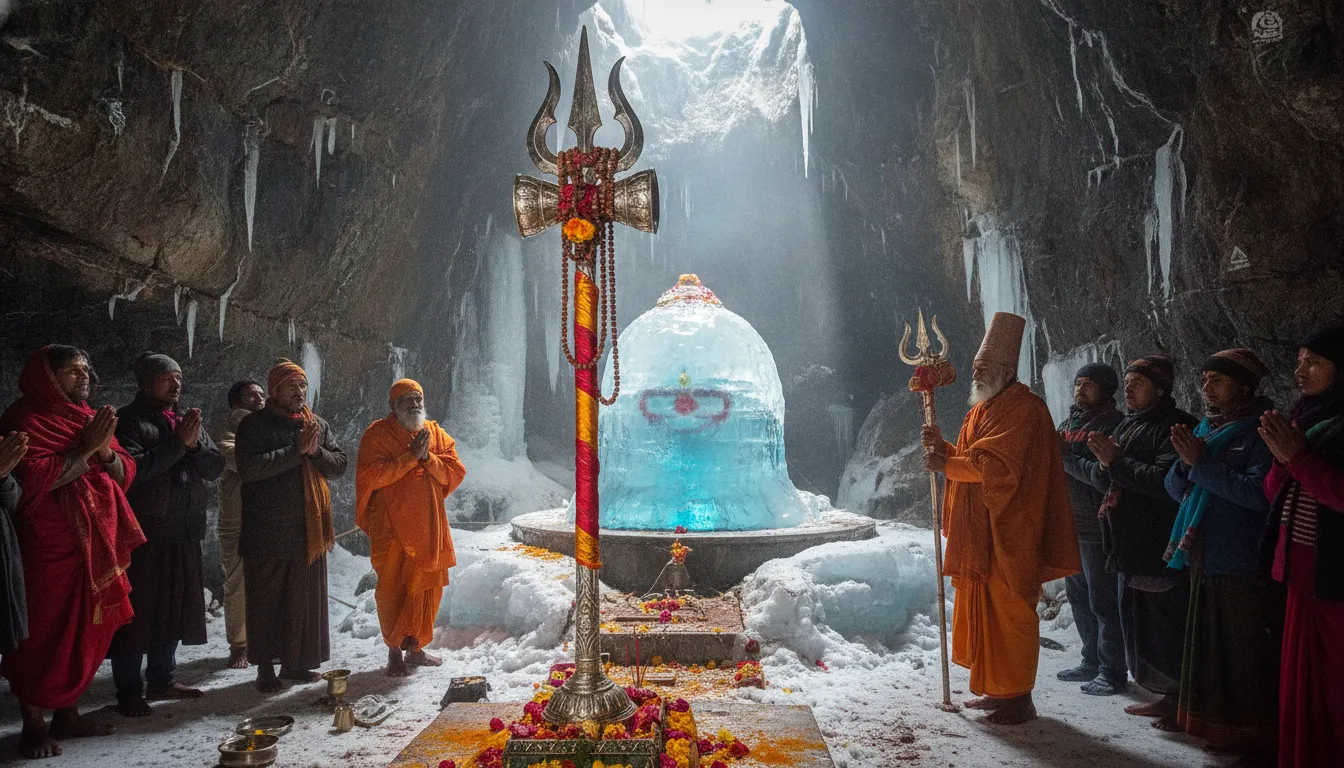
Deeply tied to the history of the ice Shivling is the Chhari Mubarak—the sacred silver mace of Lord Shiva. According to ancient texts, Sage Bringesha was gifted this defensive mace by Shiva himself to protect pilgrims from negative forces. The arrival of this mace at the cave marks the spiritual peak of the annual pilgrimage. This image represents divine protection, the preservation of ancient traditions, and the ultimate victory of spiritual righteousness over evil.
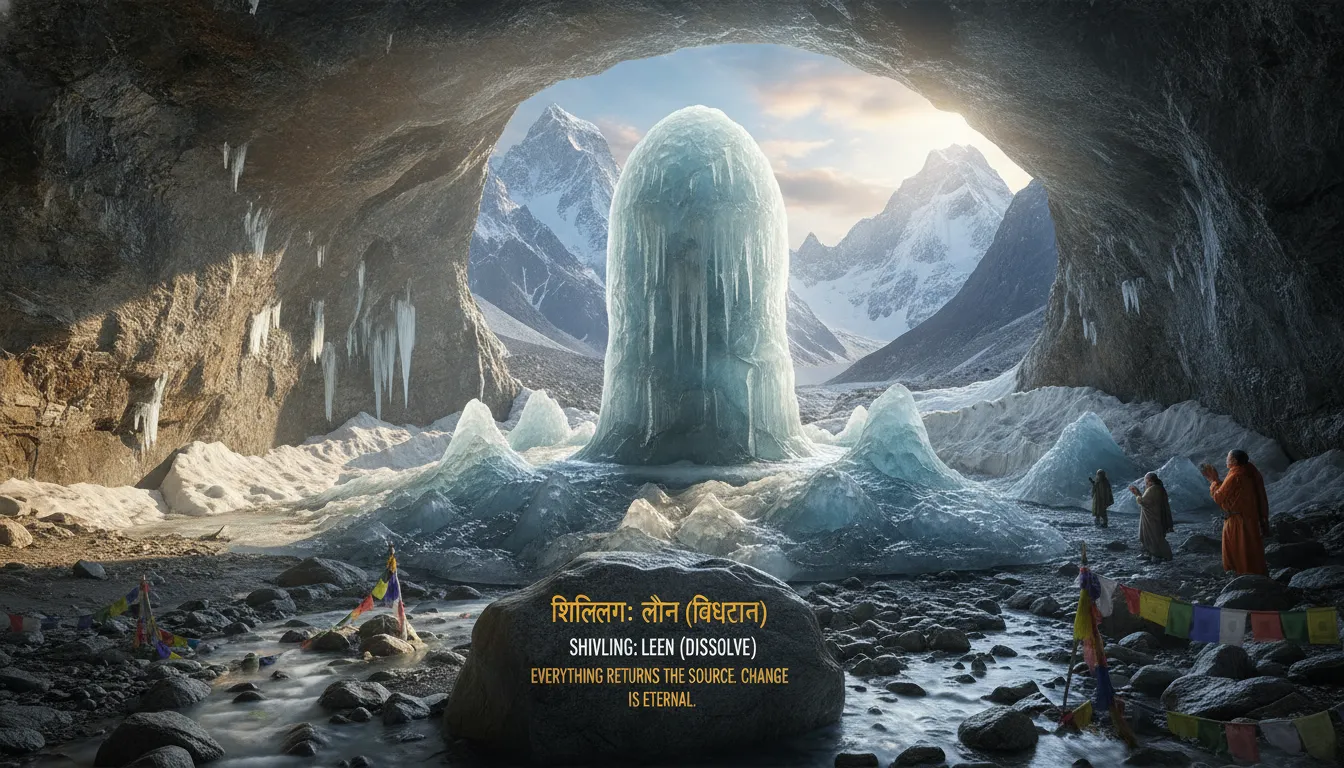
The word Shivling itself carries a deep semantic meaning: Leen (to dissolve) and Gati (to grow). The complete seasonal formation and eventual melting of the ice column perfectly mirrors the cosmic cycle of creation, preservation, and destruction (Pralaya). This final famous significance reminds mankind that everything that manifests in the physical world must eventually dissolve back into the source, making change the only permanent law of nature.