

Top Digital Marketing Strategies in 2026: A Complete Growth Guide
The New Era of Digital Marketing in 2026
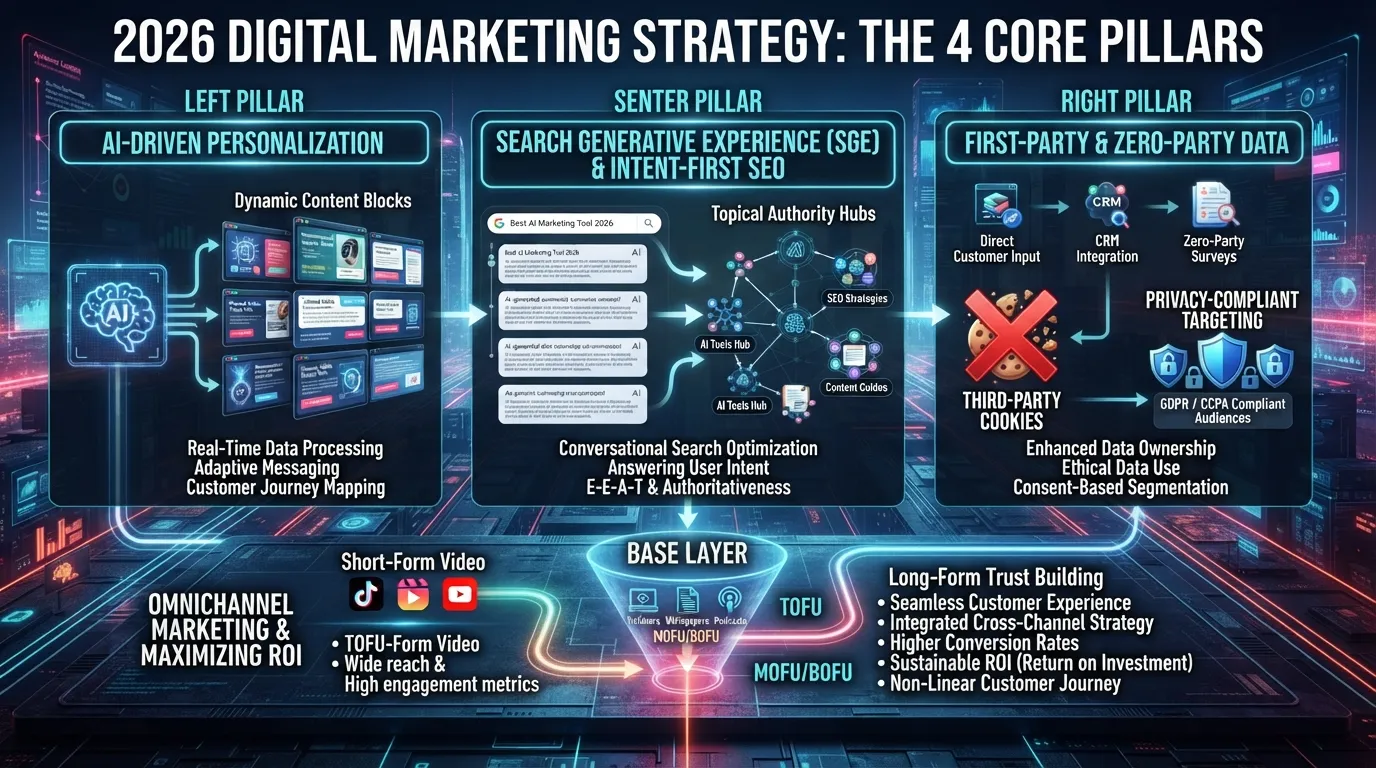
The digital marketing landscape has undergone a monumental transformation. What worked just a couple of years ago—generic mass emailing, cookie-cutter SEO content, and heavy reliance on third-party tracking—no longer yields sustainable growth. In 2026, marketing success is defined by speed, hyper-personalization, and deeply authentic user engagement. Brands that adapt to these modern mechanics are scaling rapidly, while those clinging to legacy frameworks struggle with rising customer acquisition costs (CAC) and declining engagement rates.
Key Industry Shifts: AI, Privacy, and Search Intent Trends
To succeed in today’s ecosystem, growth strategies must account for three fundamental industry shifts:
AI Integration as a Standard: Artificial intelligence has transitioned from an experimental tool to the backbone of strategic execution. AI-driven predictive modeling, real-time creative adaptation, and dynamic audience segmentations allow brands to deliver personalized experiences instantly.
The Death of Third-Party Cookies: Heightened global privacy regulations and strict browser policies have made first-party and zero-party data the ultimate currency. Marketers must now build direct, consent-driven relationships with their audience to maintain targeting precision.
Intent-First Search Behavior: Search engines now prioritize immediate, zero-click value and conversational AI responses. Ranking at the top requires shifting from basic keyword density to answering complex user intent and demonstrating genuine topical authority.
Why Traditional Funnels Are Failing (And What Works Now)
The traditional linear marketing funnel—Awareness $\rightarrow$ Consideration $\rightarrow$ Decision—is largely obsolete. Modern buyers do not follow a straight path; they move fluidly across platforms, researching via AI search assistants, social proof, short-form video, and peer communities simultaneously.
Instead of rigid top-of-funnel nets, high-performing brands use an Omnichannel Flywheel Model. In this system, every touchpoint delivers value immediately, turning customer satisfaction into self-sustaining momentum that continuously drives retention, referral, and recurring organic acquisition.
Key Takeaway for Marketers: In 2026, growth is not about shouting louder; it is about being smarter with your data, respecting user privacy, and serving exact intent precisely when your audience needs it.
Strategy 1: AI-Powered Personalization at Scale
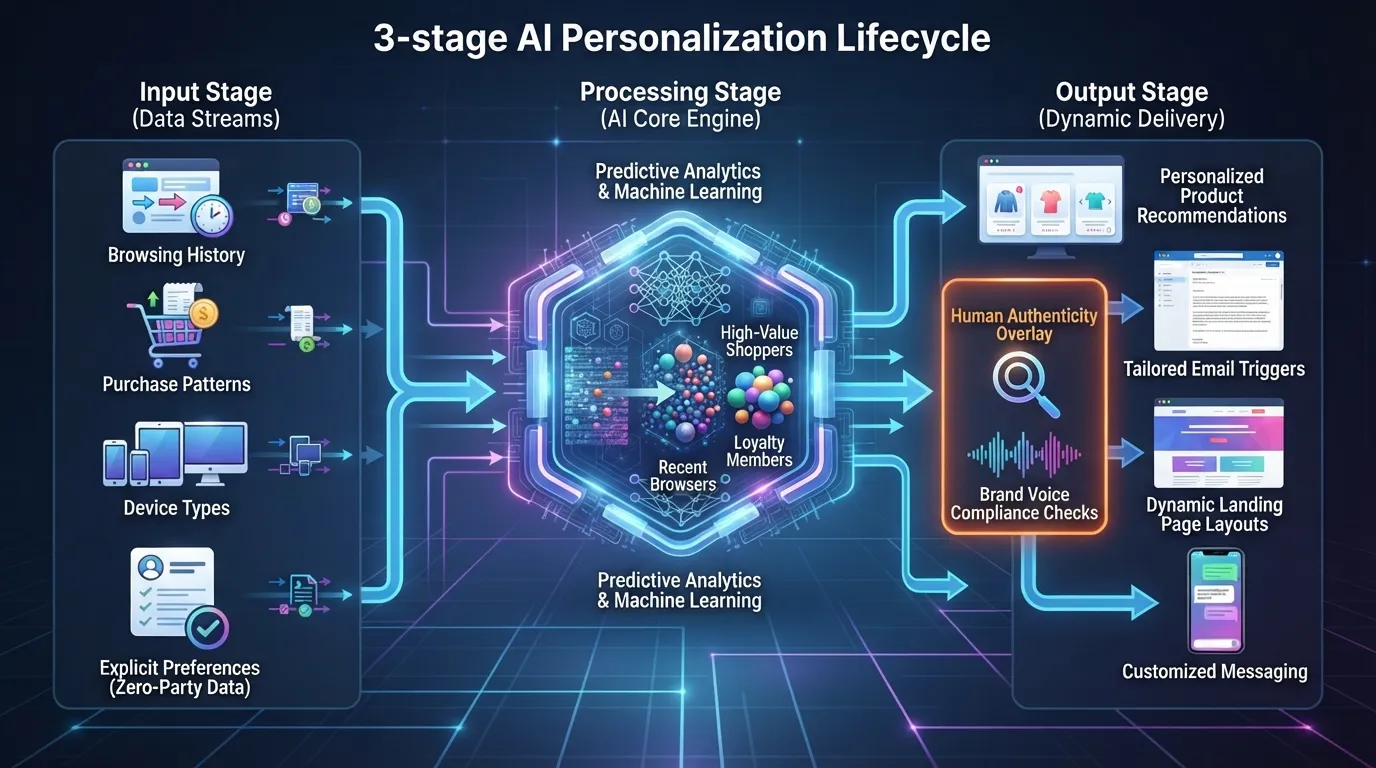
Generic, broad-brush marketing messaging is no longer effective. In 2026, audience expectations have evolved—users demand experiences that adapt instantly to their specific needs, behaviors, and pain points. AI-powered personalization at scale allows modern brands to deliver tailored customer journeys automatically, transforming raw data into high-converting visual and textual touchpoints.
Predictive Analytics & Dynamic Content Customization
Traditional personalization relied on basic rules like addressing a recipient by name in an email. Today, advanced predictive analytics engines evaluate thousands of data signals—including browsing history, device interaction speed, past purchases, and contextual intent—to forecast what a customer needs before they actively search for it.
Dynamic Web Interfaces: Websites now automatically adjust headlines, banners, product recommendations, and social proof elements based on visitor segment data in real time.
Hyper-Segmented Messaging: AI tools continuously refine audience clusters, sending targeted trigger messages at the exact moment a prospect is most likely to convert.
Predictive Lead Scoring: Sales and marketing pipelines prioritize leads based on machine-learning algorithms that track deep user engagement patterns.
By serving customized content dynamically, brands significantly reduce friction in the conversion funnel and drive higher average order values (AOV).
Balancing Automated Workflows with Human Brand Authenticity
While hyper-automation streamlines operations, relying purely on algorithms carries a distinct risk: losing the human connection that builds lasting brand equity. Audiences quickly tune out robotic tone, overly generic automated replies, and inorganic communication.
To maintain sustainable growth, top-performing brands follow a hybrid automation model:
Automate the Logistics, Humanize the Experience: Use AI to handle data analysis, workflow triggers, and repetitive scheduling—freeing up human strategists to craft compelling narrative-driven copy and creative concepts.
Context-Aware Guardrails: Implement human oversight on automated AI customer interactions to ensure responses stay aligned with brand voice, empathy, and cultural context.
Transparent Data Ethos: Clearly communicate to users how their preferences shape their personalized experience, reinforcing trust and privacy compliance.
Expert Insight:
“Automation provides speed and precision, but empathy drives conversions. The key to winning in 2026 is using AI to handle the scale, while humans preserve the soul and trust of the brand identity.”
Strategy 2: Optimizing for AI Search & Intent-First SEO
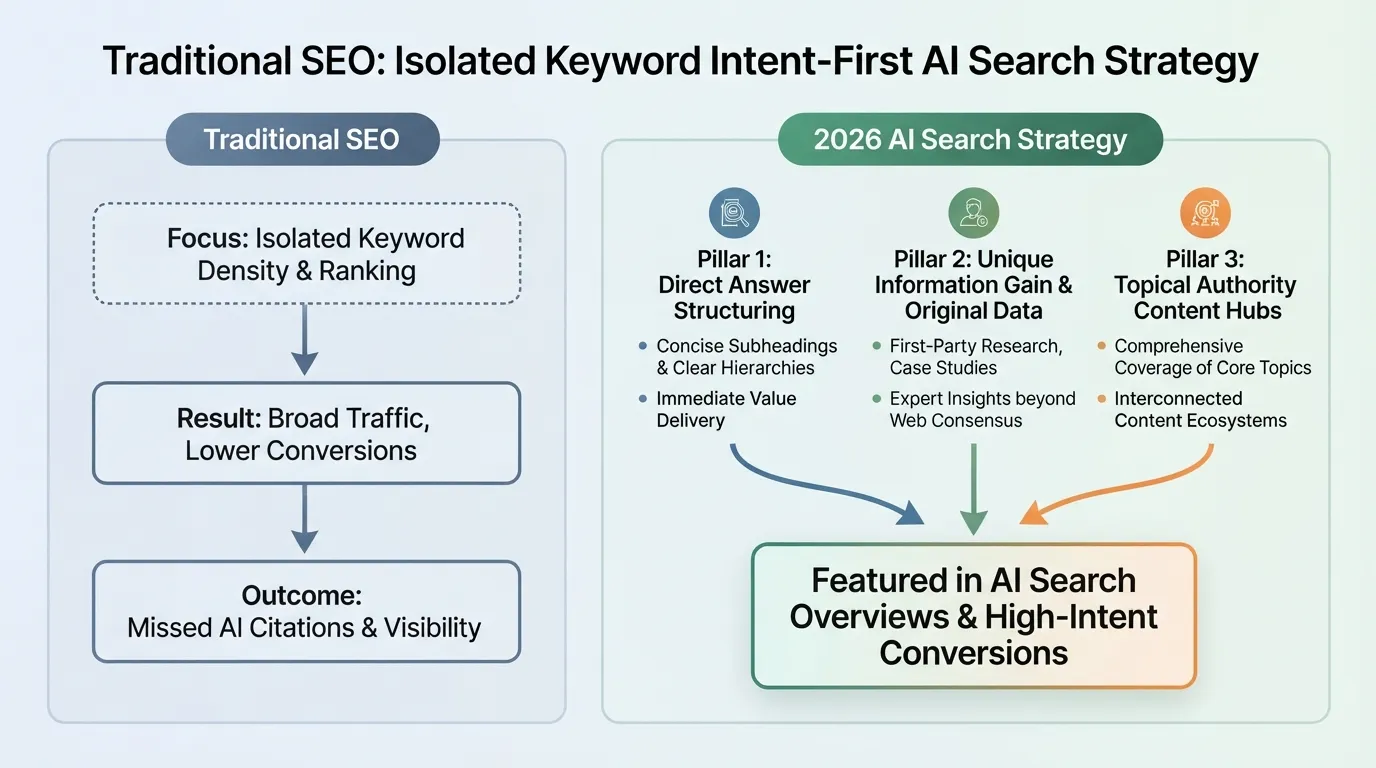
Search engines are no longer just indexers of links—they are direct answer engines. With the evolution of AI-driven search overviews and conversational discovery, ranking #1 requires a shift from traditional keyword targeting to intent-first optimization.
To maintain high search visibility, brands must ensure their content is structured so search algorithms can effortlessly process, synthesize, and cite it.
Winning in Search Generative Experience (SGE) & Answer Engines
AI search models synthesize top-ranking pages to deliver immediate, inline answers to users. Winning coverage in these AI-generated snapshots requires a targeted approach:
Direct Answer Structuring: Position concise, direct definitions or solutions immediately under your
H2andH3subheadings to increase the likelihood of being featured in AI overviews.Information Gain & Unique Data: Search algorithms favor content that provides original perspective, fresh statistical data, or unique industry insights rather than rehashed information.
Entities & Semantic Relevance: Focus on conceptual depth rather than repetition. Cover subtopics, industry terminology, and natural language queries related to your primary topic.
Building Topical Authority & High-Intent Backlinks
Getting cited by AI answer engines and maintaining top traditional rankings depends heavily on your site’s perceived topical authority.
Broad Keyword Traffic: Low Conversion Rate
Topical Authority Hub: High AI Search Inclusion + Scalable ROI
To build an authoritative presence that search engines trust:
Publish Dedicated Content Clusters: Rather than isolated posts, build structured content hubs where primary pillar pages are supported by targeted subtopic articles via strategic internal linking.
Secure High-Intent Backlinks: Quality overrides quantity. Backlinks from contextually relevant, high-DR industry platforms signal to search engines that your brand is an established voice in its niche.
Satisfy Multi-Layer Search Intent: Ensure your content answers not just the primary query, but the user’s logical next questions—reducing bounce rates and keeping visitors engaged longer.
Expert Insight: As zero-click searches increase, getting cited directly within AI answer overviews makes unlinked brand mentions and broad digital PR as crucial as traditional link-building. When search engines consistently see your brand referenced alongside core industry concepts, your overall domain authority and AI inclusion rates naturally rise.
Strategy 3: Cookieless Marketing & First-Party Data Mastery
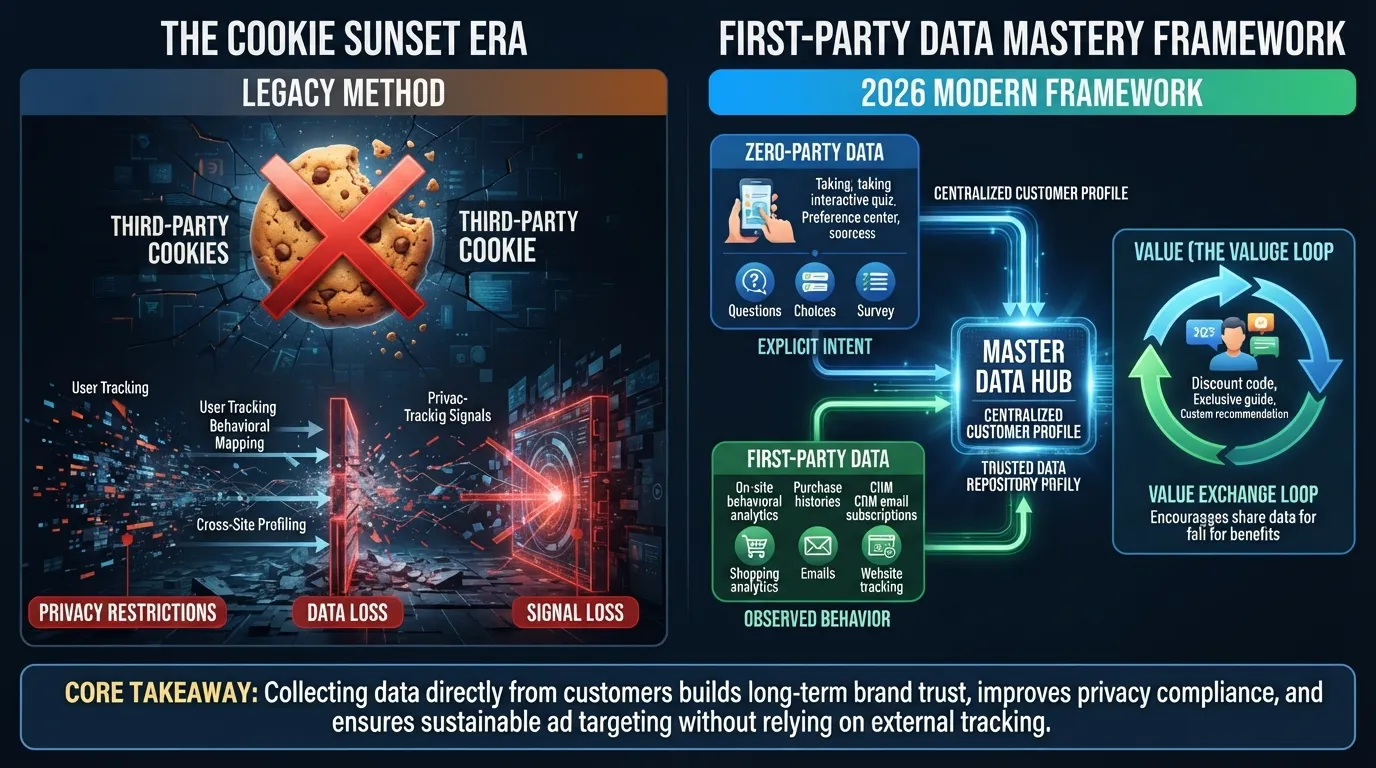
As third-party tracking mechanisms phase out and global data privacy standards tighten, relying on rented audience data is no longer a viable long-term growth strategy. Modern digital marketing demands complete ownership over your customer data infrastructure.
Building a privacy-first marketing model is not just about compliance—it is a competitive advantage that fosters long-term brand trust and yields significantly higher conversion rates.
Collecting High-Value Customer Data Ethically
To build an accurate, privacy-compliant audience database without alienating your visitors, brands must focus on transparent value exchange:
Value-Driven Gated Assets: Users gladly share contact information when the return is high. Offer specialized toolkits, whitepapers, interactive calculators, or exclusive industry reports in exchange for basic business data.
Transparent Opt-In Processes: Clearly communicate how customer data will be used. Simple, clear privacy policies and micro-copy on opt-in forms increase signup conversions by building immediate trust.
Centralized Data Management: Store and manage collected data using modern Customer Data Platforms (CDPs) or CRM integrations. This ensures seamless cross-channel segmentation while maintaining strict data governance.
Leveraging Zero-Party Data via Interactive Content & Surveys
While first-party data tells you what a user did, zero-party data tells you why they did it. Zero-party data is information a customer intentionally and proactively shares with your brand.
First-Party Data represents observed behavior (such as page views and purchase history), whereas Zero-Party Data represents explicit intent shared directly by the user (such as preferences, budget, and key pain points).
To collect high-intent zero-party data effectively:
Implement Interactive Quizzes & Assessments: Guide users through personalized diagnostic tools (e.g., “Find the Right Marketing Strategy for Your Business”) to collect exact customer preferences and pain points.
Deploy Micro-Surveys at Key Touchpoints: Place short, 1-to-2 question polls on high-intent pages or post-purchase confirmation screens to gather feedback on user intent and expectations.
Personalize Workflows Automatically: Use zero-party responses to dynamically segment email lists and tailor page content in real-time, drastically boosting relevance and sales conversions.
Strategy 4: High-Impact Video & Omnichannel Marketing
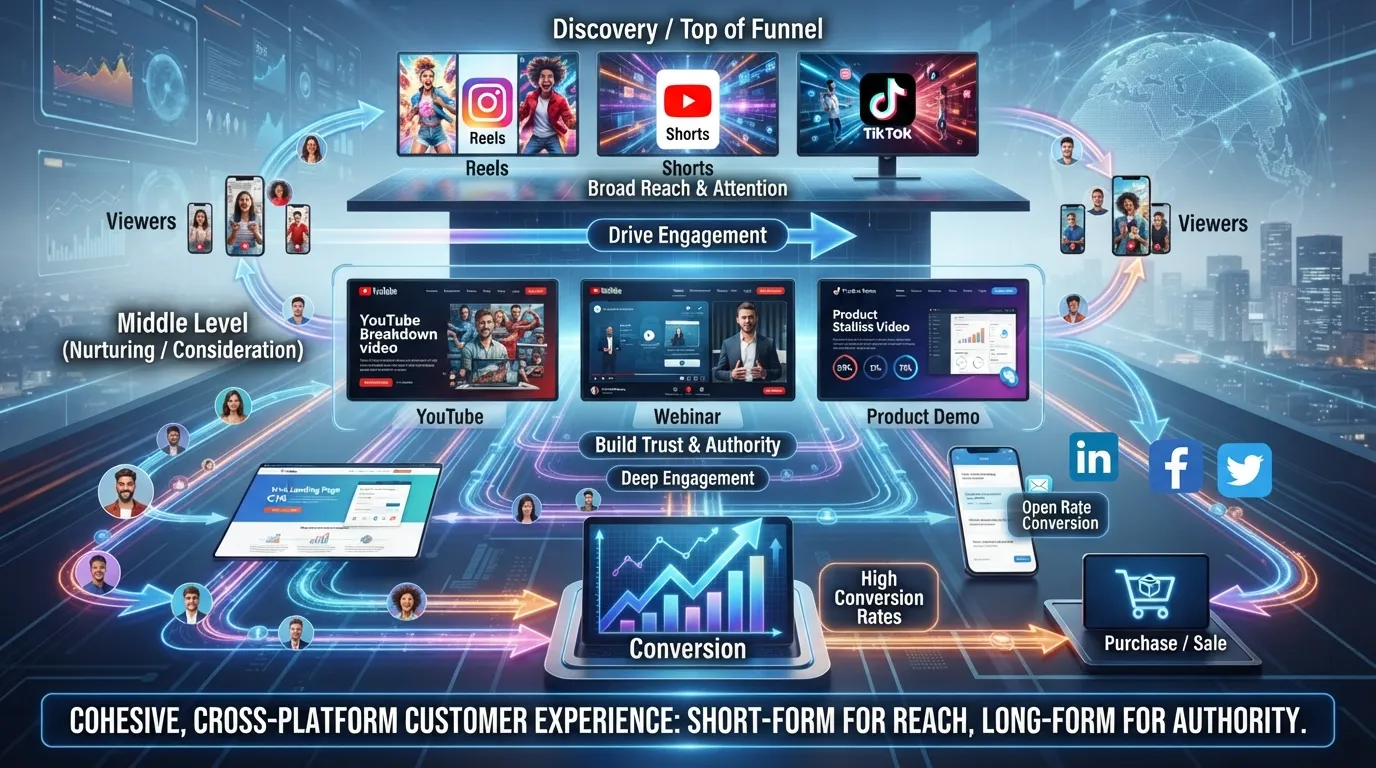
In 2026, audience attention is fragmented across dozens of digital platforms. Reaching your target market effectively requires moving beyond single-channel campaigns. By combining high-impact video formats with an integrated omnichannel presence, brands can capture attention instantly while building deep, long-term brand equity.
Short-Form Video vs. Long-Form Authority Content
Video content dominates digital consumption, but different formats serve distinctly different purposes in your marketing funnel:
Short-Form Video (Discovery Engine): Platforms like TikTok, YouTube Shorts, and Instagram Reels excel at top-of-funnel reach. Short, engaging clips (15 to 60 seconds) are designed to hook viewers, spark instant interest, and introduce your brand to broad audiences.
Long-Form Authority Content (Trust Builder): Detailed YouTube guides, podcasts, and video case studies are essential for mid-to-bottom funnel conversion. They demonstrate technical expertise, answer complex questions, and turn passive viewers into loyal customers.
Short-Form Video: Captures Immediate Attention (High Reach)
Long-Form Content: Builds Expertise & Deep Trust (High Conversion)
Pro Tip: Maximizing ROI requires a smart repurposing strategy. Extract key insights from a single 15-minute long-form video to create 5–10 short-form clips, blog summaries, and visual social media assets.
Creating Seamless Cross-Platform Customer Journeys
An effective omnichannel strategy ensures that no matter where a customer interacts with your brand, the experience is consistent, contextual, and frictionless.
Unified Messaging Across Touchpoints: Ensure your core value proposition remains consistent whether a user sees a social ad, reads a blog post, or visits a custom landing page.
Context-Specific Content Distribution: Tailor your delivery style to fit each platform’s natural user behavior—keep LinkedIn insights data-backed and professional, while making visual platforms interactive and humanized.
Cross-Platform Retargeting: Connect the dots in the user journey. If a prospect watches a specific video on YouTube, guide them toward relevant in-depth resources or interactive landing pages via tailored social touchpoints.
Fast-Track Comparison: Top Marketing Channels Compared
Selecting the right channel depends on your target audience, growth phase, and primary objective. Here is how the core 2026 marketing channels compare in terms of ROI, target intent, and primary use cases:
| Marketing Channel | Primary Focus & Intent | Expected ROI Speed | Best Used For |
|---|---|---|---|
| AI Search & SGE Optimization | High-intent information retrieval & direct answers | Medium to Long Term | Capturing ready-to-buy users & establishing topical authority |
| AI Personalization Engines | Behavioral targeting & dynamic landing pages | Fast (Immediate Conversion Impact) | Maximizing user dwell time & boosting landing page CRO |
| First-Party Data Systems | Privacy-safe lead generation & interactive quizzes | Long Term Growth | Sustainable audience retargeting & customer lifecycle retention |
| Short-Form & Motion Video | Visual brand discovery & rapid engagement | Fast to Medium | Top-of-funnel brand awareness & social proof building |
Frequently Asked Questions About 2026 Marketing Strategies
Is AI completely replacing human digital marketers in 2026?
No, AI is not replacing marketers—it is replacing traditional execution workflows. While artificial intelligence handles data analysis, content generation, and dynamic personalization at scale, human creativity, strategic positioning, brand storytelling, and emotional connection remain completely irreplaceable. Successful 2026 strategies combine AI efficiency with human brand authenticity.
What is the most cost-effective marketing strategy for small businesses?
The most cost-effective strategy is a combination of Intent-First Organic Content (SEO) and First-Party Data Collection. By creating highly targeted content that answers exact search intent, small businesses can capture ready-to-buy traffic without relying heavily on inflating ad spend. Capturing emails and leads directly ensures long-term customer retention without recurring acquisition costs.
How do I prepare my SEO strategy for AI-driven search engines?
To rank effectively in Search Generative Experience (SGE) and AI answer engines, focus on Topical Authority, Information Gain, and Direct Answer Structuring. Ensure your content directly answers user queries under subheadings, provides unique data or insights that AI models can quote, and builds high-quality backlinks from authoritative industry platforms.
Conclusion: Building Your 2026 Marketing Roadmap
Navigating digital marketing in 2026 isn’t about chasing every emerging trend—it’s about mastering the intersection of digital speed and human originality. As algorithms become more sophisticated and privacy frameworks evolve, sustainable growth belongs to brands that build authentic connections, own their audience data, and provide immediate value at every touchpoint.
Final Advice for Sustainable ROI
To maximize your marketing spend and secure a competitive advantage in 2026:
Prioritize Intent Over Volume: Focus on attracting high-intent users through structured, authoritative content rather than chasing low-value traffic spikes.
Protect Brand Authenticity: Use AI tools to accelerate research and workflow efficiency, but keep your core brand voice, human insights, and storytelling uniquely original.
Focus on Owning Your Data: Build direct communication channels with your audience using zero-party and first-party data strategies to safeguard against ongoing platform changes.
Key Takeaway: Sustainable ROI is no longer about outspending your competitors—it is about out-positioning them with clarity, speed, and trusted authority.
Take Action: Transform Your 2026 Growth Strategy
Ready to scale your organic reach and stay ahead of the changing digital landscape?
Start by picking one core strategy from this guide—whether it’s optimizing your existing content for AI search overviews or setting up an interactive lead generation funnel. Begin testing, measuring real-time conversions, and refining your growth roadmap today!