

10 Unique Decorative Temple Pillar Architectural Designs
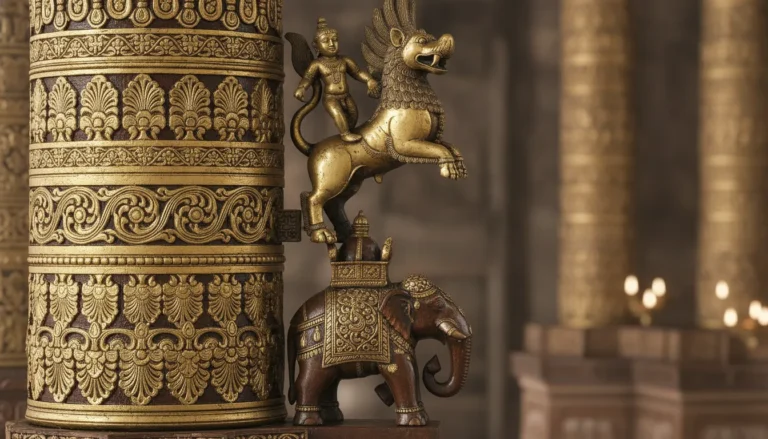
A unique artistic creation that blends traditional hand-drawn patterns with a modern abstract silhouette of the dancing deity. The central figure is rendered as a striking dark silhouette against a textured, multi-layered background filled with ancient script fragments, mandala designs, and warm watercolor washes of saffron and terracotta. The outer edge of the artwork features a bold, hand-painted border consisting of repeating geometric triangles and dots, anchoring the abstract center into traditional roots. This description offers clear, actionable guidance for generating or commissioning a highly creative asset, and its descriptive depth ensures that search engine crawlers find rich text to index right alongside your primary media files.
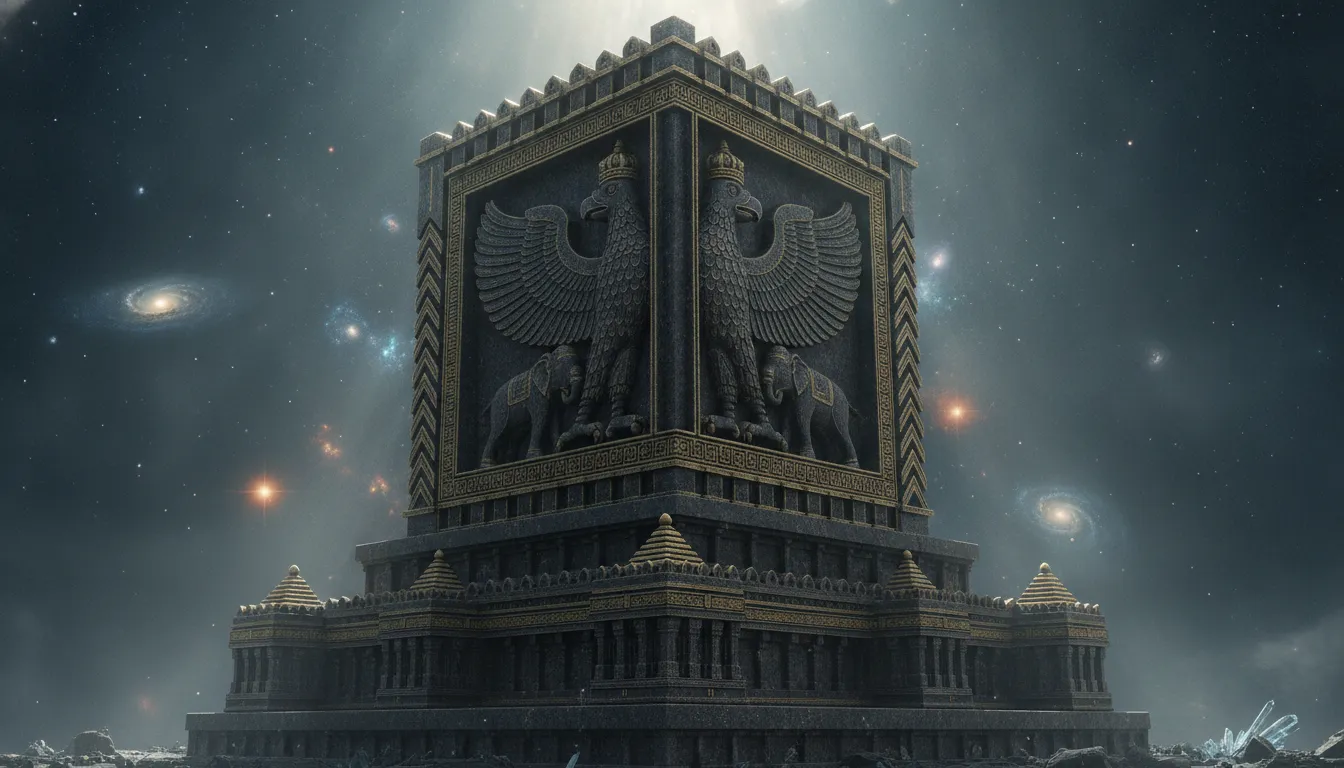
Representing ultimate sovereignty and celestial power, this grand pillar design features the Ganda Bherunda, a mythical two-headed eagle. The bird is carved in a symmetric, front-facing presentation on the central block of the column, holding miniature elephants in its massive talons to depict immense scale and strength. The surrounding borders are filled with sharp geometric chevrons and micro-architectural tiering, giving the entire pillar a regal, fortress-like aesthetic.
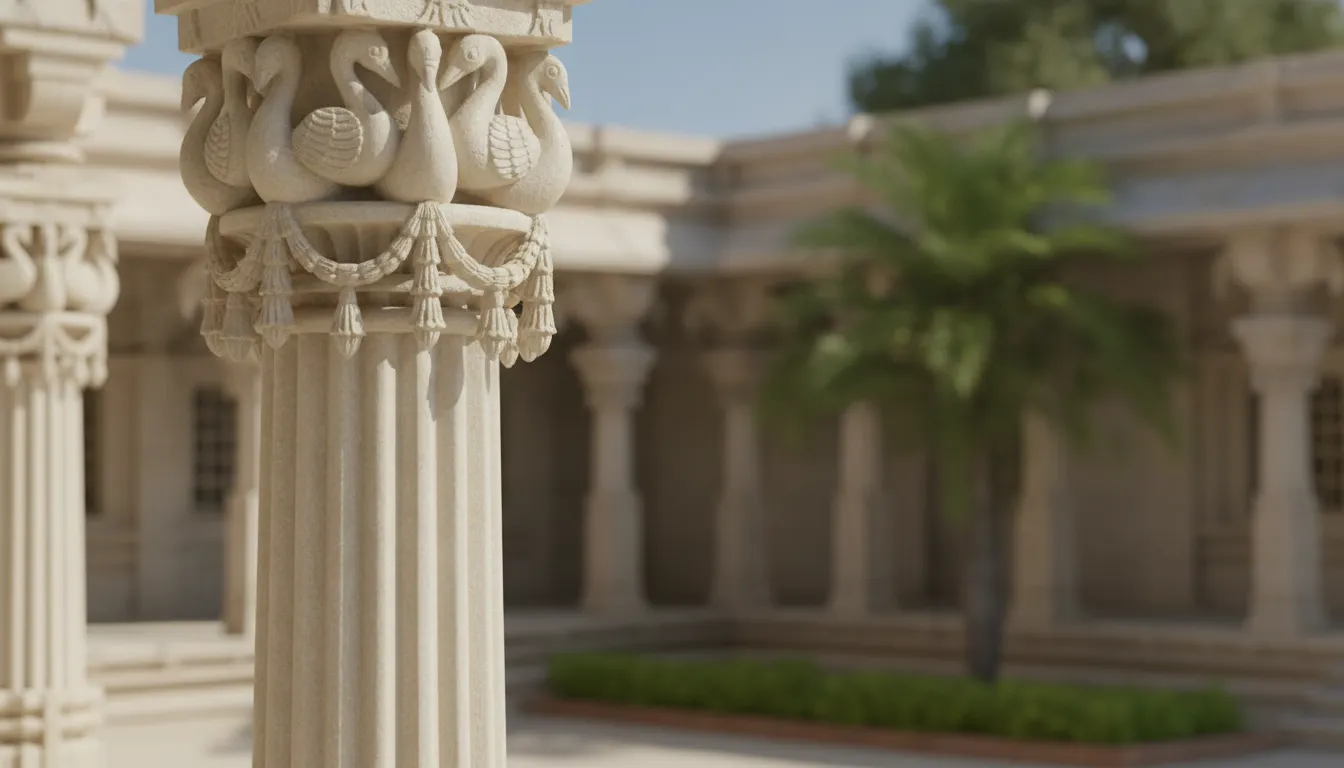
This architectural design features a slender, elegant shaft characterized by deep vertical fluting lines that draw the eye upward. The primary decorative elements are concentrated at the upper capital, where a series of mythical swans (Hamsa) are carved in a circular formation. The birds are depicted with highly stylized, flowing plumage that blends seamlessly into dangling pearl strings and floral garlands. This layout provides a lighter, more graceful alternative to the heavier, ground-level animal carvings.
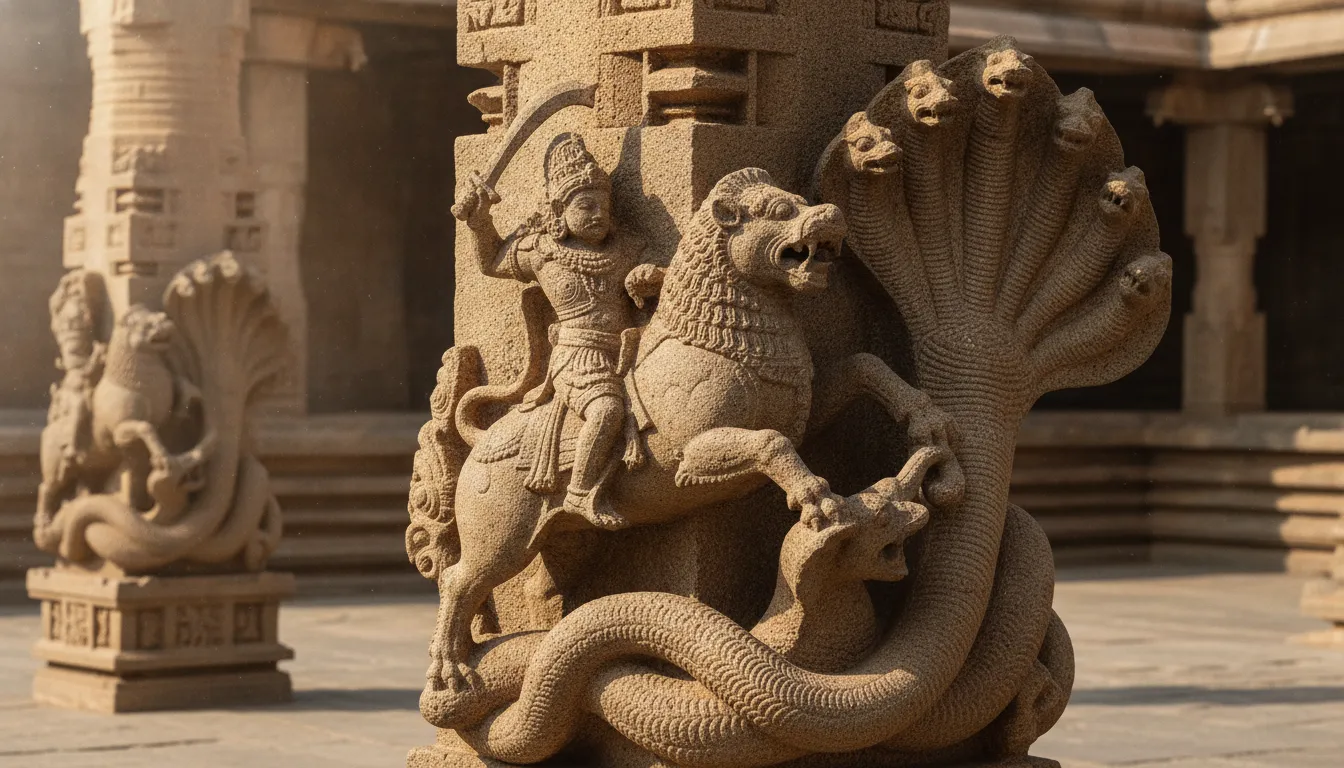
This high-relief concept portrays an action-filled mythological scene directly on the vertical face of the column. A warrior figure, detailed with armor and a curved sword, is mounted on a roaring Yali beast. The entire composition twists around the column as the beast stamps down upon a massive, multi-headed serpent (Naga) coiling at the pillar’s foot. The depth of the undercut carvings creates deep shadows, adding an incredible sense of drama and three-dimensional realism to the structure.
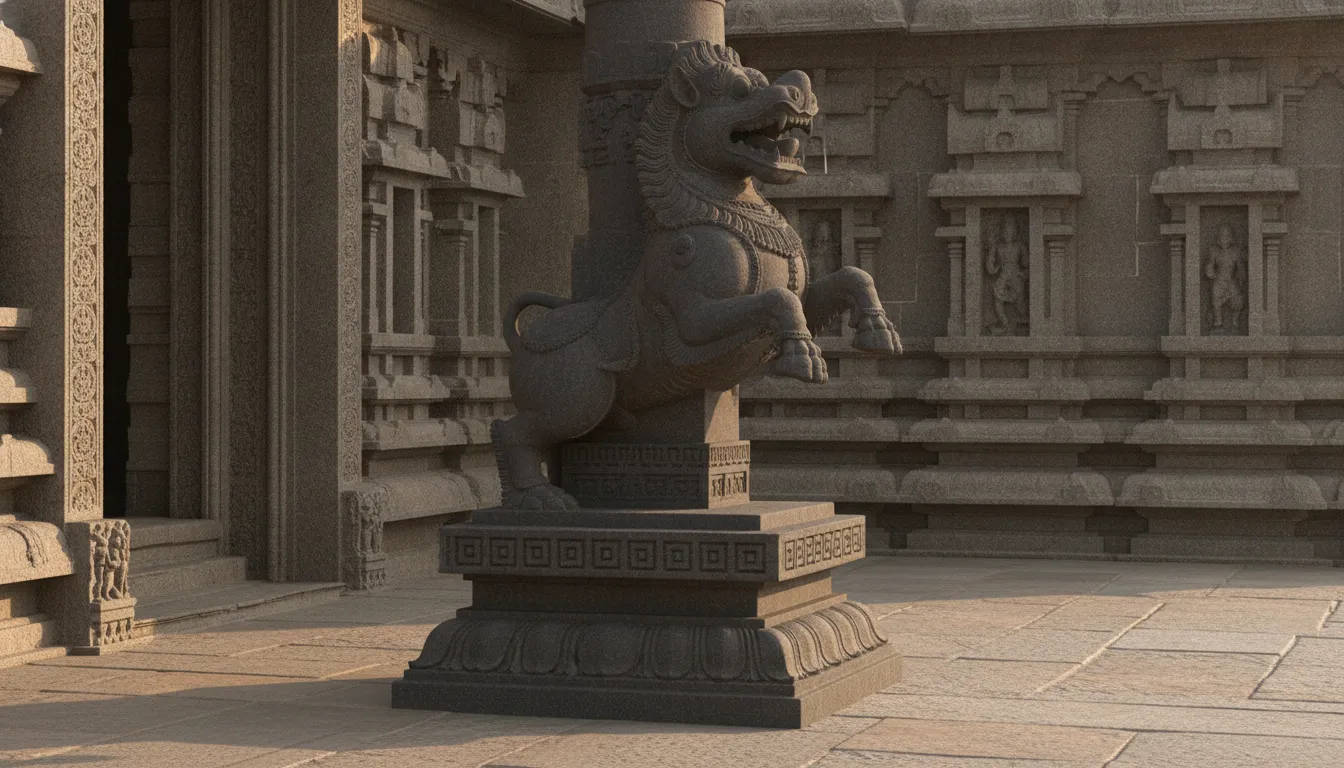
This design highlights the legendary Yali, a mythical beast combining features of a lion, elephant, and horse, positioned at the primary eye-level segment of the structural column. Carved out of dark grey monolithic stone, the creature stands in a rampant pose with its mouth wide open, displaying sharp fangs. The pillar base transitions smoothly into geometric bands and stylized lotus petals, providing a stark contrast to the organic, aggressive lines of the mythical beast above, making it perfect for main temple entryways.
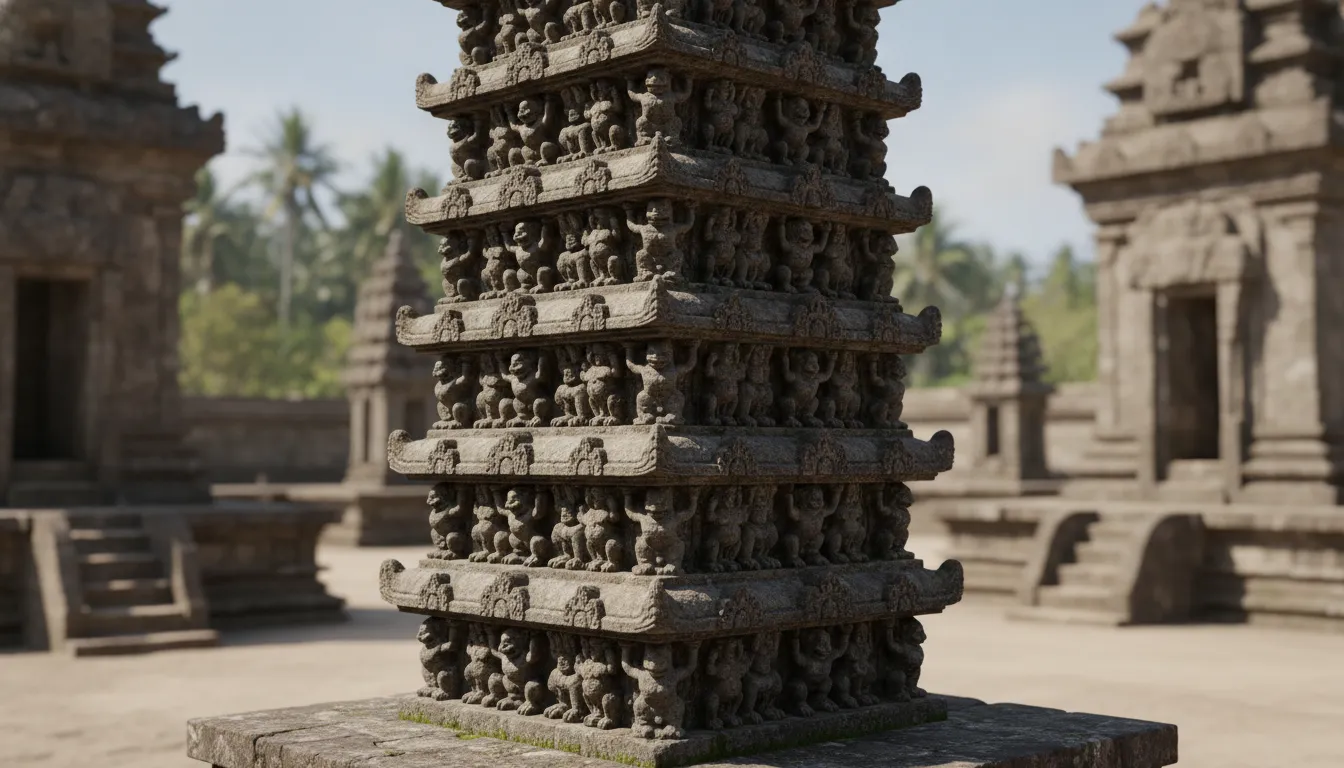
This pillar concept utilizes a micro-architectural style where the column itself looks like a stacked tower (Shikhara). It features twelve distinct vertical tiers, each separated by a small, projecting ornamental roofline. On every layer, tiny, repeating figures of mythical lions and guardian dwarfs (Ganas) are carved holding up the weight of the tier above them. This repeating pattern creates a highly rhythmic, texture-heavy pillar surface that keeps users engaged by encouraging close visual inspection.
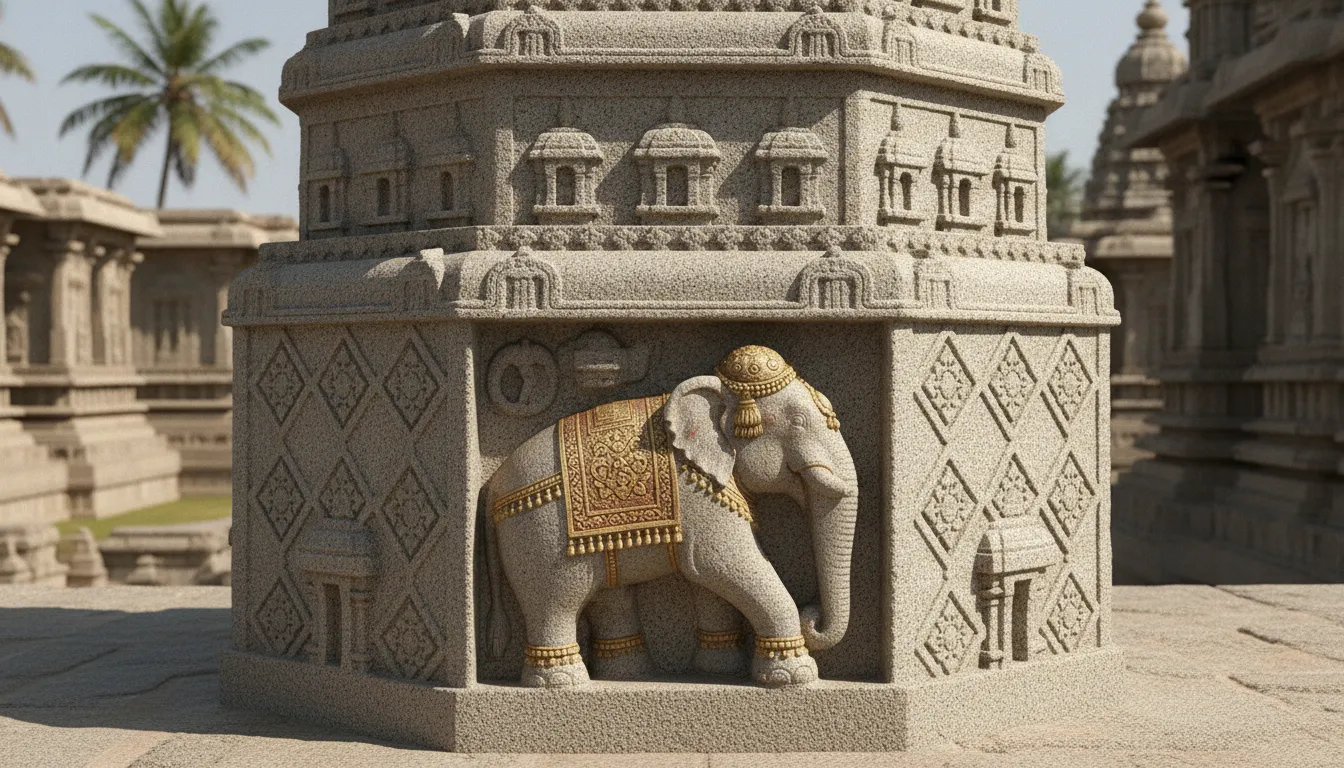
Focusing heavily on the lower structural foundations, this pillar concept features a deeply engraved ceremonial elephant in side-profile. The elephant is adorned with traditional festival cloths, ankle bells, and a decorative headpiece (Nettipattam). Above the elephant, the pillar transitions into a multi-tiered octagonal shaft, where each face is etched with miniature shrines and geometric diamond shapes. This layout provides an excellent visual weight distribution that anchors the entire architectural pillar design.
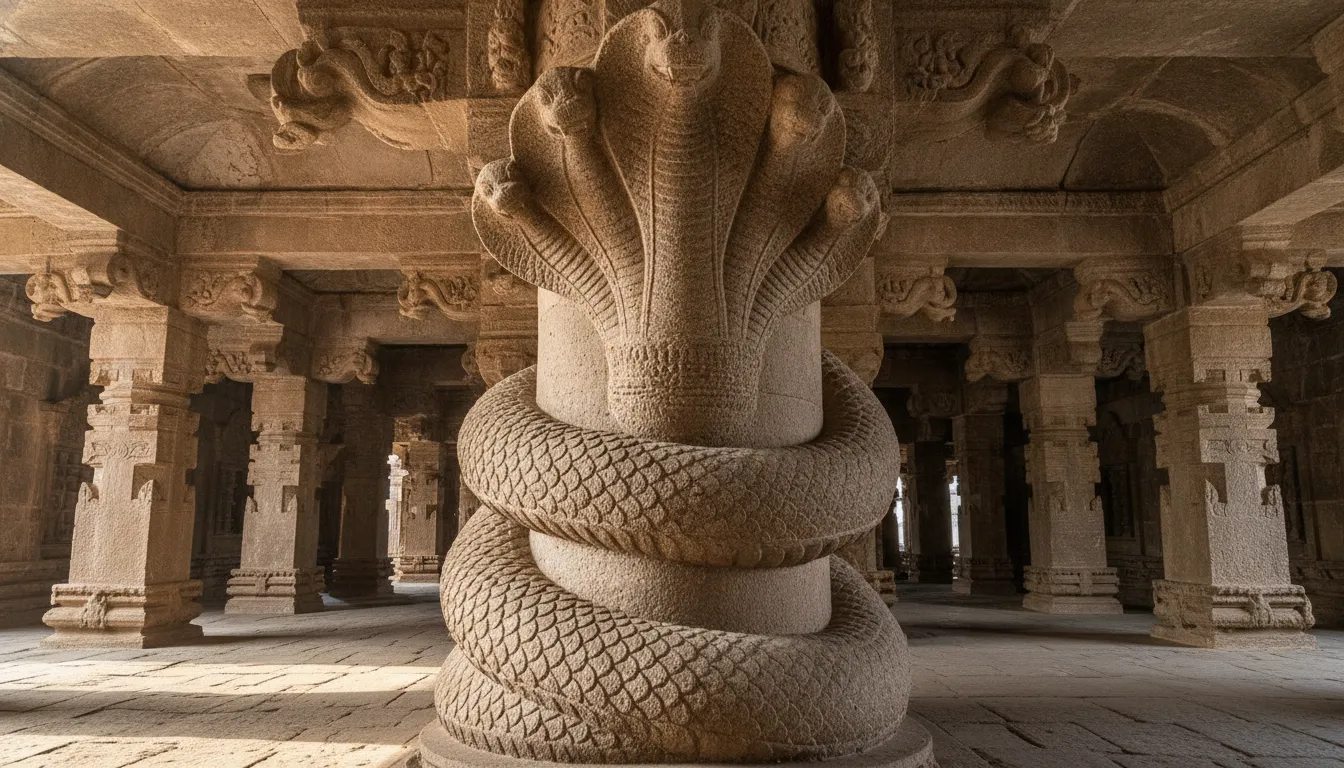
Breaking away from traditional square layouts, this pillar utilizes a smooth, circular central shaft. A massive, textured divine serpent (Naga) is sculpted wrapping dynamically around the column from bottom to top. The scales of the snake are individually detailed to provide rich tactile depth. At the very top, just beneath the pillar capital, the serpent flares its massive multi-headed hood, creating a natural, organic transition into the ceiling brackets of the temple hall.
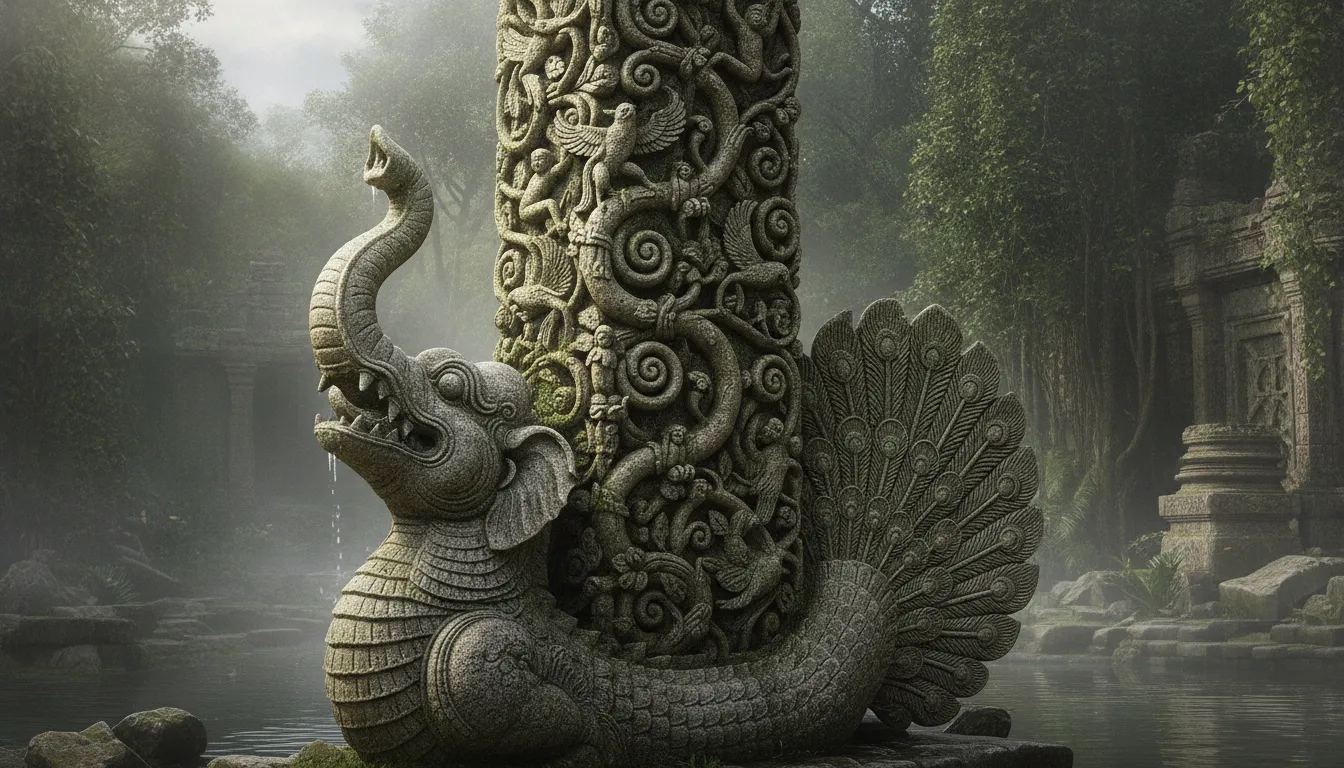
Centered around water mythology, this pillar design features a Makara—a mythical sea creature with the trunk of an elephant, jaws of a crocodile, and tail of a peacock—at its base. From the wide-open mouth of the Makara emerges a thick, continuous vine scroll that climbs vertically up the entire length of the pillar. Nested within the loops of the foliage are small carvings of birds, monkeys, and playful spirits, making this a highly detailed piece that prevents any sense of thin content.
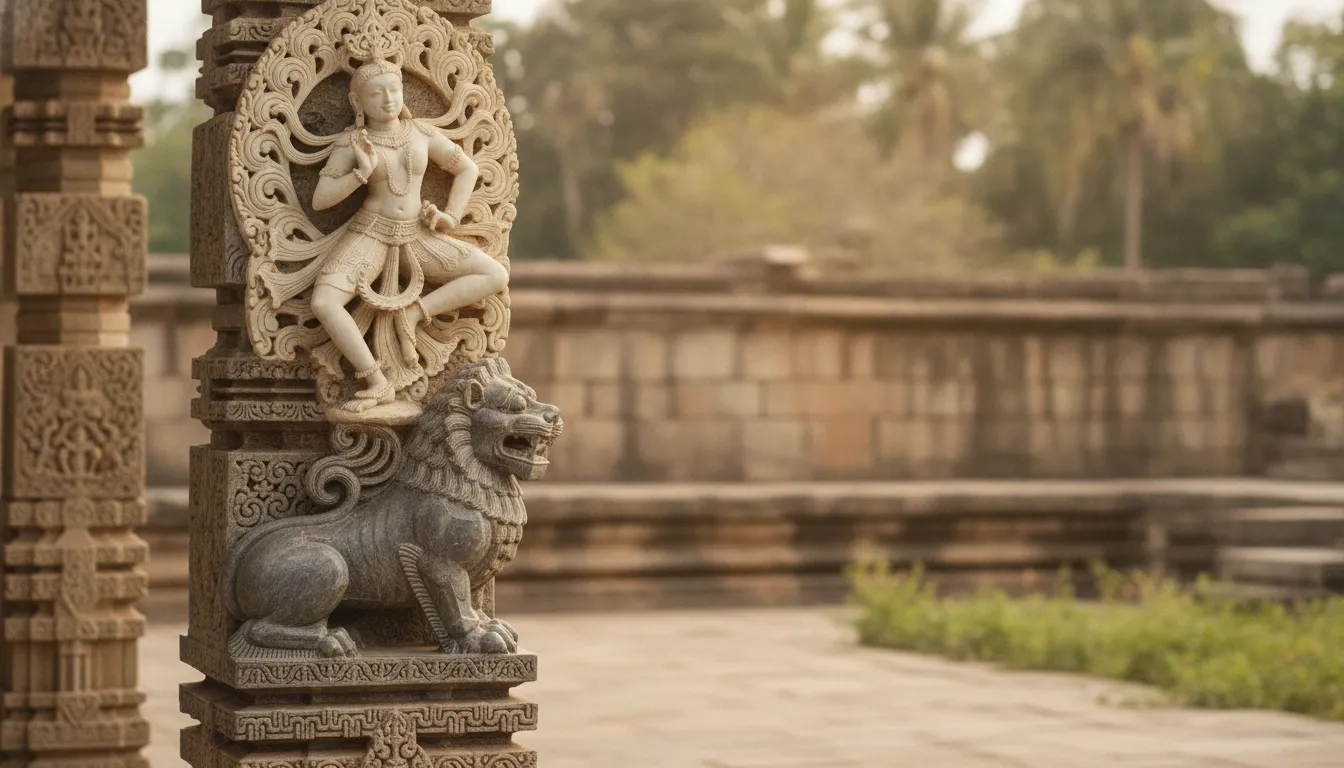
This architectural pillar idea emphasizes the balance between beauty and power. The upper section depicts a celestial dancer (Apsara) in a classical Indian dance pose, surrounded by delicate, lace-like stone filigree. Directly supporting her platform is a crouching, muscular mythical lion, whose stylized mane flows into wave-like patterns. The contrast between the smooth, fluid lines of the dancer and the sharp, blocky features of the guardian animal creates a captivating narrative flow down the pillar shaft.