

Traditional Nataraja Shiva Painting with Arch Frame – Divine Cosmic Dance Art Collection
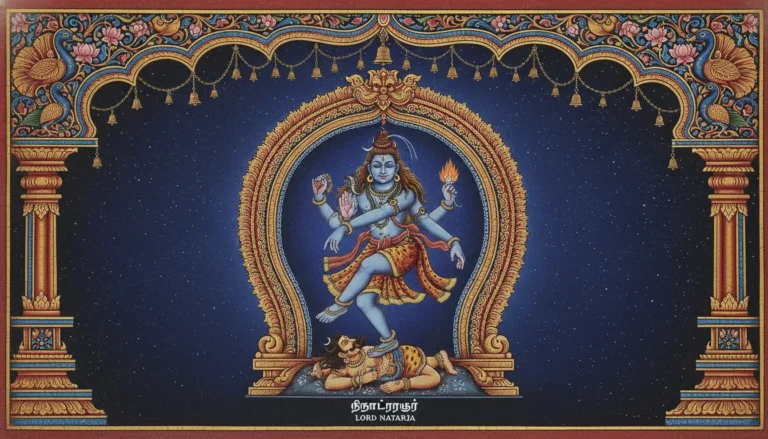
A colorful artistic depiction of Lord Shiva performing the cosmic dance within an ornate arch, symbolizing creation, destruction, and balance. The Nataraja form shows Shiva with four arms – one holding the damru (drum) representing creation, one holding fire representing destruction, one pointing to his raised foot offering refuge to devotees, and one pointing down to the demon of ignorance. The decorative arch around him is painted in rich gold, red, and blue colors, featuring traditional temple-style motifs like lotus flowers, peacocks, and geometric patterns. The arch frame represents the sacred space of a temple sanctum, as if the painting itself is a window into the divine. The background within the arch shows a night sky with stars, suggesting the cosmic scale of Shiva’s dance. This artwork is perfect for devotees who appreciate traditional South Indian painting styles, temple art, or want a classic representation of Nataraja for their home or office wall.
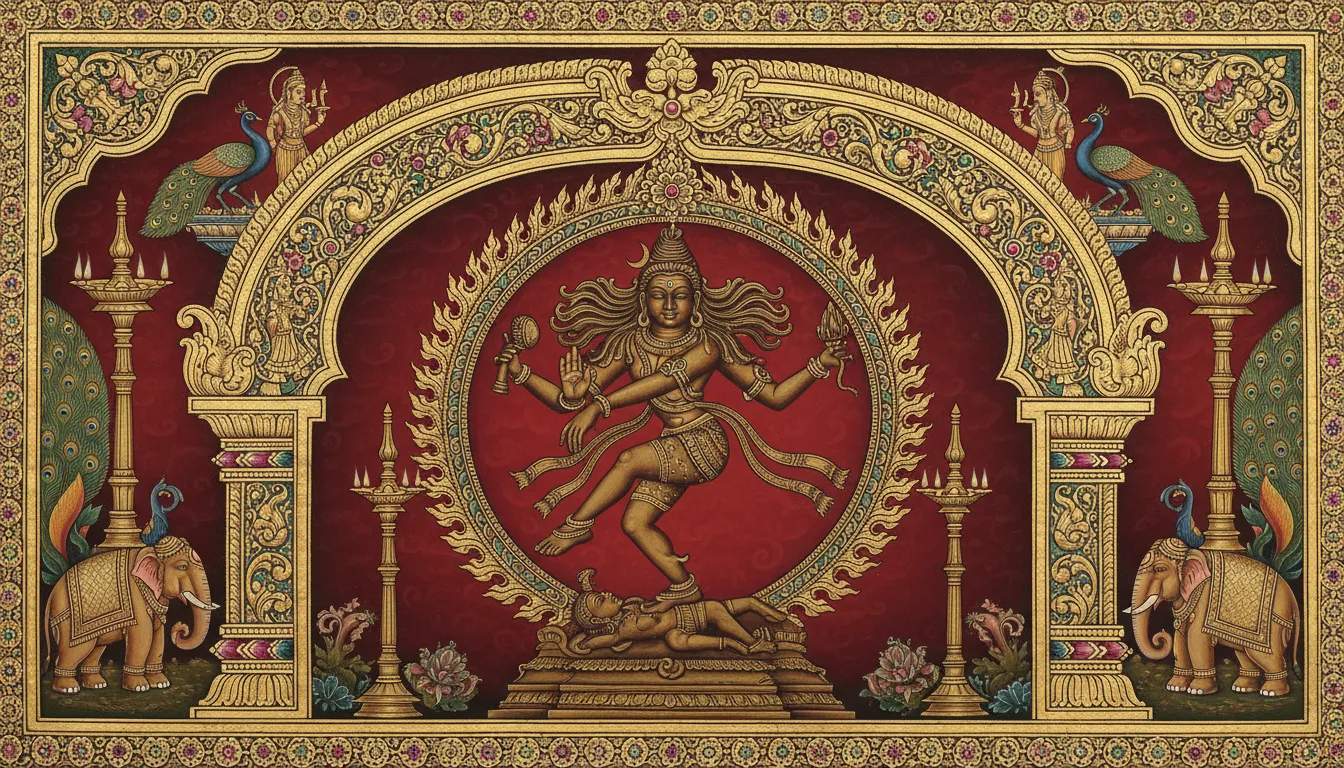
Exquisite traditional painting of Lord Shiva as Nataraja in the famous Chola bronze style, set inside a magnificent Tanjore-style golden arch. The Nataraja statue is depicted with the rich brown-gold color of bronze, standing out against a deep red background. His four arms are positioned in the classic Nataraja pose, with the circle of fire (prabhamandala) surrounding him. The arch frame is heavily decorated with gold foil work, precious stones (depicted in the painting), and intricate floral designs typical of Tanjore art from South India. Small peacocks, elephants, and temple lamps are painted on either side of the arch. This artwork captures the grandeur of Chola period bronzes and the richness of Tanjore painting traditions. The combination of bronze statue realism with decorative arch framing makes this image unique. Perfect for devotees who appreciate South Indian temple art, traditional painting techniques, or want to bring the feel of a temple shrine into their home.
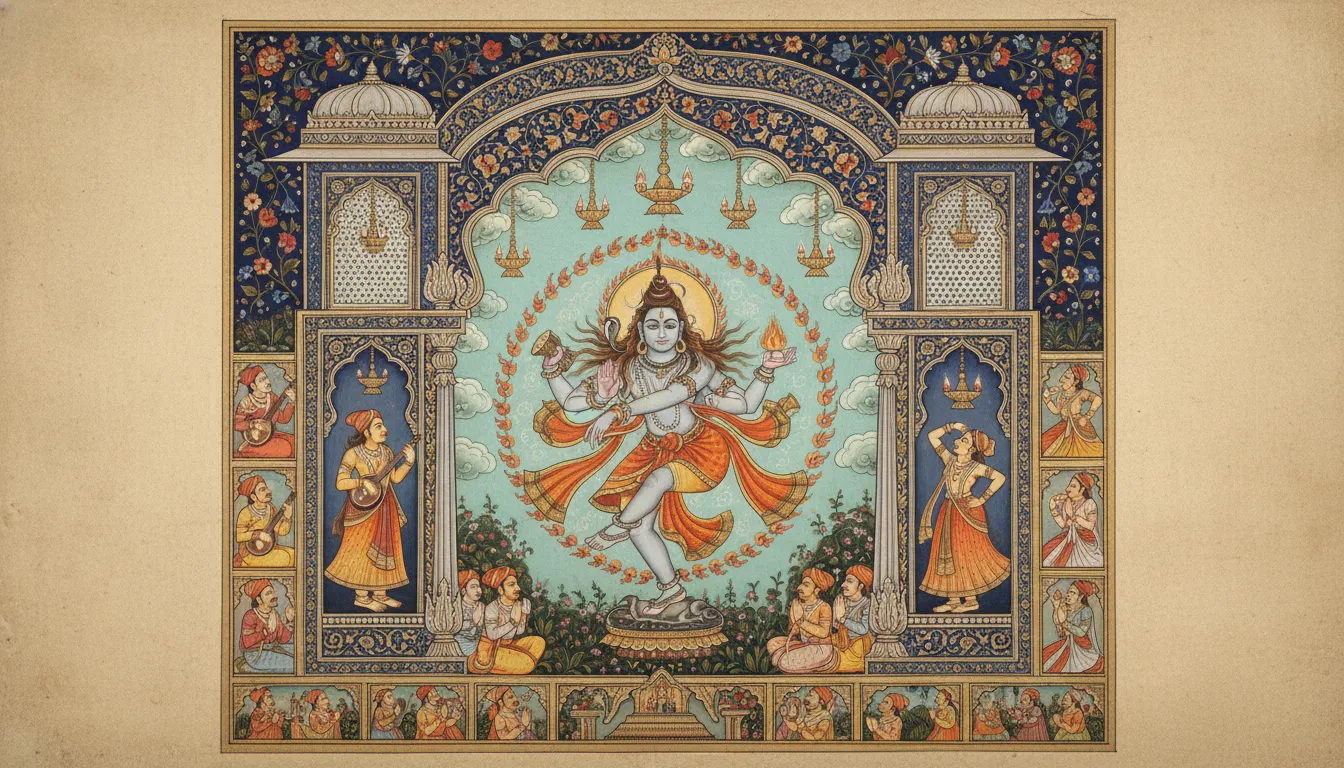
Beautiful Rajasthani miniature style painting of Lord Shiva as Nataraja, framed within an elaborate royal arch inspired by Mughal and Rajput palace architecture. Unlike the darker backgrounds of South Indian paintings, this artwork features bright colors – rich blues, greens, oranges, and golds. The Nataraja figure is smaller and more detailed, typical of miniature painting style, with fine brushwork visible in his jewelry, the flames around him, and the expression on his face. The arch frame is shaped like a palace gateway, with intricate jali (lattice) work, hanging lamps, and flowering vines cascading from the top. Small court scenes are painted in the arch borders – musicians playing instruments, dancers performing, and devotees watching the cosmic dance. This painting represents how different regions of India have their own unique artistic traditions for depicting Lord Shiva. Perfect for art lovers, collectors of Indian miniature paintings, or devotees who appreciate the diversity of Indian art.
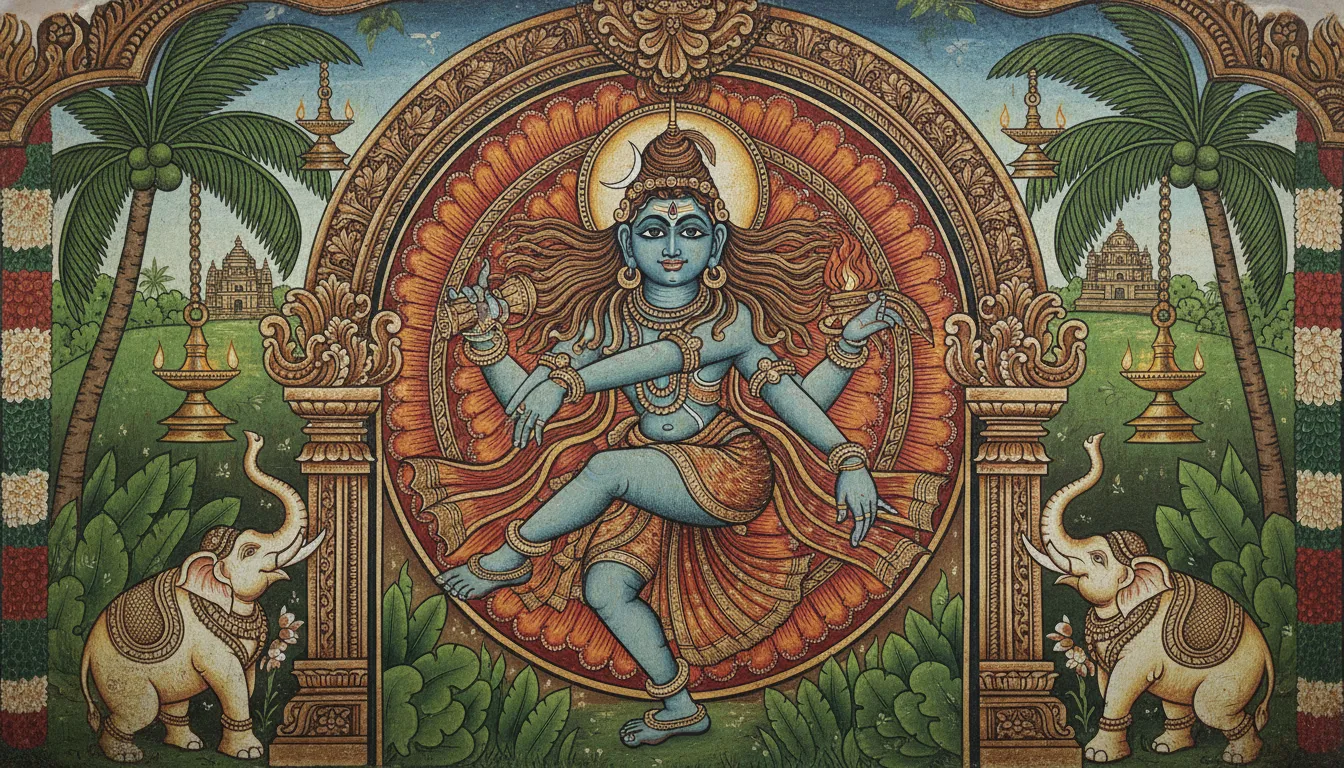
Striking Kerala mural style painting of Lord Shiva as Nataraja, set within a traditional Kerala temple arch. Kerala murals are known for their distinctive color palette – rich reds, earthy greens, warm whites, and touches of gold and black. The Nataraja figure is drawn with bold, curved lines and exaggerated features typical of this style – large almond-shaped eyes, rounded limbs, and flowing hair. The circle of fire is painted in vibrant reds and oranges, while Shiva’s blue skin is a deep, earthy blue (different from the bright blue seen in other styles). The arch frame features traditional Kerala temple motifs – elephants, flower garlands, oil lamps (deepam), and the foliage of coconut trees. The overall effect is rustic yet divine, connecting Lord Shiva to the lush green landscape of Kerala. This image is perfect for devotees who appreciate regional Indian art styles, especially those from South India. Ideal for home decor, art appreciation, or as a unique representation of Nataraja.
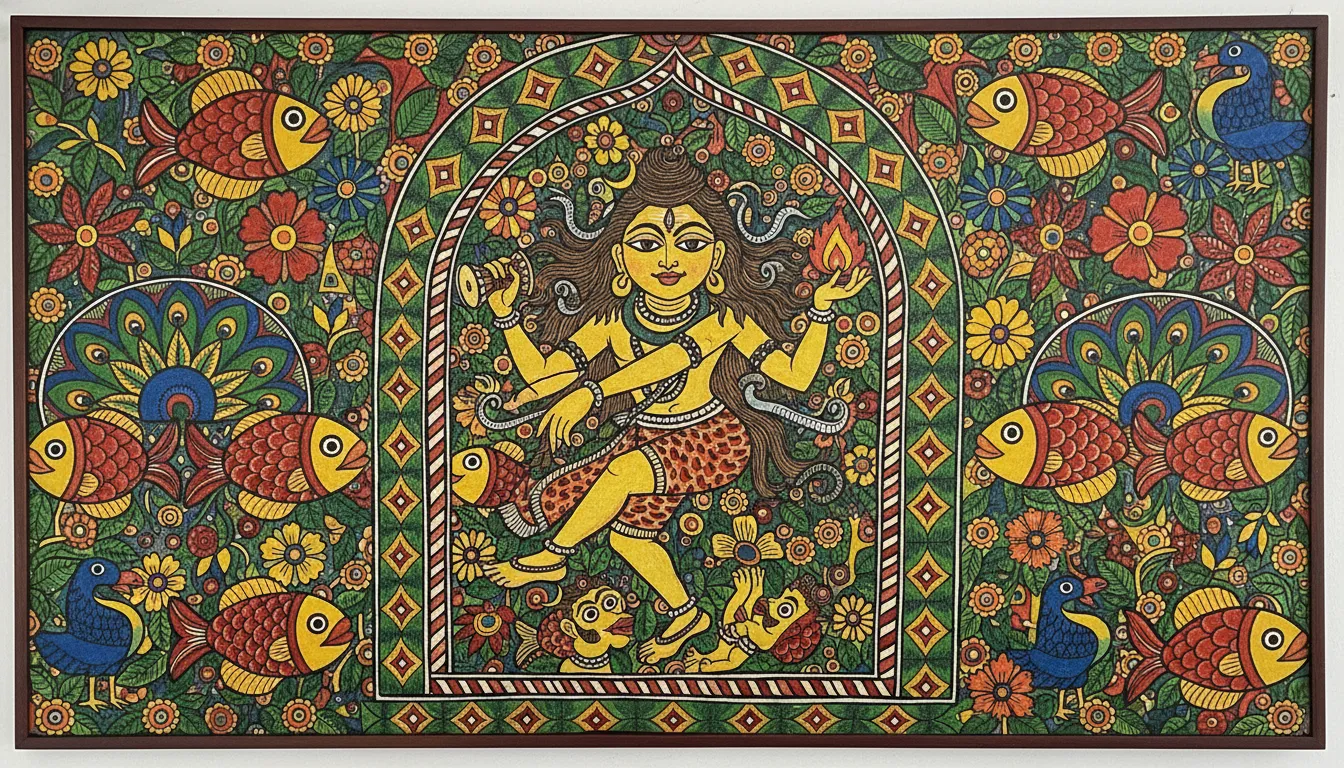
Vibrant Madhubani folk art painting of Lord Shiva as Nataraja, framed within a traditional folk art arch filled with geometric patterns and symbolic motifs. Madhubani art (also known as Mithila art) from Bihar uses bright natural colors, bold outlines, and intricate patterns. The Nataraja figure is stylized with a large face, prominent eyes, and simplified limbs, yet all the key elements are present – the damru, the fire, the raised foot, and the demon underfoot. The background is filled with fish, peacocks, flowers, and geometric designs, all painted in bright reds, yellows, greens, and blues. The arch frame continues this folk art style, with repeating patterns of leaves, diamonds, and flowers. Unlike more realistic or bronze-style depictions, this painting treats Nataraja as part of a larger decorative composition. This image is perfect for devotees who love Indian folk art, colorful decor, or want a cheerful and vibrant representation of Lord Shiva for their home.
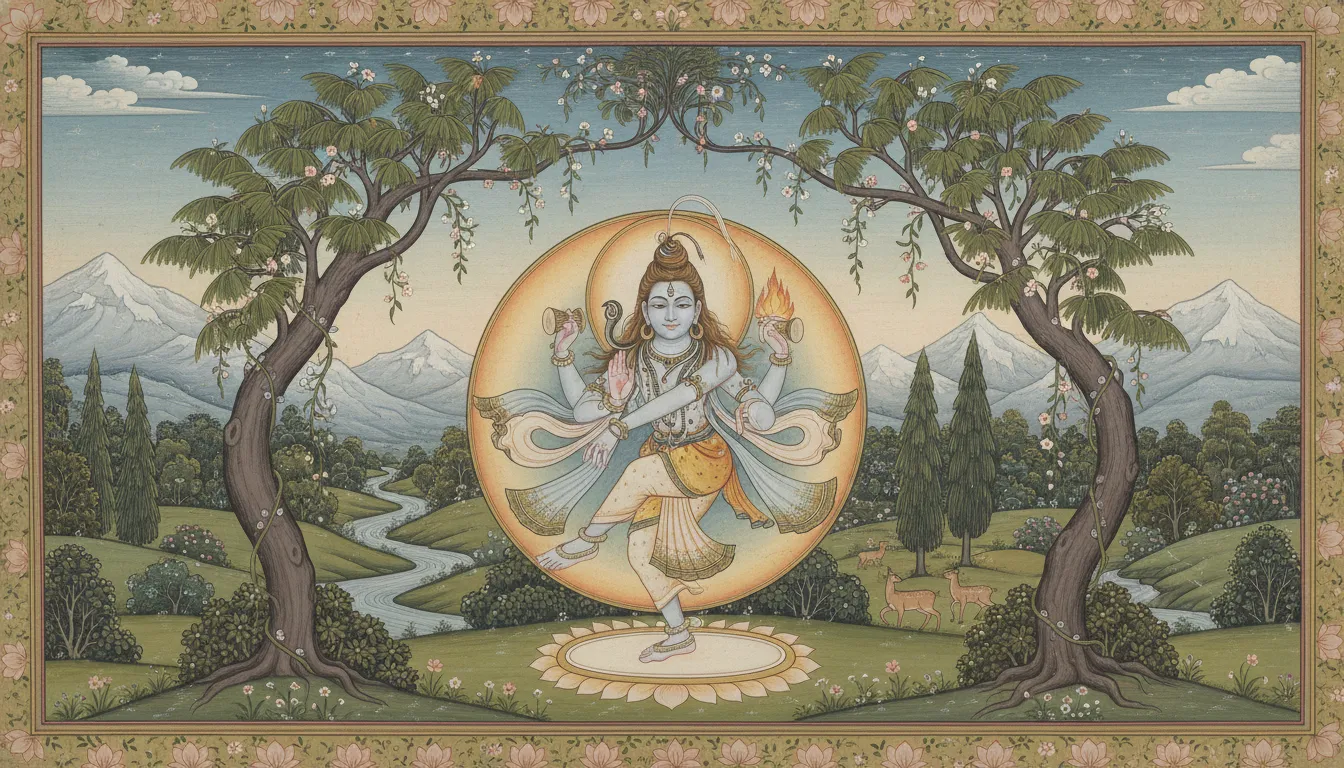
Delicate Pahari style painting of Lord Shiva as Nataraja, created in the miniature painting tradition of the Himalayan foothills (Kangra, Basohli, Guler schools). This artwork is distinctive for its soft colors, graceful figures, and natural setting. The Nataraja figure is shown with finer features, softer expressions, and more flowing garments compared to other styles. The circle of fire is painted in gentle oranges and yellows rather than harsh reds. What makes this painting unique is the arch frame – instead of a built architectural arch, the frame is formed by curved Himalayan deodar trees and flowering vines, creating a natural arch that still serves as a sacred boundary. Behind Nataraja, the painting shows the snow-capped Himalayas, a river flowing, and tiny deer in the forest. This connection to nature reflects the Pahari school’s love for landscapes. Perfect for devotees who love the Himalayan region, appreciate softer artistic styles, or want a more peaceful, nature-connected representation of Lord Shiva.
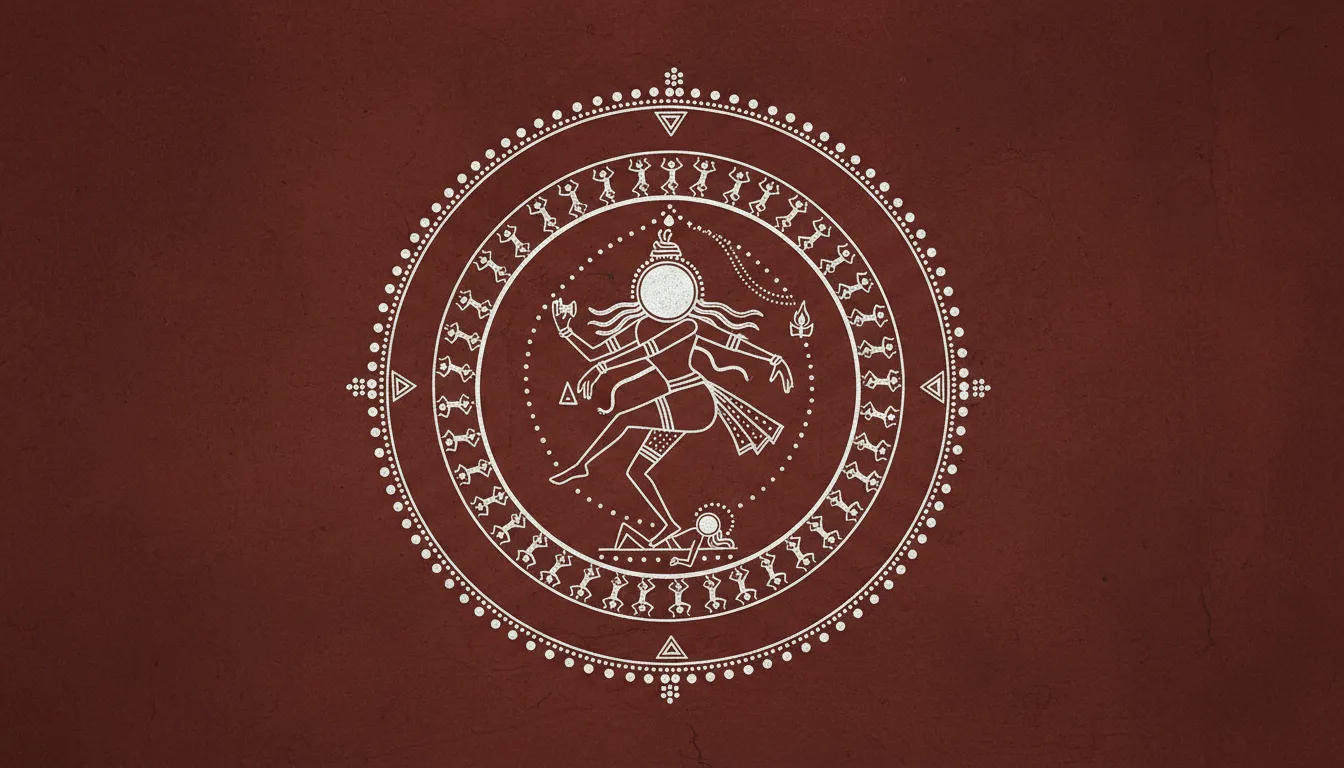
Minimalist and powerful Warli tribal painting of Lord Shiva as Nataraja, framed within a circular ritual arch. Warli art from Maharashtra uses simple white stick figures on a dark red or brown background, representing tribal life and spiritual beliefs. The Nataraja figure in this style is reduced to basic geometric shapes – a circle for the head, lines for the arms and legs, triangles for the body – yet the essence of the cosmic dance is clearly visible. The circle of fire is represented by a ring of dots or small triangles. The arch frame is not the usual peaked shape but a complete circle, representing the cycle of time and creation. Inside the circle, tiny Warli figures around the edges appear to be dancing along with Shiva, showing how the entire tribe joins in celebration of the cosmic dance. This image is perfect for devotees who appreciate tribal art, minimalism, or want to connect Lord Shiva with adivasi (indigenous) spiritual traditions.
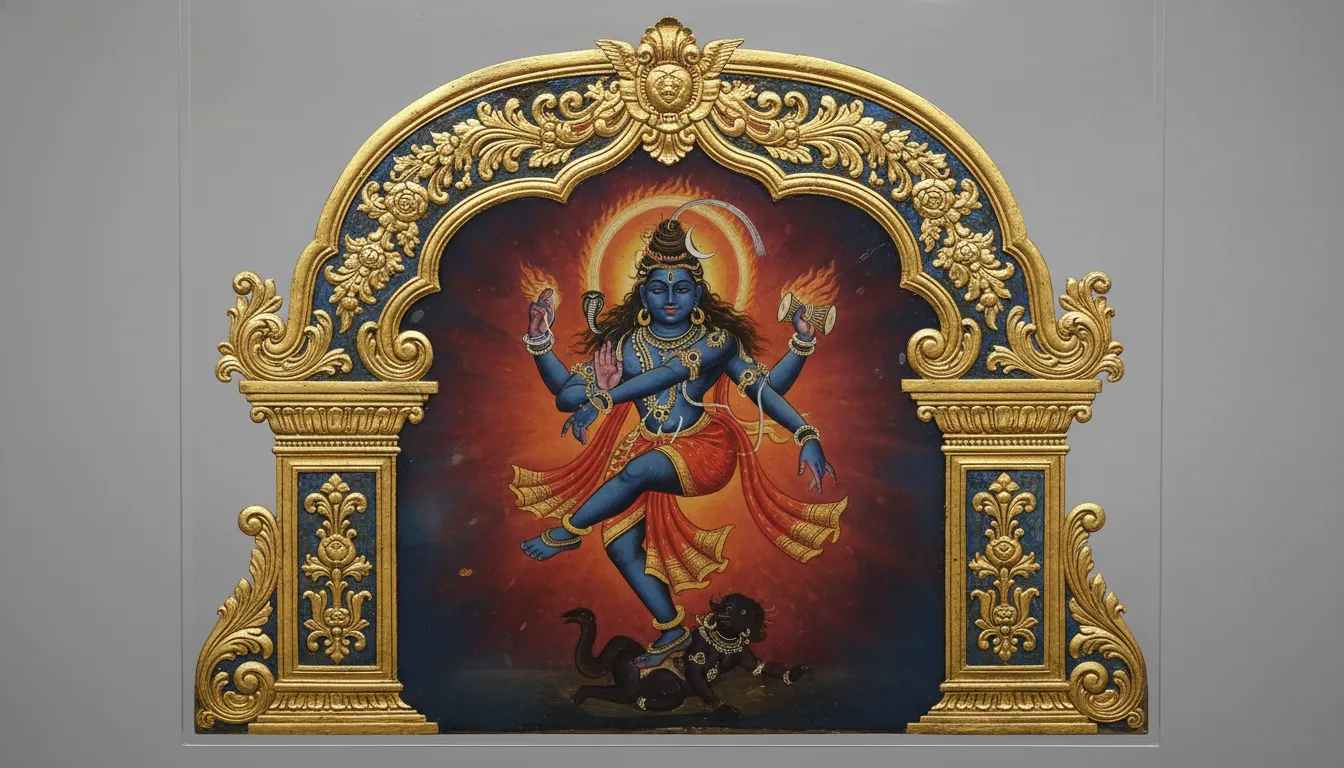
Unique reverse glass painting style depiction of Lord Shiva as Nataraja, set within an ornate Victorian-style arch frame. Glass painting (reverse glass painting) was popular in 19th century India, combining Indian religious themes with European artistic techniques and framing styles. The Nataraja figure is painted on the back of the glass, so the smooth glass surface is in front, giving the artwork a glossy, luminous quality. The colors are rich and transparent – deep blues, bright reds, and glowing golds. The arch frame is distinctly Victorian in style, with scrollwork, floral clusters, and curved pediments that look like they belong in a colonial-era mansion rather than a traditional Indian temple. This fusion style represents the cultural exchange between India and Britain during the colonial period. The gold paint is applied thickly, giving the frame a three-dimensional, raised effect. Perfect for devotees who appreciate historical art, collectors of vintage Indian religious art, or those who want a unique, cross-cultural representation of Nataraja.
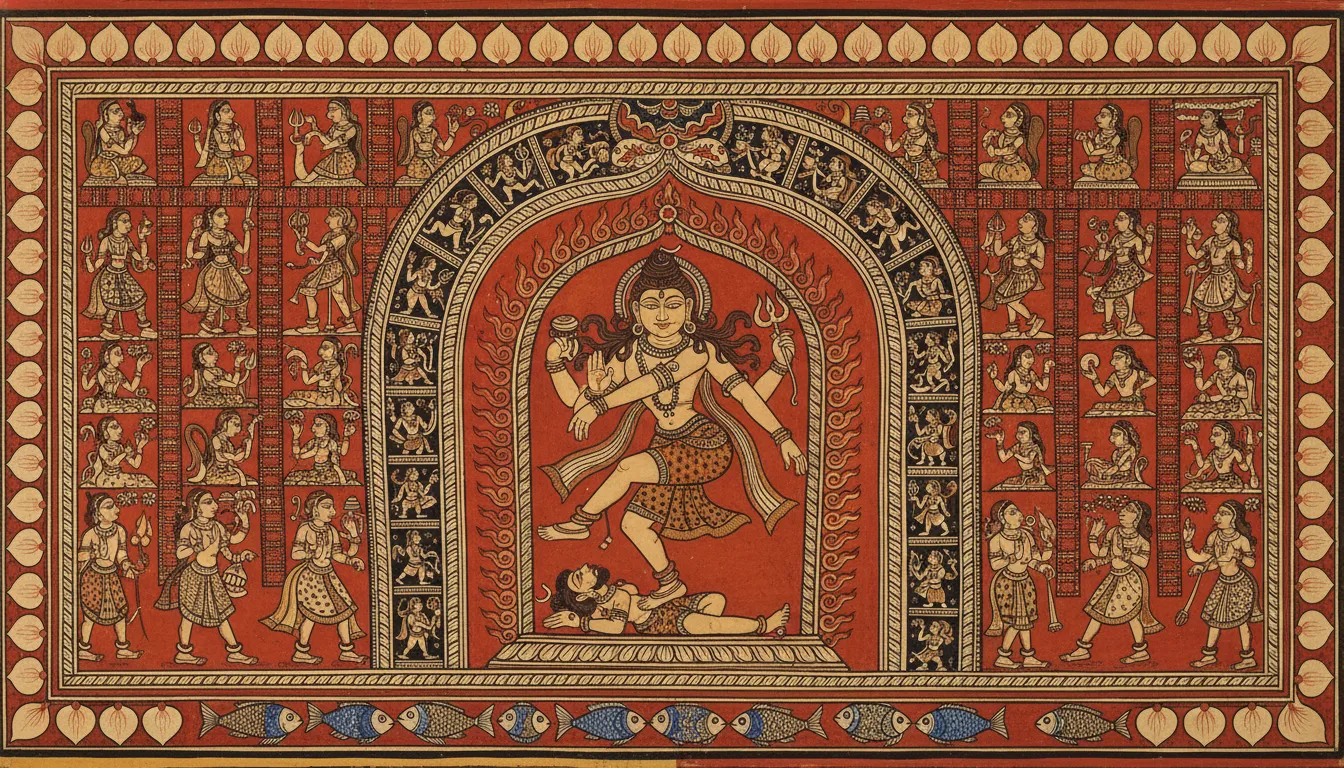
with tiny flames in repeating patterns. The arch frame features the Navagunjara (a myt Intricate Pattachitra painting of Lord Shiva as Nataraja, created in the traditional scroll painting style of Odisha. The Nataraja figure is framed within an arch shaped like the tower (deul) of an Odisha temple – tall, curved, and richly decorated. Pattachitra art is known for its detailed borders, mythological scenes, and use of natural colors (white from conch shells, black from lamps, red from cinnabar). The Nataraja figure has large, elongated eyes, a small mouth, and stylized fingers, all characteristic of this school. The circle of fire is paintedhical creature), temple dancers, and scenes from the life of Lord Shiva. The borders are densely packed with lotus petals, fish, and geometric bands. The overall effect is rich, busy, and deeply traditional – like a page from an ancient palm-leaf manuscript brought to life in color. Perfect for devotees who appreciate the art of Odisha, collectors of traditional Indian paintings, or those who want a highly detailed, traditional representation of Nataraja.
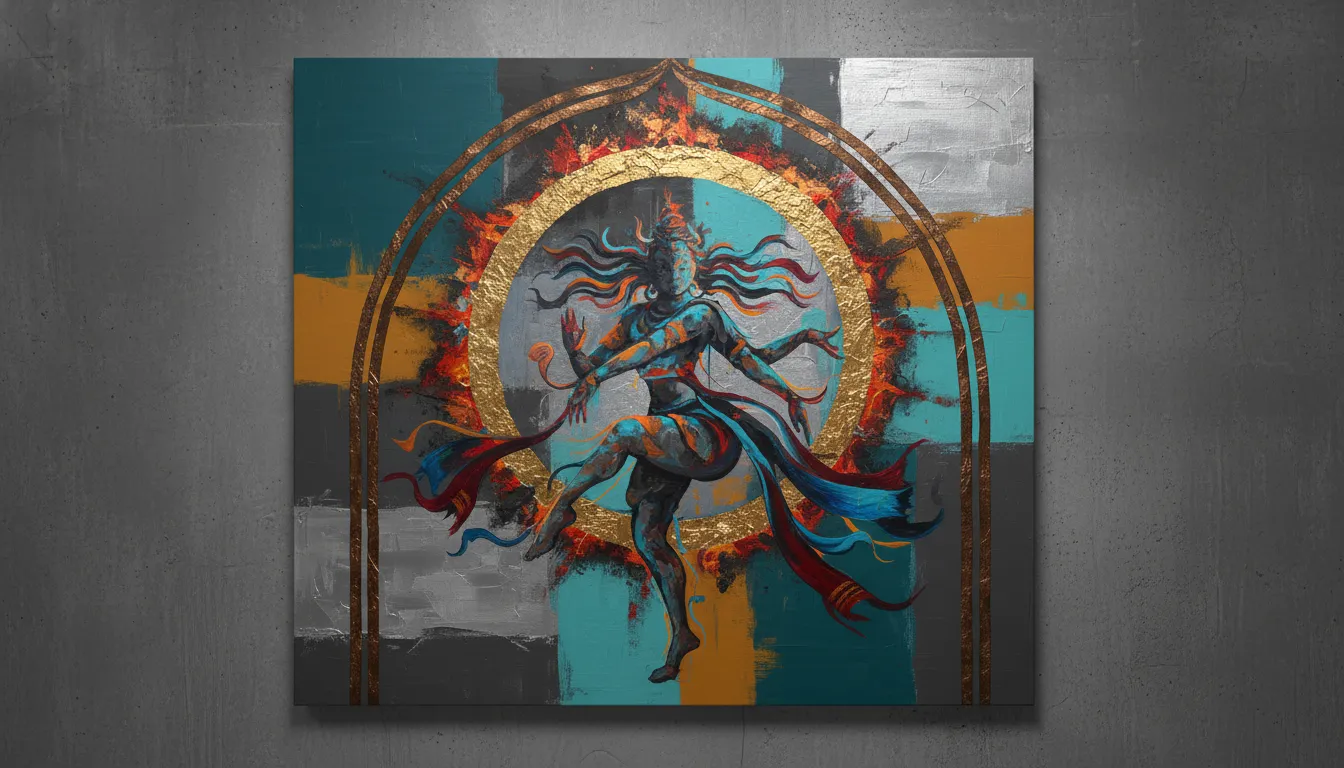
Contemporary modern art interpretation of Lord Shiva as Nataraja, framed within an abstract minimalist arch. This painting moves away from traditional styles and instead uses modern artistic techniques – bold brushstrokes, color blocking, mixed media, and abstract forms. The Nataraja figure is suggested rather than detailed – a silhouette, a swirl of colors, or fragmented shapes that come together to form the dancing figure. The circle of fire might be represented by a ring of gold leaf, a circle of thick red paint, or even a burnt edge on the canvas. The arch frame is abstract – perhaps just two curved lines suggesting an arch, with the space between them acting as the frame. The colors may be non-traditional – black and white, metallic, pastel, or neon. This painting represents how modern Indian artists continue to draw inspiration from traditional iconography while pushing artistic boundaries. Perfect for contemporary art lovers, modern home decor, or devotees who appreciate Lord Shiva as a subject for fine art beyond religious imagery. Ideal for gallery walls, modern offices, or collectors of emerging Indian contemporary art.