
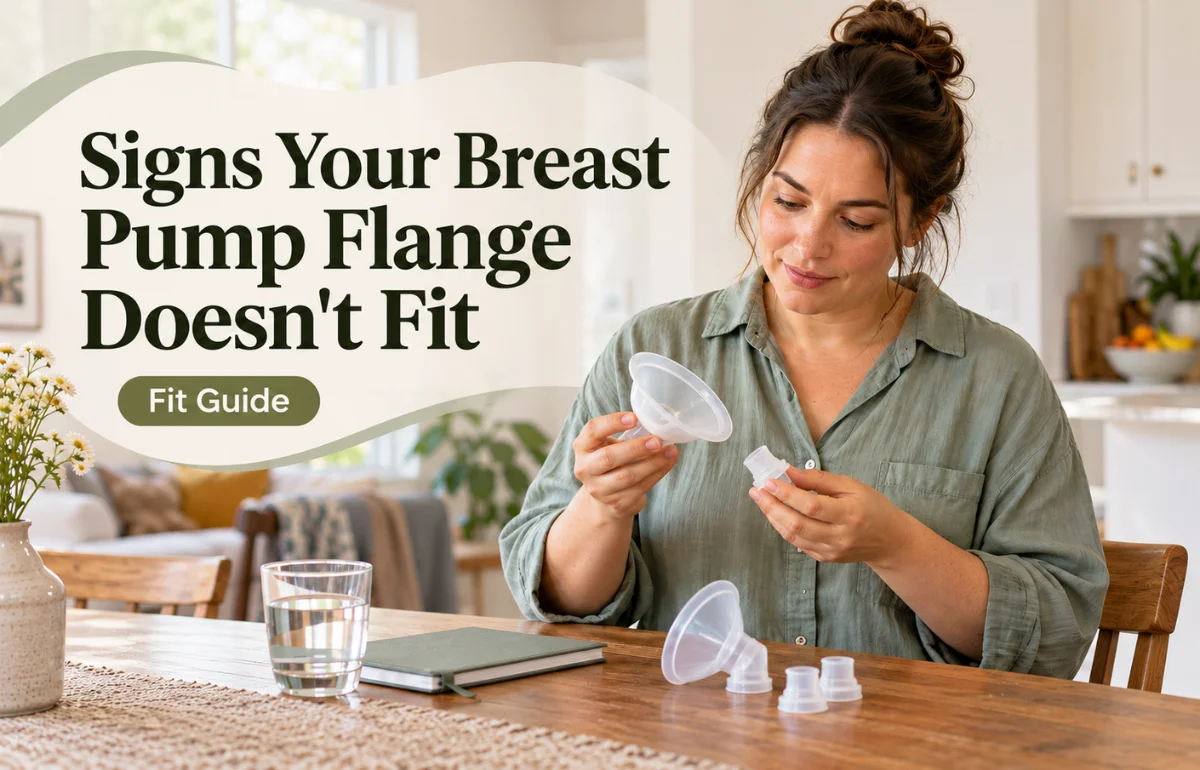
You start pumping as usual, but after a few minutes, something feels off. Your nipple brushes against the tubing, the breast shield shifts when you reach for your phone, or the skin around your nipple looks a little swollen after pumping. Is the flange size wrong, or did the breast shield just shift? If you feel pain while pumping, stop pumping—don’t increase the suction.
Once these three situations are distinguished, the signs become easier to interpret: flanges that are too large, too small, or off-center. This guide describes the appearance and feel of each situation, explains which adjustment method to try first, and indicates when to seek help from a lactation consultant or healthcare professional if pain or skin changes occur.
Alt: mom at a kitchen table examines a clear breast pump flange and small inserts before a pumping session
Signs the Flange Is Too Big
A flange opening that is too wide can draw more than the nipple into the tunnel. Watch for:
- A large portion of the areola moves in and out of the tunnel
- The nipple shifts from side to side instead of tracking steadily in the center
- After pumping, the nipple or areola looks swollen and the pulled area feels sore
A large opening can still create suction, so an attached cup does not confirm a good fit. Gaps, seal loss, or less milk than usual can also come from positioning or assembly.
Signs the Flange Is Too Small
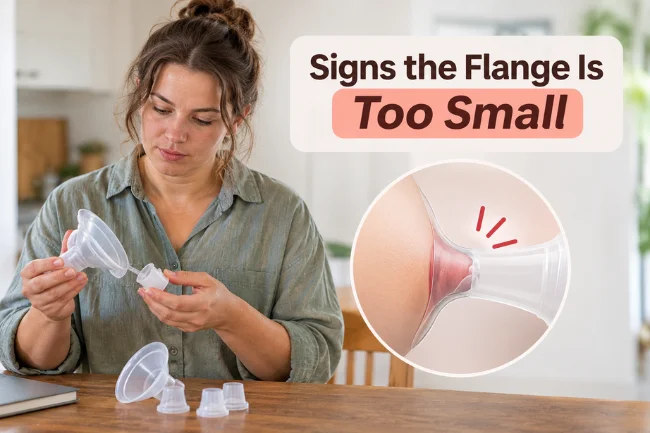
With an opening that is too narrow, you may notice:
- The nipple rubs the tunnel wall or barely moves
- The nipple looks flattened or compressed when you stop
- A focused scrape or pinch rather than a broad pull, sometimes with tenderness, a pale ring, or a purple tint
Color changes can have other causes and deserve professional advice if they persist. If rubbing occurs all around the nipple even after centering, the tunnel may be too small; if only one edge rubs, consider an off-center cup first. A sudden change in output is not a reliable size test by itself.
Signs the Flange Is Off-Center
Sometimes the opening is a reasonable size, but the nipple sits against one side of the tunnel, producing one-sided rubbing. You may see the cup tilt, the seal break when you move, or the pump shift. A mis-seated insert or a bra pushing the cup sideways can create the same pattern.
One-sided friction is different from rubbing all around the nipple. Notice when the problem starts: friction from the first suction cycle despite careful centering points to a size issue, while friction that starts only after walking suggests the cup moved. If a bra holds one side securely but lets the other tilt, the two sides may need different support.
What to Change Based on the Sign You See
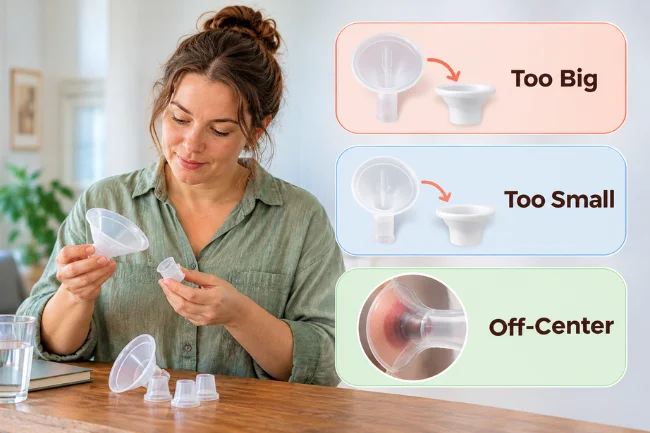
If the flange is too big: Center the nipple first. If a large portion of the areola still moves into the tunnel, try the next smaller compatible insert or flange opening. Check it while pumping: the change should reduce areola pull without making the nipple rub or pinch. If the smaller opening causes friction, stop that trial and get help choosing a fit.
If the flange is too small: If the nipple rubs around the tunnel or barely moves even after centering, try the next larger compatible opening. Restart at a low, comfortable suction setting and watch whether the nipple can move without scraping. Do not increase suction to overcome a tight fit.
If the flange is off-center: If rubbing is mainly on one side, or the seal breaks when you move, stop the pump and release the seal. Reseat the insert, center the nipple, and adjust the bra so it supports the cup without pushing it sideways. Check the position again after gentle movement. Change the opening size only if rubbing or excess areola pull remains once the cup stays centered.
Stop pumping if an adjustment causes pain or skin damage. If neither a size change nor repositioning resolves the problem, ask an IBCLC to review a pumping session.
Check Wearable Pump Alignment When You Move
With a wearable pump, the cup can look well placed while you are sitting still and shift once you reach, bend, or walk. After positioning it, check the seal with gentle movement before settling into the rest of your routine. Make sure the bra supports the pump without pressing it sideways. If suction breaks or one side begins to rub, pause and recenter the cup. If it happens again, check the insert seating and bra fit.
The eufy Wearable Breast Pump S2 Pro is one option to compare if you want a wearable design with fit-checking aids. Its see-through tunnel and nipple light can make it easier to see placement, while the double-sealed flange is designed to support a secure fit. It includes a 24 mm flange and 15, 17, 19, and 21 mm inserts, so you can compare adjacent openings without changing pumps. Those options help you test fit, but none can guarantee comfort or correct an unrelated cause of pain.
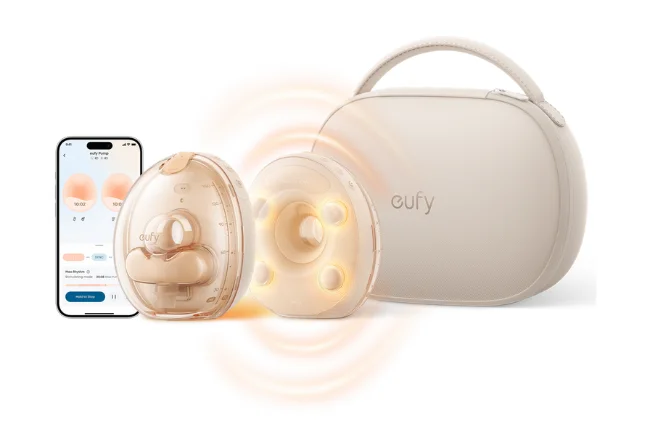
Alt: The eufy Wearable Breast Pump S2 Pro shown with its pump units, carrying case, and app display
If you are still comparing formats or accessories, the eufy breast pump collection provides the broader lineup. Choose only after checking how a pump sits in your bra, how easily you can verify alignment, and whether its available inserts suit your fit needs. A wearable pump should make your routine easier, not make discomfort something you have to ignore.
Conclusion
A flange that pulls in too much areola may be too big; one that makes the nipple rub around the tunnel may be too small; a cup that rubs on one side or slips when you move may be off-center. Let the pattern guide one change at a time, and reassess comfort during an ordinary session. If pumping hurts or leaves visible injury, stop and ask an IBCLC or healthcare professional to review the full setup.
This article is intended for educational purposes only and should not replace personalized medical advice. Breast pump comfort and flange fit can vary from person to person. If you experience persistent pain, swelling, or nipple injury while pumping, consult a qualified lactation consultant (IBCLC) or healthcare professional.

Elena Whitmore is a parenting writer with 7 years of experience covering child development, family wellbeing, and everyday parenting. She translates research into practical guidance to help parents strengthen family relationships and support their children’s emotional and physical development.