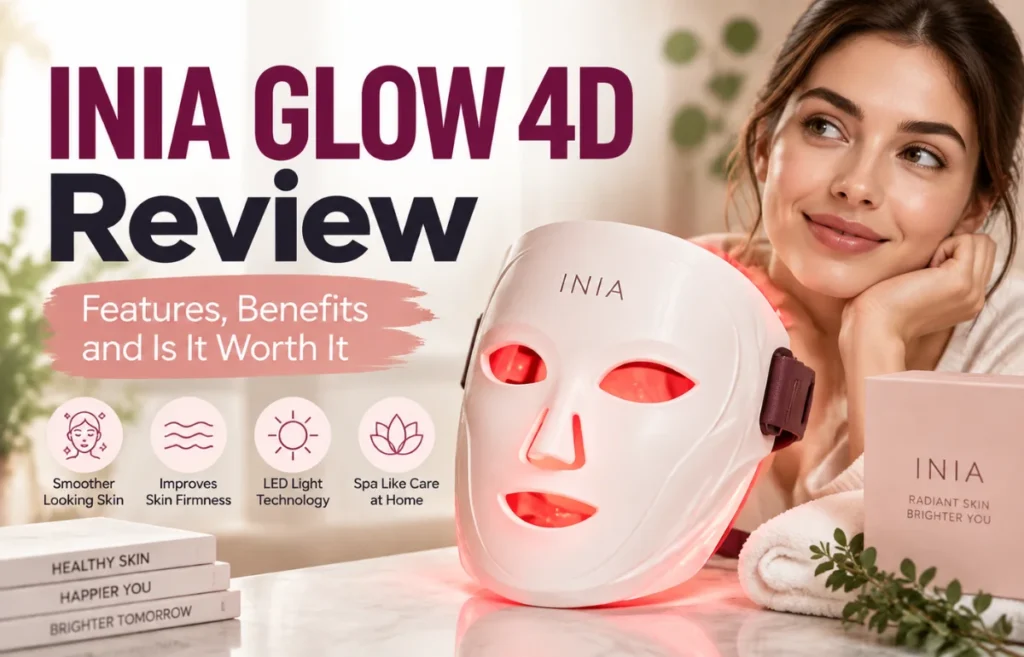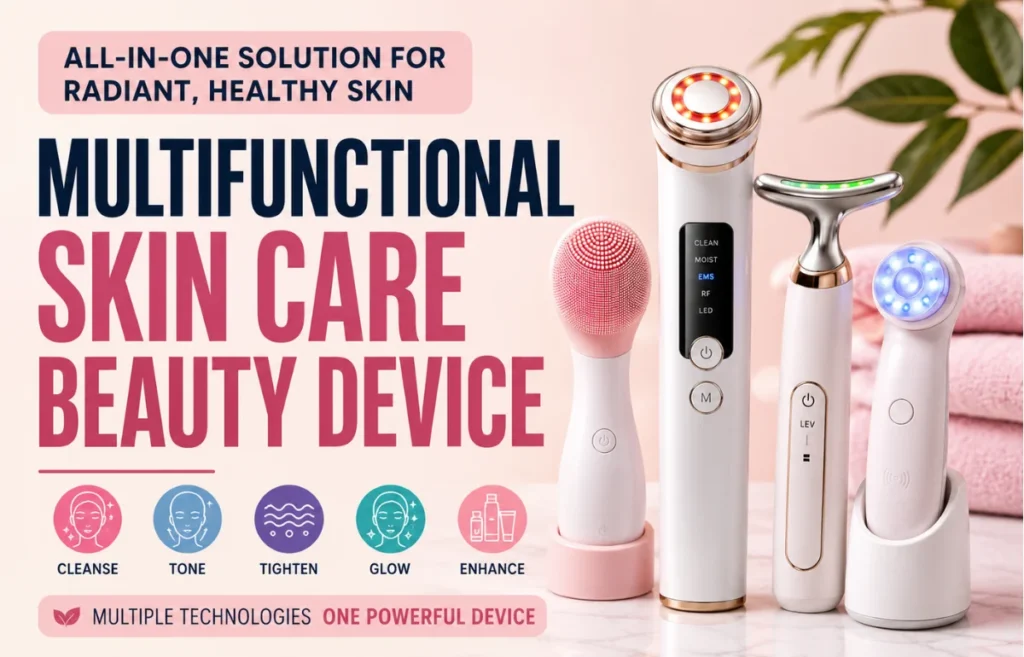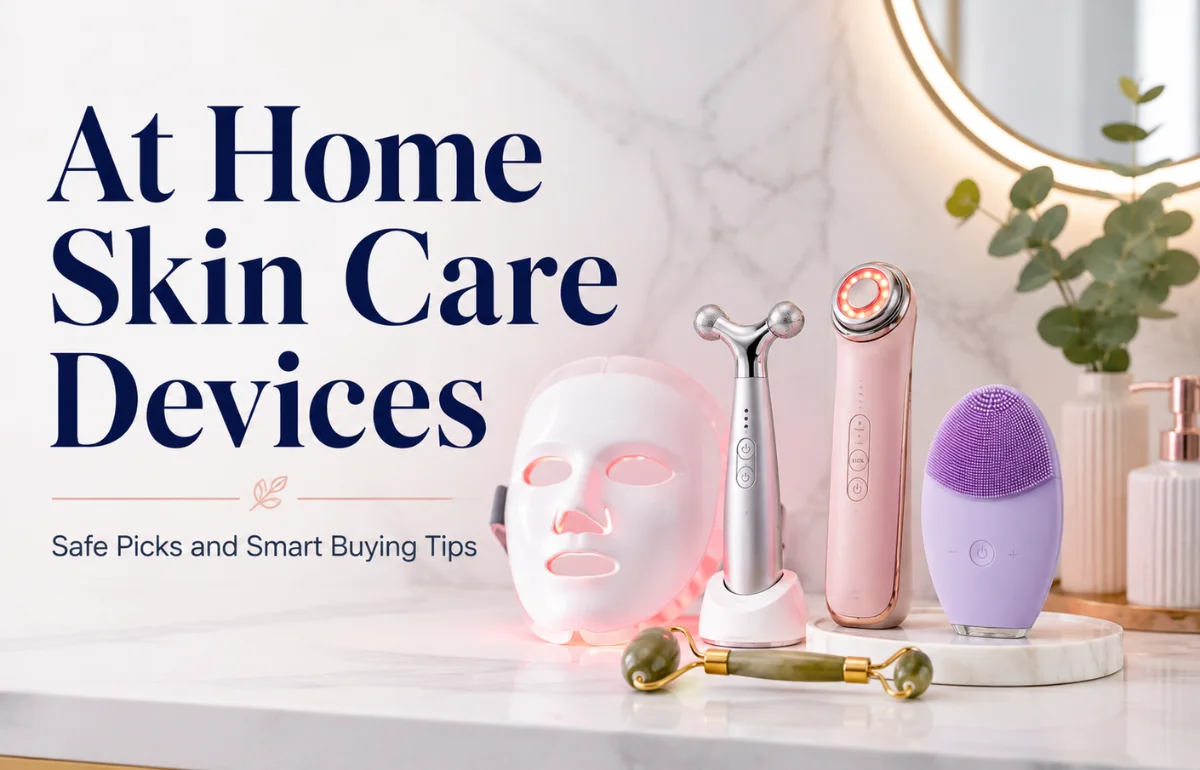
At home skin care devices are masks, brushes, wands, and handheld tools designed to support a skin goal without an in-office procedure. Depending on the product, they may use LED light, microcurrent, radiofrequency, sonic vibration, heat, cooling, or massage to improve the appearance of acne, fine lines, puffiness, texture, or mild laxity.
These tools are not miniature dermatologist offices. For safety, home facial devices usually work at lower intensities than professional equipment, so results tend to be gradual and modest. The best devices complement proven basics such as sunscreen, cleanser, moisturizer, retinoids, and acne treatment; they rarely replace them. When I assess a device, I focus on its evidence, safety instructions, realistic outcome, and whether someone can use it consistently.
Why At-Home Beauty Devices Are So Popular
Home beauty technology offers convenience. A ten-minute LED session while reading is easier than scheduling repeated appointments, and the long-term cost may be lower.
The problem is that marketing often outruns evidence. Words such as “lift,” “erase,” “detox,” and “rebuild” can make a subtle cosmetic tool sound transformational. A credible product should have one clear purpose rather than promise to fix acne, wrinkles, pores, pigmentation, sagging, and dryness at once.
I also treat convenience as a performance feature. A promising tool that remains uncharged in a drawer cannot outperform a simpler one you use correctly for several months.
Which At Home Skin Care Devices Actually Work?
Evidence varies widely across categories. LED has the strongest overall support for common home use. Radiofrequency has encouraging but smaller studies, while microcurrent is better viewed as temporary toning and maintenance.
| Device type | Best suited for | Realistic result | Main limitation |
|---|---|---|---|
| LED light therapy | Mild acne, redness, fine lines | Gradual improvement with repeated use | Performance varies by wavelength and dose |
| Microcurrent | Temporary facial toning | Subtle lifted or refreshed appearance | Ongoing maintenance is usually needed |
| Home radiofrequency | Mild laxity and wrinkles | Slow firming or texture improvement | Heat control and device quality matter |
| Sonic cleansing brush | Makeup, oil, and residue removal | Cleaner-feeling skin | Overuse may damage the skin barrier |
| Cooling or massage tool | Temporary puffiness | Short-term de-puffing | Does not permanently tighten skin |
| At-home microneedling | Marketed for scars and texture | Unpredictable outside professional care | Infection, pigmentation, and scarring risks |
LED Light Therapy Devices
LED face masks and panels use selected wavelengths, not ultraviolet radiation. Red and near-infrared light are commonly used for signs of aging, while blue light is often used for mild acne.
A systematic review and meta-analysis found benefits from red and blue LED treatments for acne, with other wavelengths showing potential for skin rejuvenation. A small home-use study involving 24 participants also reported improvements in elasticity and texture after repeated use.
The American Academy of Dermatology says at-home red-light devices may produce subtle to noticeable results, but studies use different devices and schedules, so products cannot be assumed to perform equally. Professional equipment is also generally more powerful.
My practical view is that LED is often the most sensible first device for someone who wants a noninvasive, low-effort option. Follow the stated treatment time; extra exposure does not automatically mean faster results.
Microcurrent Facial Devices
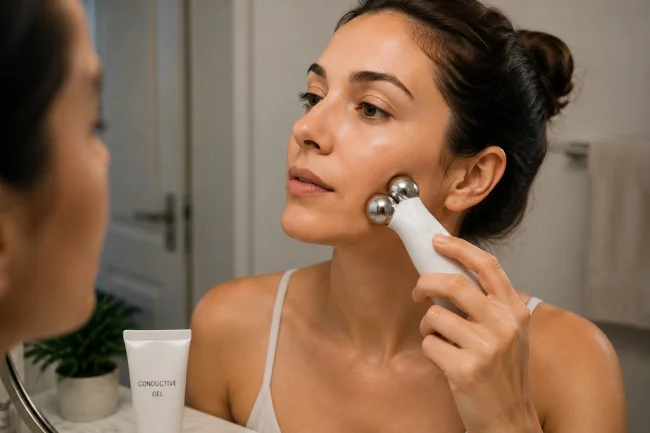
Microcurrent tools deliver low-level electrical current through the skin, usually with a conductive gel. They are marketed as facial toning devices because they stimulate muscles and may temporarily sharpen the appearance of the cheeks or jawline.
The immediate effect can look impressive when massage also reduces puffiness. Lasting structural tightening is less certain, so I would treat microcurrent as maintenance rather than a permanent lift.
Technique matters. The tool must maintain contact with the skin, move correctly, and be used with a compatible conductive product. Those added steps can make consistency harder than it appears in an advertisement.
Home Radiofrequency Devices
Radiofrequency devices create controlled heat with the aim of supporting collagen remodeling and improving mild wrinkles or laxity.
In a randomized split-face trial of 33 women, a home RF device produced statistically significant improvements in several measured features, including wrinkles, radiance, color, and skin thickness over 12 weeks. The results are promising, but one small study does not prove that every consumer RF product works the same way.
I look for temperature controls, automatic shutoff, clear treatment zones, and detailed contraindications. A generic heating wand with vague safety information is not equivalent to a studied system.
Radiofrequency microneedling is a separate, invasive procedure. In October 2025, the FDA warned about reported burns, scarring, fat loss, disfigurement, and nerve damage associated with certain RF microneedling uses.
Sonic Cleansing Brushes
A facial cleansing brush may help remove stubborn sunscreen, makeup, and oil, but aggressive scrubbing can irritate the skin barrier.
Dermatologists generally recommend gentle cleansing with the fingertips because excess friction may cause irritation. That does not make every brush harmful, but it means pressure, softness, and frequency should remain conservative.
For sensitive, rosacea-prone, inflamed, or actively acneic skin, I would usually choose a gentle cleanser over a powered brush. Stop if the skin becomes tight, sore, persistently red, or unusually shiny.
Cooling Tools, Gua Sha, and Facial Rollers
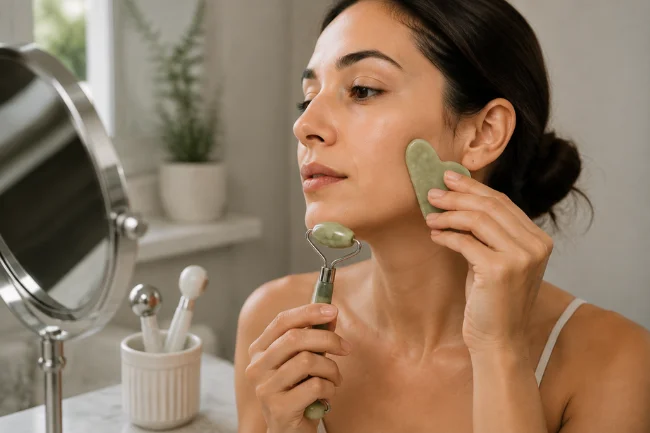
Cooling and massage tools can temporarily reduce puffiness and make the face look more defined. They may also feel calming and encourage a slower routine.
Their effects are mainly temporary. A sharper jawline after massage does not mean facial fat has disappeared or collagen has been rebuilt. I see these as grooming and comfort tools, not true skin-tightening devices.
At-Home Microneedling and Derma Rollers
Microneedling intentionally creates skin injury, which is why sterility, needle depth, technique, and patient selection matter.
The FDA states that it has not cleared microneedling devices for use with creams, cosmetics, drugs, or platelet-rich plasma. Applying a serum before rolling may increase penetration, but it can also introduce ingredients to depths where they were never tested.
I would not place home microneedling in the same casual category as an LED mask. People with active acne, eczema, psoriasis, infections, a tendency to form keloids, or a high risk of post-inflammatory pigmentation should seek professional advice.
How to Match a Device to Your Skin Concern
Start with the concern, not the gadget. Buying a trending device and inventing a reason to use it later usually wastes money.
| Main concern | Most reasonable category | What should remain essential |
|---|---|---|
| Mild inflammatory acne | Blue or combination LED | Gentle cleanser, moisturizer, proven acne care |
| Fine lines and rough texture | Red/near-infrared LED or selected RF | Broad-spectrum sunscreen and a retinoid if tolerated |
| Temporary puffiness | Cooling or massage tool | Sleep, hydration, and allergy management when relevant |
| Mild loss of definition | Microcurrent | Realistic expectations and regular maintenance |
| Heavy makeup residue | Gentle sonic cleansing | Non-abrasive cleanser and moisturizer |
| Deep scars or significant laxity | Professional evaluation | Dermatologist-directed treatment |
A device should solve one problem without creating another. A cleansing brush may remove residue but worsen redness; a poorly fitting light mask may be so uncomfortable that it is never used.
The Missing Buying Metric: Treatment Friction

Most guides compare wavelengths, power, and attachments. I think a more useful measure is treatment friction: everything that makes the device harder to use.
Before buying, add up session time, charging, cleaning, conductive gel, replacement parts, eye protection, and the number of weekly treatments. Then calculate cost per completed session.
A $400 mask used 100 times costs $4 per treatment. The same mask abandoned after six uses costs more than $66 per treatment. This simple calculation often predicts value better than the purchase price.
How to Choose a Safe, Credible Device
Check the Regulatory Wording
“FDA registered” and “FDA certified” do not mean FDA cleared. The FDA explains that facility registration and device listing do not indicate review or authorization, and the agency does not issue device registration certificates.
For medical-style claims, search the exact model and manufacturer in the FDA device database rather than trusting a logo on a marketplace listing.
Look for Useful Specifications
A light device should identify its wavelengths and treatment schedule. Electrical and heat-based products should explain intensity levels, compatible gels, treatment areas, and contraindications.
I become cautious when a brand hides basic specifications but leads with celebrity photos, dramatic testimonials, or claims that one device replaces injectables, lasers, and prescription treatment.
Read Contraindications Before Purchase
Suitability depends on the technology and the person. Extra caution may be needed with photosensitive conditions, light-sensitizing medication, implanted electronic devices, seizure disorders, active skin disease, or recent procedures.
For red-light therapy, the AAD advises checking for conditions and medications that increase light sensitivity and wearing recommended eye protection. It also notes that visible light may trigger hyperpigmentation in some darker skin tones.
Plan for Hygiene
Clean every skin-contact surface exactly as directed and let it dry fully. Do not share brush heads, rollers, or conductive applicators.
Replace cracked masks, damaged attachments, frayed cables, or corroded contacts. A beauty device is not worth extending beyond its safe working life.
How to Add a Device Without Irritating Your Skin
Introduce one device at a time and keep the rest of the routine simple. This helps identify the cause if irritation develops.
Use the tool on clean skin unless its directions require a gel or serum. Avoid combining several aggressive treatments on one night. RF, exfoliating acids, retinoids, and cleansing brushes may each be tolerable alone but too irritating together.
Stop if you notice persistent redness, swelling, blistering, increased pigmentation, pain, numbness, worsening acne, or a rash. You should never have to “push through” a device-related injury.
Take baseline photos with the same lighting, camera distance, and facial position. Review them after eight to twelve weeks. Consistent photography prevents a brighter bathroom light from being mistaken for collagen growth.
Are At Home Skin Care Devices Worth It?
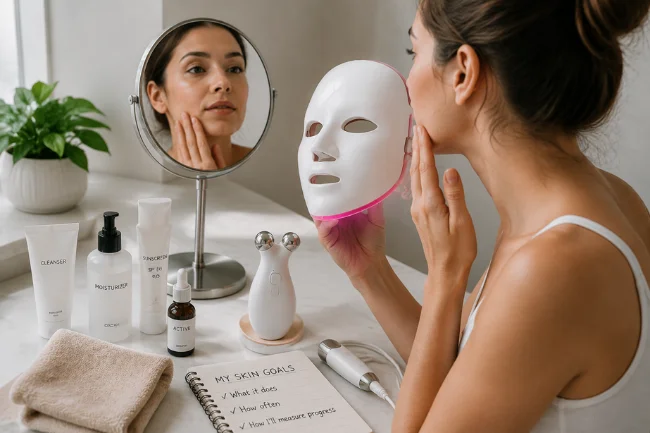
They can be when the technology matches a realistic goal, the product has credible safety information, and the schedule fits your life. LED may suit someone seeking gradual support for mild acne or visible aging. Microcurrent may suit someone who values temporary toning, while home RF may appeal to a patient user focused on mild laxity.
They are poor value when purchased instead of sunscreen, prescription acne care, evaluation of a changing mole, or professional treatment for deep scarring.
My rule is to establish the basics first: cleanser, moisturizer, broad-spectrum sunscreen, and one targeted active ingredient. Add one device only when you can explain what it does, how often you will use it, and how you will measure progress.
Frequently Asked Questions
Do at-home skin care devices really work?
Some do, especially LED devices, but home results are usually gradual and less dramatic than professional treatments.
Which skin care device is best for beginners?
A reputable LED mask is often the easiest starting point because it is noninvasive, hands-free, and requires little technique.
Can I use skin care devices every day?
Only when the manufacturer recommends daily use; extra sessions may increase irritation without improving results.
Are LED face masks safe for all skin tones?
They are generally low risk, but visible light may worsen pigmentation in some darker skin tones, so professional guidance can help.
Can I use microcurrent and red light therapy together?
Some routines combine them, but introduce them separately and follow each device’s instructions to monitor sensitivity.
A Smarter Next Step
At home skin care devices work best as supporting tools, not shortcuts. Choose one technology for one clear concern, verify its claims, follow the stated schedule, and track your skin for two to three months.
Before spending hundreds of dollars, write down your goal and compare it with what the product has actually been studied to do. That small pause can protect both your skin barrier and your budget.

Mia Anderson is a skincare writer with 8 years of experience creating practical, research-informed content about skincare routines, skin health, ingredients, and everyday self-care habits. She focuses on helping readers understand skincare choices through simple explanations and realistic routines while encouraging professional advice for specific skin concerns.