

10 Proven Business Growth Strategies for Small Enterprises
Scaling a small business in today’s competitive market is one of the most challenging tasks an entrepreneur can face. Many small business owners find themselves stuck in a constant loop of balancing limited capital, managing daily operations, and competing against well-funded market leaders. Without a clear execution plan, trying to grow often leads to burned-out teams and wasted resources.
However, business expansion does not require a massive budget—it requires a clear, structured strategy. Sustainable growth happens when you systematically optimize your operations, retain valuable clients, and leverage modern digital tools.
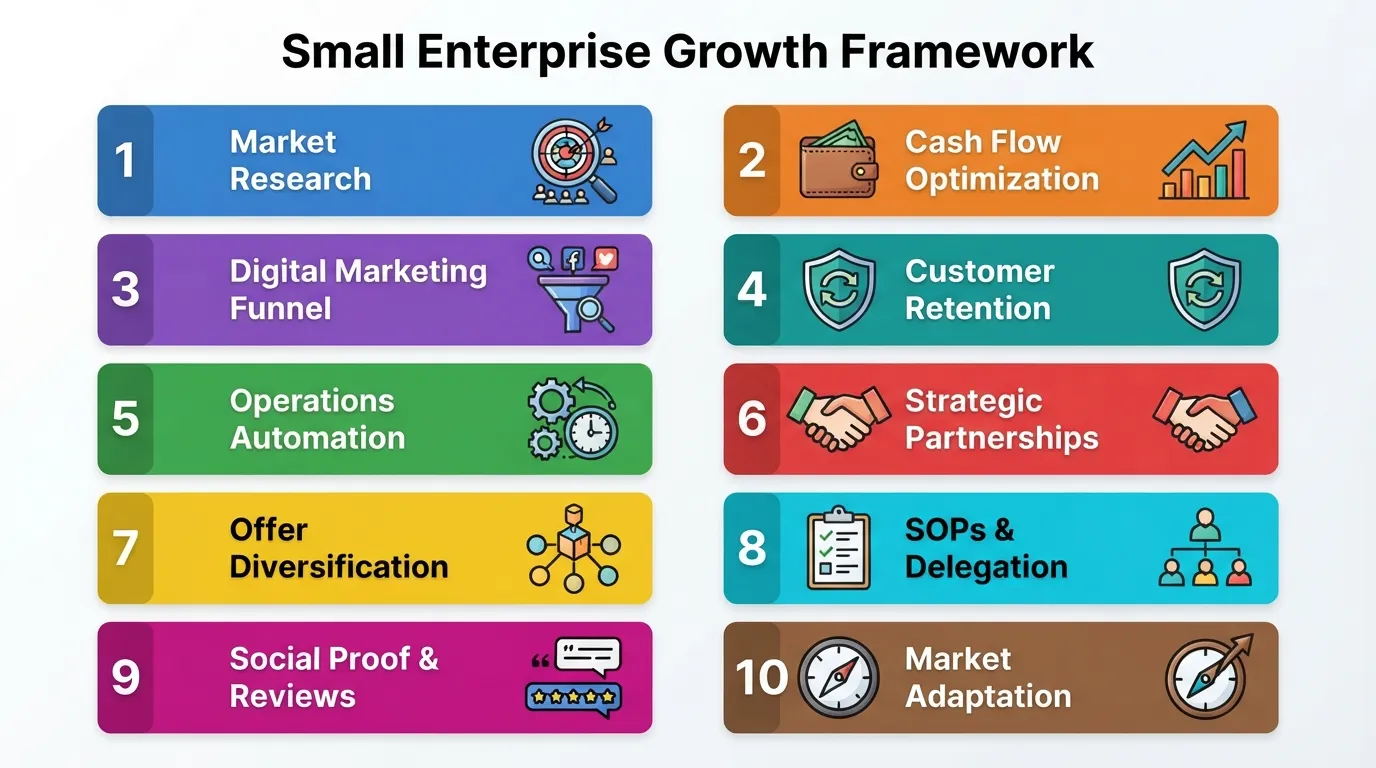
Whether you are looking to increase overall revenue, expand your target audience, or streamline daily operations, this guide covers 10 step-by-step, actionable strategies designed to help your business scale safely and sustainably.
Strategy 1: Deep Market Research & Customer Understanding
Building a successful growth strategy starts with knowing exactly who your ideal customer is and what specific problem you are solving for them. Many small businesses fail to scale because they build products or offer services based on assumptions rather than real market data.
Analyzing Core Problems and Needs
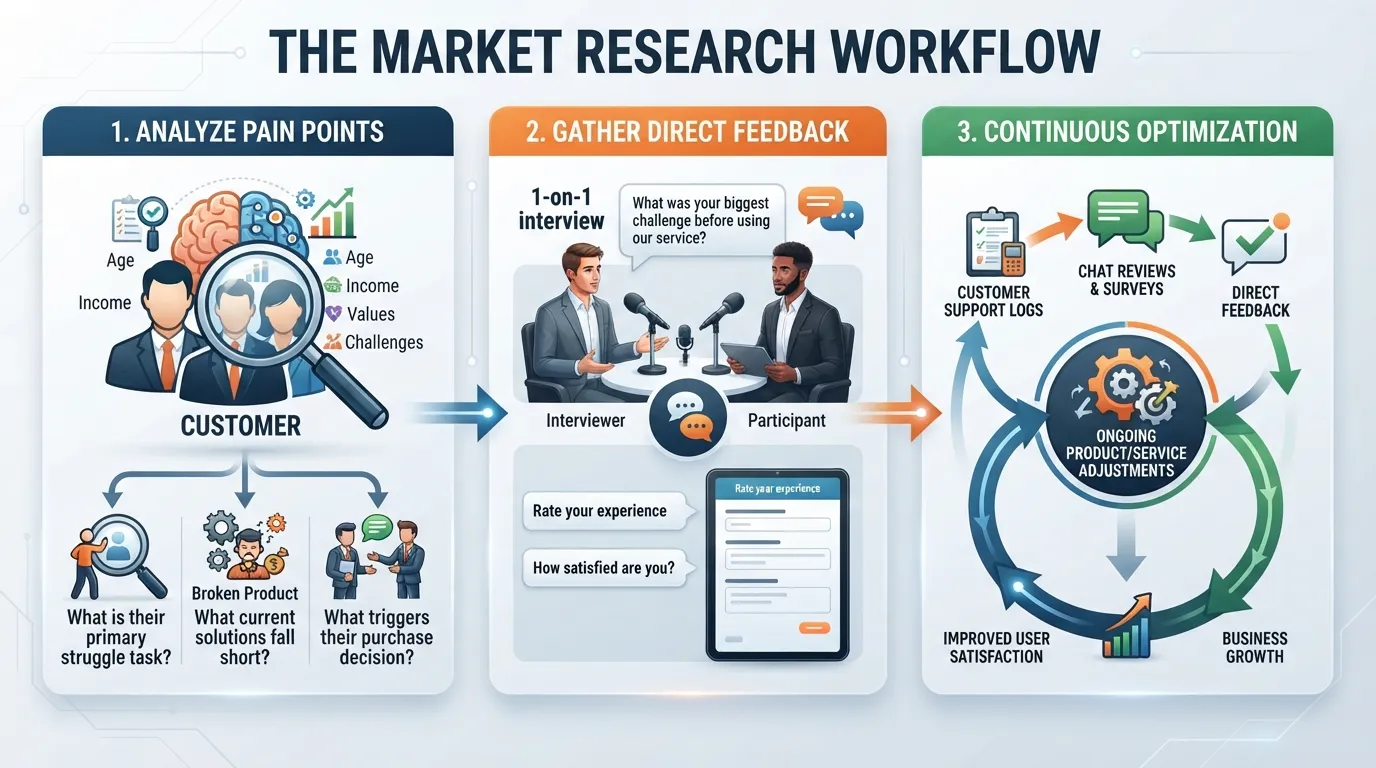
To truly understand your target audience, you must look beyond basic demographics like age, location, or income level. Focus deeply on their pain points, daily challenges, and motivations:
Identify the Primary Struggle: What specific roadblock is preventing your customer from achieving their goal?
Evaluate Current Alternatives: How are they currently solving this problem, and where do existing solutions fall short?
Uncover the Value Trigger: What specific benefit or feature convinces them to make a purchasing decision?
When your messaging speaks directly to a customer’s specific problem, your conversion rates increase, and marketing costs decrease.
Utilizing Feedback Loops and Customer Interviews
The most reliable way to gather actionable insights is directly from your current and potential clients. Relying solely on market guessing can be costly.
Direct Customer Interviews: Conduct 10 to 15 minute one-on-one conversations with your most active clients. Ask open-ended questions like, “What was the biggest challenge you faced before using our service?” or “What almost kept you from buying from us?”
Targeted Surveys & Feedback Forms: Send short, non-intrusive post-purchase surveys using simple digital tools. Focus on simple scales and open feedback fields to catch raw customer sentiment.
Analyze Support & Reviews: Review support tickets, chat logs, and public client feedback. Repeated complaints or feature requests often point directly to new growth opportunities.
By continuously gathering and analyzing customer data, you ensure your business adapts alongside market demand—keeping you ahead of competitors.
Strategy 2: Optimize Cash Flow & Financial Planning

Revenue alone does not guarantee business survival; healthy cash flow does. Many growing businesses fail not because of a lack of sales, but because their capital is tied up, mismanaged, or spent inefficiently. To build a sustainable framework for expansion, you must maintain tight control over your operational finances.
Trimming Operational Costs and Building an ROI-Driven Budget
Scaling requires smart spending. Every expense should either directly generate revenue or streamline operations to save time and labor costs.
Audit Recurring Expenses: Regularly review all recurring operational overhead, such as unused software subscriptions, high vendor fees, or unnecessary administrative costs. Eliminate anything that doesn’t add direct value.
Prioritize ROI-Driven Allocations: Shift your capital toward channels with measurable returns, such as high-performing marketing campaigns or essential operational tools.
Renegotiate Supplier & Vendor Terms: Speak with your current suppliers to secure bulk discounts, early-payment perks, or extended payment windows (e.g., Net-30 or Net-60) to keep liquidity high.
Creating a lean operational budget gives your business the flexibility to reallocate capital toward active growth opportunities without overextending itself.
Maintaining Cash Reserves and Emergency Funds
Unforeseen market shifts, late-paying clients, or sudden equipment failures can stall your business if you operate without a financial safety net.
Establish a Dedicated Emergency Reserve: Aim to set aside 3 to 6 months’ worth of core operating expenses in a liquid business account. This acts as a buffer during seasonal lulls or slow economic cycles.
Implement Cash Flow Forecasting: Track incoming payments versus upcoming bills on a weekly or monthly basis. Predicting shortfalls in advance allows you to adjust spending before it impacts daily operations.
Separate Growth Capital from Daily Funds: Keep your operational cash separate from funds earmarked for expansion (e.g., launching new products or hiring staff). This prevents you from accidentally burning through crucial working capital.
By keeping your operations lean and backing them with solid cash reserves, your business gains the financial stability required to take calculated risks and scale securely.
Strategy 3: Build a Targeted Digital Marketing Funnel
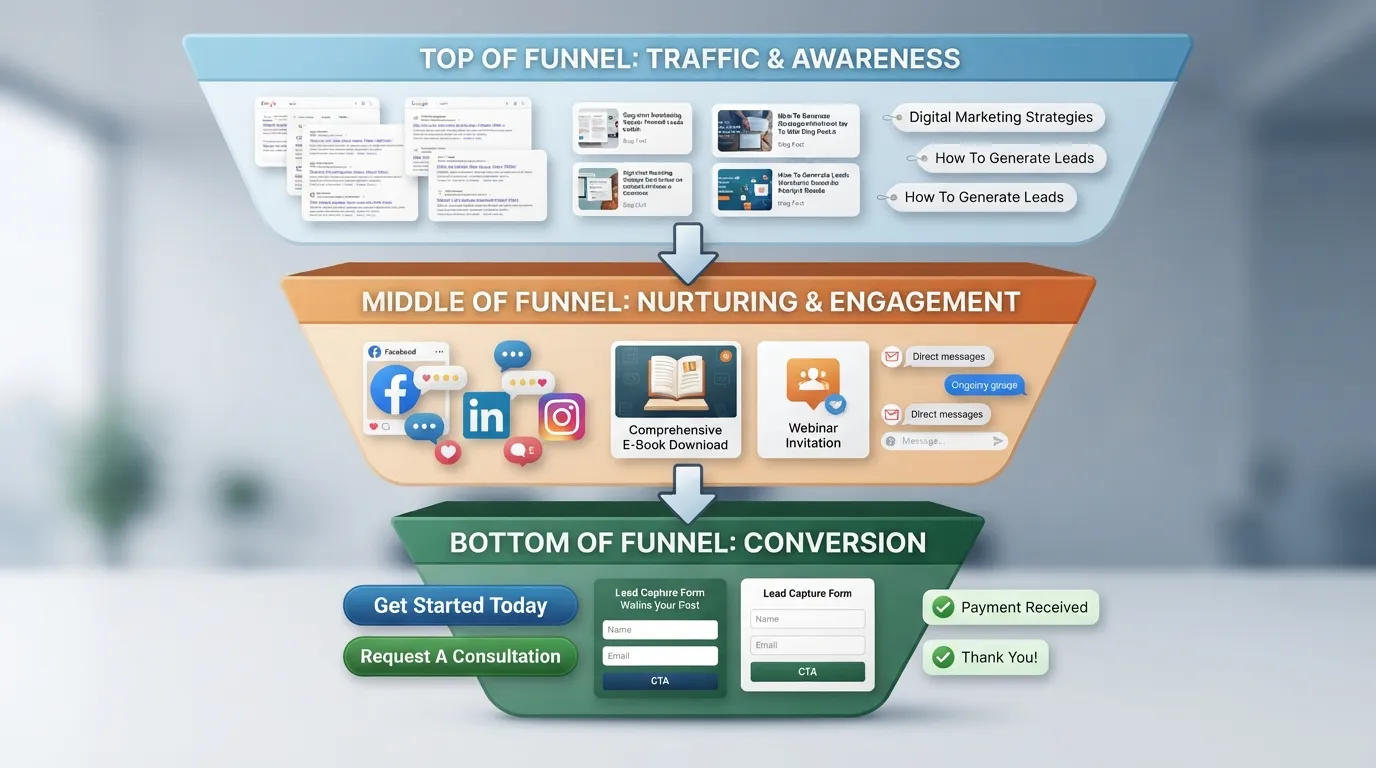
To scale a small business efficiently, relying on unpredictable word-of-mouth or one-off promotions is not enough. You need a structured digital marketing funnel that consistently attracts prospects, nurtures their interest, and converts them into paying customers.
Driving Sustainable Traffic with Organic Search (SEO) & Content Marketing
Paid ads can bring quick wins, but organic marketing builds long-term authority and predictable growth without increasing your ad spend.
Target High-Intent Keywords: Focus on creating content around search terms your prospective buyers use when actively seeking solutions in your niche.
Publish In-Depth, Problem-Solving Content: Create detailed guides, how-to articles, and case studies that address your audience’s exact pain points. This establishes immediate credibility.
Optimize On-Page & Technical SEO: Ensure your website loads quickly, is mobile-friendly, and features clear internal linking to guide visitors seamlessly from reading a blog post to visiting a service or product page.
By treating content as an asset, every article you publish continues to generate targeted traffic and leads over time.
Focusing on High-Converting Social Media Channels
Trying to maintain an active presence on every single social platform often leads to diluted effort and burnout. Instead, focus your resources where your ideal buyers actually hang out.
Identify Platform-Audience Fit: If you operate a B2B service, double down on platforms like LinkedIn. If your business relies heavily on visual products, focus on Instagram or Pinterest.
Focus on Direct Engagement over Vanity Metrics: Likes and shares are great, but direct messages, inquiries, and click-through rates to your website are what drive actual business revenue.
Use Clear Calls-to-Action (CTAs): Every post, video, or social update should guide the viewer toward the next step—whether that is joining an email newsletter, downloading a free resource, or booking a consultation.
When you align high-converting social channels with an organic search engine strategy, you create a reliable engine that generates leads on autopilot.
Strategy 4: Improve Customer Retention & Loyalty
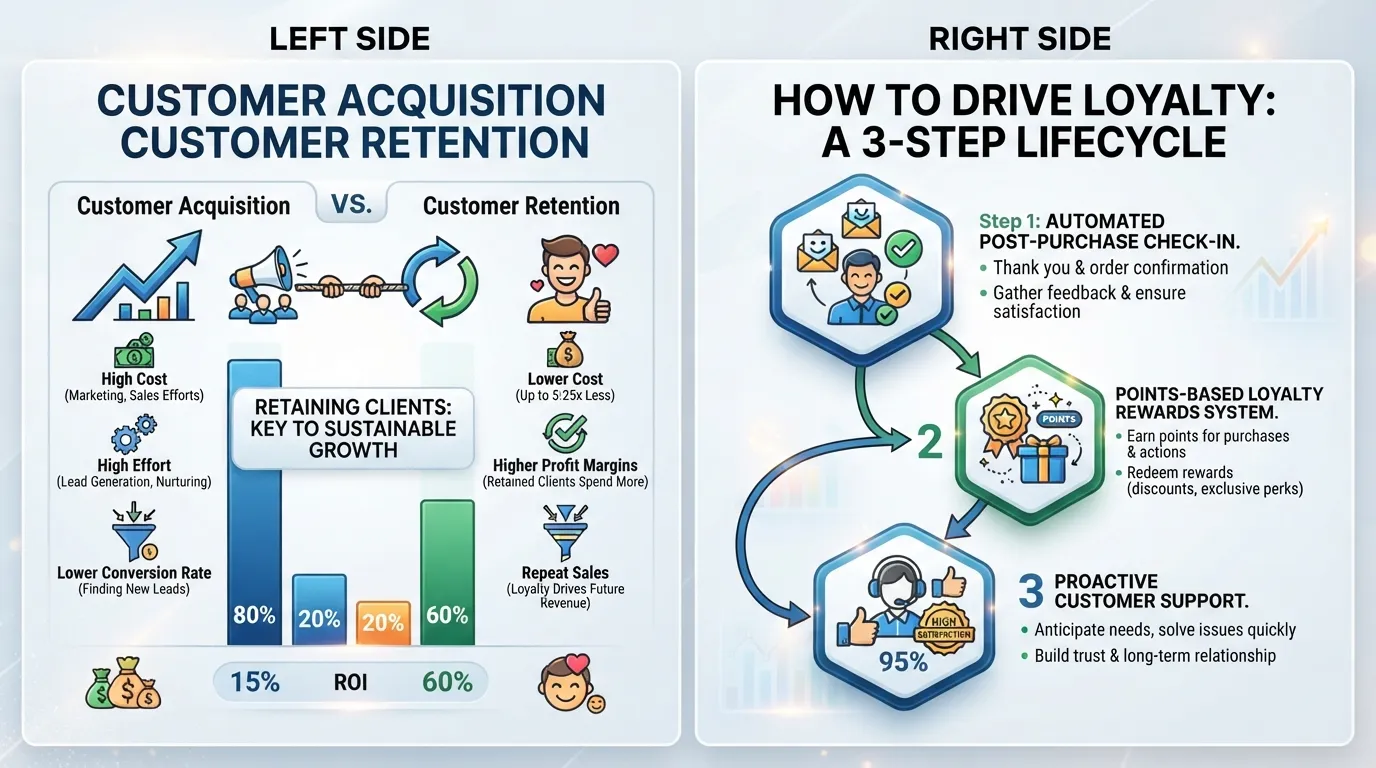
Many small business owners focus entirely on acquiring new customers, but long-term profitability comes from keeping the ones you already have. Retaining existing customers is significantly more cost-effective than constantly chasing new leads, making retention a crucial engine for sustainable business growth.
The Power of Repeat Business: Acquisition vs. Retention
Acquiring a new client requires advertising spend, outreach effort, and sales nurturing. In contrast, existing clients already know, trust, and value your brand.
Lower Customer Acquisition Cost (CAC): Studies consistently show that acquiring a new customer can cost anywhere from 5 to 25 times more than retaining an existing one.
Higher Order Value & Conversion Rates: Existing clients are much more likely to try new offerings, purchase upgrades, or opt for higher-tier services because the trust baseline is already established.
Predictable Revenue Streams: Repeat buyers stabilize your monthly cash flow, giving you a reliable financial base to reinvest in operational expansion.
Shifting a portion of your focus toward nurturing current relationships dramatically improves your long-term profit margins.
Implementing Loyalty Programs & Outstanding Customer Support
To keep customers coming back, you must make them feel valued and supported long after their initial purchase.
Structured Loyalty & Incentive Programs: Reward repeat buyers with simple incentives—such as points-based rewards, exclusive discounts, or early access to new service lines.
Proactive & Responsive Support: Build a fast, helpful customer service process. Address complaints immediately, listen to feedback, and solve issues with zero friction.
Post-Purchase Engagement: Don’t let the relationship end at checkout. Stay top-of-mind through personalized follow-up emails, helpful usage tips, or periodic check-ins to ensure they are getting maximum value from your product or service.
When you transform one-time buyers into loyal, repeat customers, your client base expands organically and drives consistent word-of-mouth growth.
Strategy 5: Automate Business Operations & Use Smart Tools
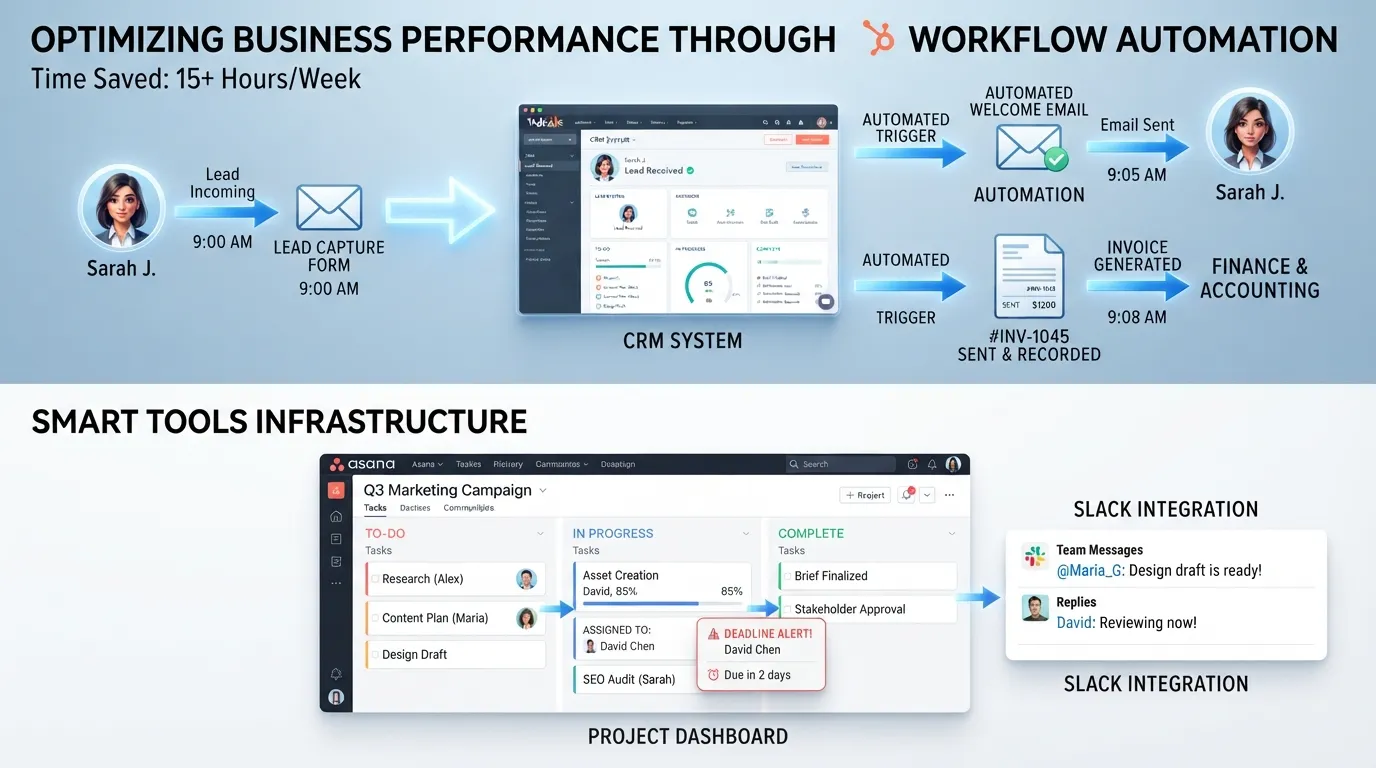
As a small business grows, manual administrative tasks can quickly become a bottleneck. If you and your team are spending hours on repetitive routines, you have less time to focus on high-impact growth initiatives. Automating core operational workflows allows you to scale your business efficiency without proportionally increasing your workload.
Saving Time by Automating Repetitive Tasks
Modern business automation tools can take over routine, time-consuming processes, reducing human error and freeing up valuable hours every week.
Automated Invoicing & Billing: Set up recurring billing, automated payment reminders, and digital receipt generation. This speeds up cash flow collection while eliminating manual follow-ups.
Email Marketing & Autoresponders: Implement welcome sequences, abandoned cart notices, and instant lead-reply templates. This ensures prospects receive timely responses without manual intervention.
Customer Relationship Management (CRM): Use a central CRM tool to automatically capture leads, track customer interactions, and schedule automated follow-up tasks for your team.
By removing manual friction points from your daily operations, your business can handle a higher volume of transactions smoothly.
Adopting Productivity Software & Project Management Tools
To keep growing teams aligned and projects delivered on schedule, clear digital infrastructure is essential.
Centralized Project Workspaces: Implement modern project management platforms (like Asana, Trello, or ClickUp) to assign tasks, set clear deadlines, and monitor project progress transparently.
Team Communication Hubs: Separate internal team discussions from cluttered email inboxes using dedicated messaging channels to keep operational decisions fast and organized.
Standardized Knowledge Bases: Store internal guides, templates, and video walkthroughs in a central digital hub so employees can resolve daily operational queries independently.
Leveraging smart software ensures your business operates like a well-oiled machine, giving you the freedom to focus on strategy and scaling.
Strategy 6: Form Strategic Local & B2B Partnerships
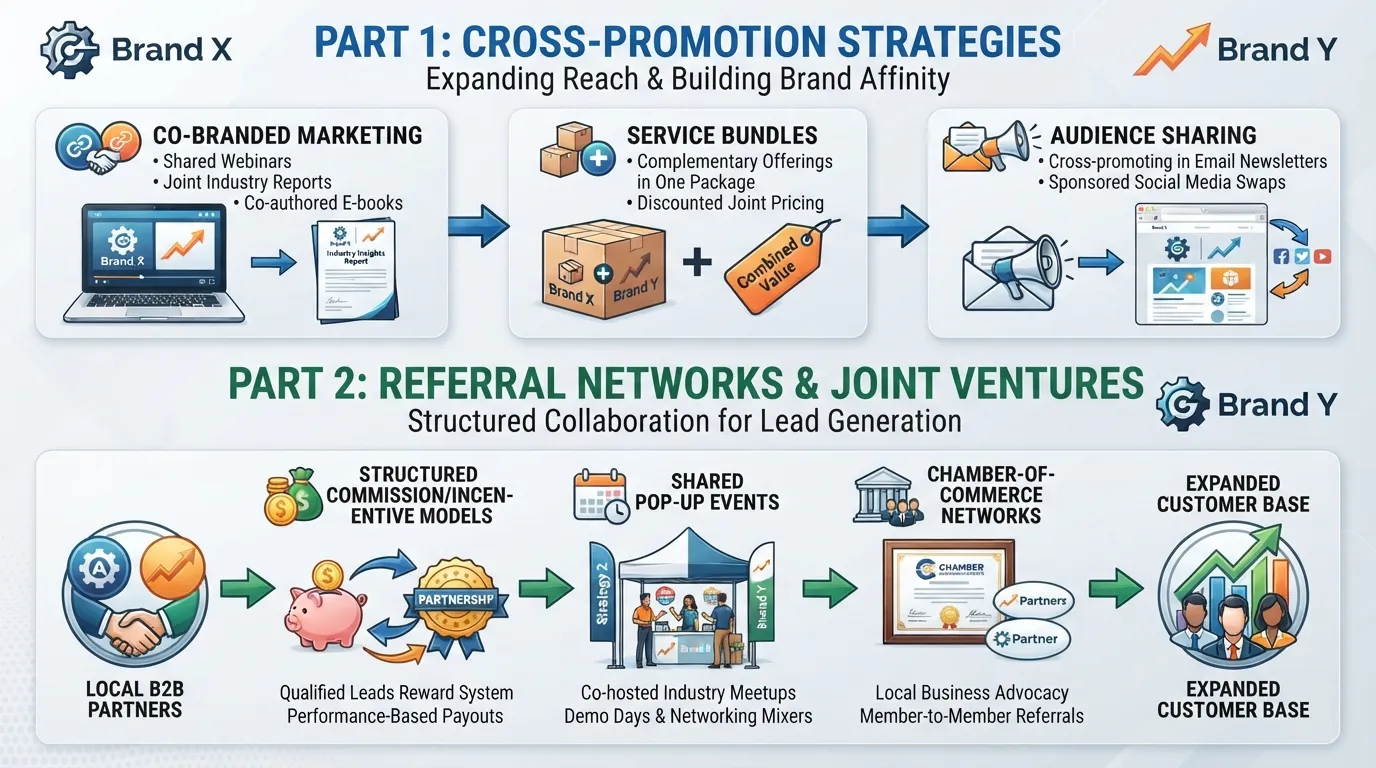
Growth doesn’t always have to happen in isolation. One of the fastest and most cost-effective ways to reach a broader audience is by forming strategic partnerships with other businesses. By aligning with companies that share your target market but don’t directly compete with you, both brands can grow together.
Leveraging Cross-Promotion with Non-Competing Businesses
Cross-promotion allows you to tap into an established, trusting client base without starting your marketing efforts from scratch.
Co-Branded Marketing Content: Partner with complementary brands to co-host webinars, publish joint industry reports, or run shared social media campaigns.
Exclusive Package Deals: Bundle your services or products with a partner’s offer to create high-value packages (e.g., a web designer partnering with an SEO copywriter).
Shared Newsletter & Promotion Slots: Feature each other’s offers in your respective email newsletters or promotional materials to instantly cross-pollinate your client lists.
When both audiences see a recommendation from a brand they already trust, your credibility and conversions naturally increase.
Building Referral Networks & Joint Ventures
Formalizing your business relationships turns casual word-of-mouth into a reliable lead generation engine.
Structured Referral Incentive Plans: Create a clear commission or store-credit program for partners who send paying clients your way. This gives local businesses a strong financial reason to recommend you continuously.
Joint Venture Projects (JVs): Team up with non-competing businesses to launch new events, pop-up markets, or specialized B2B service packages that neither business could execute alone.
Local Business Associations: Engage actively with local trade chambers, digital hubs, or B2B networks to build long-term relationships with key decision-makers in your area.
Strategic alliances provide a scalable way to tap into new market segments while keeping your customer acquisition costs low.
Strategy 7: Diversify Product or Service Offerings
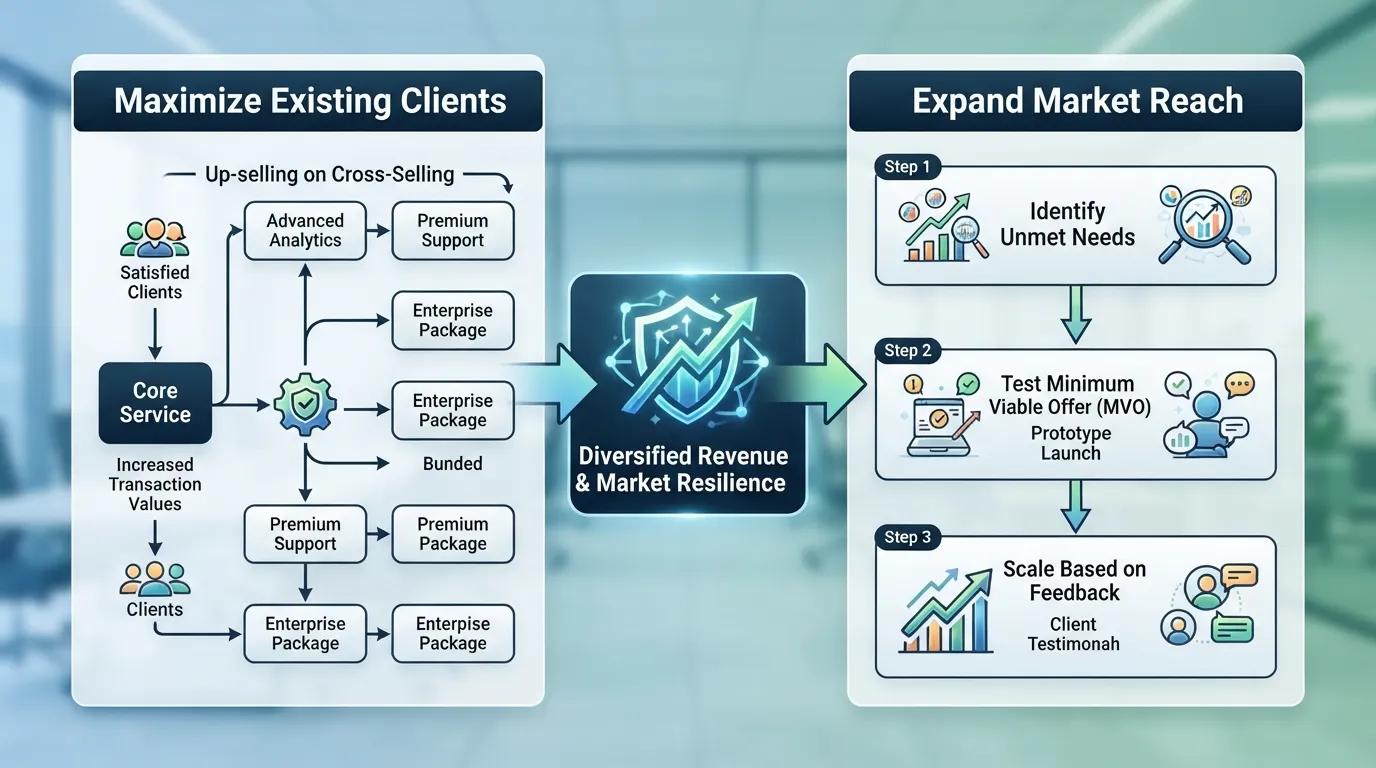
Relying on a single product or service line can limit your revenue potential and leave your business vulnerable to market shifts. Expanding and diversifying your offerings creates multiple revenue streams, increases customer lifetime value, and protects your business during economic fluctuations.
Up-Selling and Cross-Selling to Existing Clients
Your current customers already trust your quality and reliability. Offering them additional value through complementary services is the most efficient way to grow revenue without increasing ad spend.
Strategic Up-Selling: Encourage clients to upgrade to a higher-tier service package, a premium product version, or a comprehensive ongoing retainer that yields better long-term results.
Relevant Cross-Selling: Introduce related products or add-on services that enhance their original purchase (e.g., offering ongoing website maintenance to a web design client).
Value-Added Bundling: Group complementary products or services together at a slight package discount to increase average order value while solving multiple customer needs at once.
By focusing on deep, multi-solution client relationships, you maximize the total value generated from every account you manage.
Rolling Out New Offers Based on Market Demand
Diversification should always be guided by real customer feedback and documented market demand, rather than guesswork.
Identify Unmet Client Needs: Look at frequent requests, common complaints, or gaps in your industry where clients are forced to hire third-party vendors.
Launch Minimum Viable Offers (MVOs): Test new product ideas or service concepts with a small segment of your existing audience before investing heavily in full-scale production.
Adapt to Emerging Market Trends: Continuously evaluate shifts in technology, consumer behavior, or industry standards, and evolve your offer suite to stay relevant.
Smart diversification ensures your business remains versatile, resilient, and continuously valuable to your client base.
Strategy 8: Build SOPs & Delegate Effectively
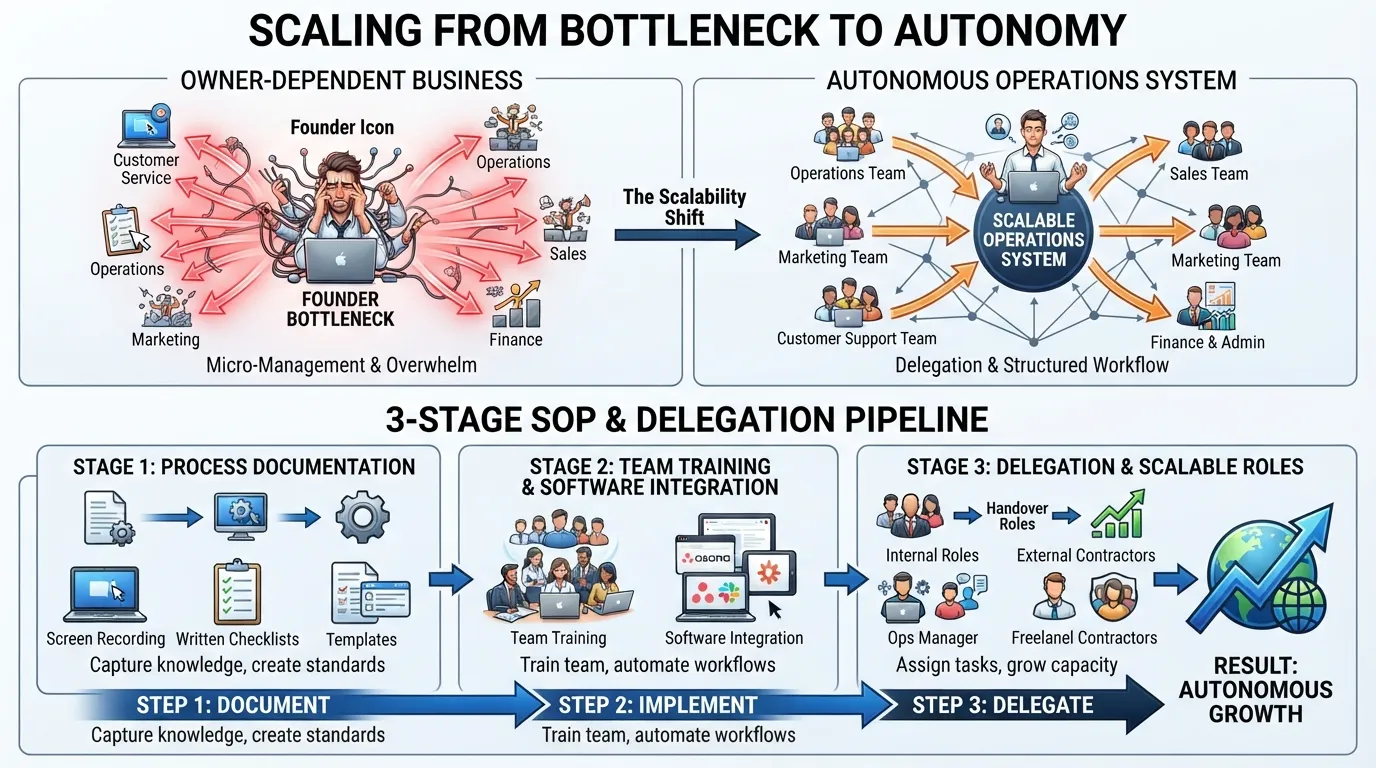
If a business stops running the moment the founder steps away, it isn’t a scalable business—it’s just a high-stress job. True growth happens when operations rely on structured systems rather than individual effort. To scale successfully, you must transition from doing every operational task yourself to managing a system that executes consistently.
Eliminating Owner Dependency for Autonomous Operations
When every major decision and daily operational task requires the business owner’s approval, progress slows down dramatically.
Identify Bottlenecks: Document every daily and weekly task you handle personally. Highlight repetitive, routine actions that do not require high-level strategic vision.
Empower Team Decision-Making: Give trained team members clear guidelines and permission to solve minor daily problems independently without constant oversight.
Shift from Executor to Strategist: Step away from micro-managing tasks so you can dedicate time to revenue-generating activities, big-picture planning, and strategic leadership.
Removing yourself as the single point of failure frees up your time and allows the business to scale smoothly.
Documenting SOPs and Strategic Hiring/Outsourcing
Delegation is only effective when clear standards are in place. Documented processes guarantee that work quality remains high, regardless of who executes the task.
Create Clear Standard Operating Procedures (SOPs): Record step-by-step written guides, checklists, or short screen-share video tutorials for core tasks (e.g., client onboarding, invoicing, order fulfillment, support replies).
Outsource Non-Core Functions: Instead of hiring full-time employees for every specialized need, leverage reliable freelancers, contractors, or specialized B2B agencies for tasks like bookkeeping, SEO copywriting, or graphic design.
Hire for Key Competencies: When bringing on permanent staff, hire individuals who excel at executing your SOPs efficiently, allowing you to delegate complete responsibilities with confidence.
Building a well-documented operational foundation transforms your business into a self-sustaining asset built for long-term growth.
Strategy 9: Leverage Customer Reviews & Social Proof
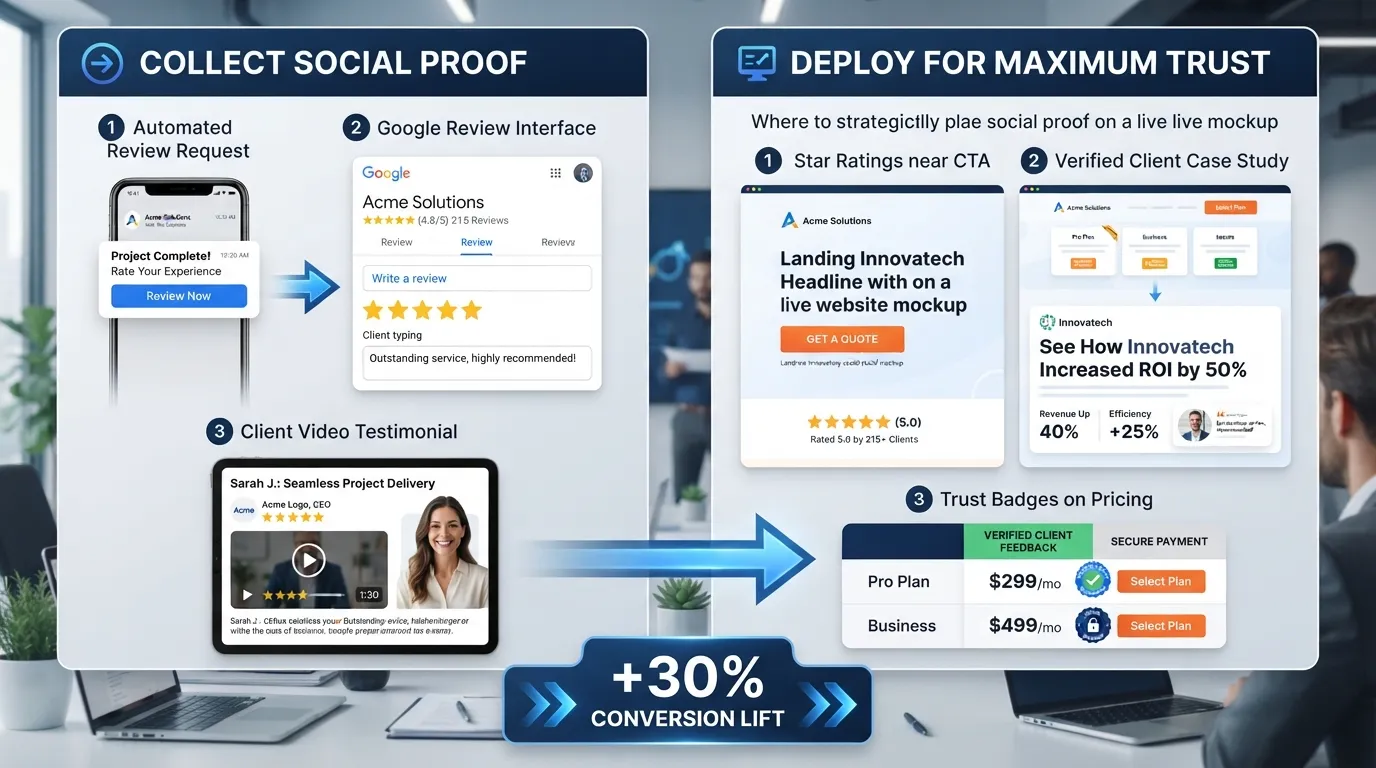
In today’s digital marketplace, prospective buyers rarely take a business’s word at face value. They look for validation from real people who have already bought from you. Building strong social proof is one of the most effective ways to lower buyer hesitation, build trust instantly, and accelerate your sales cycle.
Actively Gathering Google Reviews & Client Testimonials
Happy customers are often willing to share their positive experiences, but they rarely do so without a gentle prompt. Making review collection an automated part of your customer journey ensures a steady stream of fresh social proof.
Ask at the Peak of Satisfaction: Request feedback immediately after delivering a great result, resolving a support issue, or completing a successful project milestone.
Streamline the Review Process: Send direct, one-click links to your Google Business Profile or feedback form via email or SMS to make leaving a review effortless.
Capture Video & In-Depth Testimonials: For high-value B2B services, ask satisfied clients for short video clips or detailed written quotes highlighting specific results (e.g., “How [Your Company] helped us boost sales by 30%”).
Systematic review collection ensures your business builds a strong online reputation while you focus on day-to-day operations.
Boosting Brand Credibility Across Your Marketing Channels
Collecting reviews is only half the battle—you must strategically display them where potential buyers make purchasing decisions.
Feature Social Proof on Landing Pages: Place client quotes, star ratings, and review widgets directly near your main calls-to-action (CTAs) and pricing tables to boost conversion rates.
Develop Actionable Case Studies: Turn standout client success stories into step-by-step case studies that highlight the initial problem, your specific solution, and the measurable results achieved.
Showcase Trust Badges & Metrics: Highlight key milestones on your website—such as “Over 500+ Happy Clients Served” or badges from recognized industry platforms—to signal authority instantly.
Leveraging genuine social proof builds buyer confidence, making it significantly easier to convert cold leads into paying customers.
Strategy 10: Continuously Adapt to Market Changes
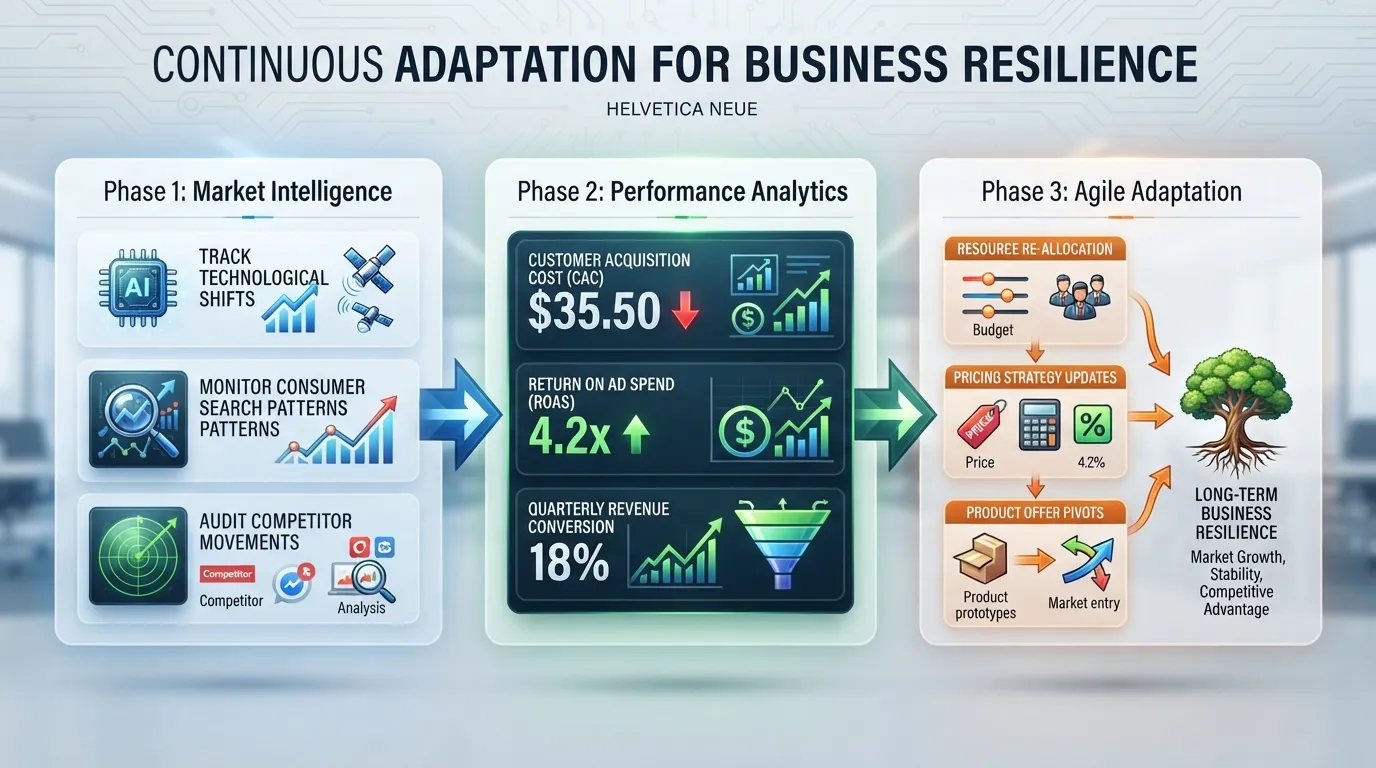
The business landscape evolves rapidly due to technological advancements, economic shifts, and changing consumer behaviors. What works today may become obsolete tomorrow. To maintain sustainable long-term growth, small businesses must remain flexible, monitor market shifts, and adapt their strategies proactively rather than reacting when it’s too late.
Monitoring Industry Trends and Search Patterns
Staying ahead of the competition requires keeping a constant pulse on where your industry and target audience are moving.
Track Technological Advancements: Continuously evaluate new tools, automation capabilities, and AI-driven platforms that can streamline your operations or improve customer experience.
Observe Consumer Behavior Shifts: Pay attention to how your audience prefers to buy, communicate, and search for services. Keep your content aligned with current search engine updates and evolving user expectations.
Monitor Competitor Movements: Keep an eye on direct and indirect competitors to identify new service offerings, pricing strategies, or market gaps they might be missing.
By staying informed about broader industry movements, you can position your business as a modern, forward-thinking leader in your niche.
Leveraging Performance Analytics to Pivot Strategies
Data-driven businesses make far better decisions than those relying solely on gut feeling. Regularly reviewing key performance metrics allows you to double down on what works and cut what doesn’t.
Review Core Growth Metrics Weekly: Track essential indicators such as Customer Acquisition Cost (CAC), Return on Ad Spend (ROAS), monthly recurring revenue, and website conversion rates.
Conduct Regular Strategy Audits: Assess your active marketing channels and service lines every quarter. If a campaign or product is underperforming despite optimization efforts, reallocate those resources toward higher-yield initiatives.
Embrace Agility and Strategic Pivoting: Smaller enterprises have a distinct advantage over massive corporations—they can pivot quickly. Don’t be afraid to adjust your pricing, messaging, or product line when data shows a shift in demand.
Continuous adaptation ensures your business stays resilient, relevant, and built to thrive through any market cycle.
Conclusion & Next Steps
Scaling a small enterprise isn’t about implementing a single magical solution overnight; it requires a disciplined, structured approach across every layer of your business. By focusing on sustainable practices—ranging from deep market research and solid financial planning to strategic marketing and operational automation—you lay a reliable foundation for long-term growth.
Quick Summary of Key Growth Strategies
Understand Your Market & Audience: Base your offerings on verified client needs and direct feedback.
Master Financials & Operations: Trim unnecessary overhead, protect cash flow, and automate routine tasks.
Build Predictable Marketing Funnels: Combine organic search authority with targeted social media channels to generate steady leads.
Maximize Client Value: Retain existing customers, encourage repeat business, and build trust through genuine social proof.
Systematize for Scale: Create clear SOPs, delegate effectively, and remain agile enough to adapt to changing market trends.
Final Takeaway: Focus on Phased Execution
Trying to execute all 10 strategies simultaneously can quickly overwhelm your team and dilute your focus.
The smartest approach is to select 2 or 3 core strategies that address your business’s most immediate bottlenecks—whether that is stabilizing cash flow, setting up basic operational automation, or optimizing your digital marketing funnel. Master those areas, measure your results, and then systematically implement the remaining strategies.
Consistent, step-by-step execution is what transforms ambitious small businesses into industry leaders.