

The Ultimate Visual Guide to Chidambaram Nataraja Original Images
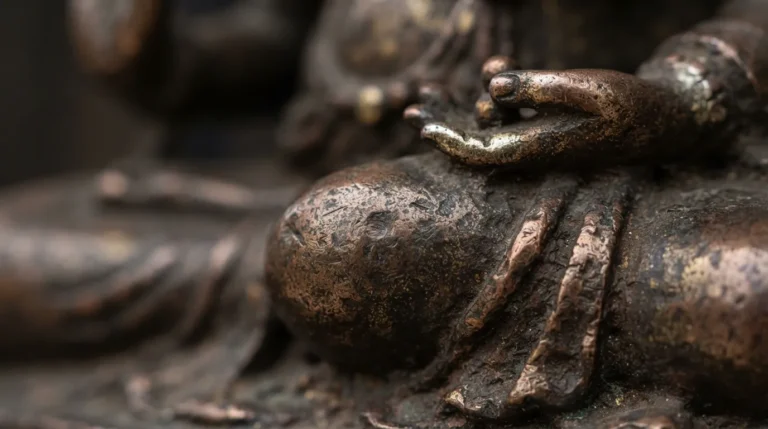
A high-resolution macro surface shot showing the unique texture of Panchaloha—the sacred five-metal alloy consisting of gold, silver, copper, zinc, and tin. The surface displays a rich patina with subtle warm gold highlights mixed with deep copper-bronze undertones. Fine details of ancient hammer marks, casting lines, and the natural metallic aging process are clearly visible, conveying the physical weight, authenticity, and spiritual value of the sacred idol.
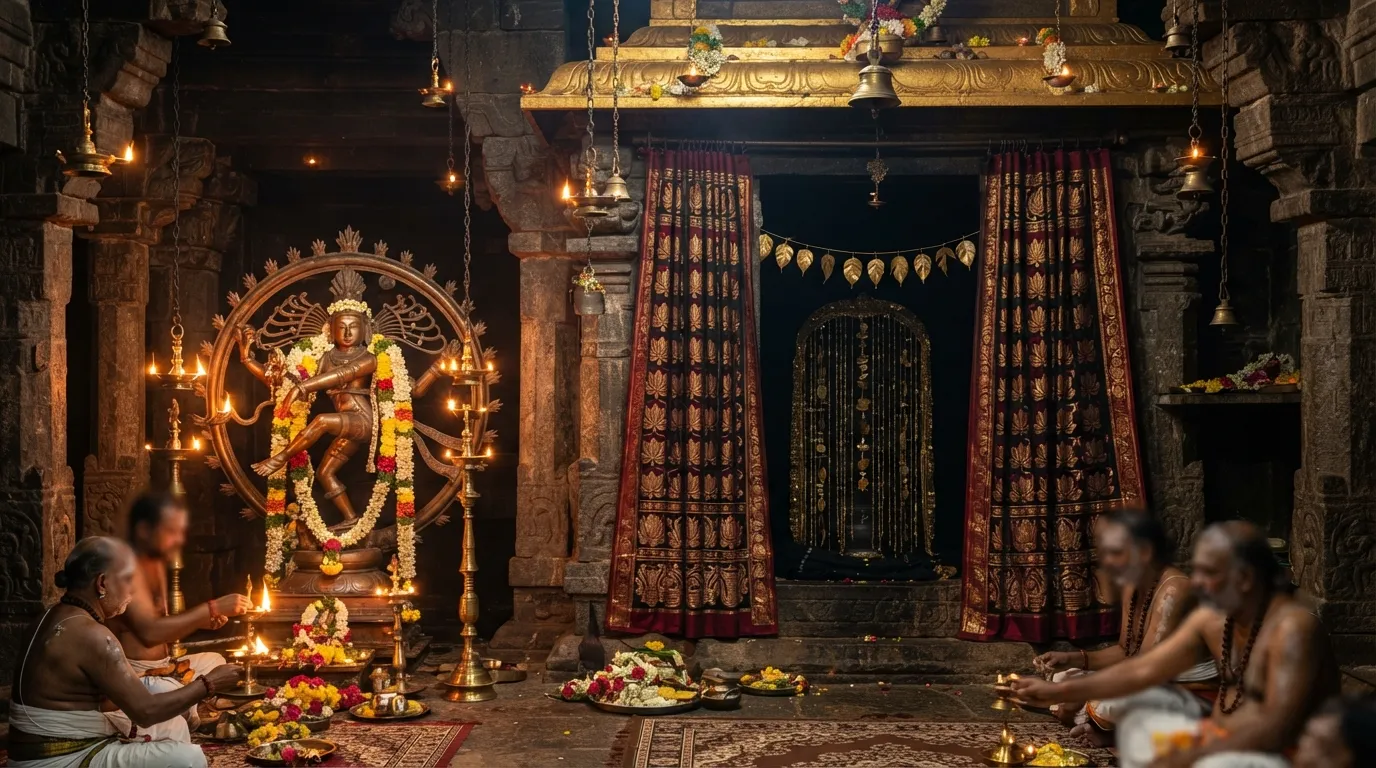
A wide interior perspective of the Chitsabha, the innermost sanctum of the Chidambaram temple. To the left stands the majestic bronze idol of Lord Nataraja shimmering under oil lamp flames (diyas). To the immediate right is the sacred Chidambaram Rahasya—a dark area covered by a rich red and black silk curtain embroidered with golden lotus leaves. The curtain is slightly parted to reveal a string of golden vilva leaves hanging against an empty space, symbolizing the ultimate formless reality (Akasha).
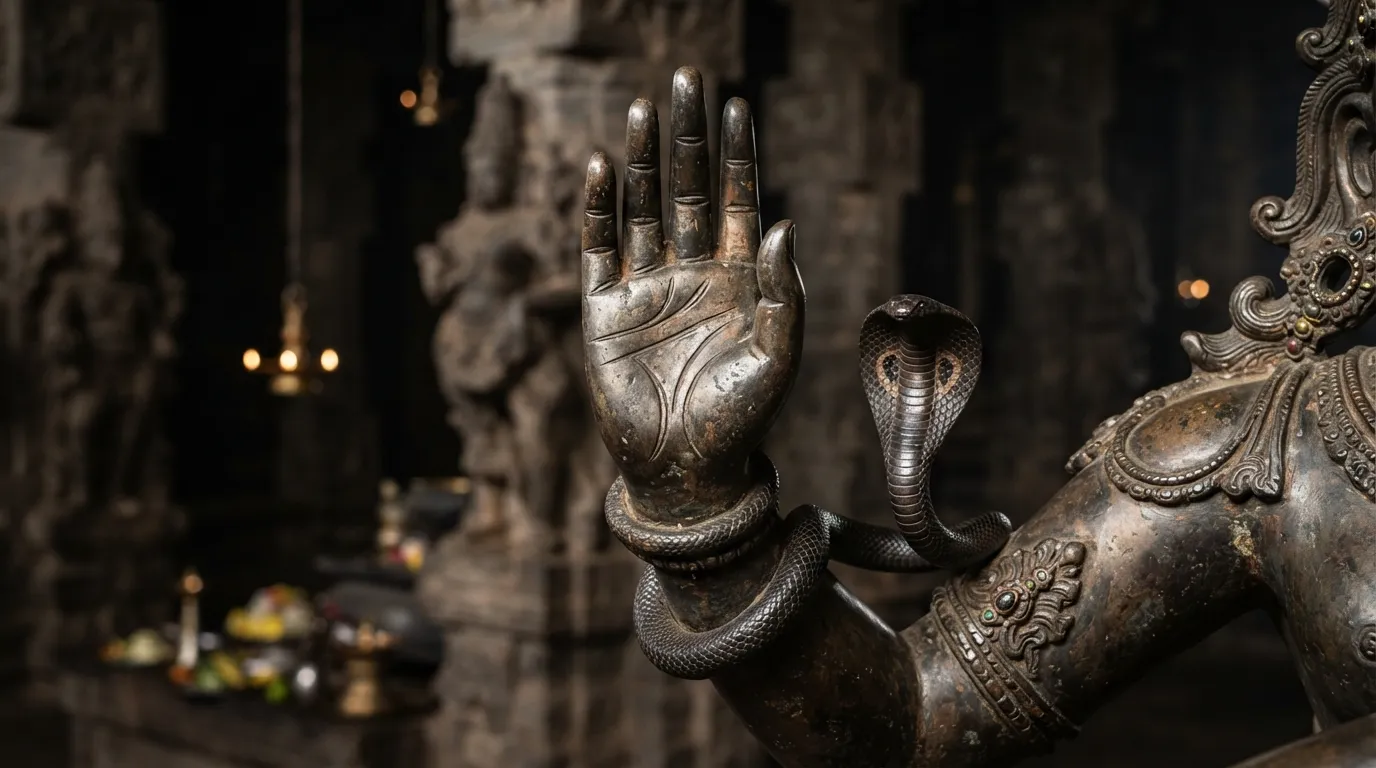
This visual highlights the lower right hand of Lord Nataraja raised in the Abhaya Mudra, which is the universal gesture of fearlessness and protection. A sacred cobra snake is seen uncoiling smoothly around the forearm, adding a layered symbolic meaning of mastery over fear and time. The palm faces forward toward the viewer with clear, elongated finger lines characteristic of ancient Chola bronze art, exuding peace, stability, and reassurance.
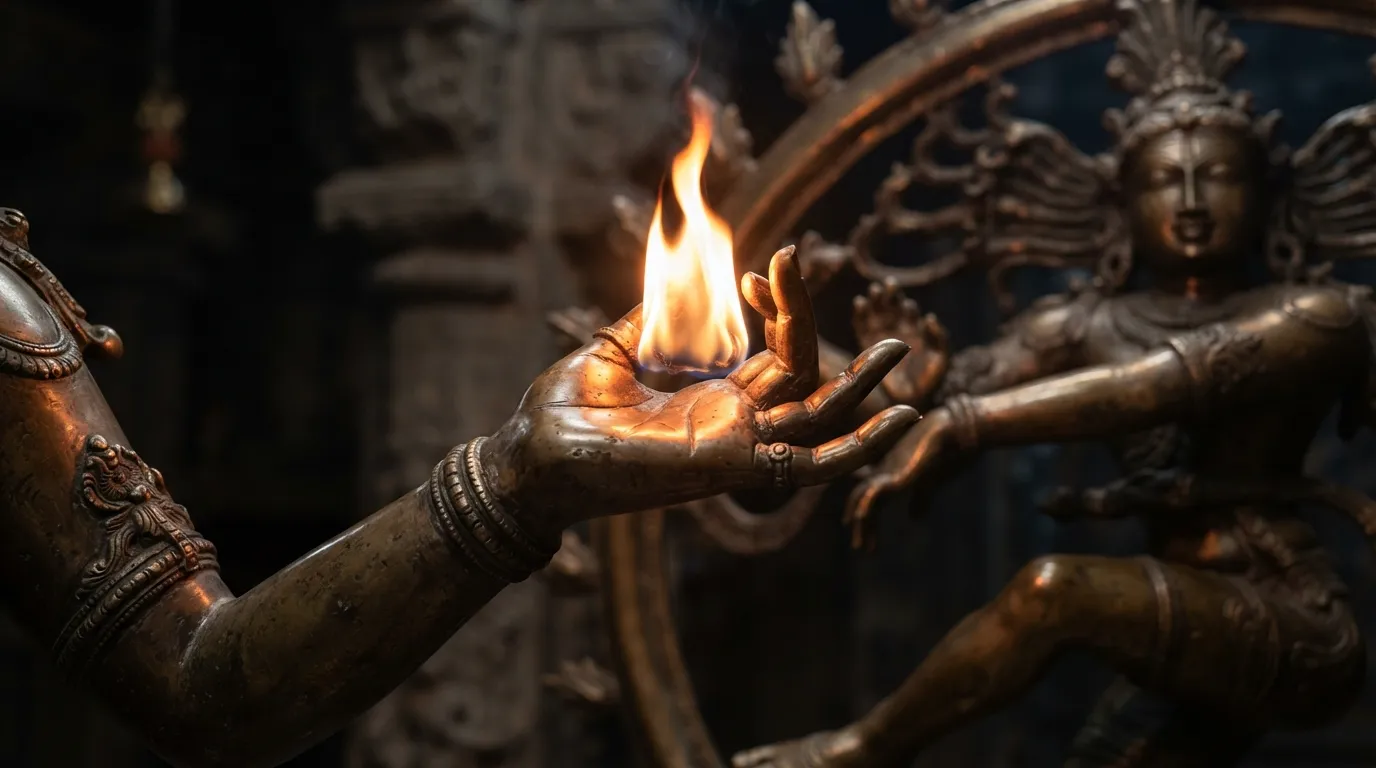
A close-up shot capturing the upper left hand of the Nataraja idol. The palm is open and upturned, carefully cradling a realistic, glowing flame of fire (Agni). This flame represents the power of cosmic destruction, the dissolution of the weary universe, and the elimination of illusion through divine knowledge. The metal casting details around the fingers show precise proportions defined in classical Hindu Agama texts, with light reflecting off the warm metallic surfaces.
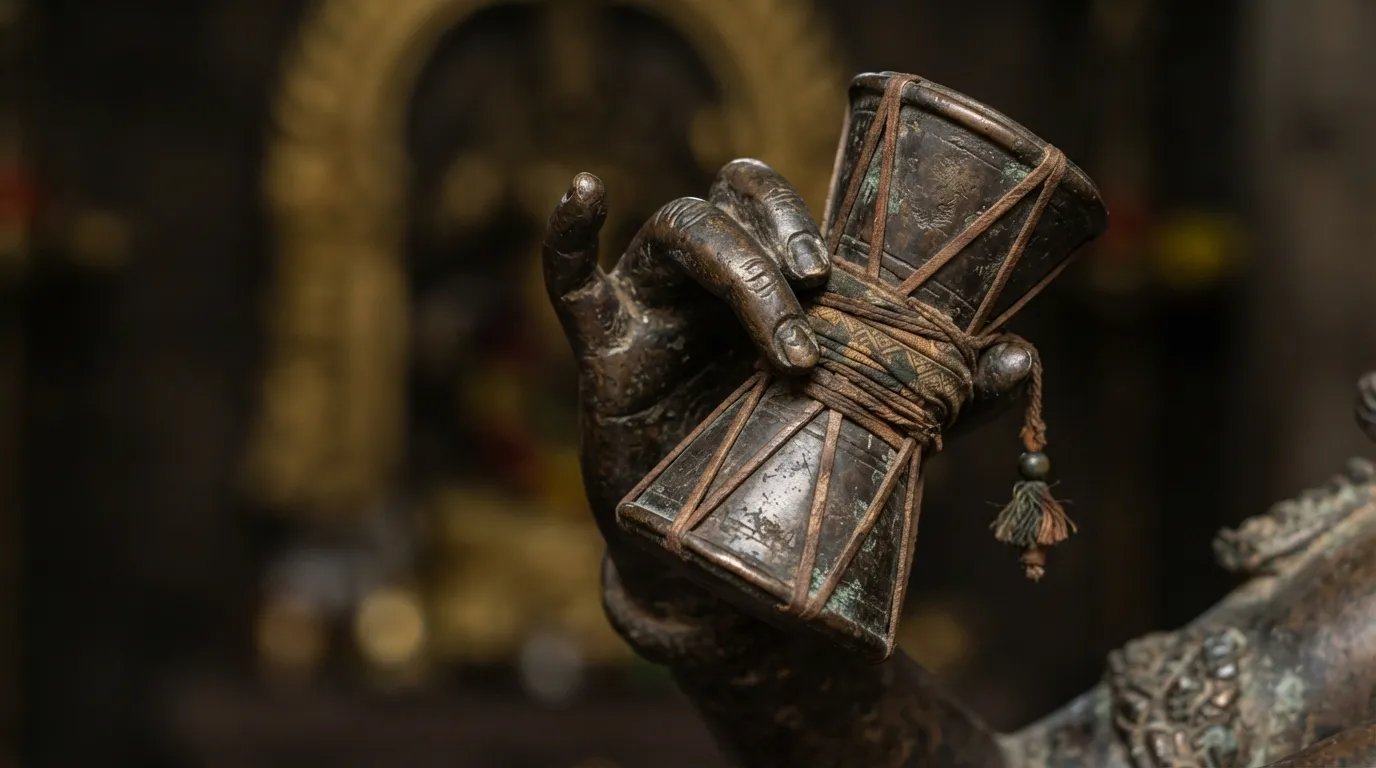
A detailed macro close-up view focusing on the upper right hand of the Chidambaram Nataraja statue. The hand is positioned in the specific Damaru-hasta mudra, gripping a small, classical hourglass-shaped drum called the Damaru. The surface texturing displays ancient metallic wear on the bronze metal. This drum represents the primal sound of creation and the structural intervals of cosmic time in the universe. The background is softly blurred to keep the focus entirely on the hand gesture and the sacred musical instrument.
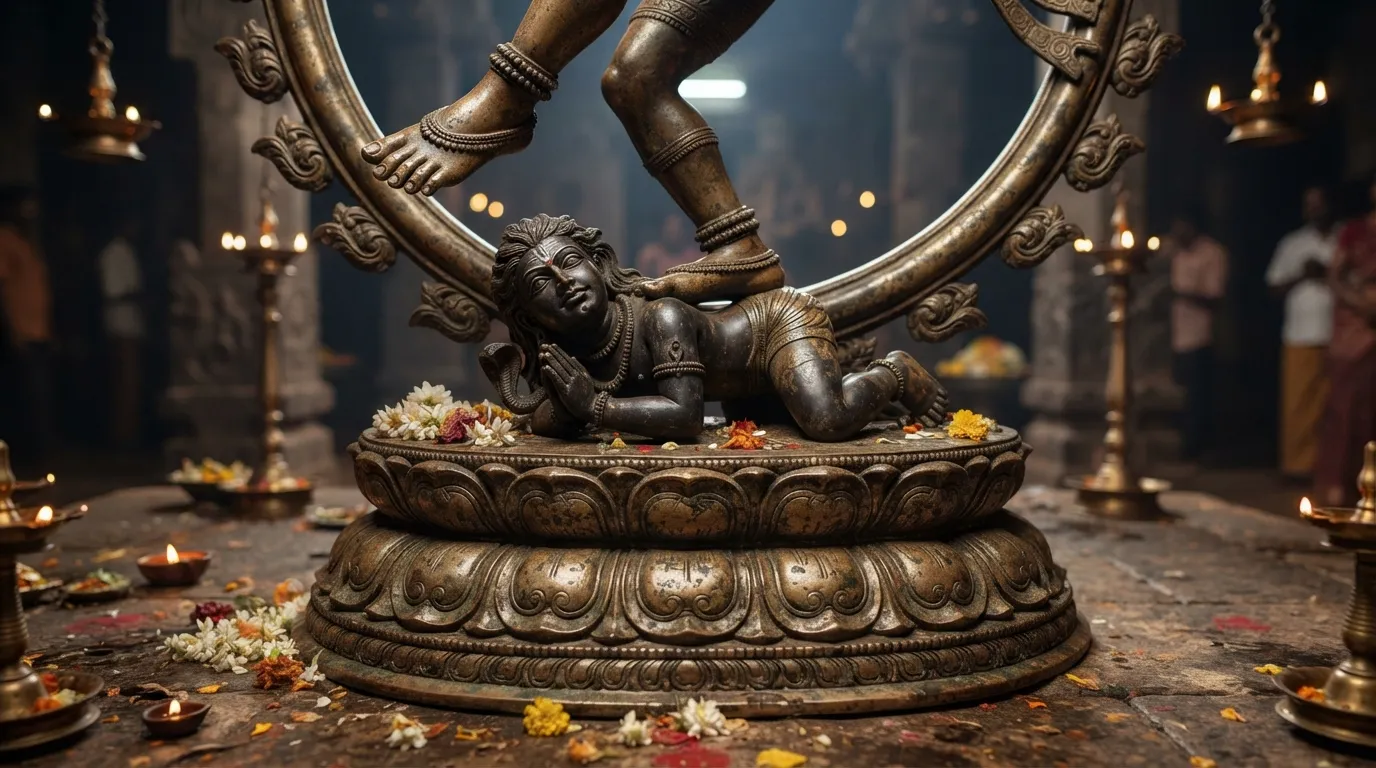
A low-angle, focused shot of the base of the Nataraja statue. The Lord’s right foot is firmly planted on the back of a small, crawling dwarf demon named Apasmara (or Muyalaka). The dwarf figure looks upward with an expression of submission, symbolizing the crushing of human ego, arrogance, and spiritual blindness. The entire scene rests on a double-layered oval lotus pedestal (Padmapitha) featuring traditional petaled engravings carved deep into the bronze base.
A low-angle, focused shot of the base of the Nataraja statue. The Lord’s right foot is firmly planted on the back of a small, crawling dwarf demon named Apasmara (or Muyalaka). The dwarf figure looks upward with an expression of submission, symbolizing the crushing of human ego, arrogance, and spiritual blindness. The entire scene rests on a double-layered oval lotus pedestal (Padmapitha) featuring traditional petaled engravings carved deep into the bronze base.
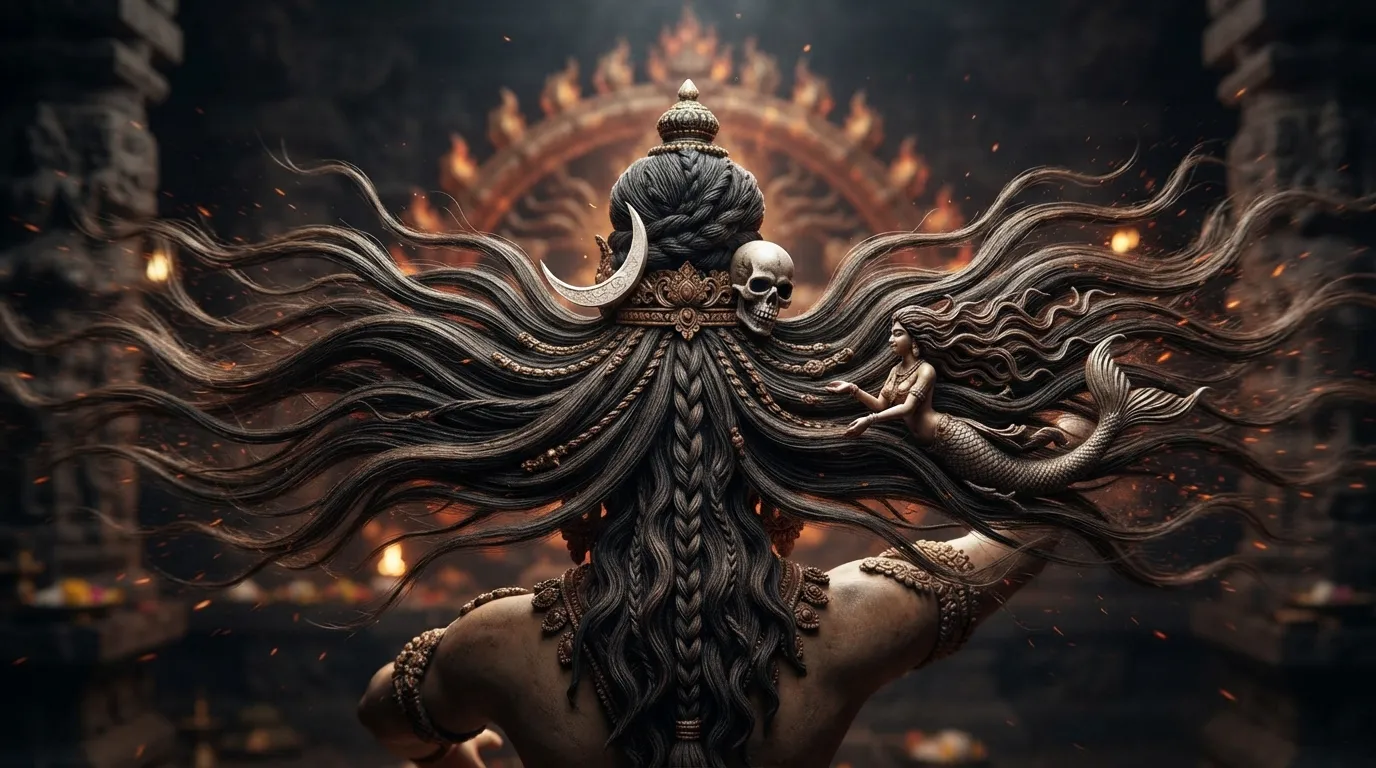
A detailed view behind the head of Lord Nataraja, showcasing his flowing, horizontal hair strands (Jatas) that fan out due to the high energy of his cosmic dance. Meshed within the right side of these thin, flying metal strands is the small, distinct figure of Goddess Ganga personified as a mermaid. A tiny crescent moon and a skull are also delicately crafted into the crown of his hair, representing the cyclical nature of time and life.
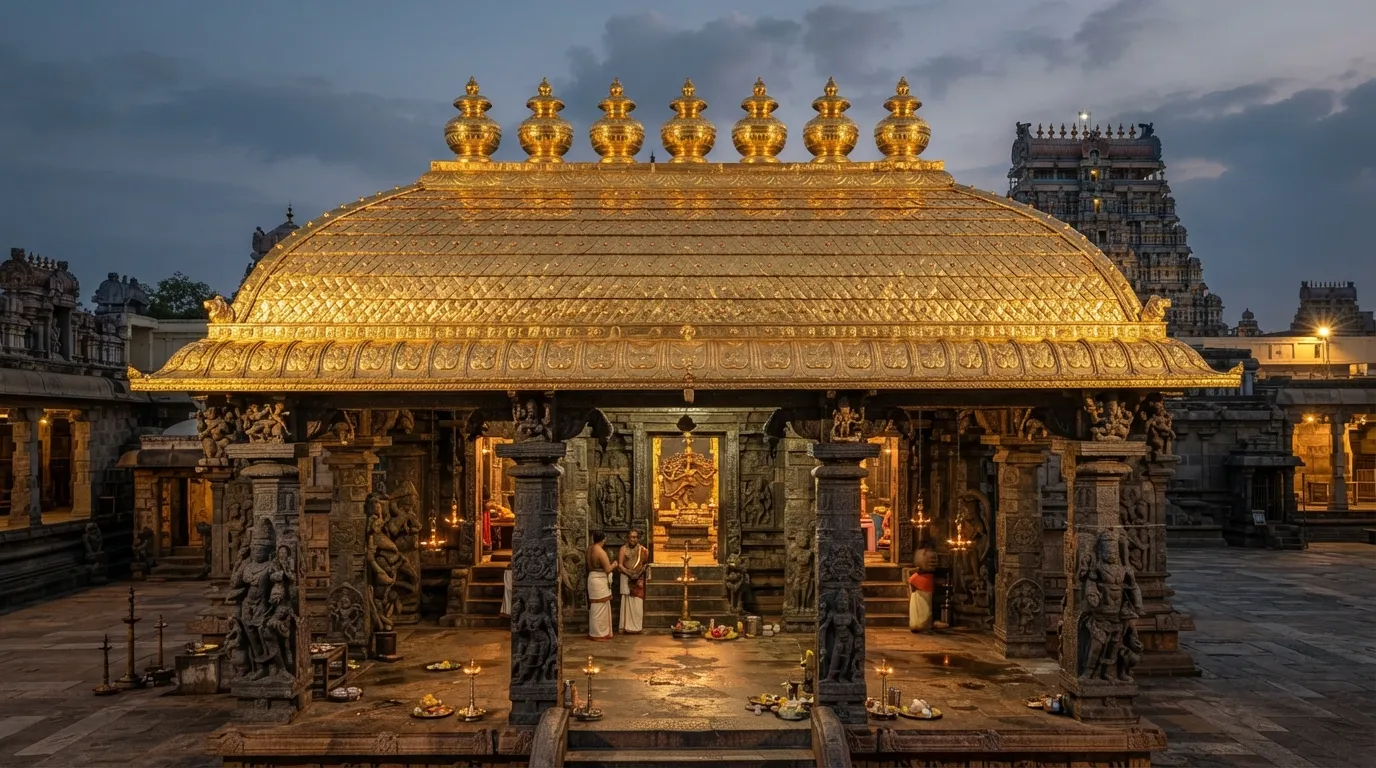
An architectural rendering of the famous Kanaka Sabha (Golden Hall) inside the Chidambaram temple complex. The roof is completely covered with thousands of shimmering, authentic gold tiles held together by copper rivets. At the apex of the roof, nine golden urns (Kalashas) stand in a perfect row, representing the nine forms of energy or Shaktis. The structure is supported by dark granite pillars adorned with traditional Dravidian stone reliefs under dramatic temple lighting.
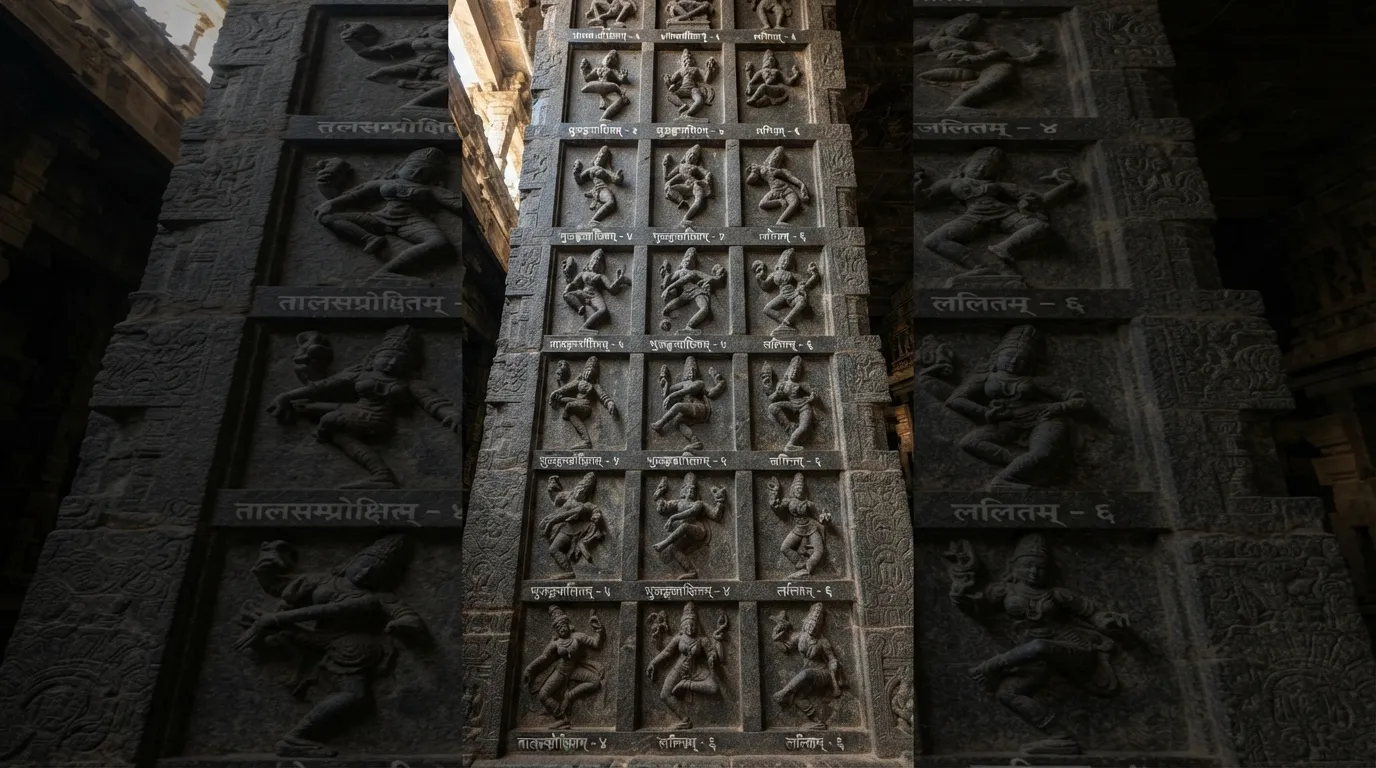
A vertical panel view of the stone walls inside the eastern Gopuram (gateway tower) of the Chidambaram temple. The image displays highly detailed, sequential relief panels carved into ancient gray granite. Each square panel depicts a classical dancer performing one of the 108 Karanas (sacred dance postures) from Bharata Muni’s Natya Shastra. Small, legible Sanskrit verses are engraved directly beneath the figures, highlighting the connection between divine dance and architecture.