

10 Beautiful Lord Nataraja Images: Significance and Divine Symbolism
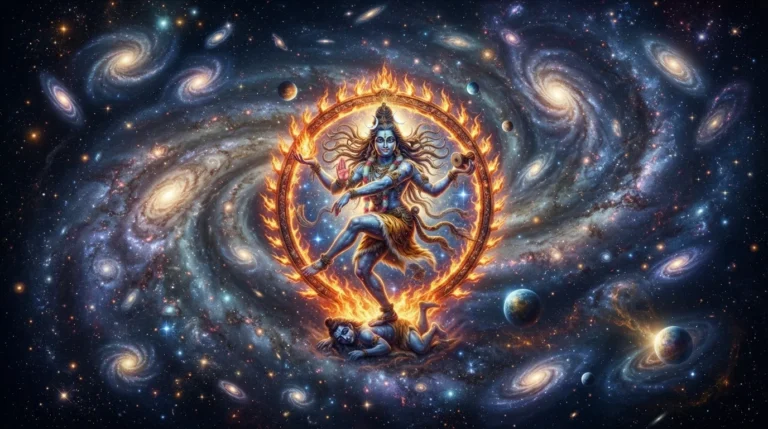
A modern artistic interpretation showing Lord Nataraja in the vast expanse of the universe. This image beautifully illustrates the concept that Shiva’s dance is the source of all cosmic creation, preservation, and destruction. The swirling galaxies around him represent the rhythmic energy that sustains the macrocosm, blending ancient spirituality with astrophysics.
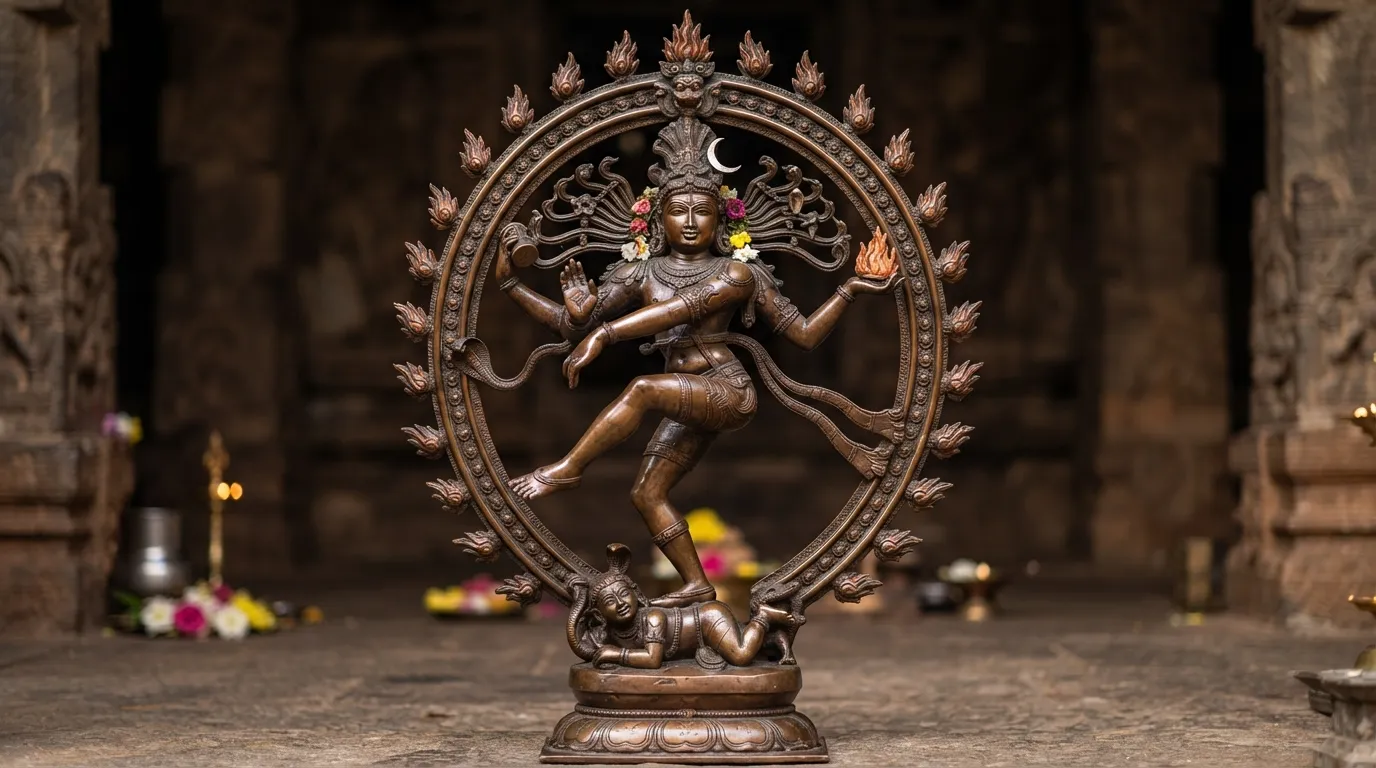
This image captures the traditional bronze craftsmanship of Lord Nataraja, the King of Dance. Encircled by the Prabha Mandala (halo of fire), Lord Shiva performs the Ananda Tandava (dance of bliss). His right foot crushes Apasmara, the dwarf demon representing ignorance, while his raised left foot symbolizes liberation from cosmic illusion.
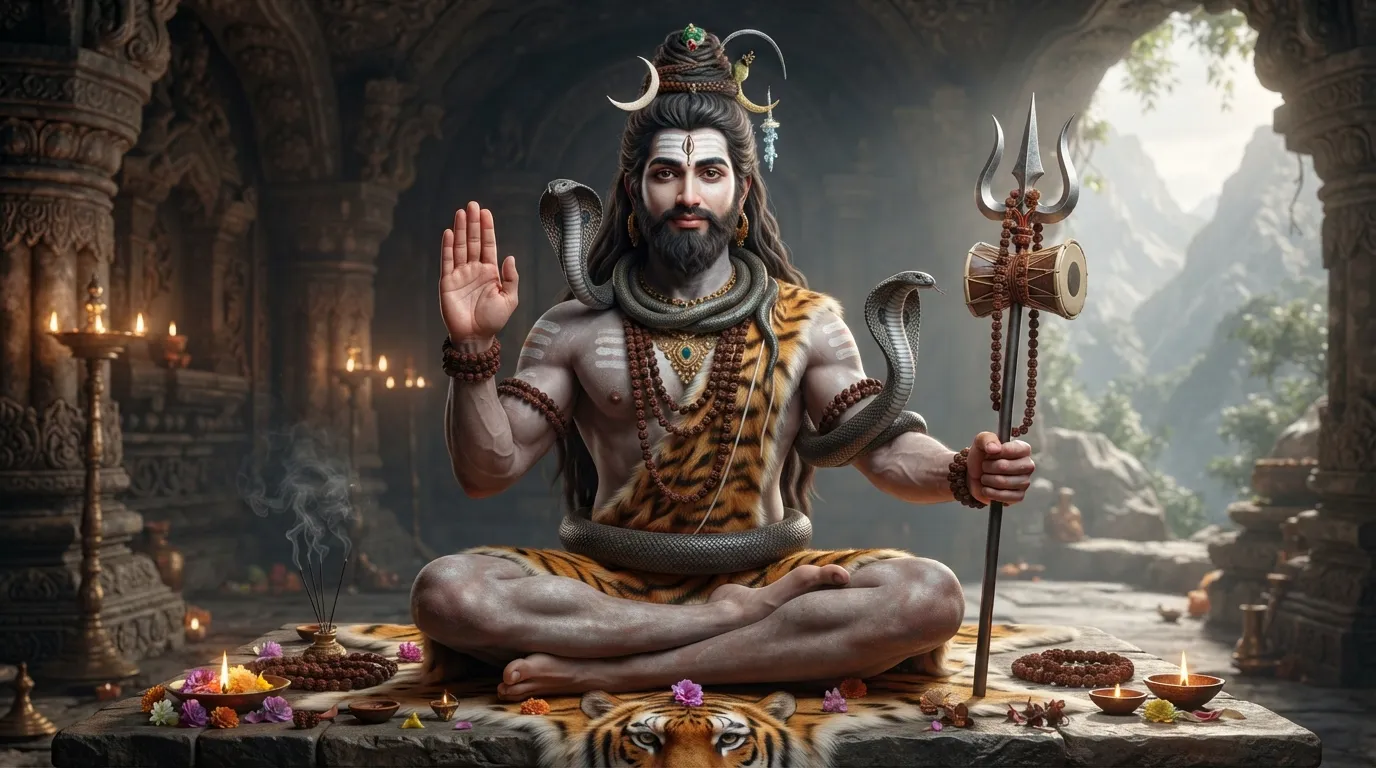
This image highlights the gesture of fearlessness, known as the Abhaya Mudra. Shiva’s open palm reassures his devotees, offering divine protection from fear, evil, and worldly anxieties. The calm serpent coiled around his arm signifies that even the most feared elements become peaceful in the presence of the divine.
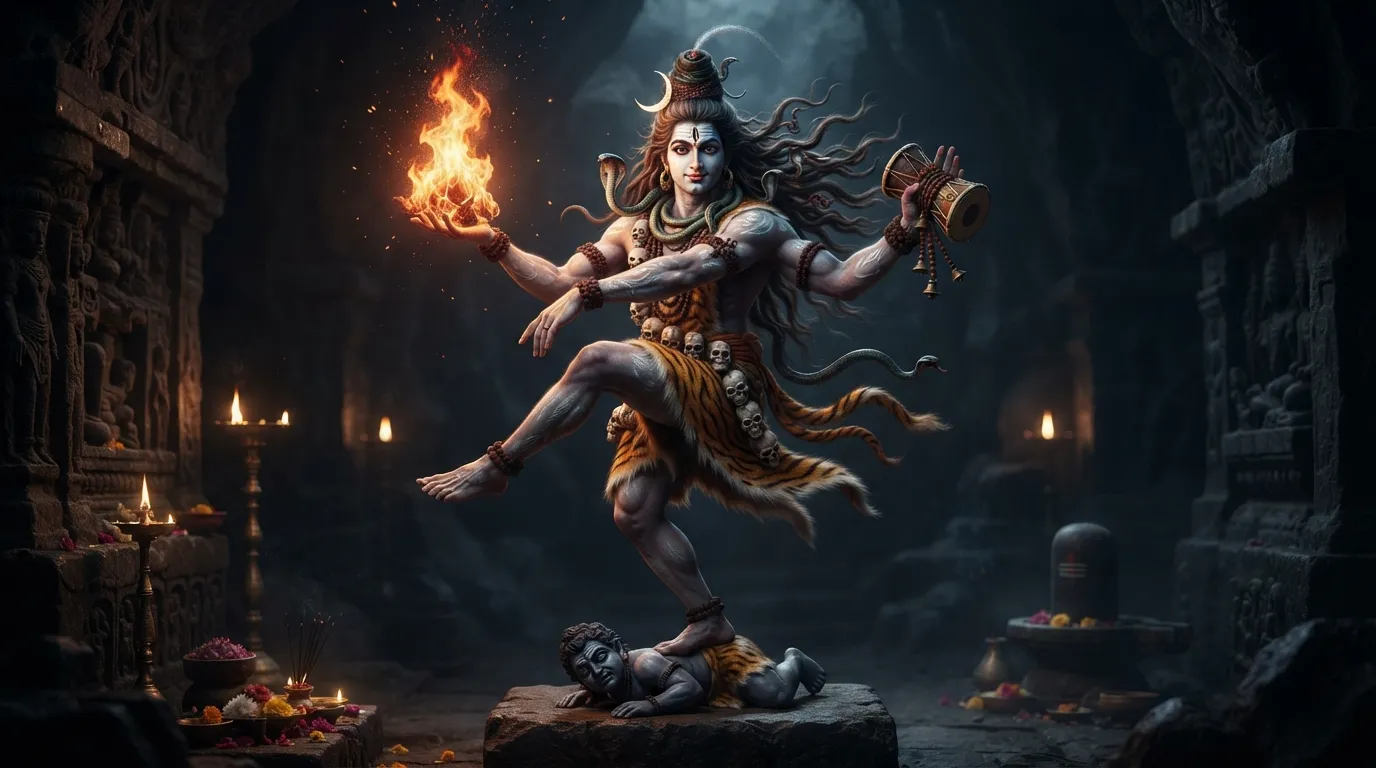
This powerful image symbolizes Samhara—the aspect of destruction and transformation. The flame (Agni) held in Shiva’s upper left hand balances the creative sound of the Damru. It reminds us that destruction is not the end, but a necessary step for renewal, burning away illusion and impurities to pave the way for truth.
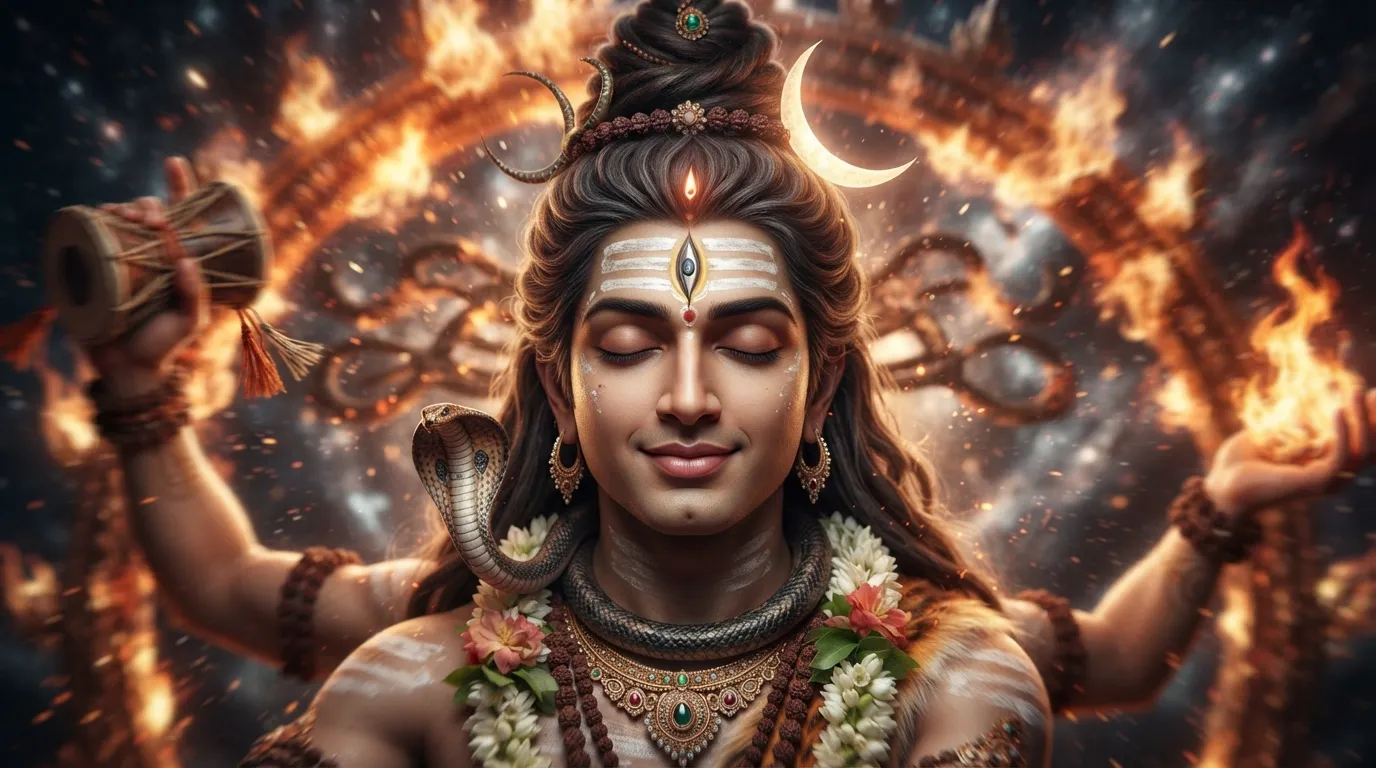
This striking portrait focuses on the facial expression of Lord Nataraja. It represents one of the core philosophies of Hinduism: finding inner peace amidst outer chaos. While his body is engaged in the most energetic dance in the universe, his face remains completely detached, serene, and deeply meditative, symbolizing the unchanging eternal reality.
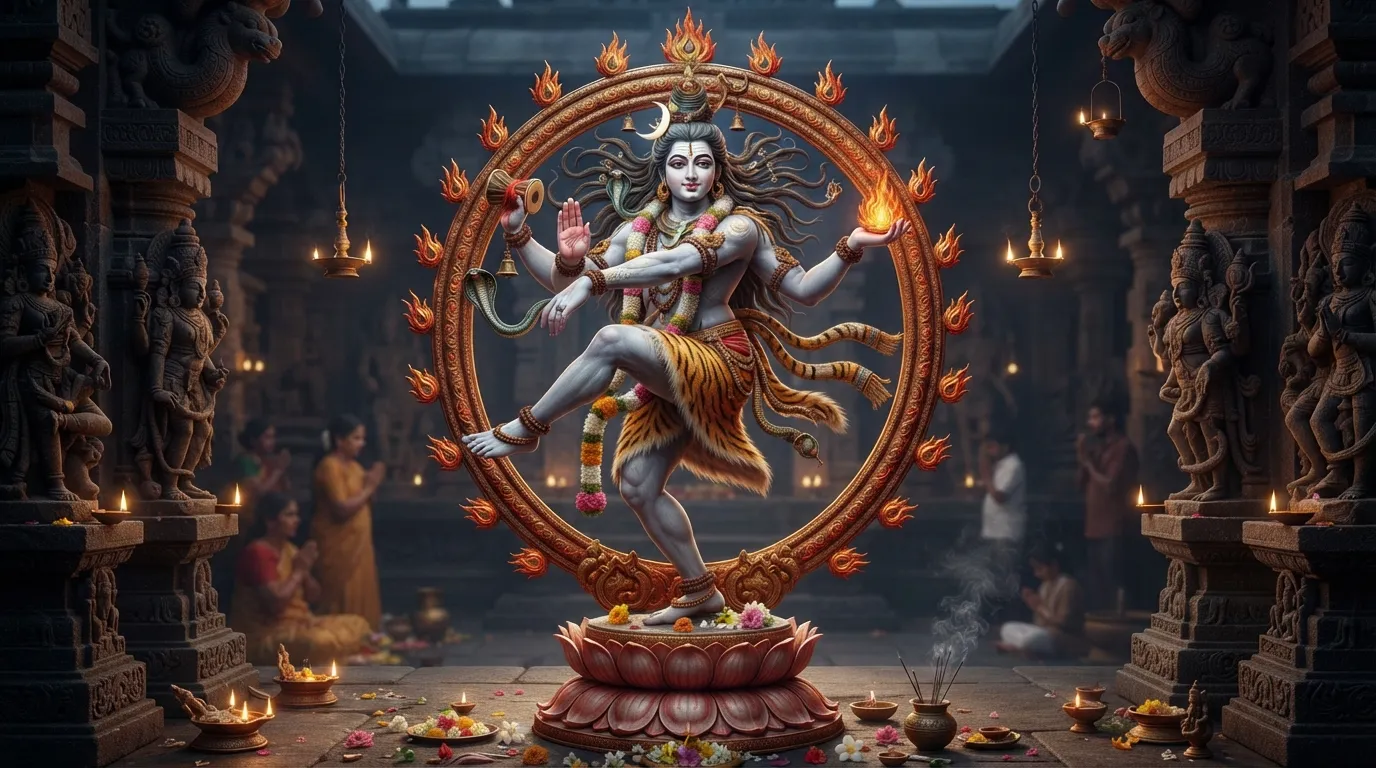
This visual highlights the Gaja Hasta Mudra, where Shiva’s arm mimics the trunk of an elephant, pointing across his chest toward his lifted left foot. This profound gesture represents Anugraha (grace) and liberation, signaling to spiritual seekers that surrendering at the divine feet of Shiva leads to freedom from the cycle of rebirth.
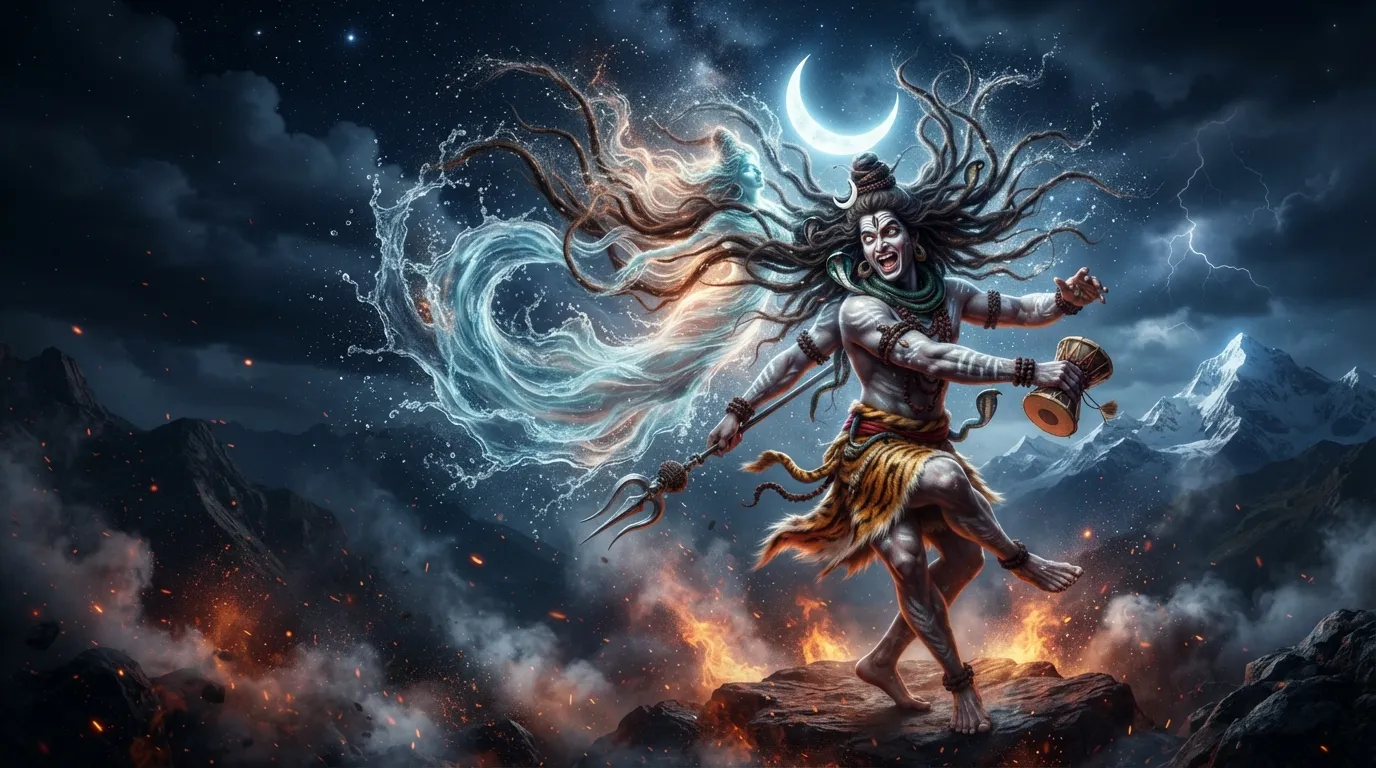
This image captures the wild yet controlled energy of Shiva’s matted locks (Jatas). As he dances violently, his hair flies outward, holding the Goddess Ganga to break her fierce fall to Earth, symbolizing life-giving water. The crescent moon tucked into his hair represents the cyclical nature of time and the calmness of a meditative mind amidst chaotic motion.
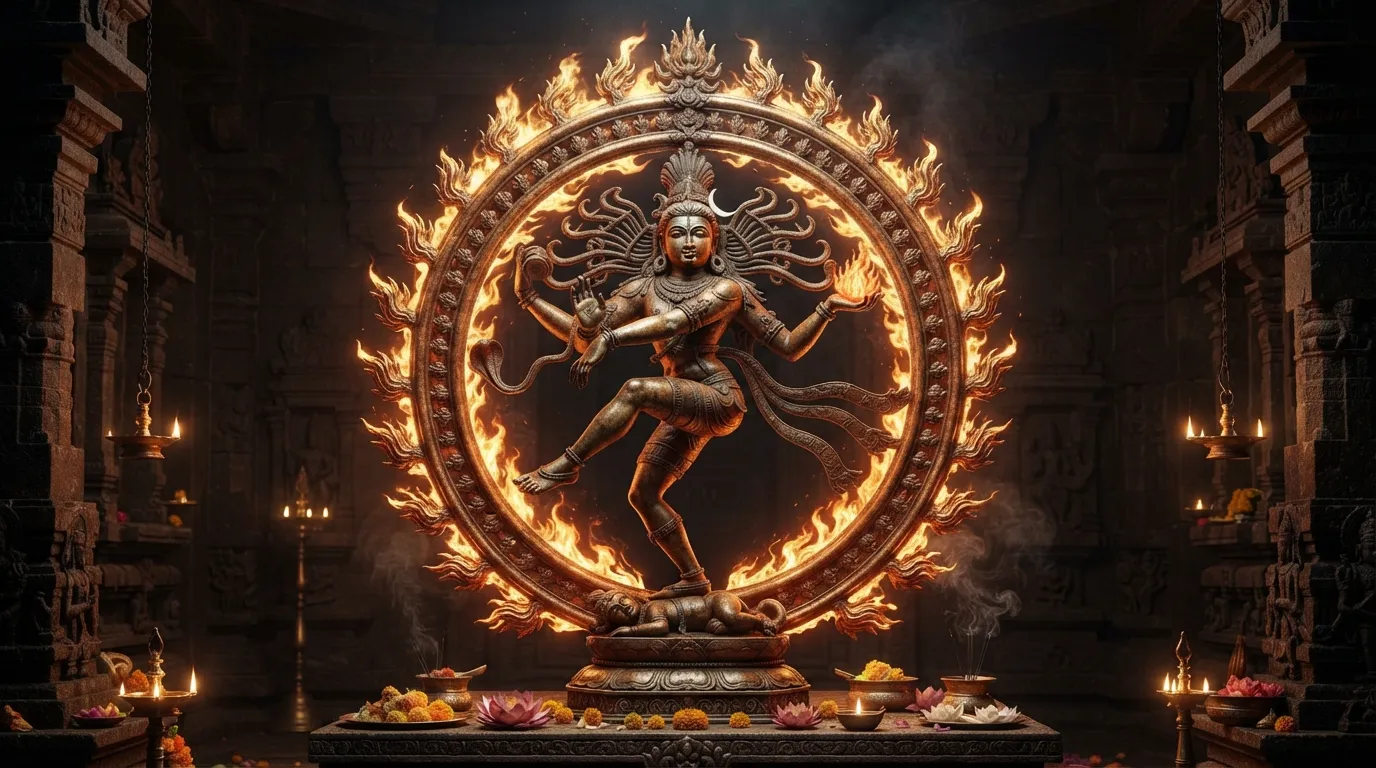
This detailed visual showcases the Prabha Mandala, the flaming arch that surrounds the entire form of Nataraja. The fire represents nature (Prakriti) and the manifest physical universe. Shiva dancing inside this ring signifies that the divine soul activates and gives life to dead matter, keeping the universe in a constant state of motion.
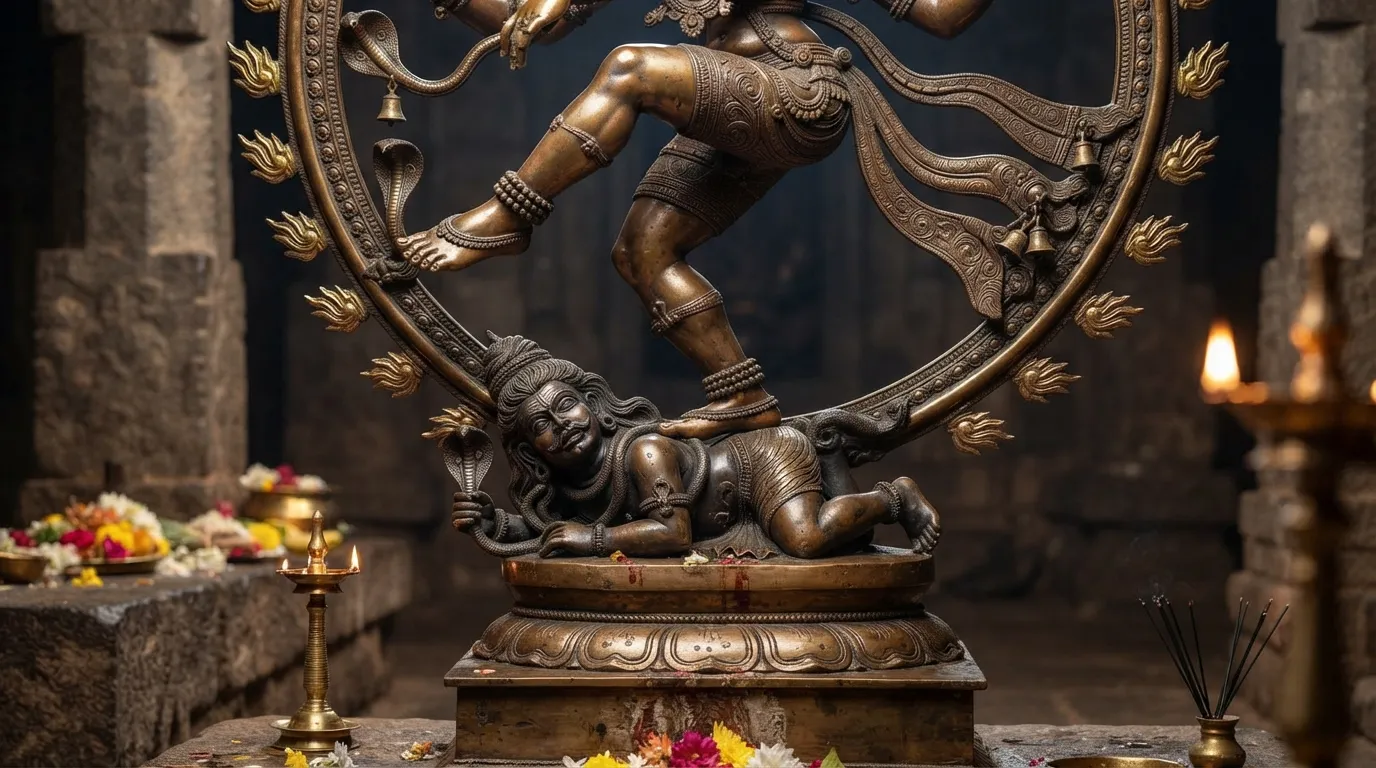
This composition details the base of the Nataraja icon, where Shiva tramples Apasmara Purusha. The dwarf demon symbolizes human ego, spiritual laziness, and ignorance. Shiva keeping his foot on the demon signifies that ignorance must be kept suppressed under the weight of divine wisdom for the soul to evolve.
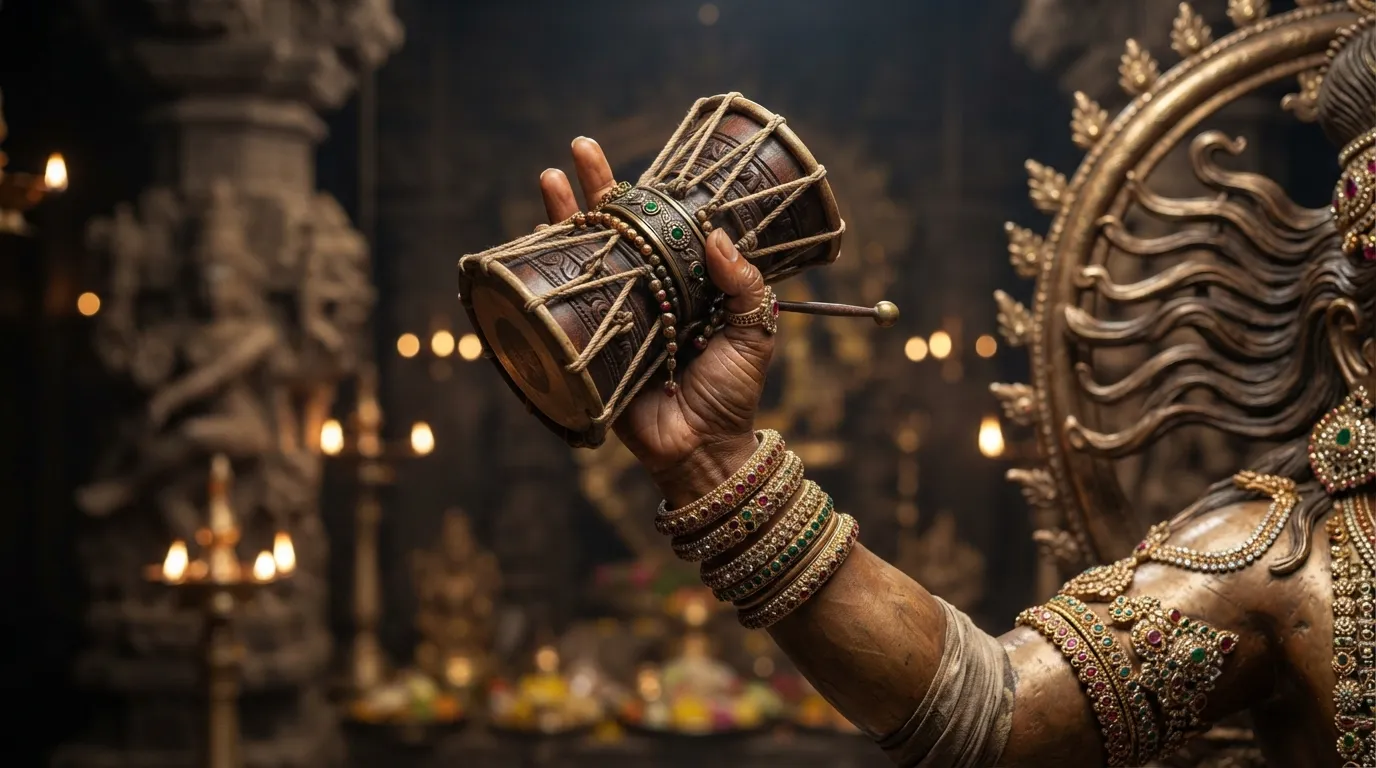
This detailed visual focuses on the upper right hand of Lord Nataraja holding the Damru. In Hindu philosophy, the beats of this divine drum create the first rhythms of time and space, originating the Sanskrit language and the primordial sound of ‘Om’. It symbolizes the act of creation (Srishti) in the cosmic cycle.